
Full profile
A Viral Appeal Exposed a Closed System
On July 17, 2026, Bill Ackman pushed an Indian student's F-1 appointment request into public view by asking for help with Threcy Jo Lawrence. Reporting described her as a purported Harvard Law admit with a scholarship of more than 90%, but the public record was thin, her X account disappeared after the backlash, and the claim itself was not independently verified. The episode matters less as a celebrity feud than as a rare public glimpse of a student visa queue that had already stopped behaving like a normal queue. [1][2]
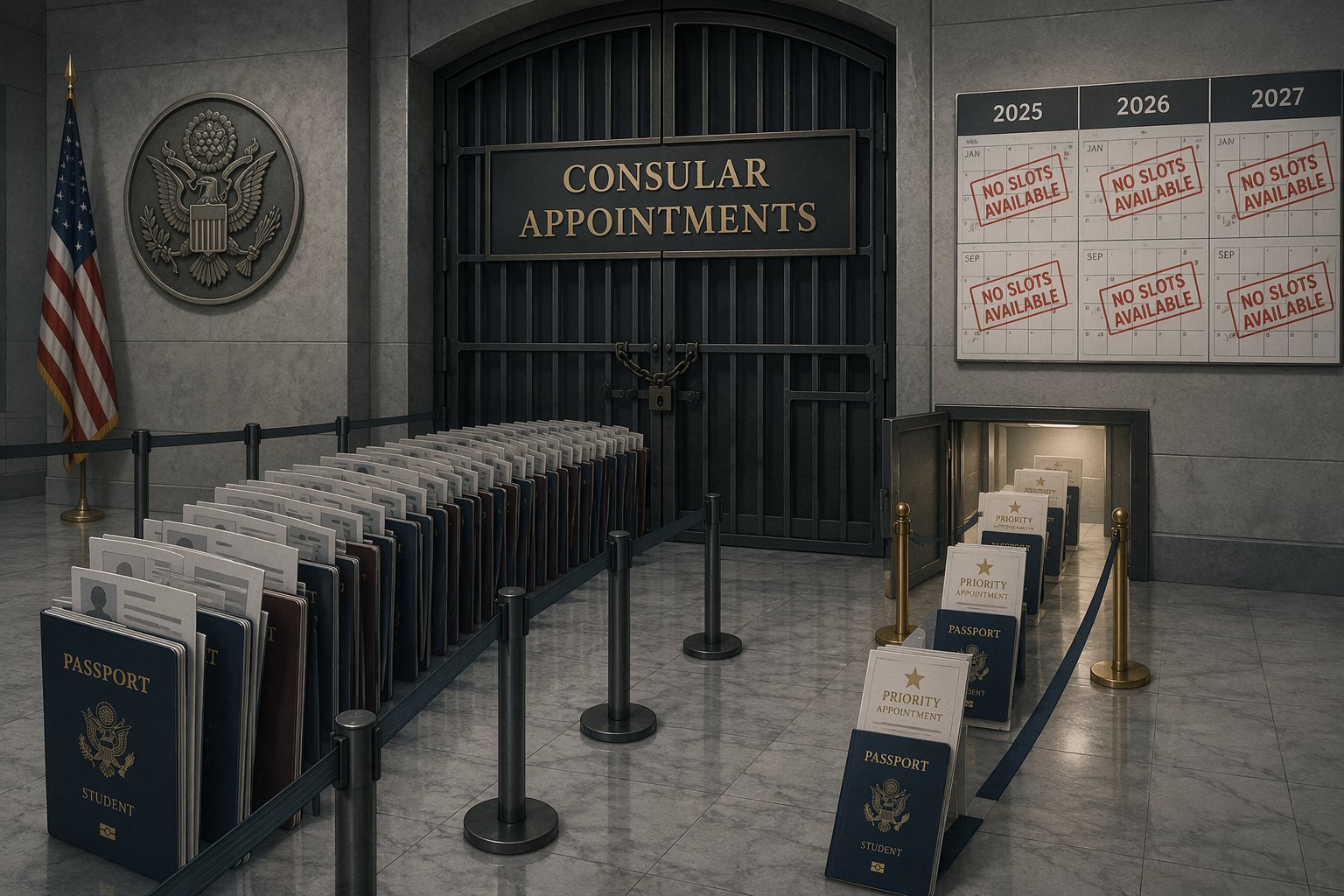
What made the reaction so strange is the asymmetry. One student's plea became visible enough to draw a billionaire response, while thousands of other students and the university offices advising them were already dealing with calendars that had slipped past enrollment deadlines. In that setting, a fast-track appeal can look like a favor request even when it is really a symptom report.
How Capacity Was Taken Out of the System
The appointment problem was not produced by one headline change. Between February 2025 and March 2026, at least five consular processing moves removed slack from the system and pushed more applicants into the same interview bottleneck. [3][4]
- The interview-waiver window shrank from 48 months to 12, which sent more repeat applicants back into live interviews. [3]
- Dropbox processing was eliminated for most applicants, so a paper shortcut stopped absorbing routine renewals. [3]
- Third-country-national processing was ended, closing the overflow route that let some applicants interview outside their home country. [3]
- Expanded social media vetting, covering 12+ additional visa categories by March 2026, made each case slower and reduced daily interview throughput. [4]
- The May 2026 AOS memo added pressure from another part of the immigration system, so the same officer pool had more work on more fronts. [3]
That matters because consular backlogs are cumulative. Each lost shortcut forces more people into the same queue, and each extra review step consumes time that would otherwise clear appointments. A delay becomes a structural bottleneck when the system strips out every place where low-risk cases used to disappear.
The Numbers Match the Queue
The issuance data points in the same direction. VisaPro reported that Indian F-1 issuances in the June-July 2025 comparison period fell to 12,776 from 41,336, a 69% drop. The PIE News reported a 36% decline in student visa issuance overall, and Al Jazeera reported a one-fifth year-on-year decline for Indians. [5][6][7]
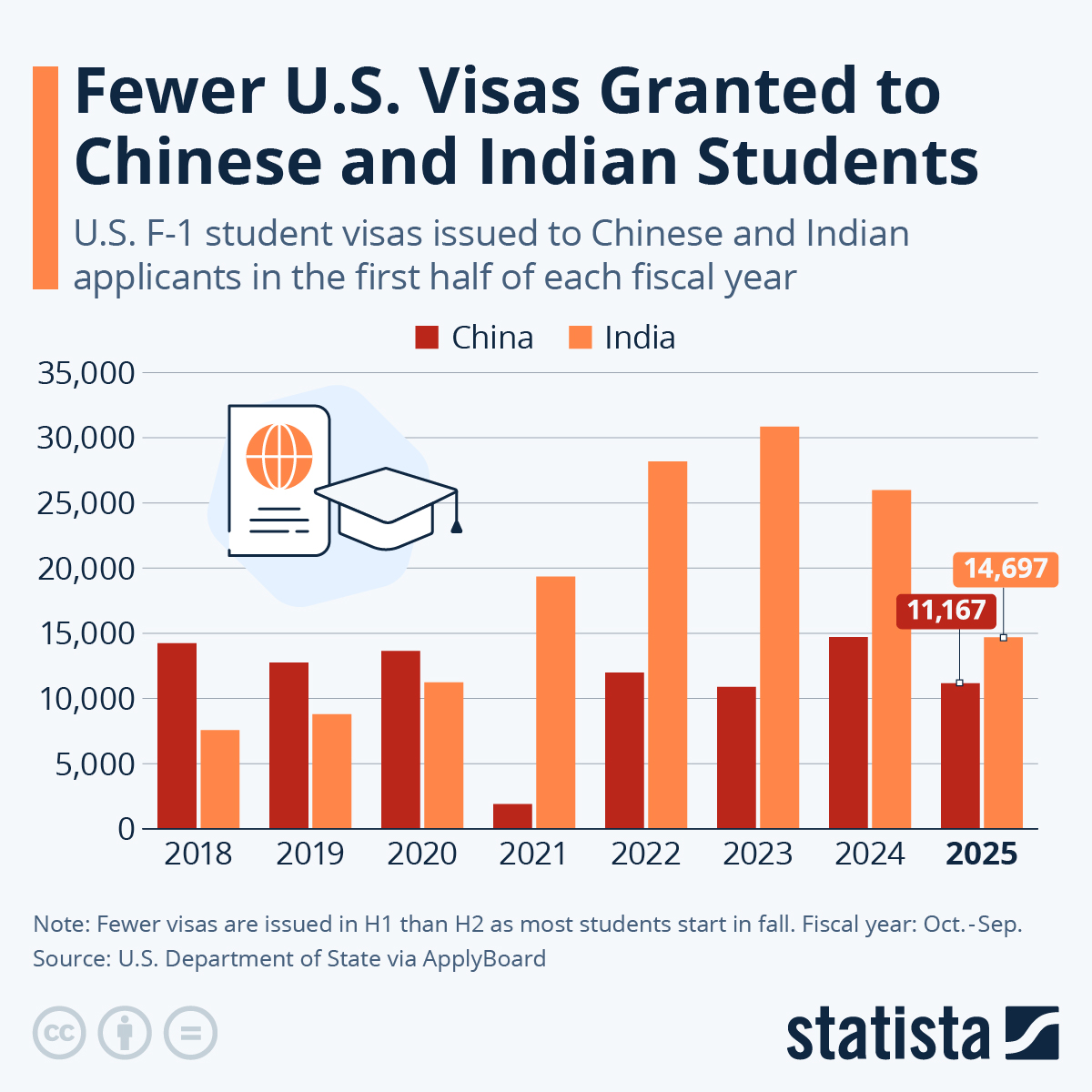
Those figures do not prove that every delayed student was blocked by the same rule. They do show a system suppressing approvals and appointment throughput at the same time, which is exactly the kind of environment in which a single public appeal starts to look like an emergency workaround rather than a novelty.
Public status trackers then showed Indian consular posts with interview slots extending into 2027. Boundless and Immigration Fleet both described calendars that had drifted beyond the normal planning window for an academic year. [8][9]
Why Counsel Has Little Leverage
This is where the legal picture becomes almost more frustrating than the administrative one. Visa-processing disputes sit inside consular nonreviewability, the doctrine associated with Kleindienst v. Mandel and later reinforced in Trump v. Hawaii. In practice, that leaves lawyers with escalation letters, records requests, congressional inquiries, and repeated follow-up, but not a dependable lawsuit that can force a consulate to open a slot.
For universities, the consequence is operational: admissions offices can defer enrollment, issue letters, and explain timing, but they cannot manufacture interview capacity. For students, a formal denial is not necessary for the damage to be real; a calendar that reaches the next cycle can defeat the seat they already earned.
Duration of Status Adds Another Layer
The July 16, 2026 DHS final rule pushes in the same direction. It would replace duration of status for F-1 and J-1 admissions with a four-year cap, cut the grace period from 60 days to 30, and add biometric vetting for extension requests, with an effective date of September 15, 2026. DHS published the rule before any potential litigation or Congressional Review Act challenge could play out, so legal status may still move, but the compliance burden is already part of the planning problem. [10]
For a separate read on how the D/S architecture and public charge policy already reshaped student-visa planning, see How Public Charge and D/S Rules Reshape International Student Visas.
Ackman's post did not create the controversy. It exposed a system where regulatory narrowing, appointment scarcity, and the absence of a practical court remedy leave lawyers advising around a collapse they cannot reliably fix.
References
- Indian woman seeks help in getting F-1 visa appointment; Bill Ackman responds and receives massive backlash: Why don't you finance a Harvard in Kerala? - Times of India - 2026-07-17
- Ackman criticized for calling to fast-track Indian student's visa - American Bazaar - 2026-07-17
- Why is my US visa taking so long? How five consular processing changes created significant delays in 2026 and why the new AOS rule may increase pressure further - RL Law Group
- State Department halts new student visa interviews, expands social media vetting - Global Immigration Blog
- F-1 Visa for Indian Students - VisaPro
- US visa issuance fell by 36% last summer - The PIE News
- Indians hard-hit as US student visas decline by a fifth from last year - Al Jazeera - 2025-10-06
- US Embassy and Consulate Statuses - Boundless
- Postponement of U.S. Consular Visa Interviews Into 2026-2027: Legal and Practical Analysis - Immigration Fleet
- Trump administration issues final rule: end foreign student visa abuse - U.S. Department of Homeland Security - 2026-07-16
Comments
Join the discussion with an anonymous comment.