
Full profile
The constitutional problems behind the Bill Ackman F-1 visa controversy are easiest to see if the July 2026 episode is not treated as a celebrity side note. American Bazaar reported on July 17, 2026, that Bill Ackman publicly asked for fast-tracked visa help for an Indian Harvard Law student, a request that had not been independently verified through official channels in the materials available here.[1] Standing alone, that request might be read as ordinary advocacy for a student caught in administrative delay. It becomes legally more interesting because it sits beside Ackman’s earlier October 2023 posture favoring immigration consequences for pro-Palestinian students.
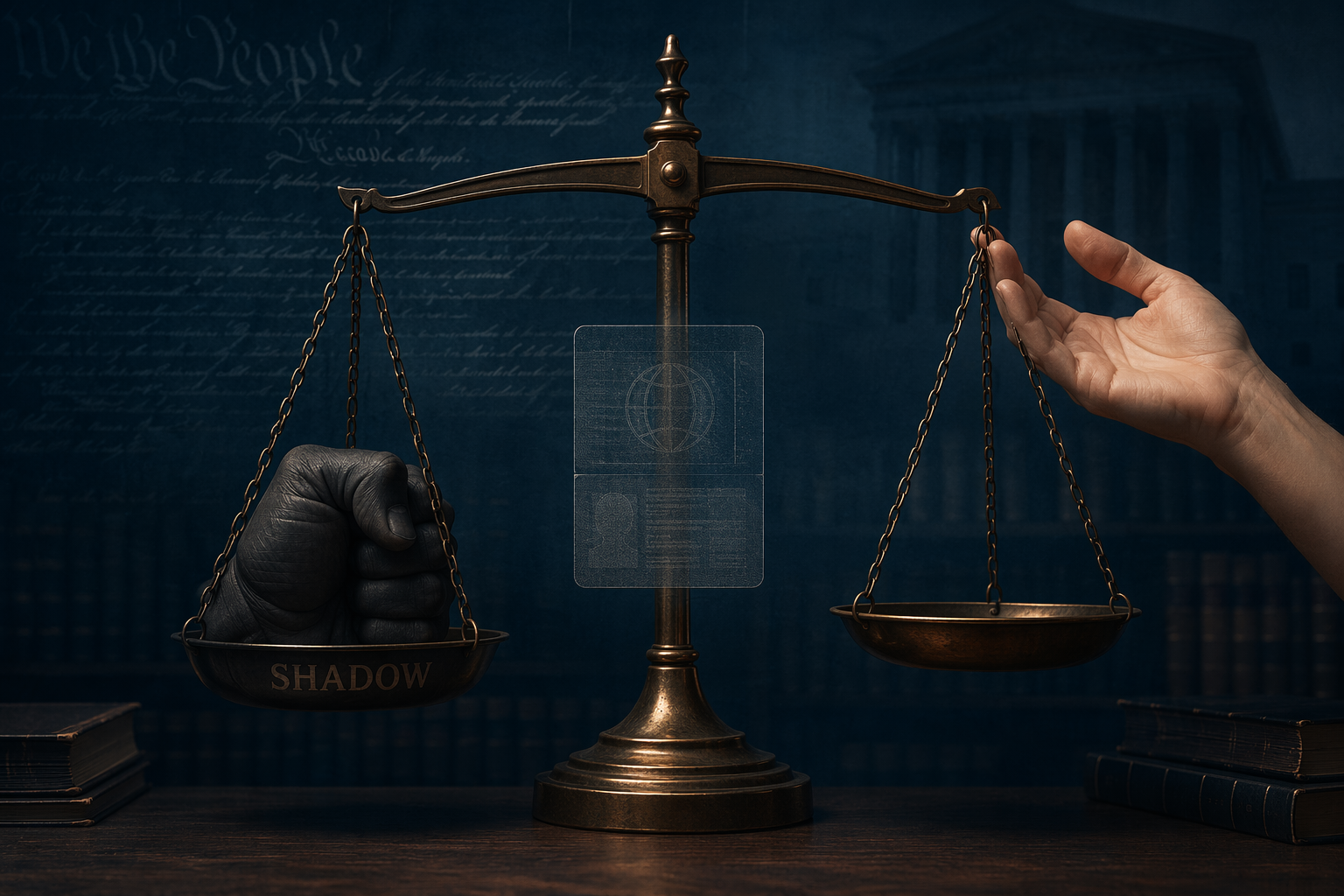
The public contradiction is not the legal issue by itself. Private citizens can change positions, press officials, criticize students, defend students, and ask agencies to act. The harder question begins only if government power moves in response: revocation, removal, delay, expedition, or exceptional handling because a student said the wrong thing, held the wrong view, belonged to the wrong political community, or had the right sponsor calling the right office.
That is why the punitive and preferential versions belong in the same frame. “Deport this student because of protected expression” and “help this student because of favored identity, association, or access” are not moral equivalents in ordinary conversation. But as constitutional problems, both test whether visa discretion is being administered through a neutral legal standard or through an individualized preference that the First Amendment and equal protection principles may not tolerate.
The Question Is Not Whether Immigration Discretion Exists
Immigration enforcement is full of discretion. Agencies decide what to prioritize, when to investigate, how to allocate adjudicatory resources, and which cases justify urgent attention. F-1 students also occupy a status that is conditional, rule-bound, and vulnerable to mistakes that citizens never have to worry about. None of that eliminates the constitutional question.
The relevant distinction is between discretion exercised through lawful criteria and discretion bent toward viewpoint punishment or private favor. A visa file can be prioritized because a statutory deadline, security concern, consular error, court order, or agency policy requires attention. A different problem arises if the operative reason is that an outsider with influence wants this speaker helped, or that a disfavored speaker punished, outside the ordinary rules that govern similarly situated students.
That distinction matters for universities as much as for students. Campus officials are often asked to certify facts, maintain SEVIS records, respond to subpoenas, preserve disciplinary neutrality, and explain rules to students who are also being judged in public. The institution’s legal exposure may not turn on Ackman’s statements. But the institution’s process can be distorted when outsiders try to convert immigration status into a sanction for speech or a reward for affinity.
The Government Has Already Seen the First Amendment Trap
Internal ICE memoranda released in 2023 through FOIA requests by the Knight First Amendment Institute are not precedent. They do not bind a court, and they do not answer how a later administration would defend a particular revocation. Still, they are useful because they show that the constitutional risk was not invented by advocates after the fact. The memos concluded that ideological visa revocation would face strict scrutiny and likely be held unconstitutional.[2]
That is a narrow but important point. The memos do not say every speech-adjacent immigration action is forbidden. They do not immunize noncitizen students from status violations, criminal conduct, fraud, or statutory inadmissibility grounds. They do recognize, however, that revoking a visa because of protected ideological expression is not the same thing as enforcing a neutral status rule against a student who happens to have spoken publicly.
The same analytic discipline should apply to favorable treatment. An agency may expedite a case for reasons embedded in law or policy. It may also create constitutional and administrative-law trouble if favored speakers, favored associates, or politically useful applicants receive a pathway unavailable to others who meet the same legal criteria. Preferential enforcement is sometimes discussed as a fairness problem. In this setting, it can also become a classification problem.
Bridges Gives the Speech-Protective Baseline
The strongest speech-protective starting point remains Bridges v. Wixon. In 1945, the Supreme Court rejected deportation based on political associations and treated the First Amendment problem as real, not dissolved by the noncitizen’s removable status.[3] Bridges is not a modern F-1 case, and it did not arise from today’s campus conflicts. Its continuing importance is more basic: it refuses the proposition that deportation power can be used as an ideological penalty without constitutional resistance.
For present purposes, Bridges matters because it links motive to constitutional injury. If the government acts because of a person’s political association or expression, the injury is not cured by saying that immigration law gives the executive branch broad room to act. The executive still needs a lawful ground, and when the ground is entangled with belief or advocacy, a court has a reason to look harder.
That does not mean every student disciplined by immigration authorities can relabel enforcement as retaliation. A student who overstays, loses a qualifying course load, commits fraud, or otherwise violates a status condition cannot defeat enforcement merely by pointing to political speech elsewhere in the record. The hard cases are the mixed ones: a lawful basis appears in the file, but the public campaign, agency communications, or selection pattern suggests that speech was the reason the file was opened, accelerated, or treated differently.
Harisiades Keeps the Door Open for Deference
The problem is that Bridges is not the only line in the doctrine. Harisiades v. Shaughnessy, decided in 1952, gives the government language that is much more deferential when removal intersects with national security and foreign affairs.[4] The case rested in part on a speech classification that would be difficult to defend under modern First Amendment doctrine, but its deference language has never disappeared from immigration law.
This is where confident answers usually become less useful. One can quote Bridges and say ideological deportation is constitutionally suspect. One can quote Harisiades and say the political branches receive unusual latitude in removal. Neither move fully resolves the present problem, because the Supreme Court has not squarely reconciled those instincts in the post-9/11 environment where national security, campus speech, foreign policy, visa vetting, and social-media evidence can all appear in the same administrative record.
The unresolved tension is not academic. If an administration says it is removing students because their speech indicates support for terrorism, a court must decide whether that characterization is a genuine application of immigration law or a viewpoint label attached to protected expression. If an official says a particular student deserves exceptional assistance because the case has public salience, a court may have to decide whether the assistance is a neutral response to urgency or an arbitrary preference shaped by access and viewpoint.
AAUP v. Rubio Shows What Modern Viewpoint Analysis Can Look Like
The modern judicial example worth taking seriously is Judge William Young’s September 2025 ruling in AAUP v. Rubio. As covered by AILA, Courthouse News, and The Marshall Project, the ruling held that targeting noncitizen students for pro-Palestinian speech violated the First Amendment.[5] The case remains ongoing, and the materials here do not support treating it as a final appellate resolution. Its importance is more immediate: it shows how viewpoint-targeted enforcement can look when a court actually applies First Amendment analysis rather than stopping at the word immigration.
For higher-education counsel, that matters because the litigation model is concrete. Plaintiffs do not need to prove that every immigration action involving a politically active student is unlawful. They need a record showing that protected expression, association, or viewpoint was a motivating factor in the government’s treatment. Public statements by officials, patterns of selection, deviations from ordinary process, and agency documents can become more important than the label placed on the visa action.
The lesson should not be overstated. AAUP v. Rubio is not the Supreme Court harmonizing Bridges and Harisiades. It does not tell agencies they can never consider conduct that is expressed through words, and it does not make F-1 students immune from immigration consequences. But it undercuts the lazy version of plenary-power argument that treats noncitizen student speech as constitutionally weightless once the immigration file opens.
The Statutory Safe Harbor Is Short, but It Matters
Congress has also drawn a relevant line. The 1990 INA safe harbor, now codified at 8 U.S.C. § 1227(a)(4)(C), bars removal based on lawful beliefs, statements, or associations that would be lawful in the United States.[6] The provision is not a complete answer to every visa question. It does not govern every form of consular processing, every discretionary benefit, or every factual scenario involving conduct beyond speech. But it anchors a statutory judgment that lawful belief alone is not a removal ground.
That safe harbor is especially relevant when public pressure demands deportation for ideological reasons. If the alleged problem is a student’s lawful political view, slogan, association, or campus advocacy, the statute gives counsel a concrete text to put beside Bridges and the ICE memoranda. If the government identifies conduct outside the safe harbor, the analysis moves to whether that conduct is real, whether the statute actually reaches it, and whether speech has been used as the proxy.
Preferential Treatment Raises a Different Record Problem
The fast-track side of the Ackman controversy is doctrinally less developed because courts more often see plaintiffs challenging punishment than outsiders challenging someone else’s favorable treatment. That does not make the issue harmless. Equal protection principles are concerned with unexplained differential treatment, and administrative law is concerned with reasoned decision-making. A student denied ordinary processing while another receives special intervention may have a different claim from a student facing removal for speech, but both claims ask whether government power followed lawful criteria.
The evidentiary problem is harder on the preferential side. A public request by a prominent figure does not prove that the government acted on the request. A favorable outcome, if one occurred, would not by itself prove unlawful favoritism. Agencies can expedite for legitimate humanitarian, administrative, diplomatic, or error-correction reasons. The constitutional concern sharpens only if the record shows similarly situated applicants were treated differently because of viewpoint, identity, association, political pressure, or private access rather than a rule the agency can defend.
That is why the July 2026 report should be handled with care. The documented fact is the public request, not an official grant of special treatment.[1] A lawyer should resist turning the episode into proof of agency misconduct without records. The proper use of the episode is more limited and more useful: it illustrates how quickly immigration discretion can be invited to serve personalized ends, even when the immediate beneficiary is sympathetic.
What Counsel Should Watch in the Record
In practice, these disputes turn less on broad statements about executive authority than on the record. The following questions matter because they separate ordinary enforcement from selective treatment:
- What lawful visa rule, statutory ground, or adjudicatory policy did the government identify?
- Was the student selected because of speech, association, viewpoint, political identity, or outside pressure?
- Did officials depart from ordinary processing, investigation, notice, timing, or review practices?
- Are similarly situated students being treated differently, and on what stated basis?
- Is the government relying on conduct outside protected expression, or using protected expression as evidence of disfavored ideology?
Those questions apply in both directions. In a punitive case, they expose retaliation and viewpoint discrimination. In a preferential case, they test whether access has displaced neutral criteria. The constitutional vocabulary differs, but the administrative anxiety is the same: individualized immigration treatment becomes hardest to defend when the file reads less like law enforcement and more like a response to who is speaking, who is listening, and who has influence.
Where the Law Actually Stops
The available doctrine supports a serious challenge to visa enforcement used as ideological punishment. Bridges supplies the speech-protective baseline; the 1990 safe harbor gives statutory force to the idea that lawful beliefs are not removal grounds; the ICE memoranda show the executive branch has recognized the strict-scrutiny problem; and AAUP v. Rubio shows a modern district court treating noncitizen student viewpoint targeting as unconstitutional.[2][3][5][6]
But the law does not yet give a clean rule for every case. Harisiades remains part of the landscape, especially where the government invokes national security or foreign affairs.[4] AAUP v. Rubio is ongoing, not final.[5] Internal memoranda are not judicial holdings.[2] The Ackman fast-track report documents a request, not official agency action.[1] Those limits are not reasons to ignore the constitutional problem. They are reasons to describe it accurately.
Selective visa enforcement in either direction is constitutionally fraught when speech, ideology, association, or individualized favor enters the frame. Current doctrine gives lawyers real tools, but not a settled map. Anyone pretending otherwise is usually skipping the part of the analysis where immigration power and constitutional limits still have to occupy the same file.
References
- Bill Ackman seeks fast-track visa assistance for Indian Harvard Law student, American Bazaar, July 17, 2026.
- ICE Memos on Ideological Exclusion, Knight First Amendment Institute, 2023.
- Bridges v. Wixon, 326 U.S. 135, Supreme Court of the United States, 1945.
- Harisiades v. Shaughnessy, 342 U.S. 580, Supreme Court of the United States, 1952.
- AAUP v. Rubio, AILA, September 2025.
- 8 U.S.C. § 1227(a)(4)(C), Legal Information Institute.
Comments
Join the discussion with an anonymous comment.