
Full profile
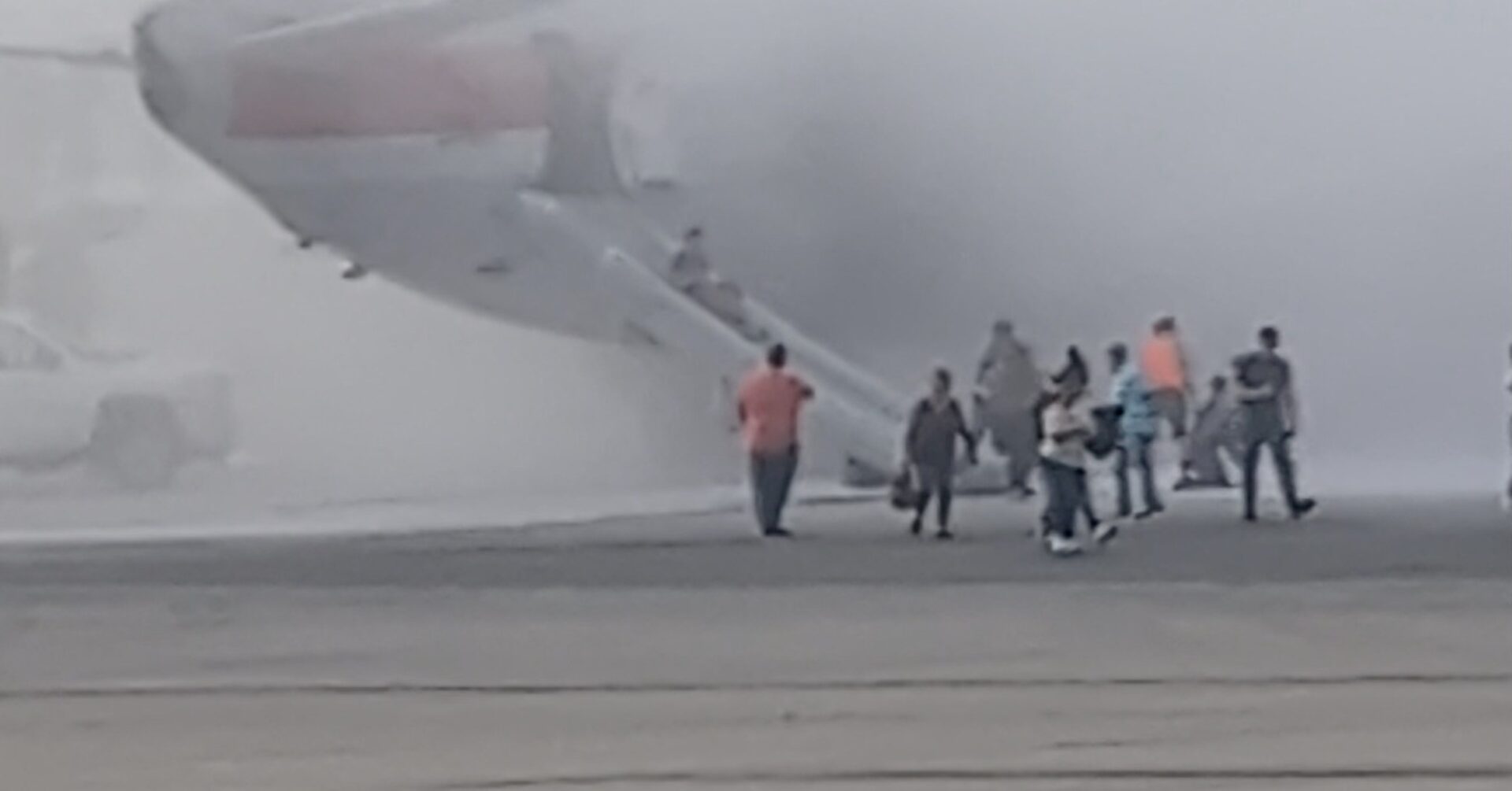
American Airlines Flight 1006 is a useful case for Boeing 737-800 return-to-gate legal liability partly because it was not, in the literal sense, a clean return-to-gate event. The March 13, 2025 flight departed Colorado Springs for Dallas-Fort Worth, encountered a mechanical problem, diverted to Denver, then caught fire after landing while passengers evacuated.[1] The active legal fight is not built on the phrase “plane fire” alone. It is built on the earlier handoffs: maintenance work, release of the aircraft, cockpit decisions after a mechanical indication, emergency communication, taxi after landing, and evacuation equipment that allegedly did not perform as passengers expected.
That distinction matters for the target phrase. “Return-to-gate liability” is not a standalone doctrine. In litigation, it usually becomes a shorthand for several claims that may arise when a crew knows of a mechanical problem and the aircraft is either returned, diverted, taxied, or evacuated under conditions that later look avoidable. In AA1006, the record now points to three different legal lanes: maintenance-based negligence, gross-negligence allegations tied to operational decisions, and a separate equipment-failure theory involving the L2 emergency slide.
The Short Timeline, Before the Legal Labels
| Point in the sequence | Why it matters legally |
|---|---|
| Mechanical symptoms appeared before the flight completed its intended trip. | The maintenance and release history becomes central, not merely the fire scene. |
| The aircraft diverted to Denver rather than returning to Colorado Springs. | The plaintiffs’ theory challenges the judgment not to return to origin, but that issue remains a contested operational decision. |
| After landing, the aircraft taxied while a fuel leak was visible from the right engine nacelle. | The post-landing conduct becomes part of the gross-negligence argument, separate from the original mechanical fault. |
| Passengers evacuated, and the L2 slide allegedly jammed. | Evacuation injuries and equipment condition create a separate proof problem from engine maintenance. |
The NTSB preliminary report is still preliminary, and it should be treated that way. It confirms a set of mechanical and evacuation-related findings that matter, but it is not a final probable-cause determination.[1] Current passenger litigation is also still allegation-driven; pleadings can frame a theory, but they do not establish liability.
Maintenance Is the Cleanest Bridge From Fact to Duty
The strongest early liability material in AA1006 is not the most dramatic material. It is the maintenance layer. The NTSB preliminary report identified several concrete defects in the CFM56-7B engine system, including a fractured fan blade, lockwire installed backward, a variable stator vane actuator that was incorrectly fastened, and a drain line clogged with sealant.[1] AP’s reporting on the NTSB findings likewise emphasized improperly installed engine parts and a fuel leak tied to the engine area.[2]
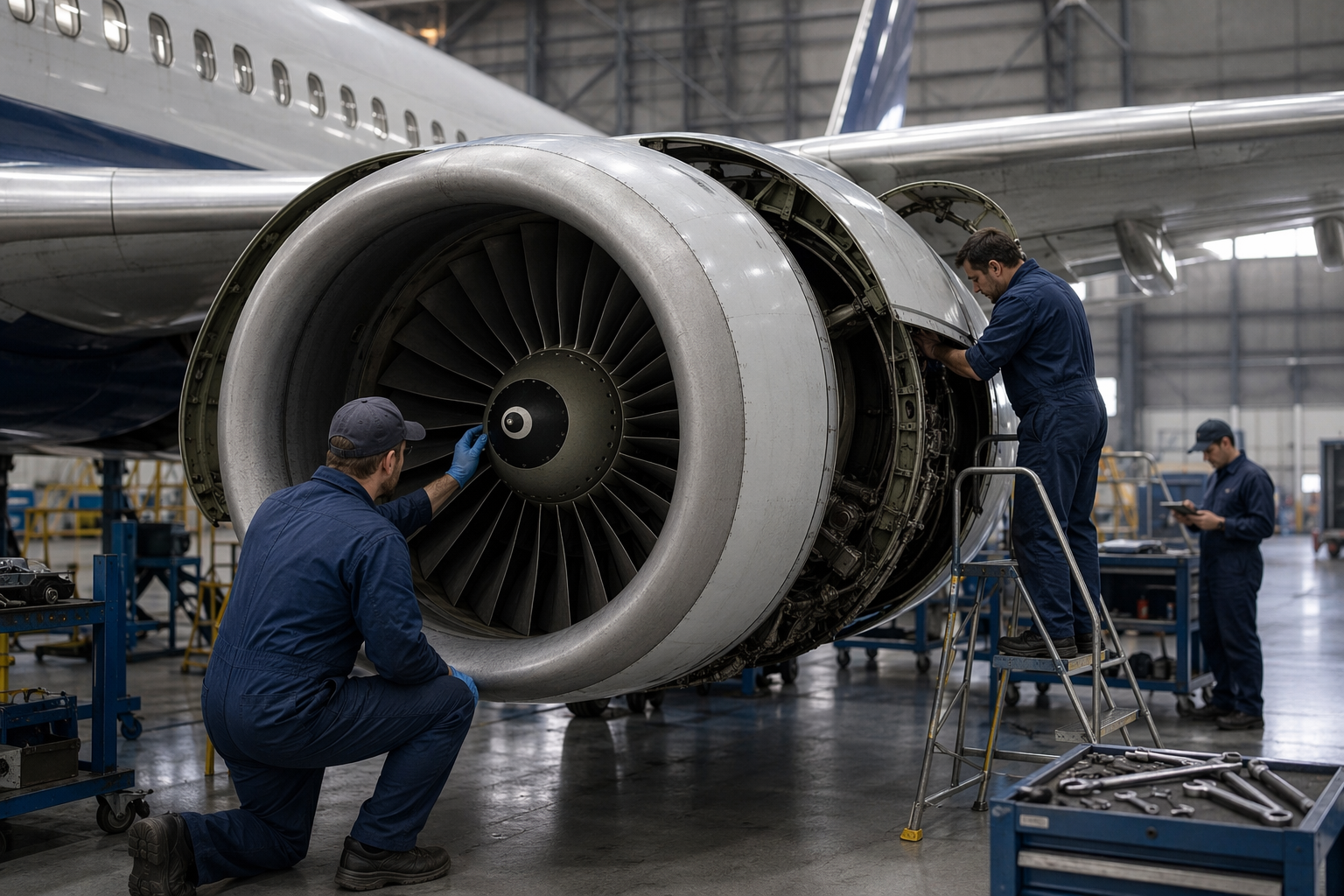
Those are not atmospheric criticisms such as “poor maintenance” or “unsafe airline culture.” They are checkable conditions. A backward lockwire either was or was not installed in a way that secured the component. A fastener either met the required installation condition or did not. A drain line either was obstructed or it was not. That is why the maintenance facts are likely to carry more legal weight than generalized outrage over a frightening evacuation.
Negligence per se is the theory that a defendant’s violation of a safety rule can satisfy part of the negligence showing if the injured person belongs to the class the rule is meant to protect and the harm is the kind the rule is meant to prevent. In aviation maintenance cases, plaintiffs will often look for a regulatory baseline before arguing ordinary care. Federal return-to-service rules provide that no person may operate an aircraft after maintenance, preventive maintenance, rebuilding, or alteration unless it has been approved for return to service by an authorized person and the required maintenance record entry has been made.[3]
For AA1006, that rule does not automatically answer who is liable. It does sharpen the factual questions. Who performed the relevant work? Who inspected it? What record entry supported the aircraft’s release? Was the installation error visible on a required inspection? Was the clogged drain line introduced during maintenance, missed during maintenance, or unrelated to the release decision? The passenger claim becomes stronger if the plaintiffs can move from “the airplane had defects” to “a required inspection or return-to-service step should have caught these defects before passengers boarded.”
That is also where loose public phrasing can mislead. The aircraft was a Boeing 737-800, but the currently available materials described in the active dispute focus heavily on American Airlines operations, maintenance work, crew decisions, and evacuation equipment. A “Boeing 737-800 liability” search may bring a reader to this case, but the presently cited facts do not support treating Boeing, as manufacturer, as the default defendant for every link in the chain.
The Return-to-Origin Question Sits in the Cockpit Record
The return-to-gate issue in AA1006 is really a return-to-origin issue. The plaintiffs’ theory challenges the decision not to return to Colorado Springs after the mechanical problem arose, while the flight instead diverted to Denver. Denver7’s coverage of the NTSB report highlighted several operational details now important to that theory: the crew did not declare an emergency, declined an aircraft rescue and firefighting escort, and taxied for about eight minutes after landing while airport video showed a visible fuel leak from the right engine nacelle.[4]
Those facts do different legal work than the maintenance findings. Maintenance evidence asks whether the aircraft should have been released or operated with the defects later identified. The cockpit and emergency-response evidence asks what reasonable flight and ground personnel should have done once the abnormal condition existed. A mechanical fault can begin the incident; later decisions can enlarge the injury risk.
That is where gross negligence enters the discussion. Under the framing reported in the passenger lawsuit coverage, the plaintiffs are not merely saying that the crew chose the wrong airport in hindsight. They are pointing to a cluster of decisions after the first warning signs: no emergency declaration, no ARFF escort, no return to Colorado Springs, and continued taxiing despite a visible leak.[4] In a gross-negligence theory, the burden is higher than ordinary carelessness. The plaintiff must generally show conduct far outside reasonable care, not just a difficult judgment call made under operational pressure.
The eight-minute taxi matters because it is downstream of the initial fault. If the leak was visible to others but not adequately communicated to the crew, that points to airport-response and communication issues. If it was known or should have been known by decision-makers responsible for stopping the aircraft, it points closer to reckless disregard. The legal significance depends less on the number of minutes in isolation than on who knew what during those minutes and what options remained available.
Aviation defendants will have their own factual answers. A crew’s choice of diversion airport may reflect runway length, weather, emergency services, traffic, checklists, engine indications, and company procedures. The present record does not justify declaring that the failure to return to Colorado Springs was itself unlawful. It does justify treating that choice as a central evidentiary fight, because the plaintiffs are tying it to later fire exposure and evacuation injuries rather than criticizing it in the abstract.
The Evacuation Claim Is Separate, and It Should Stay Separate
Evacuation evidence often gets flattened into the fire narrative. In AA1006, it deserves its own lane. The NTSB preliminary materials reported that the L2 emergency slide was found with the safety pin still installed and torn girt fabric.[1] For passengers trying to get out of a smoke- and fire-adjacent aircraft, that is not a technical footnote. It affects crowd movement, panic, delay, and injury exposure at the exact point when passengers have stopped being observers and have become participants in the emergency.
Legally, the slide evidence can support a maintenance theory, a product-liability theory, or both, depending on what discovery shows. A safety pin left installed suggests a configuration or inspection problem. Torn girt fabric may raise questions about condition, deployment, storage, prior inspection, or design performance. Those questions are not interchangeable. A defective slide product claim is different from a claim that an otherwise adequate slide was not armed, inspected, or maintained properly.
This is the portion of the case where passenger experience should not be reduced to damages math too quickly. A jammed or unavailable exit device changes how people behave inside the cabin. It can compress passengers into fewer usable routes, increase the force used at exits, and make evacuation instructions harder to follow. The pleading-stage legal categories matter, but the jury-facing fact is simpler: passengers were trying to leave an aircraft that had caught fire, and at least one expected evacuation path allegedly did not work as intended.
What the Passenger Litigation Actually Adds
The lawsuit materials give the NTSB findings an adversarial structure. Business Insider reported that 16 passengers sued American Airlines over the Denver engine fire, asserting claims that included negligence and gross negligence.[5] CBS Colorado later reported that more passengers had joined, bringing the number to 17, and described claims including negligence, gross negligence, and extreme and outrageous conduct.[6] Kreindler & Kreindler, a major aviation plaintiffs’ firm, has also stated that it was retained in the American Airlines engine fire evacuation case in Denver.[7]
Those filings do not prove the pleaded facts. They do show how the incident is being converted into liability theories. The plaintiffs are not limited to one causation story. They can argue that maintenance errors put the flight into the abnormal condition, operational decisions increased the danger after the condition was known, and evacuation-equipment failures worsened passenger injuries. Each layer may require different witnesses, documents, and expert testimony.
| Liability lane | Record-supported facts now doing the work | Likely proof fight |
|---|---|---|
| Negligence or negligence per se | NTSB-identified maintenance issues in the engine system; federal return-to-service baseline. | Whether required maintenance, inspection, or release procedures were violated and whether those violations caused the fire or evacuation injuries. |
| Gross negligence | No emergency declaration, declined ARFF escort, disputed non-return to Colorado Springs, and taxi after landing with visible fuel leak. | Whether the decisions were merely debatable operational judgments or a conscious disregard of a known serious risk. |
| Product or equipment liability | L2 slide condition, including safety pin still installed and torn girt fabric. | Whether the slide failed because of design, manufacture, maintenance, configuration, inspection, or deployment conditions. |
The case also illustrates why passenger claims in mechanical-diversion events rarely turn on a single bad act. A complaint may name one airline defendant and use broad language about safety, but discovery will usually move into maintenance logs, component histories, cockpit communications, airport video, crew training, emergency-response decisions, slide records, and passenger medical evidence. The evidentiary burden is cumulative, not theatrical.
Where the Evidence Is Strong, and Where It Is Still Thin
The maintenance evidence is presently the most concrete because it rests on physical findings identified in the preliminary investigation. The legal question is not whether the engine area became unsafe; the harder question is how that condition came to exist, who had responsibility for detecting it, and whether the missed or incorrect work was causally connected to the injuries claimed.
The gross-negligence evidence is more judgment-dependent. Plaintiffs can point to a troubling sequence after the mechanical event, especially the lack of emergency declaration, declined ARFF escort, and taxi with visible leakage.[4] Defendants can respond that emergency decisions are made under imperfect information, and that a diversion to Denver may have been reasonable when judged from the cockpit at the time. The gap between those positions will not be closed by adjectives. It will be closed, if at all, by cockpit voice recordings, radio communications, company procedures, airport video, crew testimony, and expert reconstruction.
The slide evidence is important but narrower. It can explain evacuation difficulty and some injuries even if it does not explain the engine fire. That separation is not a weakness; it is how aviation cases often work. One defendant or actor may be connected to the initiating hazard, another to the emergency response, and another to the exit equipment. A plaintiff still has to prove causation for each injury category rather than relying on the overall seriousness of the incident.
The Boeing 737-800 Label Should Not Do More Work Than the Record Allows
Because AA1006 involved a Boeing 737-800, the aircraft model will naturally appear in search queries and public summaries. But legal liability does not attach to an airframe label by default. The present materials point first to engine-system maintenance findings, airline operational decisions, emergency-response choices, and evacuation-slide condition. Unless later evidence identifies a design or manufacturing defect attributable to Boeing or another product manufacturer, “Boeing liability” remains too broad a shorthand.
That precision protects both sides of the analysis. Plaintiffs do not need an overbroad manufacturer narrative if the maintenance and operational facts are strong. Defendants should not be treated as liable merely because their name appears on the aircraft type. The better question is always narrower: which person or entity controlled the failed step, what duty governed that step, and what evidence shows the failure caused compensable harm?
What AA1006 Teaches About Return-to-Gate Liability
AA1006 shows why Boeing 737-800 return-to-gate legal liability is better understood as layered mechanical-diversion liability. The legal exposure does not begin only when flames appear. It may begin with maintenance compliance and return-to-service documentation. It may expand through cockpit and ground decisions after a mechanical abnormality is known. It may change again when evacuation equipment affects how passengers escape.
The case is also a useful warning against premature certainty. The NTSB report is preliminary, the passenger claims are active, and the strongest public facts still need to be tested through discovery and expert proof. On the current record, AA1006 is not an AI incident. It does, however, involve the kind of discrete inspection failures — backward lockwire, incorrect fastening, and an obstructed drain line — that AI-assisted maintenance systems may eventually be asked to flag. If those tools enter future aviation cases, the same questions will remain: what did the system detect, who reviewed it, who signed the aircraft off, and who bore the consequence when the handoff failed?
References
- NTSB Preliminary Report DCA25FA159, Aviation Safety Network.
- Denver plane fire engine NTSB American Airlines, AP News.
- 14 CFR § 91.407, Legal Information Institute.
- NTSB report: American Airlines plane that diverted to DIA before catching fire had parts incorrectly installed, Denver7.
- American Airlines sued by 16 passengers over Denver engine fire, Business Insider.
- More passengers join lawsuit against American Airlines after fire at Denver airport, CBS Colorado.
- Kreindler Retained in American Airlines Engine Fire Evacuation Case in Denver, Kreindler & Kreindler.
Comments
Join the discussion with an anonymous comment.