
Full profile
Brendan Carr's Paramount-linked ticket record is not a one-off gala problem; it is a pattern. ProPublica reported that he accepted Kennedy Center Honors tickets at least seven times since 2017, with disclosed value above $63,000, while Paramount and CBS had merger business before the FCC. The agency's answer is that the invitations fit the "widely attended gathering" exception, but that defense has to do real work against a rule with very specific limits. [1]
What the rule actually requires
The governing text is 5 CFR 2635.204(g), and it is narrower than the phrase "widely attended gathering" sounds. The exception only works if the event clears four conditions: it draws a large number of attendees, it represents a diversity of views, it gives people a meaningful chance to exchange ideas, and an agency designee gives written authorization after finding the agency's interest outweighs the appearance problem. [2]
- Large number of attendees. [2]
- Diversity of views represented. [2]
- A structured opportunity to exchange ideas. [2]
- Written authorization from an agency designee who concludes the agency's interest outweighs appearance concerns. [2]
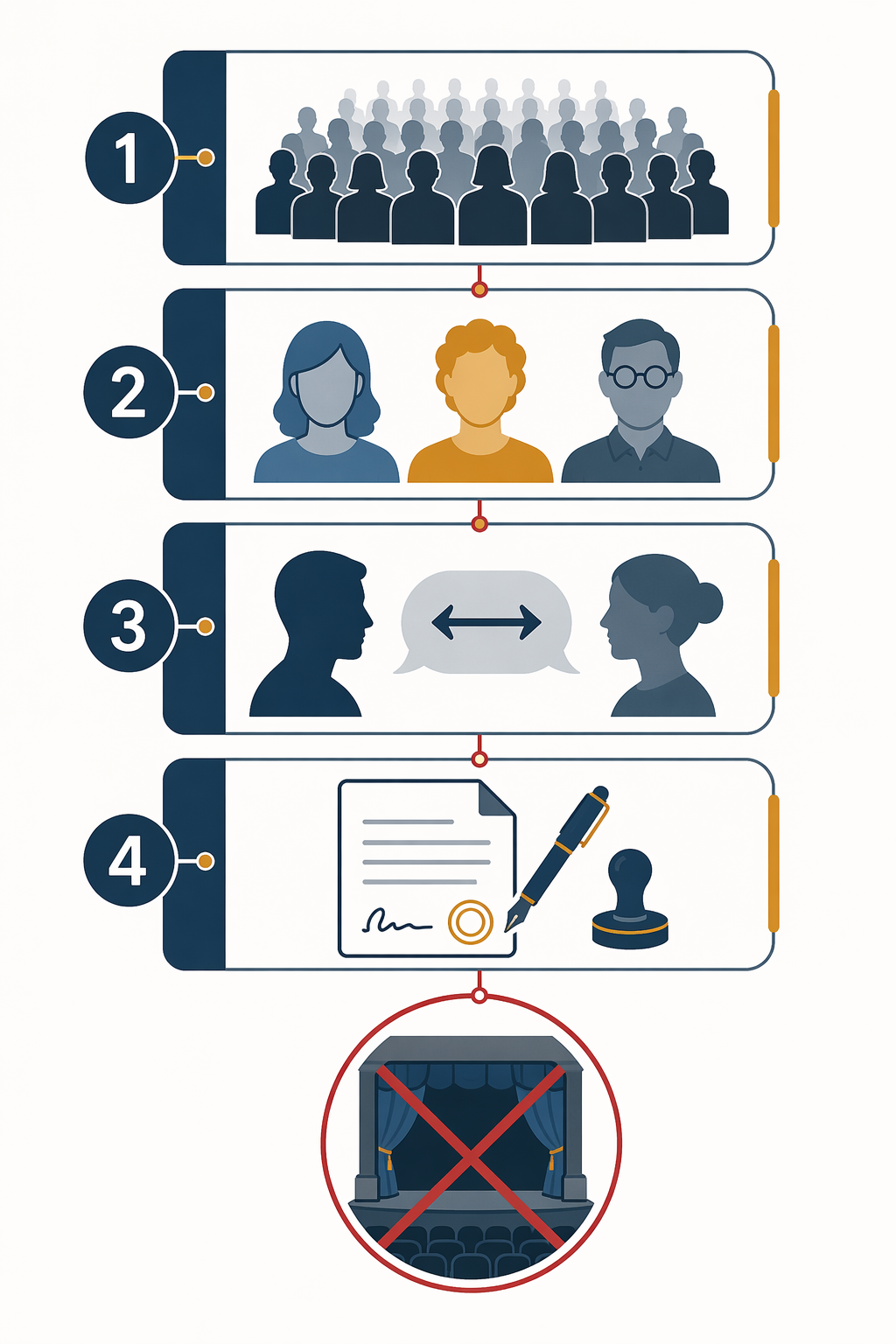
That is already a strained fit for a performance gala. ProPublica reported that OGE's 2007 guidance excludes performing arts presentations from the exception, even when a pre-event reception is attached. [1]
Why the ticket record matters
The details make the legal mismatch concrete. The December 2025 gala reportedly placed Carr in a private skybox with Paramount's CEO, and the tickets were valued at about $125,000 each under Kennedy Center guidelines. Five months after Commissioner Trusty voted to approve the $8 billion Paramount-Skydance merger, she accepted more than $12,000 in tickets. Separate disclosures show that seven of ten FCC commissioners serving since 2016 accepted more than $260,000 in Kennedy Center tickets, while Commissioner Simington declined every invitation. [1]
Why the defense keeps failing
This is where the "we've always done it" argument collapses. Walter Shaub, Virginia Canter, Kedric Payne, and Richard Painter all rejected the FCC's reliance on the widely attended gathering theory. That uniform reaction matters because it shows the agency is not just taking an arguable reading of the rule; it is stretching past the line that ethics lawyers ordinarily recognize. [1]
Written authorization is the other pressure point. The FCC has said ethics staff cleared attendance, but no written authorizations have been released, and the agency did not respond to ProPublica's request for them. When an exception depends on a file, the file is the defense. [1]
What agency lawyers should take from it
For lawyers who practice before federal agencies, the lesson is simple: high-value gifts do not become safe because the venue is prestigious, the invite is recurring, or the agency culture treats the event as routine. A WAG analysis is a record test, not a mood test. If the government wants the exception, it needs the elements, the authorization, and a defensible answer to the appearance concern.
The pending complaints keep the matter open, and that unresolved status matters. Even without a finding of a rule violation, a casual gifts culture can leave an agency with a governance problem once recusals become real. If Carr and Trusty both recuse from the pending $110 billion Paramount-Warner Bros. Discovery merger, the FCC's three-commissioner quorum requirement could prevent the commission from voting at all. [1] [3]
References
- Paramount Mergers, FCC, Kennedy Center Gala - ProPublica, July 15, 2026
- 5 CFR Part 2635 Subpart B - eCFR
- IG must investigate Paramount gifts to FCC officials - Citizens for Responsibility and Ethics in Washington
Comments
Join the discussion with an anonymous comment.