
Full profile
Last reviewed: July 19, 2026. For sanctions screening, the 2026 US oil blockade of Cuba should not be filed as one enlarged embargo. It is four legal layers: the long-running CACR framework under TWEA, Helms-Burton statutory exposure, the January tariff framework later cut back in Learning Resources v. Trump, and EO 14404’s IEEPA-based secondary sanctions program. Only the last of those turns certain foreign Cuba-oil activity into direct US sanctions exposure without the familiar primary-embargo US-nexus analysis.

| Layer | Authority | Timing | Target conduct | Jurisdictional reach | Enforcement mechanism | Current status |
|---|---|---|---|---|---|---|
| CACR primary embargo | Trading with the Enemy Act; Cuban Assets Control Regulations | Core framework since 1963 | US-person dealings, Cuban property interests, prohibited exports, services, financing, and other transactions unless authorized | Primary sanctions: US persons, US-origin items and services, US financial system touchpoints, and property subject to US jurisdiction | OFAC blocking, licensing, civil penalties, and compliance obligations | Still operative; not displaced by EO 14404 |
| Helms-Burton statutory layer | Cuban Liberty and Democratic Solidarity Act of 1996 | Enacted 1996; Title III litigation exposure activated in prior US policy cycle and remains a separate statutory risk channel | Trafficking in confiscated property and related statutory conduct | Can reach non-US defendants through private litigation theories, subject to statutory scope and case law | Private civil litigation, damages exposure, and related risk assessment | Still separate from OFAC secondary sanctions; Havana Docks status should be verified before reliance |
| EO 14380 tariff framework | IEEPA-based national emergency and tariff mechanism | January 2026; Supreme Court decision in February 2026 struck the IEEPA tariff mechanism | Oil-supplier trade connected to Cuba under the tariff framework | Trade/tariff reach rather than OFAC blocking architecture | Tariffs and customs administration | Tariff mechanism cut back; underlying national emergency and sanctions architecture were not erased |
| EO 14404 secondary sanctions program | IEEPA; new Cuba-related secondary sanctions authority | May 1, 2026; CUPET designated June 11, 2026 | Significant transactions involving designated Cuban sectors or persons, including Cuba oil and energy-sector activity | Secondary sanctions: foreign entities and foreign financial institutions may face US restrictions even without a traditional US nexus | SDN designation, blocking, FFI correspondent/payable-through account restrictions, and related OFAC measures | Operative; CUPET is the first sector-based implementation signal |
That table is the risk map. A non-US bank processing a Cuba-related oil payment, an insurer reviewing a tanker call, or a commodity trader screening a Cuban counterparty cannot answer the exposure question by asking whether the United States has an “embargo.” The useful questions are narrower: Is there a US person? Is there Cuban property subject to US jurisdiction? Is a confiscated-property claim implicated? Is the tariff rule even available after Learning Resources? Is the transaction now significant for EO 14404 purposes? Those are different questions because they come from different instruments.
The older embargo still matters, but it is not the new break
The CACR-centered embargo remains the base layer. It is a primary-sanctions architecture: it regulates US persons, property subject to US jurisdiction, US-linked services and payments, and transactions for which an OFAC license or general authorization matters. Norton Rose Fulbright describes EO 14404 as changing the Cuba sanctions architecture by creating a parallel program rather than replacing the CACR framework, which is the right starting point for compliance analysis.[1]
In practical terms, the CACR asks whether the transaction touches the United States in a legally relevant way. A US bank clearing a dollar payment, a US insurer, a US person officer approving a transaction, US-origin goods or services, or Cuban property in which a prohibited interest exists can all bring the transaction into the primary-embargo field. A transaction that is entirely outside those hooks may still be politically sensitive and commercially unattractive, but under the older architecture that is not the same as direct OFAC secondary-sanctions exposure.
Helms-Burton adds a different kind of exposure. It is not simply another OFAC blocking rule. Its best-known compliance consequence is private litigation risk tied to alleged trafficking in confiscated property, including the continuing uncertainty around the scope of Title III claims. Squire Patton Boggs flagged Havana Docks Corp. v. Royal Caribbean Cruises as a live issue when discussing the May 2026 Cuba order, and that status should be checked again before relying on the litigation boundary.[2]
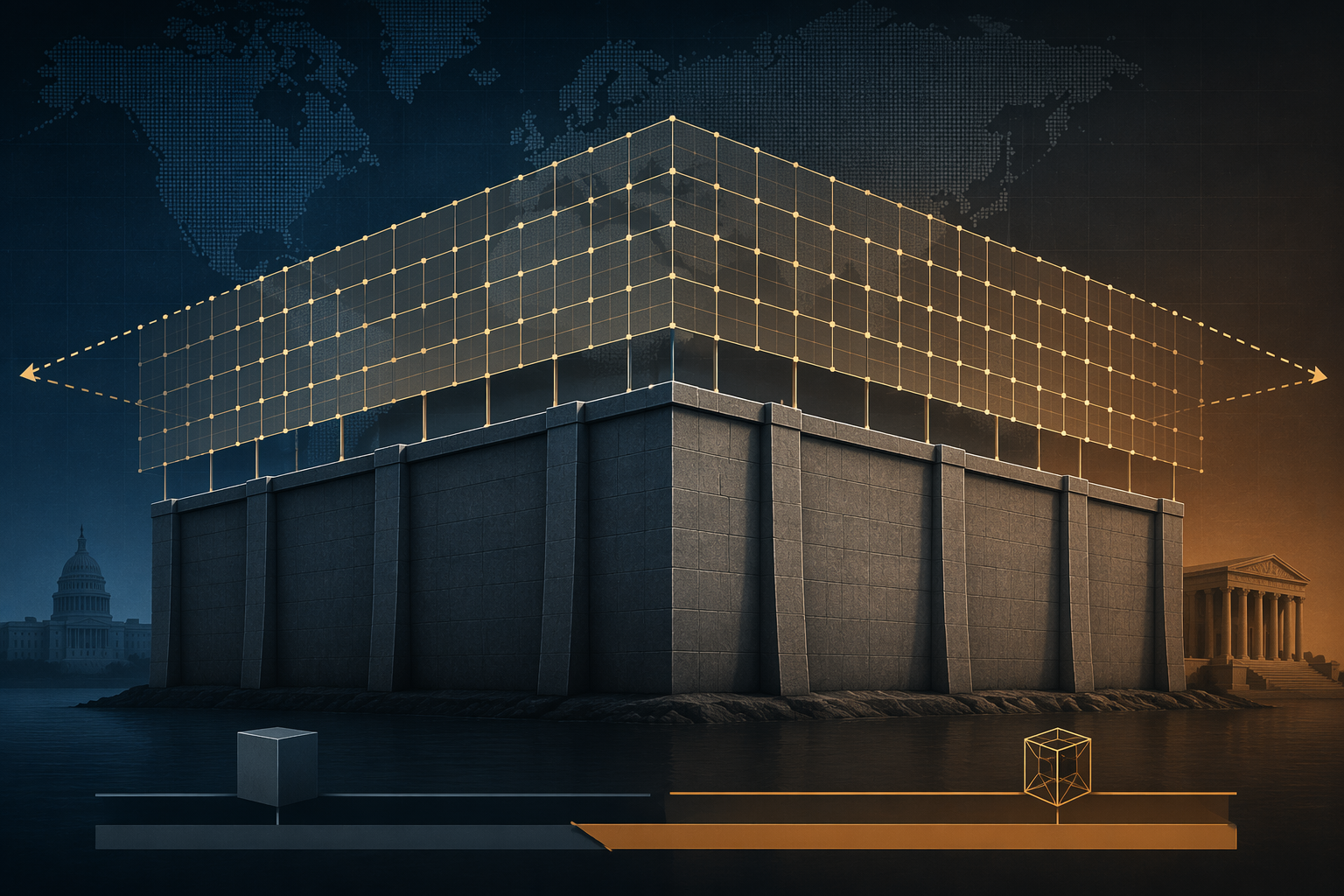
This distinction is not pedantry. Primary OFAC restrictions, private Helms-Burton litigation, and secondary sanctions change different parts of a compliance workflow. The first changes transaction screening and licensing analysis. The second changes counterparty due diligence, contractual risk allocation, and litigation reserves. The third can put a foreign bank’s US correspondent access or a foreign company’s SDN risk on the table even when the transaction was structured to avoid the United States.
The tariff layer belongs in the anatomy, but not at the center
EO 14380 belongs in any 2026 chronology because it was part of the sequence. GT Law described the February 2026 posture as a national emergency declaration paired with a tariff framework targeting oil suppliers connected to Cuba.[3] It was a trade instrument aimed at changing the cost of specified conduct through tariff consequences, not an OFAC blocking program.
Learning Resources v. Trump then narrowed that path by striking the IEEPA tariff mechanism. The common mistake is to treat that decision as if it knocked out the whole Cuba oil sanctions structure. It did not. The CACR and Helms-Burton layers did not depend on EO 14380, and EO 14404’s secondary sanctions architecture must be analyzed on its own authority and terms.
For compliance teams, the result is simple but easy to misstate: do not build a Cuba-oil risk memo around a tariff rule that has been cut back, but do not remove Cuba-oil escalation from the sanctions risk register merely because the tariff theory failed. Judicial limits on one executive instrument do not dissolve separate statutory and regulatory tools.
EO 14404 changes the jurisdictional question
EO 14404 is the structural break. Baker McKenzie’s May 2026 summary places the order in an IEEPA national-emergency framework and describes it as imposing US secondary sanctions targeting Cuba.[4] Arnold & Porter’s June 2026 analysis is more granular: the order creates targeted sectoral authorities, an FFI secondary sanctions mechanism, and an early safe harbor through General License 1.[5]
The operational difference is the absence of the traditional US-nexus gate. Morrison Foerster identifies this as the key shift for foreign financial institutions: EO 14404 can create exposure for significant transactions involving covered Cuba-related activity even when the transaction does not clear through the United States, involve a US person, or use US-origin goods or services.[6] That is why a non-US bank that was comfortable asking only “Where is the US touchpoint?” now needs a second question: “Is the conduct itself within a covered Cuba sanctions target under the new secondary program?”
The “significant transaction” threshold is also not a decorative phrase. Morrison Foerster notes that the factors track the familiar Iran FAQ 208-style analysis, while also emphasizing that the Cuba order does not contain the same knowledge requirement.[6] That matters for controls design. A bank cannot safely rely only on actual-knowledge escalation if the program’s significance analysis can be triggered by the character, size, frequency, nature, management awareness, sanctions nexus, and broader policy context of the transaction.
Freshfields reads the new program as a signal of enforcement priority within the administration’s broader Cuba posture.[7] That is useful context, but it should not be substituted for the legal test. Enforcement priority tells a compliance officer where OFAC may spend attention. The operative exposure still turns on authority, designation criteria, transaction significance, and the particular sanction available against the foreign actor.
What changes for foreign financial institutions
The FFI mechanism is the part most likely to change behavior quickly. Under a primary embargo, a non-US bank can often manage Cuba risk by excluding US persons, avoiding US clearing, reviewing US-origin content, and checking whether any blocked property or sanctioned person is involved. Under EO 14404, the bank must also ask whether it has knowingly or otherwise processed activity that OFAC may characterize as significant under the Cuba secondary-sanctions program, including transactions tied to designated persons or covered sectors.
- Payment operations need sector tagging, not only name screening.
- Trade finance teams need escalation rules for oil, shipping, insurance, and Cuban state-linked counterparties.
- Correspondent banking teams need a view of whether a foreign respondent is processing covered Cuba activity at scale.
- Legal review needs to separate GL 1 safe-harbor questions from broader ongoing exposure.
Steptoe’s risk outlook makes the same point from the foreign-entity side: the expansion poses new risks for non-US actors that previously treated the Cuba embargo principally as a US-person and US-nexus problem.[8] The hard work is not updating a country code. It is deciding which oil-related counterparties, vessels, insurers, and payment chains now require review because the legal hook moved from territorial connection to secondary-sanctions targeting.
CUPET turns the new authority into an operating signal
The June 11, 2026 designation of Unión Cuba-Petróleo, commonly known as CUPET, is more than the first headline use of a new Cuba authority. Arnold & Porter describes it as an early designation under EO 14404 and connects it to the order’s sector-based targeting tools.[5] That matters because the order’s architecture was abstract on May 1; CUPET gave compliance teams a concrete indicator of where OFAC was willing to start.
CUPET also changed the practical meaning of earlier licensing signals. HF Law reported in February 2026 on OFAC’s favorable licensing policy for Venezuelan-origin oil bound for Cuba.[9] After CUPET’s designation, that earlier signal could no longer be read in isolation. A licensing posture that once appeared to ease a category of oil movement had to be rechecked against the new designated-party and sectoral sanctions environment.
The first designation should not be overread. It does not establish a mature administrative pattern for every company that touches Cuba’s energy sector, and there is no developed public precedent for how OFAC will apply the “operating in the energy sector” criterion beyond the first case. It does, however, remove any serious argument that EO 14404 is merely symbolic. The authority has been used, and the first use was oil-sector central.
For counterparties, the immediate consequence is not simply that CUPET itself must be screened. The review should extend to ownership, control, payment routing, shipping documents, cargo descriptions, insurance, and whether a transaction that does not name CUPET nevertheless supports activity OFAC may view as significant within the covered energy-sector program. That is a different inquiry from asking whether a vessel has a US call or whether payment passes through New York.
Blocking statutes and Title III remain unresolved edges
The EU and UK blocking-regulation question should be stated carefully. Squire Patton Boggs identifies blocking-regulation complications, but available sources do not support a categorical statement that EO 14404 has already been fully absorbed into a finalized EU or UK annex amendment.[2] For a multinational group, that means US secondary-sanctions exposure and non-US anti-compliance obligations may need to be analyzed together, but the result will depend on the text in force, the entity location, and the conduct at issue.
The same caution applies to Helms-Burton Title III. It sits beside the OFAC program rather than inside it. If Havana Docks or related appellate activity has moved since the advisory record, the litigation-risk paragraph in any client memo should move with it. There is no virtue in treating Title III as either irrelevant because EO 14404 is newer, or fully settled because it is older.
Just Security’s April 2026 international-law treatment is useful mostly as a boundary marker here: there is a separate debate about the legality of the Cuba oil measures under international law.[10] That debate is not the same as the domestic sanctions-architecture question. A compliance team may need both analyses, but it should not let one answer pretend to be the other.
The usable map as of July 19, 2026
As of July 19, 2026, the most defensible legal analysis is that the US oil blockade of Cuba consists of four distinct layers with different sources of authority and different enforcement paths. The CACR remains the primary-embargo base. Helms-Burton remains a statutory litigation and policy layer. EO 14380’s tariff mechanism belongs in the history but should not be confused with still-operative sanctions authorities after Learning Resources. EO 14404 is the real structural break because it creates direct US secondary-sanctions risk for certain foreign Cuba-oil activity outside the old US-nexus frame.
That conclusion should be carried with three qualifications. Verify the current Havana Docks posture before relying on any Title III statement. Qualify any EU or UK blocking-regulation analysis unless the relevant annex text has actually been finalized. Do not predict a full OFAC pattern from CUPET alone; treat it as the first sector-based implementation signal, not a complete map of future energy-sector targeting.
References
- The US is changing Cuba sanctions architecture, Norton Rose Fulbright, 2026
- The 1 May 2026 Executive Order on Cuba: A New Era for US Sanctions on Cuba, Squire Patton Boggs, 2026
- U.S. Declares National Emergency on Cuba and Announces Tariff Framework Targeting Oil Suppliers, GT Law, Feb 2026
- President Trump Signs New Executive Order Imposing US Secondary Sanctions Targeting Cuba, Baker McKenzie, May 2026
- U.S. Expands Cuba Sanctions: Analysis of New Executive Order and Early Designations, Arnold & Porter, June 2026
- New Cuba Sanctions Broaden Targeting Authorities—and Risk to Foreign Financial Institutions, Morrison Foerster, May 2026
- New Cuba Sanctions Program Signals US Policy and Enforcement Priority, Freshfields, 2026
- US Expands Embargo on Cuba as Secondary Sanctions Pose New Risks for Foreign Entities, Steptoe, 2026
- OFAC Eases Licensing Policy on Venezuelan-Origin Oil Bound for Cuba, HF Law, Feb 2026
- The United States-Cuba Oil Embargo and International Law, Just Security, Apr 29, 2026
Comments
Join the discussion with an anonymous comment.