
Full profile
The FCC is heading toward an August 6 vote on a draft order announced July 15, but the final text is still not public, so the live question is narrower than whether the national TV ownership cap is good policy. The harder issue is whether the Communications Act, as amended in 2004, lets the Commission repeal or replace that cap on its own, or whether Congress kept that decision for itself. Commissioner Gomez has already called the move unlawful, which tells you where the politics are; it does not answer the statute. [1]
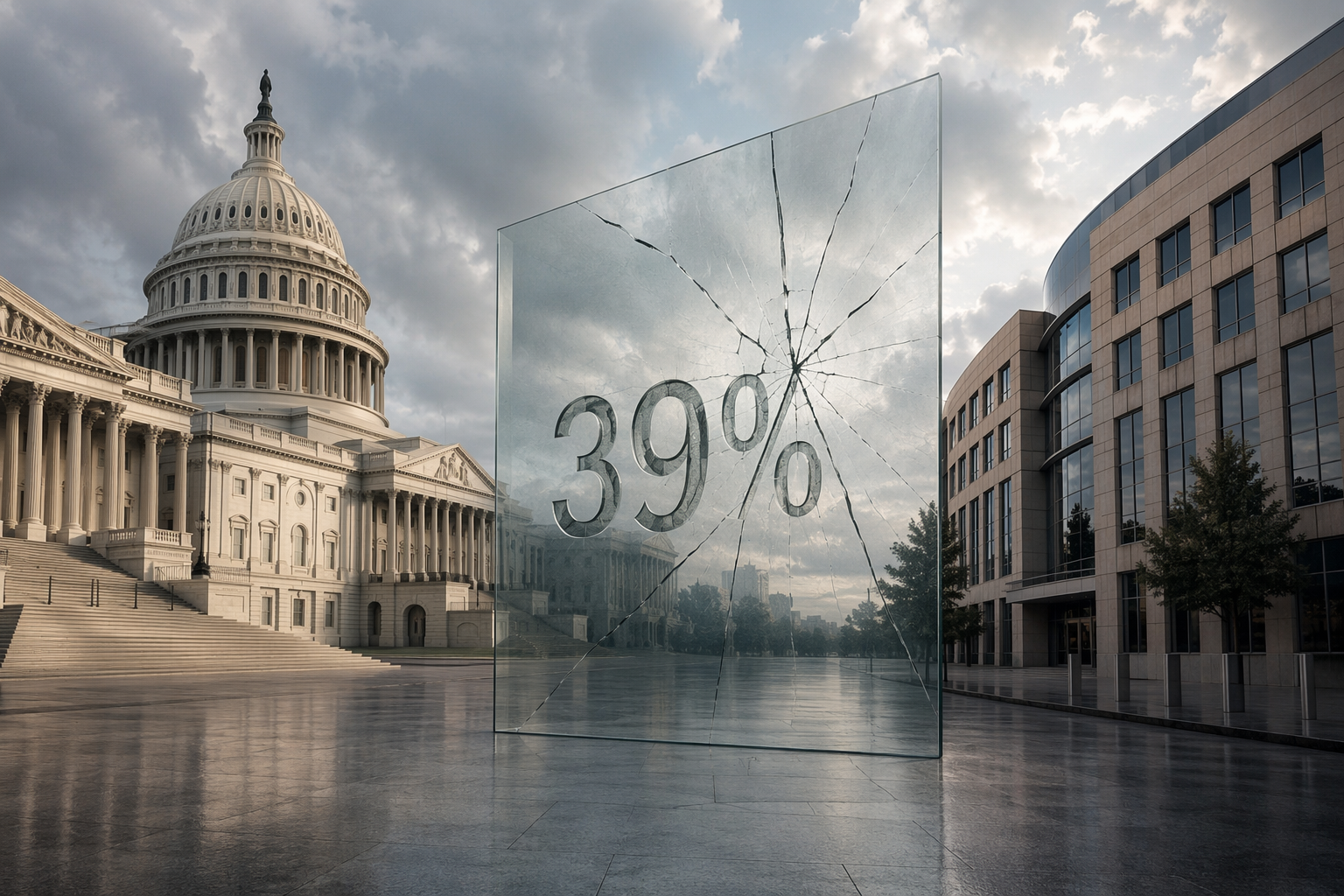
The cap itself is still the current rule, set at 39% of national audience reach. That matters because the question is not whether the rule has become inconvenient, but whether the agency can move it without a fresh act of Congress. [2]
The statutory paths Congress closed
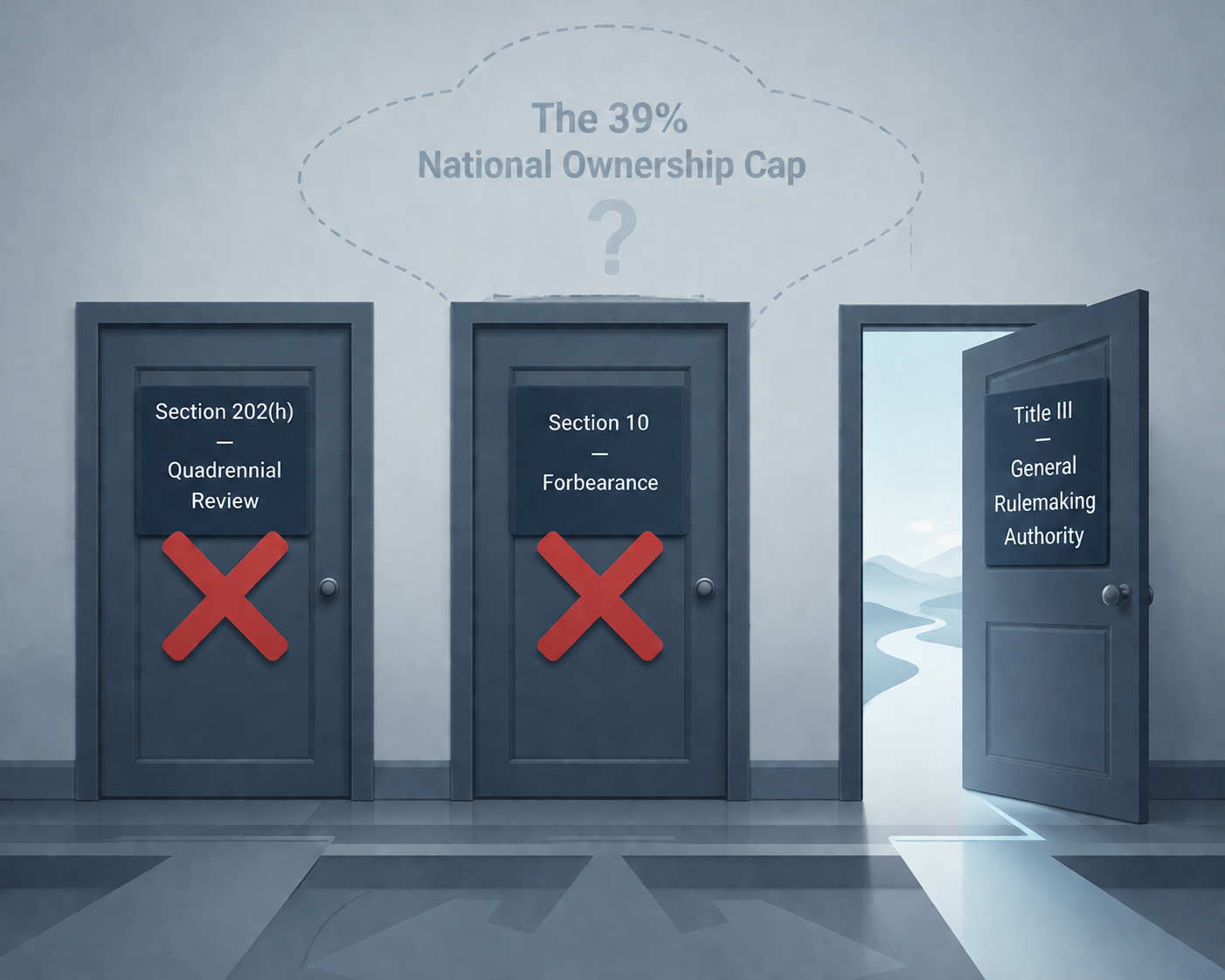
Congress made the statutory path unusually specific in 2004. Section 202(h)'s quadrennial review authority does not apply to rules tied to the 39% limitation, and Section 10 forbearance cannot be used to waive it. Lawrence Spiwak argues that pairing is deliberate: Congress did not merely slow the FCC down, it took those two routes off the board. The FCC-side reply, as Carr has framed it, is that the Commission still has general Title III public-interest rulemaking power and can "modify" the cap by replacing a hard limit with case-by-case review rather than by raising the percentage. [3][4]
That repeal-versus-raise distinction is not trivial, but it is not self-answering either. The most direct adverse precedent is the Third Circuit's 2004 ruling that the FCC could not raise the cap from 35% to 45%; that opinion still sits in the background even though Carr says repeal is different from a higher ceiling. A court will have to decide whether eliminating the cap is just another way of moving the same line or a legally distinct act that falls outside the old precedent. [4]
What changes after Loper Bright
Post-Loper Bright, the FCC does not get Chevron-style insulation for its statutory reading. A reviewing court will start with text and structure, and the agency's reading will survive only if the court thinks the Communications Act actually leaves room for it. If the 2004 exclusions are read as exclusive, general Title III authority looks like a way around a specific congressional choice; if they are read more narrowly, the FCC can argue that Congress blocked only Section 202(h) and Section 10, not every possible rulemaking path. That is the real fight, and it is why Spiwak's text-first attack is so central. [3]
The wider ownership cases matter mainly as context. The FCC's 2017 elimination of the UHF discount already changed the practical pressure on the national cap. Prometheus showed the Court willing to uphold some media-ownership revisions, while Zimmer Radio is another reminder that ownership rules have been unstable across circuits and market levels. None of those decisions resolves the national-cap question, but they make clear that this is not a frozen corner of the Communications Act. [4][5][6]
Where the case lands
That leaves a restrained conclusion. Repeal is legally vulnerable, because Congress wrote two specific exclusions around the cap and courts dislike readings that turn those lines into dead words. But it is not frivolous, because the FCC can point to broader statutory language and to the narrower claim that it is modifying, not merely raising, the cap. The likely judicial question is whether the 2004 amendments reserved the cap to Congress alone or merely barred two FCC mechanisms while leaving another path open. [3][4]
References
- FCC Moves to End Cap on National Broadcast Ownership — Variety, July 15, 2026
- National TV Ownership Rule — FCC
- "Waiving" the Communications Act's National Broadcast Ownership Cap is a Legal Non-Starter — Yale Journal on Regulation, July 2026
- The FCC sets the stage for a showdown over local TV ownership — Poynter, 2026
- Court upholds FCC's changes to media ownership rules — SCOTUSblog, April 2021
- Federal Court Vacates Portions of Local Television Ownership Rule — Wiley LLP, 2025
Comments
Join the discussion with an anonymous comment.