
Full profile
The searchable phrase “hawaii truck bed age minimum law 2025” is one year off. The current Hawaii truck-bed passenger age rule comes from HB1692, enacted as Act 095 in the 2026 session, not from a 2025 enactment. The operative change was signed on June 5, 2026, and took effect on approval: Hawaii raised the minimum age for riding in the bed of a pickup truck from 12 to 16, subject to the statute’s exceptions and exemptions. [1]
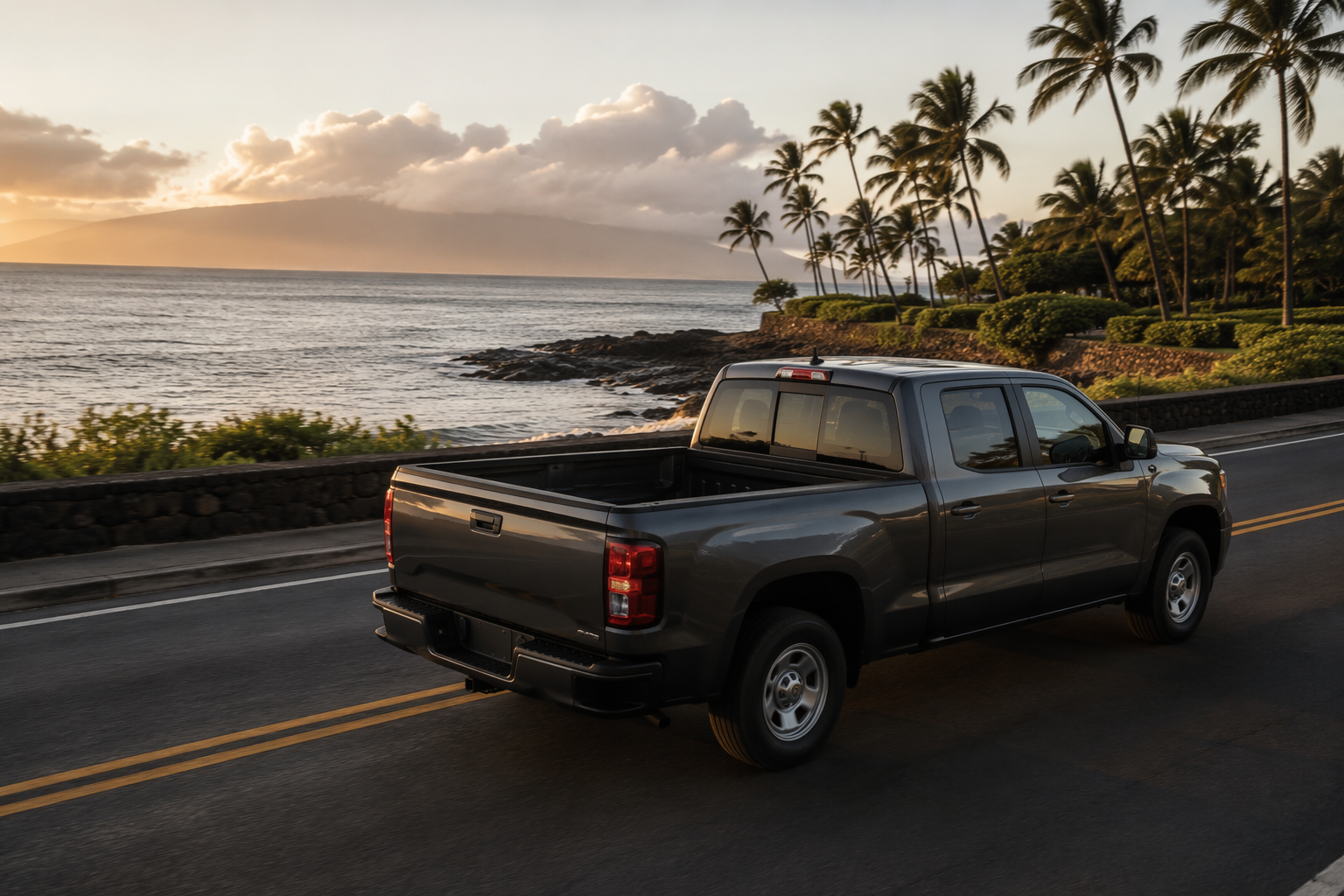
That date matters. A memo, compliance chart, or client alert that labels this as a 2025 law risks sending the reader to the wrong legislative year and, worse, to the wrong version of the rule. The current-law answer is the enacted 2026 change in HB1692 CD1, effective June 5, 2026. [1]
The Current Rule: 16 and Older, Unless an Exception or Exemption Applies
Under Act 095, the basic age floor is now 16. The law amends Hawaii’s pickup truck passenger restriction by replacing the prior minimum age of 12 with 16. For ordinary private use, that is the number that should be used in a current-law answer. [1]
The final law is narrower than an earlier version of the bill. HB1692 SD1 would have set the minimum at 18 and included road-speed-based restrictions. Those features did not survive into the enacted CD1 text. The final statute uses 16, and the speed-based language from SD1 should not be treated as current Hawaii law. [2][1]
| Question | Current Hawaii Answer |
|---|---|
| Minimum age for non-exempt pickup bed passengers | 16 |
| Effective date | June 5, 2026, upon approval |
| Was this a 2025 law? | No matching 2025 enactment is identified in the cited legislative materials; the enacted bill is from the 2026 session |
| Did the final law use the SD1 age of 18? | No. The enacted CD1 version uses 16 |
| Does the rule apply without carve-outs? | No. The exceptions and categorical exemptions are central to the statute’s reach |
The Exceptions Are Narrow, but They Matter
The first set of carve-outs is situational. Act 095 preserves exceptions for life-threatening emergencies and for certain authorized parade-type uses, including parades, caravans, and exhibitions. These are not general convenience exceptions. They are limited circumstances in which the legislature chose not to apply the age restriction in the ordinary way. [1]
The emergency exception is best read as an emergency exception, not as a broad hardship clause. If the situation is not life-threatening, the safer current-law reading is that the ordinary age floor still controls unless another statutory exemption applies. That distinction is not decorative. It determines whether a private driver transporting a younger passenger in the bed can point to the statute or merely to a sympathetic fact pattern.
The parade, caravan, and exhibition language is similarly bounded. The point is authorization and event context, not the mere fact that a vehicle is moving slowly or that passengers are visible in the bed. The enacted text should be consulted before treating a community event, procession, or display as covered. [1]
The Broader Exemptions Do Most of the Practical Work
The more important practical limitation is not the emergency language. It is the statute’s categorical exemptions. Act 095 maintains exemptions for agricultural and farm transport, on-duty law enforcement, fire and emergency medical services, military vehicles on official operations, and public-serving business vehicles. [1]
| Category | Practical Effect |
|---|---|
| Agricultural or farm transport | The age restriction does not operate in the same way for covered farm-related transportation |
| Law enforcement, fire, and emergency medical services on duty | Official emergency-service use remains outside the ordinary private-passenger rule |
| Military vehicles on official operations | Official military operations are treated separately from ordinary pickup use |
| Public-serving business vehicles | Certain business vehicles serving the public are exempted by category |
This is where a quick summary can become misleading. Saying “Hawaii bans pickup-bed riders under 16” is serviceable only as a shorthand for non-exempt private use. It is not a complete statement of the statute. The final law leaves substantial room for work, emergency, official, and public-serving transportation categories that the legislature did not fold into the ordinary age rule. [1]
For compliance purposes, the first screening question should not be only “How old is the passenger?” It should be “Is this an exempt use?” If the use is not exempt, then the 16-and-over minimum becomes the controlling age floor. If the use is exempt, the analysis changes before the age question does all the work.
Penalty Language: Do Not Import the Draft Fine Amounts Without Checking the Current Code
The penalty section deserves a separate check because the earlier SD1 version and the enacted CD1 text do not present the issue in the same way. The SD1 draft referenced a $25 general fine and a $50 fine for age violations, but the final CD1 text amends HRS § 291-14 by reference rather than restating those specific dollar figures in the same way. [2][1]
That means the fine amount should be verified against the current HRS § 291-14(e) penalty provision before it is cited in a filing, advisory, training document, or compliance table. The enacted age change is clear. The exact penalty citation should be checked against the current codified statute rather than lifted from an earlier draft of HB1692.
Why Some Secondary Sources Need Careful Handling
News and bill-tracking pages are useful for context, but they are not a substitute for the enacted text. KHON2 reported the signing among Hawaii traffic law updates and noted that HDOT director Ed Sniffen cited three roadside fatalities as an impetus for the measure. That helps explain why the bill moved, but it does not define the operative age floor, exemptions, or penalty language. [3]
BillTrack50 and Civil Beat’s Digital Democracy page are also useful for locating and tracking HB1692 in the 2026 session. They help confirm the bill path and status, but the legal answer still comes back to Act 095 and the current HRS text. [4][5]
The IIHS national table requires an additional caution. Its July 2026 cargo-area restrictions table is useful as a national comparison, but for Hawaii it should be treated only as a cross-check, not authority. The research materials note that a match on “16” is coincidental and does not substitute for the enacted Hawaii text. [6]
The Usable Current-Law Answer
As of today, the Hawaii minimum age for a non-exempt passenger riding in a pickup truck bed is 16. The change was enacted by Act 095, HB1692 CD1, signed June 5, 2026, and effective upon approval. The final law did not adopt the earlier SD1 proposal’s age-18 floor or road-speed restrictions. [1][2]
The answer is therefore not “a 2025 Hawaii truck-bed law.” It is a 2026 Hawaii law with a 16-and-over rule for non-exempt situations, narrow emergency and authorized-event exceptions, broader categorical exemptions, and a penalty provision that should be checked against current HRS § 291-14(e) before quoting fine amounts.
References
- HB1692 CD1, Hawaii State Legislature
- HB1692 SD1, Hawaii State Legislature
- Hawaii traffic law updates, KHON2
- Hawaii HB1692, BillTrack50
- hi_20250hb1692, Civil Beat Digital Democracy
- Cargo area restrictions laws, IIHS, July 2026
Comments
Join the discussion with an anonymous comment.