
Full profile
Kimi K3’s immediate impact on US companies is not a tidy story about who won a benchmark race. It is that Moonshot has put a frontier-scale Chinese model into the market at the precise moment Washington has begun treating access to advanced AI models as an export-control event. Kimi K3 is reported as a 2.8 trillion-parameter, open-weight model, priced at $15 per million output tokens against Anthropic Fable 5 at $50 per million, and described as competitive with Fable 5 on key benchmarks; Chinese models also already occupy three of the four most-used positions on OpenRouter.[1][2]
Those facts matter less as leaderboard claims than as compliance facts. A model at that scale, at that price, and with that distribution profile will not stay outside procurement reviews, benchmark runs, routing experiments, or internal “can we self-host this?” conversations. K3 was released only three days ago, and independent third-party testing of Moonshot’s performance claims remains thin. Broader open-weight testing is still expected to develop after the July 27 release window described in the launch coverage.[1] But legal teams do not get to wait for the model ecosystem to settle before someone asks whether evaluation is permissible.
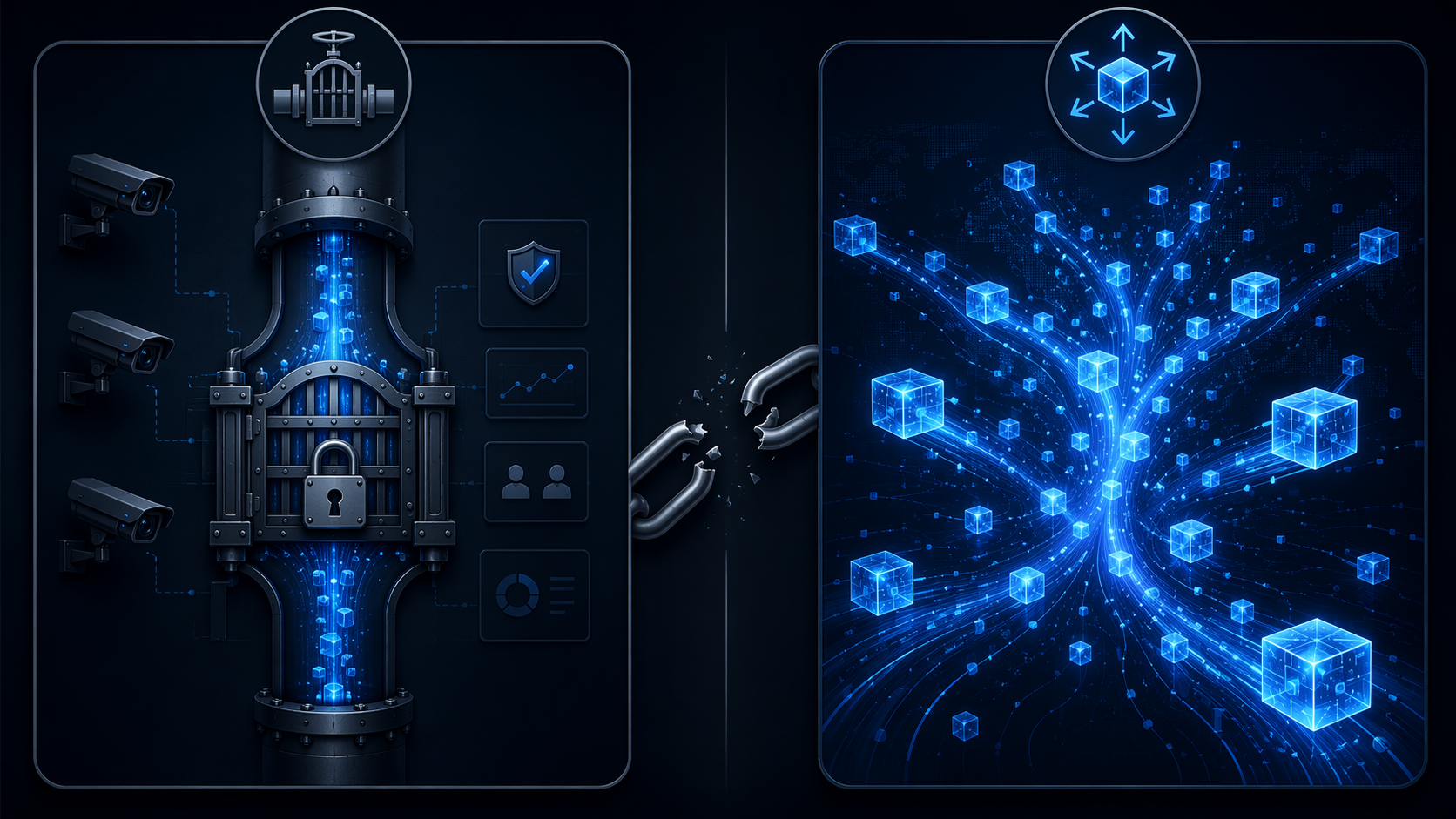
The hard question is not whether Kimi K3 is “Chinese” or whether it is inexpensive. It is whether the current US export-control architecture has any clean way to reach a model whose economically relevant artifact can be distributed as weights rather than delivered as a metered service. In June 2026, the Bureau of Industry and Security moved in the opposite direction: it used an Individualized License Exception to authorize specified trusted-partner access to Anthropic models, while asserting that API-based access to advanced AI models can constitute a controlled “release” of technology under the Export Administration Regulations.[3]
That verb does most of the work. If model capability is accessed through an API controlled by a US provider, BIS can try to characterize access as a release, condition who receives it, and build compliance obligations around the gate. If the relevant model weights are already circulating outside that provider-controlled channel, the gate is in the wrong place.
The IIL Works Best When There Is a Gate
The June 2026 Anthropic framework is significant because it did not merely regulate chips, cloud infrastructure, or physical exports. It treated access to advanced AI model capability as controlled technology under the EAR, through the mechanism of API-based release to named or trusted recipients.[3] For export-control lawyers, that is a large move, but it is still recognizable. There is a provider. There is a controlled access point. There are recipients. There is a compliance program that can identify, approve, deny, log, and terminate access.
The model may be intangible, but the transaction still resembles an export-control object: something controlled moves from a regulated party to a recipient. The analysis can then ask familiar questions. Who is the exporter? Who is the recipient? What technology is being released? Which country, entity, or end use is implicated? What conditions attach to the authorization?
Kimi K3 stresses that model by changing the distribution fact. An API is a service relationship. Downloadable weights are an artifact. Once weights are available for download and self-hosting, the compliance chokepoint shifts away from the original model developer and toward a diffuse set of mirrors, repositories, hosting providers, downstream vendors, enterprise deployments, and internal experimentation environments. BIS can regulate US persons, US-origin technology, controlled exports, reexports, and transfers within its statutory and regulatory reach. It cannot turn every globally copied model file into an Anthropic API endpoint.
This is why K3 is more legally interesting than another model-release story. If the policy concern is access to frontier capability, K3 may be relevant. If the legal hook is a controlled release through a US API provider, K3 may be outside the hook. Those are different statements, and conflating them is how compliance memos become either uselessly alarmist or dangerously casual.
Commercial Pressure Will Force the Legal Question
A regulatory gap can sit quietly when the thing outside the gate is marginal. K3 does not look marginal. Moonshot’s launch positioning puts it near Fable-level performance at a materially lower output-token price, and OpenRouter’s usage rankings already show Chinese models among the most-used options on the platform.[1][2] That does not prove K3 is a verified Fable peer. It does prove that Chinese-origin models are not appearing only in obscure research notebooks.
The market response to the Anthropic restrictions also undercuts the assumption that controls on US model access simply preserve US provider leverage. Fortune reported in June that the restrictions on Anthropic models boosted demand for Chinese open-source alternatives, particularly as governments in Japan, South Korea, and the Middle East pursued sovereign AI strategies less dependent on US model providers. The same report said Z.ai shares had surged 800% since its January 2026 debut.[4]
That is not evidence that US controls caused Chinese model adoption by themselves. It is evidence of a practical substitution problem. If a company, government agency, or integrator loses access to a preferred US model path, it may not stop using advanced models. It may look for models with fewer access restrictions, lower costs, local hosting options, or a sovereignty narrative that is easier to sell internally.
For US organizations, the result is a procurement question before it is a grand strategy question. Can a team evaluate K3 through a third-party router? Can it benchmark K3 against an incumbent model? Can it download weights into a segregated environment? Can a vendor quietly use K3 inside a product feature? Can an offshore affiliate host it? Each fact pattern may produce a different answer, and the absence of a clean prohibition is not the same as the absence of risk.
| Distribution path | Why it matters for compliance review |
|---|---|
| US-provider API access to a controlled model | The IIL theory can attach to a provider-managed release, with recipient controls and access conditions. |
| Third-party routing to a foreign model | Review shifts to vendor diligence, data flow, sanctions screening, contractual controls, and model provenance. |
| Downloaded open weights for self-hosting | The main questions become source, hosting environment, downstream use, data exposure, and whether any separate US regulatory hook applies. |
| Vendor product using an embedded model | The customer may not see the model directly, so supply-chain disclosure and audit rights become more important. |
Downloadable Weights Do Not Behave Like API Access
The practical difference between API access and model weights is not cosmetic. API access leaves the model under the provider’s operational control. The provider can meter usage, block jurisdictions, terminate accounts, monitor unusual behavior, impose contractual limits, and preserve logs. That is exactly the kind of structure regulators can pressure, condition, or license.
Weights change the custody problem. If a model can be downloaded and run elsewhere, control moves from the original developer’s interface to whoever possesses and deploys the files. There may still be license terms, platform rules, sanctions exposure, cybersecurity obligations, privacy constraints, or contractual restrictions. But those are not the same as BIS conditioning the release of a US provider’s controlled technology through an API.
This is the structural mismatch K3 exposes. The IIL approach can tell Anthropic how and to whom it may release advanced model access. It does not, by itself, answer what a US company must do when a Chinese-origin open-weight model becomes available from a non-US source, is hosted by a third party, or is incorporated into a vendor product. The analysis has to move from “is this access authorized under the IIL?” to a wider map: where the model came from, who hosts it, what data touches it, what country exposure exists, and what end use the company is enabling.
That is a less satisfying compliance answer, but it is the honest one. K3 does not automatically become prohibited because it is Chinese-origin. It also does not become low-risk because it is open-weight. Open distribution reduces one kind of dependency and creates another: the enterprise may gain local control over inference while losing the comfort of a known provider’s access controls, audit trails, and regulatory posture.
The Legion Challenge Could Test the Foundation Before K3 Tests the Edge
The IIL framework itself is not settled ground. Legion LegalTech v. United States, No. 1:26-cv-02225, has been filed in federal court challenging Commerce’s statutory authority to regulate AI models under the EAR, and no ruling has issued.[3] That absence matters. There is not yet a judicial answer validating or rejecting Commerce’s theory that advanced model access can be treated as controlled technology in the way the June framework assumes.
The pending challenge could matter even if the court never addresses Kimi K3 or open-weight models directly. If Commerce’s API-access theory is narrowed, the government’s room to regulate model access through export controls may shrink before it ever reaches more difficult distribution models. If the theory is upheld, BIS still faces the harder operational question: what statutory and regulatory mechanism reaches a foreign-developed model whose weights are already outside a US-controlled release channel?
That is why K3 should not be described as a simple loophole. A loophole implies that the rule was designed to catch the conduct but drafted poorly. Here, the more precise problem is that the inherited export-control frame depends on identifiable acts of export, release, reexport, or transfer. Open-weight AI distribution can make the most sensitive practical event—the spread of capability—look less like a shipment and more like replication.
Commerce may try to adapt. Congress may legislate. Agencies may lean harder on cloud controls, end-use rules, sanctions, procurement restrictions, or outbound investment theories. None of that changes the current compliance posture on July 19, 2026: the legal hook that looks most developed for advanced model access is built around controlled release through a managed channel, while K3’s significance lies in the possibility of capability moving outside that channel.
Distillation Allegations Matter, but They Do Not Solve the Export-Control Question
Moonshot also arrives with a provenance problem. In February 2026, Anthropic disclosed that it had detected a distillation campaign involving more than 3.4 million exchanges through 24,000 fraudulent Claude accounts, identifying Moonshot among the Chinese AI firms involved in efforts to extract reasoning capabilities.[5] CNBC also reported on allegations that Chinese firms used distillation techniques against US AI systems.[6] The named firms have not publicly responded, and the allegations have not been independently adjudicated.
The policy language around this conduct has been severe. An April 2026 White House memo by Michael Kratsios characterized distillation as “industrial-scale theft,” as discussed in later legal-policy analysis.[7] That phrase captures the concern that a rival model developer can use repeated outputs from a frontier system to compress expensive capability development into cheaper imitation.
For K3, however, the distinction has to be kept clean. The public record described in the available sources supports concern about Moonshot’s earlier alleged conduct. It does not establish that K3 specifically was built from distilled Claude outputs. The overlap in claimed capabilities—reasoning, coding, tool use, agentic behavior—may be notable, but it is not proof of construction history.
That matters because wrongful acquisition and export-control jurisdiction are not the same question. A model can raise serious provenance, trade-secret, contractual, or policy concerns without automatically falling within a BIS control. Conversely, a model can fall within an export-control framework even if its development history is pristine. Compliance teams should not use distillation allegations as a substitute for the harder jurisdictional analysis.
What the Monday-Morning Review Should Actually Track
This is legal analysis, not legal advice, but the risk map is already visible. The first review question is not “is Kimi K3 banned?” That is too blunt. The better first question is how the organization would touch the model: through a US vendor, a foreign API, a routing platform, direct download, vendor-embedded functionality, or an internal self-hosted deployment.
- Model provenance: identify the developer, release terms, known allegations, and whether the vendor can document model lineage with enough specificity for the intended use.
- Hosting path: distinguish between calling a third-party API, routing through an aggregator, downloading weights, or running the model in an internal environment.
- Data exposure: determine whether prompts, customer data, regulated data, source code, or controlled technical information will be sent to the model or its host.
- Country and party exposure: screen the provider, host, affiliates, payment flow, and any jurisdictions involved in access, support, or deployment.
- Vendor dependency: require disclosure when a product feature uses K3 or another Chinese-origin model behind the scenes, especially where the customer cannot select or audit the model.
- Use-case sensitivity: treat ordinary internal benchmarking differently from deployments involving government customers, critical infrastructure, cyber tooling, defense-adjacent work, or controlled technical data.
The key compliance distinction is between legal uncertainty and clear prohibition. K3’s existence does not mean every US company that tests it has violated export controls. It does mean that a company cannot analyze model risk by asking only whether the provider is a familiar US lab with a standard API agreement. AI supply-chain review now has to account for models that may be cheap, capable, foreign-origin, open-weight, and operationally attractive all at once.
The same point applies to benchmarks. If K3 turns out, after broader testing, to be weaker than Moonshot’s launch materials suggest, the legal issue does not disappear. If it is validated as a strong Fable competitor, the issue becomes more commercially urgent. Either way, the distribution model—not the exact leaderboard position—is what exposes the gap in the present control structure.
Kimi K3 therefore matters in a narrower and more durable way than the launch cycle suggests. The current US framework can condition certain access channels to US-controlled models, especially where a provider-managed API creates a recognizable release event. It is much less capable of regulating the global circulation of open-weight models once the weights are outside that channel. For legal and compliance teams, the immediate impact is not certainty. It is a sharper map of where the real questions now sit: provenance, hosting path, vendor dependency, source-country exposure, and the data a company is willing to put in front of a model it does not fully control.
References
- Moonshot's Kimi K3 pushes Chinese AI into Fable-level territory, Fortune, July 16, 2026.
- moonshotai/kimi-k3, OpenRouter.
- Commerce Department Extends Export Controls to Advanced AI Models, Mayer Brown, June 30, 2026.
- U.S. Anthropic ban opens door for open-source AI, particularly from China, Fortune, June 16, 2026.
- Detecting and preventing distillation attacks, Anthropic.
- Anthropic says Chinese AI firms used Claude to improve their own models, CNBC.
- The Costs of China’s AI Distillation, Just Security.
Comments
Join the discussion with an anonymous comment.