
Full profile
The July 17 LA28 refund email lands in the worst possible way: it looks like the kind of message a fraud team would tell clients to delete, yet LAist confirmed it is genuine. That instinct to distrust it is not irrational. In April, the California Attorney General warned about fake websites mimicking AXS and Eventim, phishing emails asking for payment information, social-media ticket offers, and bogus time-slot sales, which is exactly the pattern that makes an actual refund notice hard to trust. The key facts are narrower: LA28 is correcting erroneous local tax charges, with refunds under $11 for Intuit Dome tickets and under $40 for Columbus football venue tickets, and the money goes back to the original payment method.[1][2]
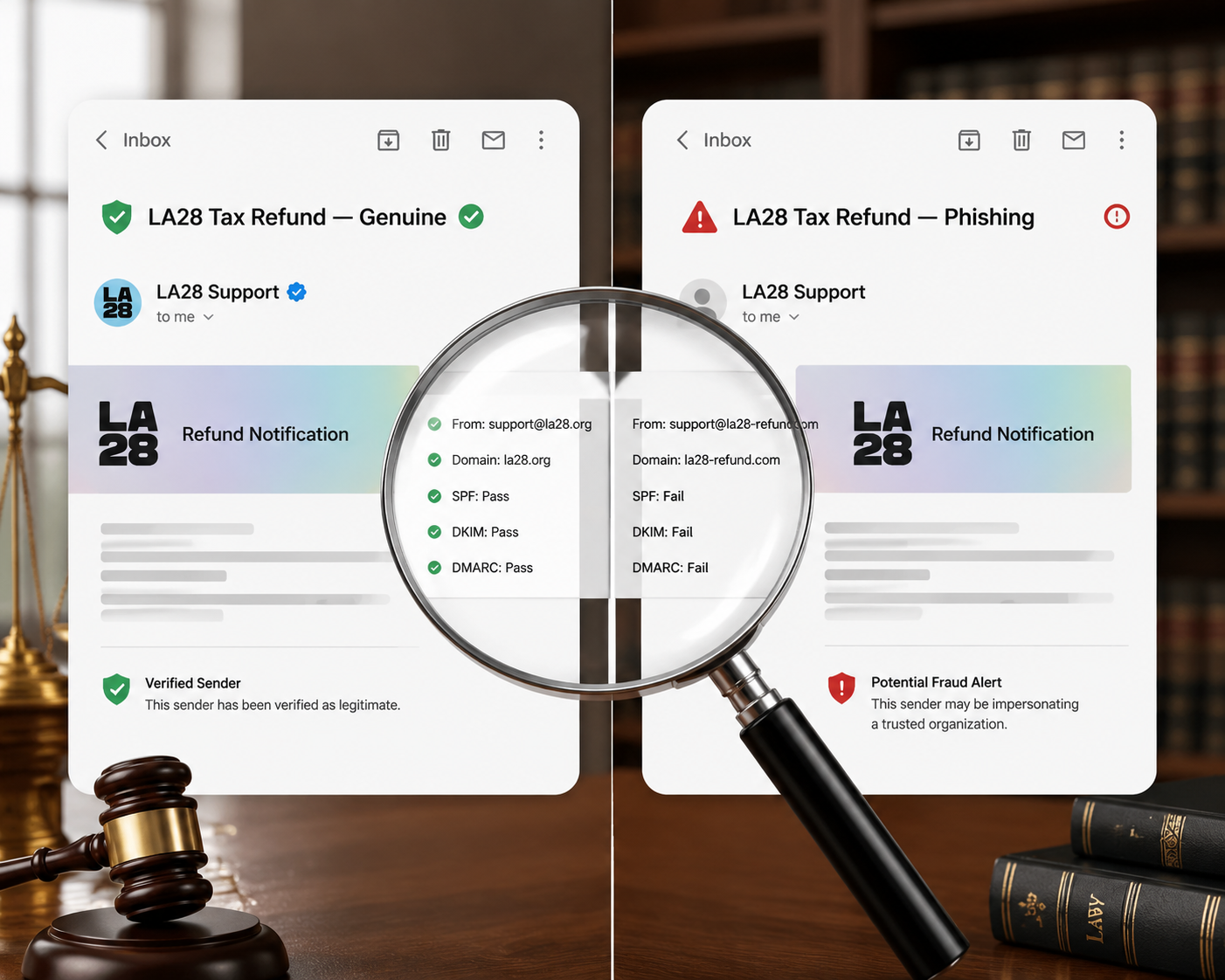
The checks that matter
The safest way to advise a client is to ignore the email as a decision point and verify the transaction from outside it. In practice, that means treating the message as a lead, not as proof, and checking facts that should exist whether the email is real or fake.
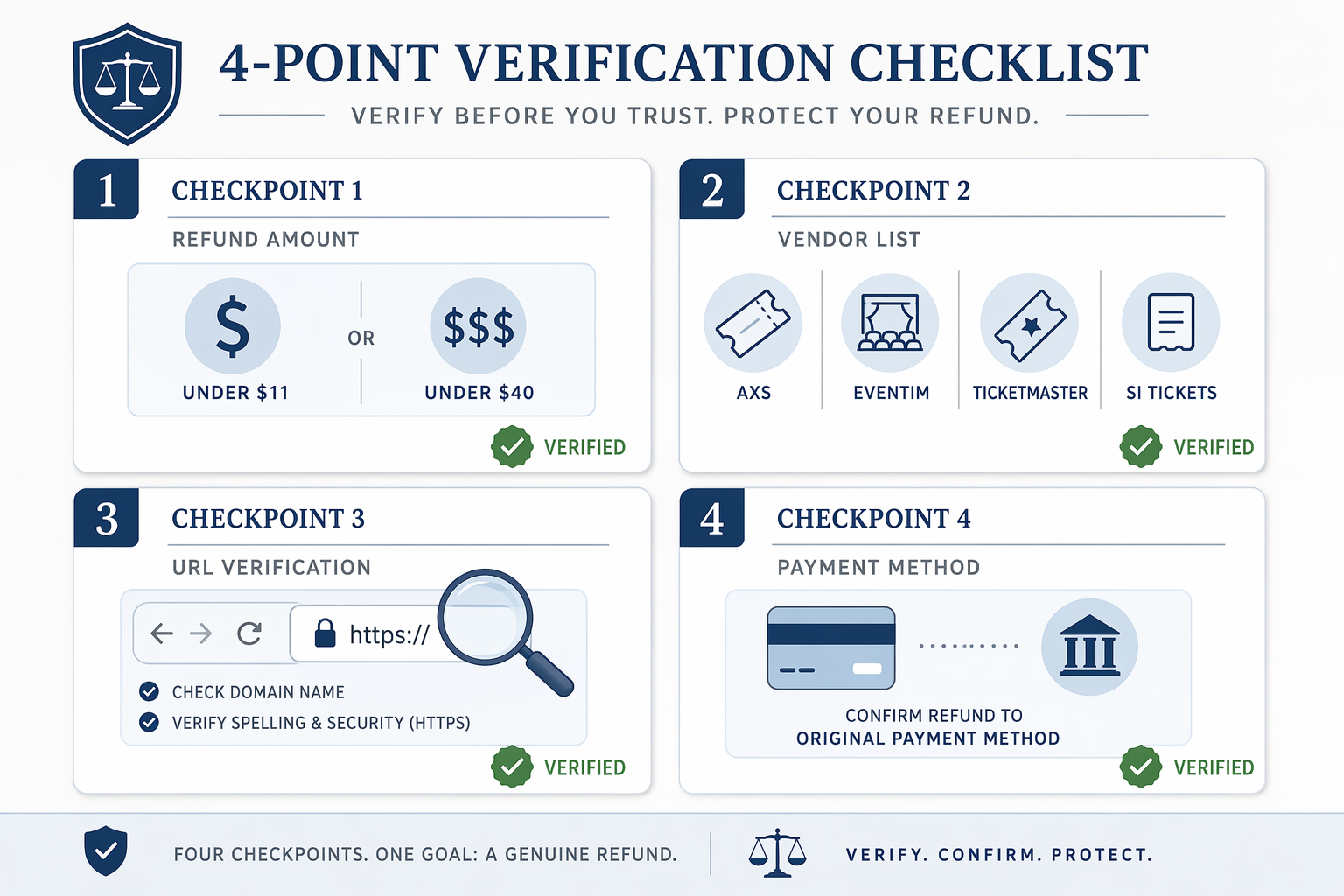
| Checkpoint | What to confirm | Why it matters |
|---|---|---|
| Refund amount | The refund should fit the known ranges: under $11 for Intuit Dome tickets and under $40 for Columbus football venue tickets.[1] | A fake refund can claim urgency, but it cannot easily mimic the announced amounts without drifting outside the real pattern. |
| Payment method | The refund should return to the original payment method, not to a new card, wallet, or bank account.[1] | A request to switch payout channels is a strong warning sign. |
| Vendor and domain | Compare the sender and destination with LA28's authorized vendor list; the California Attorney General named AXS and Eventim as current vendors, with Ticketmaster and SI Tickets tied to the 2027 resale marketplace.[2] | A real notice should line up with the official vendor structure, not just with a polished email design. |
| Message logic | A refund notice that asks for fresh payment data, a new login, or a time-sensitive verification through the email itself should be treated with caution.[2] | The question is not whether the email looks official, but whether the workflow matches the stated refund process. |
That framework matters more now because phishing copy has improved. Panda Security notes that advances in AI now let cybercriminals write emails that can sound natural enough to fool even security-savvy people.[3] Enforcement also lags behind production: Proofpoint reported 338 fraudulent Olympics ticketing websites during Paris 2024, and only 51 were shut down, a 15% takedown rate.[4]
This is not a new scam pattern. Washington State warned about Olympic ticket scams in 2008, which shows how long this playbook has been around.[6] The CoSport dispute around Tokyo 2020 also shows that Olympic-ticket problems can turn into breach-of-contract and fraud litigation even when the seller was authorized, which is useful context for lawyers trying to separate a bad refund process from an outright fake.[5]
If it is a scam, report it in order
If the client concludes the message is fake, or if the client already clicked or paid, the goal is to preserve the cleanest possible record before any more damage is done. Do not start with a random list of agencies. Start with the sequence that keeps the consumer-protection file intact.
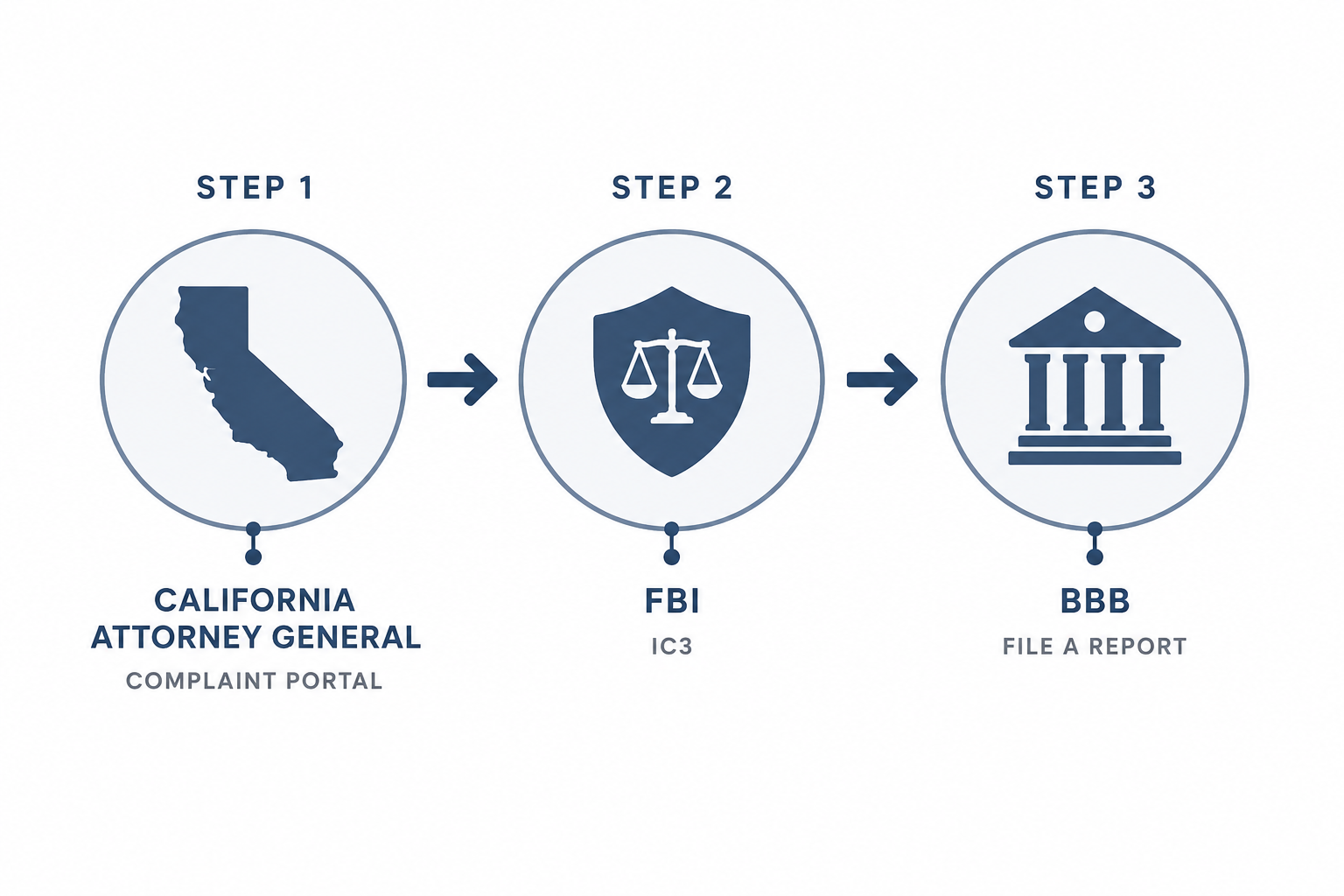
- California Attorney General complaint portal: file first so the matter enters the state consumer-protection channel while the details are still fresh.
- FBI IC3: add the federal cybercrime report next if payment data, account access, or cross-border routing is involved.
- BBB: make the consumer-fraud complaint as a practical follow-up layer that helps document the problem.
Before filing, collect the sender address, headers, URL, screenshots, and payment records. If the client used the original payment method and the refund still does not match what LA28 described, that record will matter more than the email itself.
Verify the refund against the amount, the payment rail, the vendor list, and the domain, then route any genuine fraud through the reporting sequence that best preserves remedies. This is general information for counsel, not legal advice, and local options will depend on what the client clicked, what was paid, and which platform handled the ticket purchase.
References
- LAist, July 17, 2026 — Olympics refund — LAist Brief (LA28 tax refund confirmation)
- California Attorney General, April 27, 2026 — All That Glitters isn't Gold: Attorney General Bonta Warns Californians of LA 2028 Olympic Games Ticket Scams
- Panda Security, April 2026 — Olympics Ticket Scams: Don't Get Fooled
- Proofpoint — Security Brief: Scammers Create Fraudulent Olympics Ticketing Websites
- Yahoo Sports / Sportico — In Court, Olympic Ticket Seller Calls Refund Lawsuit a 'Shakedown'
- Washington State AG — Olympic ticket scam
Comments
Join the discussion with an anonymous comment.