
Full profile
The easiest litigation hold failure to miss is the one that looks administratively complete. The matter is opened, custodians are identified, the hold notice goes out, acknowledgments come back, and the tracker turns green. Meanwhile, the AI tool a product manager used to draft a customer-impact analysis keeps deleting conversation history on its own schedule. Some generative AI platforms may auto-delete histories on cycles as short as 30 days, separate from the retention rules legal teams usually rely on for email, file shares, and collaboration systems.[1]
That is the practical problem behind litigation holds for AI-generated documents in 2026. The issue is not whether every prompt, draft, or chatbot answer deserves permanent preservation. It is whether the hold workflow has a place where someone asks where the AI activity lives, who controls deletion, how it can be exported or preserved in place, and what record will later show that the scope decision was reasonable.
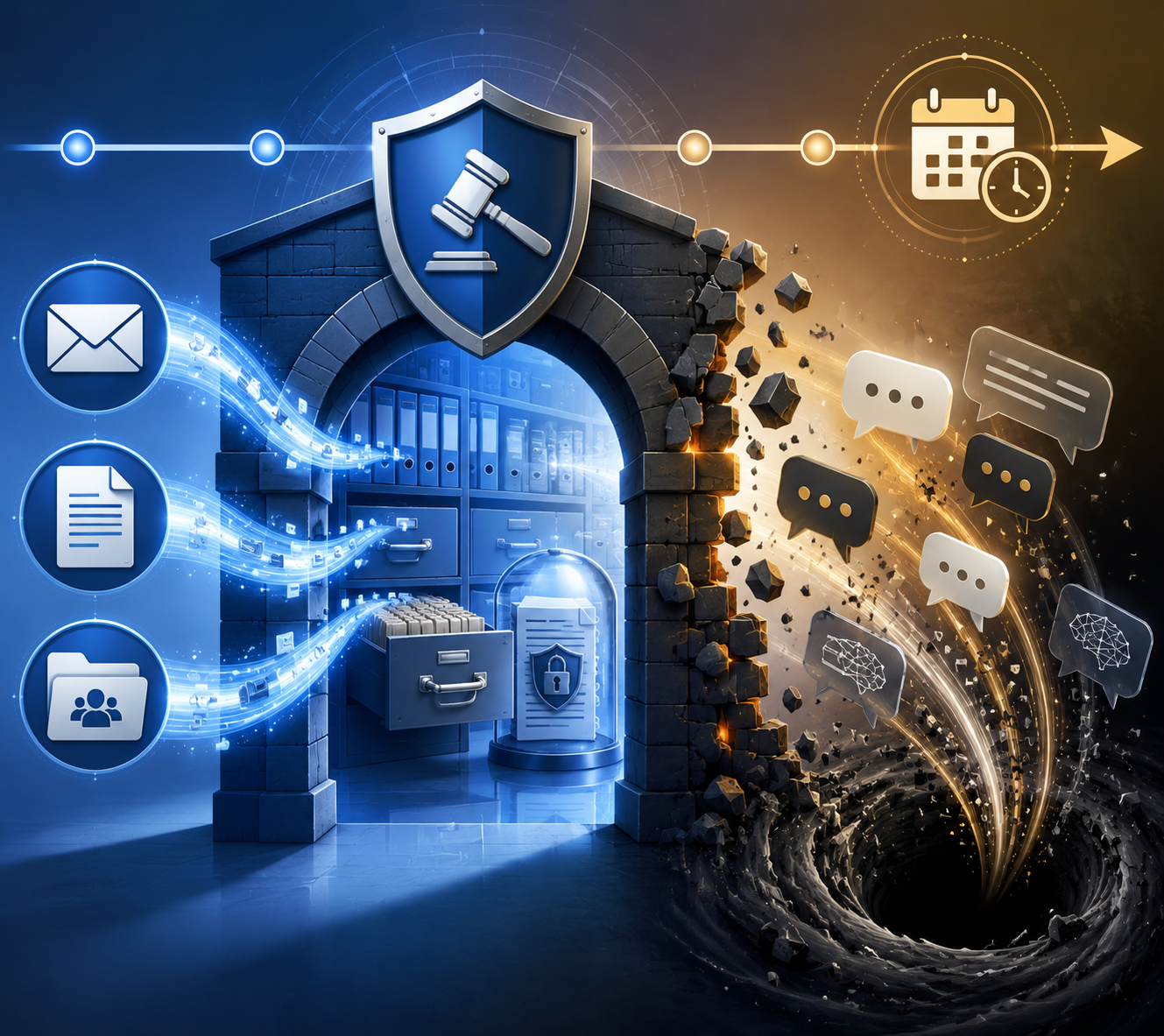
The legal reason this can no longer sit in a policy appendix is also becoming clearer. In re OpenAI in the Southern District of New York treated generative AI outputs as discoverable records subject to preservation obligations, and secondary analysis reported that the court ordered preservation of more than 20 million ChatGPT logs; later analysis of the September 2025 ruling emphasized that the preservation standard was targeted and defensible, not an indefinite command to keep everything.[2] Arnold & Porter’s eData Edge made the same operational point in November 2025: AI preservation obligations should reach materials related to claims or defenses, with scope reasoning documented rather than assumed.[3]
The Q1 2026 rulings sharpen the point without making it limitless. Heppner, decided in the Southern District of New York on February 17, 2026, addressed AI materials created without attorney direction and privilege; Warner v. Gilbarco, decided in the Eastern District of Michigan on February 10, 2026, treated AI platforms as tools rather than persons for waiver analysis; Morgan v. V2X, decided in the District of Colorado on March 30, 2026, addressed uploading confidential discovery materials to consumer AI tools without contractual protection against model training.[4][5] These are district-level rulings in a developing U.S. federal framework, not appellate instructions for every future AI fact pattern. But for hold administration, they are enough to make silence about AI tools hard to defend.
Start With the Failure Point Your Current Hold Does Not See
A conventional hold process usually assumes that potentially relevant material sits in systems the company already knows how to preserve: mailboxes, shared drives, enterprise chat, document repositories, databases, and maybe phones. AI-generated content does not stay that tidy. A single interaction may leave traces in the AI platform log, the user’s downloaded draft, a pasted excerpt in a Word document, a forwarded email, browser history, audit logs, and a ticketing or product-management system where the output was used.
Onna’s analysis describes five recurring workflow gaps: hold notices often do not name AI tools, custodian lists miss personal-account AI use, data source inventories omit enterprise AI platforms, auto-delete runs on schedules outside ordinary corporate retention, and collection can strip session context such as identifiers, timestamps, and edit history.[2] Those are not five abstract risks. They are five places where a standard workflow can say “preserve relevant documents” and still fail to preserve the AI-generated evidence needed to understand how a decision, draft, or analysis was produced.
| Hold workflow point | What changes for AI-generated content |
|---|---|
| Custodian interviews | Ask about enterprise tools, consumer tools, personal accounts, prompts, outputs, histories, and pasted or downloaded copies. |
| Hold notice language | Name AI content categories instead of relying on generic document language. |
| IT retention controls | Verify and suspend relevant auto-delete, retention, and logging settings before histories expire. |
| Preservation locations | Preserve across AI platforms, repositories, email, collaboration tools, and audit logs where the same interaction may appear differently. |
| Scope documentation | Record why tools, custodians, date ranges, repositories, and data types were included or excluded. |
Change 1: Ask Custodians About AI Use Before You Finalize the Source List
The custodian interview has to move upstream. If the data-source inventory is finalized before anyone asks about AI use, the matter team will preserve the systems it already knows and miss the ones that actually shaped the relevant work. The question cannot be “Did you use AI?” and stop there. Many custodians will hear that as a question about formal company tools, not a browser tab they opened to summarize a contract clause, rewrite a customer email, test code, or generate talking points.
The better interview sequence separates tool access from content location. Start with approved enterprise tools. Then ask about consumer tools, personal accounts, browser extensions, embedded AI features in productivity software, and AI functions inside systems the custodian may not think of as “AI platforms.” Shadow AI is not a fringe assumption: Relativity reported that 69% of cybersecurity leaders suspect or have evidence of employees using prohibited public generative AI tools, and Gartner predicted that more than 40% of businesses will suffer security or compliance incidents from shadow AI by 2030.[6]
For a live hold, the interview should identify at least these points:
- Which AI tools the custodian used during the relevant period, including enterprise tools, public tools, embedded assistants, and personal-account access.
- What the custodian used the tool for: summarizing documents, drafting language, analyzing data, coding, decision support, customer communications, legal or compliance review, or other matter-related work.
- Whether prompts, outputs, conversation histories, uploaded files, downloaded responses, screenshots, or pasted text still exist.
- Where downstream copies went, including email, shared drives, document-management systems, collaboration channels, tickets, slide decks, or local files.
- Whether the custodian knows of deletion settings, private browsing, temporary chats, account closures, or manual cleanup.
This is also where self-collection starts to break down. Onna’s analysis warns that many custodians cannot reliably determine which AI interactions are relevant, and manual exports may omit session identifiers, timestamps, and edit history.[2] A custodian can tell legal operations that an AI tool was used. The preservation plan still needs IT, platform administration, or eDiscovery support to determine whether the underlying history exists and how to preserve it without flattening the context.
Change 2: Rewrite the Hold Notice So AI Content Is Named, Not Implied
A standard hold notice that tells employees to preserve “documents, communications, and electronically stored information” may be legally familiar, but it is operationally weak for AI-generated content. Custodians who do not think of prompts as documents, chatbot outputs as records, or AI conversation histories as business files may read the notice and continue working exactly as before.
The revised notice should name AI categories plainly. It should tell custodians not to delete, alter, overwrite, clear, export-and-delete, or disable histories for potentially relevant AI interactions. It should also tell them not to upload confidential discovery materials or matter-related confidential information into consumer AI tools unless the legal team has approved the platform and contractual protections. Morgan makes that last point concrete: the court addressed the use of consumer AI tools for confidential discovery materials where there was no contractual protection against model training.[4]
Useful hold language is specific enough that a business custodian can act on it without guessing. For example:
- Preserve prompts, questions, instructions, uploaded files, generated outputs, conversation histories, session titles, timestamps, feedback, regenerated responses, and exports related to the matter.
- Preserve AI-assisted drafts or analyses even if the final version was later edited in Word, email, a ticketing system, a code repository, or another business application.
- Do not clear chat histories, delete AI sessions, close relevant accounts, use temporary-chat modes for matter-related work, or change retention settings without legal approval.
- Identify any personal or public AI tools used for matter-related work so the legal team can evaluate preservation options.
The notice should not overpromise. If the organization cannot technically preserve a consumer account or retrieve deleted temporary chats, the notice should still instruct custodians not to delete what remains and should route disclosures to the legal team for scope documentation. A hold notice is not a preservation system; it is one control in a larger workflow.
Change 3: Give IT a Retention-Control Task, Not a Courtesy Copy
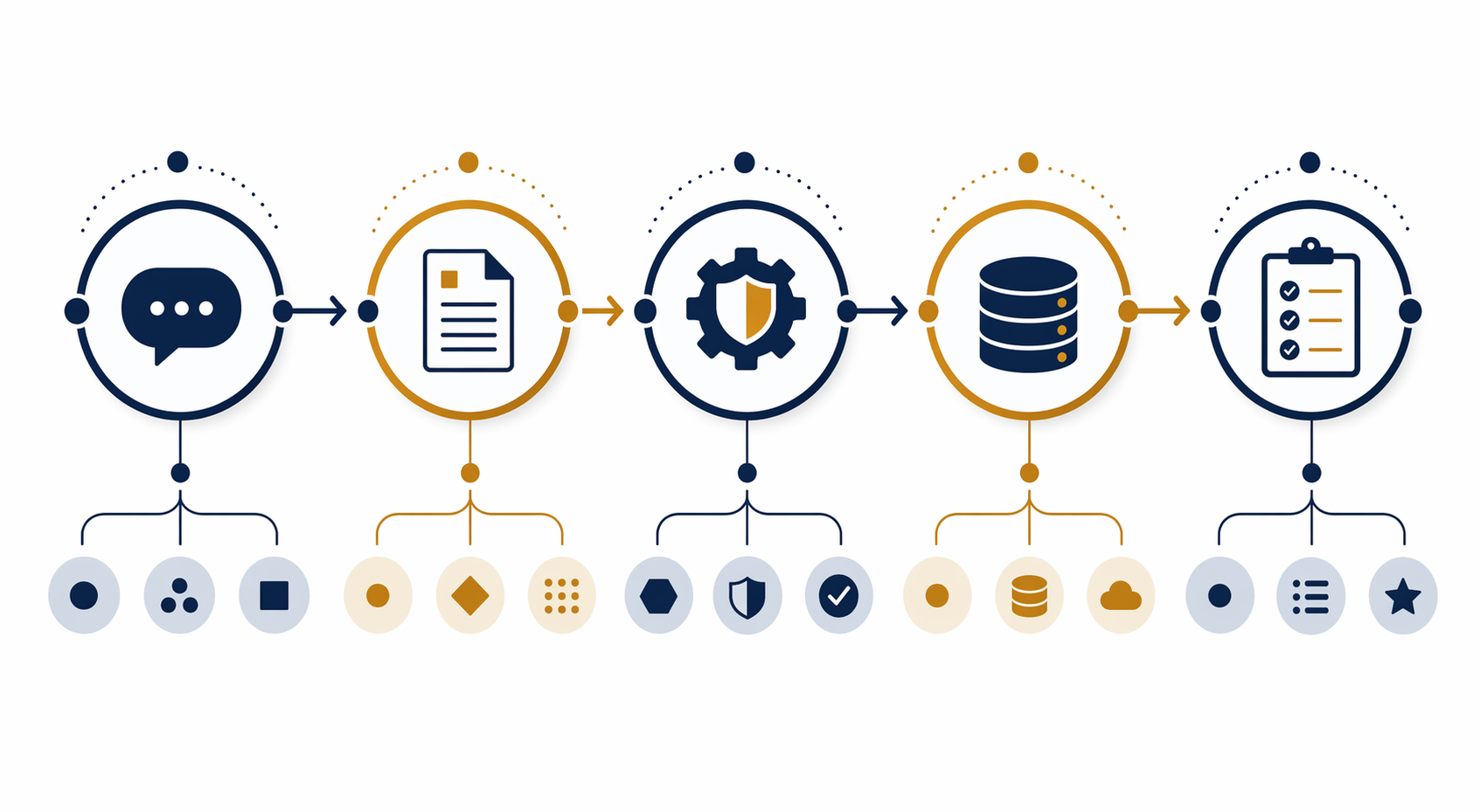
The most important AI hold work often happens outside the legal hold platform. If IT receives the same notice as everyone else but no specific instruction to verify AI retention settings, the deletion clock may keep running. K&L Gates specifically warns that generative AI systems can have auto-delete settings independent of corporate retention policies, including cycles as short as 30 days.[1]
The IT request should be written as a preservation action list. It should identify the matter, relevant custodians or groups, known or suspected AI tools, relevant date range, and the retention or export decision needed for each tool. It should also ask IT to confirm whether the company controls the instance at all. An enterprise AI tenant, a browser-based consumer account, and an AI feature embedded in a SaaS product do not give IT the same preservation levers.
Platform examples show why generic instructions fail. Google Gemini preservation may involve Google Vault and XML export. Microsoft Copilot for Microsoft 365 may require attention to Exchange mailbox hidden folders and Microsoft Purview configuration. ChatGPT Enterprise may offer a Compliance API. Claude may involve configurable retention and manual export settings.[2] These examples are not a product ranking. They are reminders that “preserve AI chats” is not an executable request until the platform owner verifies the actual tenant, plan, retention configuration, export path, and logging behavior.
| Question for IT or the platform owner | Why it matters |
|---|---|
| Is this an enterprise-controlled instance, an embedded feature, or a personal/public account? | The organization’s ability to suspend deletion, export content, or preserve in place depends on control. |
| What is the current retention or deletion setting for prompts, outputs, histories, uploads, and metadata? | A hold cannot stop deletion if no one identifies the deletion mechanism. |
| Can retention be suspended by custodian, group, workspace, date range, or tenant? | Targeted preservation depends on the available control level. |
| What export method preserves session context, timestamps, identifiers, and attachments? | Manual copy-and-paste collection may lose context needed for review and defensibility. |
| What audit logs show access, deletion, export, or configuration changes? | Later explanations require proof of what was done and when. |
This is where legal operations should insist on a response date. If a tool has a 30-day deletion cycle and the relevant interviews take two weeks, a slow configuration check is not a harmless delay. It can become the event that separates a reasonable hold process from a post-loss explanation.
Change 4: Preserve the AI Interaction Across the Places It Actually Lands
AI-generated content rarely remains only inside the AI platform. Onna describes the distributed storage problem as content living across disconnected systems, including AI platform logs, document repositories, email forwards, and IT audit logs.[2] Preserving only the downloaded output may capture the wording but not the prompt, source upload, regenerated answer, timestamp, user, or context showing how the content was created and used.
For collection planning, it helps to separate three layers. The first is the AI-system layer: prompts, outputs, histories, uploaded files, session metadata, and configuration or audit records. The second is the work-product layer: drafts, spreadsheets, code, slide decks, analyses, summaries, or emails that contain AI-generated material. The third is the communication and decision layer: messages where the AI output was forwarded, discussed, approved, rejected, or incorporated into a business decision.
Those layers should not automatically be collected with the same breadth. A customer-service chatbot output pasted into a final email may require a different scope than an AI-assisted pricing analysis used in a disputed transaction. The point is to make the difference deliberately. K&L Gates notes that generative AI ESI may reflect decision-making not apparent from final documents, which can make courts more likely to find prejudice from its loss.[1] That observation matters most when the AI interaction explains why a later document says what it says.
Do not let collection strip the session context
Copying an answer into a PDF may be better than losing it, but it is usually a poor preservation method if richer data is available. The collection plan should prefer exports or in-place preservation that retain timestamps, session identifiers, user information, attachments, prompt-output sequence, and available edit or regeneration history. Where the platform cannot provide that context, the limitation should be recorded rather than hidden inside a generic “collected from custodian” note.
For enterprise systems, in-place preservation may be more defensible than ad hoc custodian exports because it reduces the chance that users select, omit, rename, or flatten the material before legal review. For personal or public accounts, the options may be narrower and more sensitive. The matter team still needs a documented path: what was requested, what the custodian reported, what could be preserved, what could not be accessed, and why.
Change 5: Document the Scope Reasoning While the Hold Is Being Built
The defensible answer is not to preserve every AI interaction across the company forever. That would create its own review, privacy, security, and records-management problems. The better answer is to document the reasoning that connects the claims and defenses to specific tools, custodians, repositories, time periods, and data types. In re OpenAI and later commentary point toward targeted, defensible preservation, not blanket retention without an endpoint.[2][3]
Scope documentation should be created as the workflow runs, not reconstructed months later from meeting notes. A short preservation memo or matter log should capture:
- The AI tools known, suspected, or ruled out, including the source of that information.
- The custodians, teams, shared workspaces, or system owners interviewed or contacted.
- The date ranges selected and the reason those ranges match the dispute.
- The data types included, such as prompts, outputs, uploads, histories, exports, metadata, audit logs, and downstream documents.
- The data types excluded and the reason for exclusion, such as lack of relevance, lack of control, duplication, technical unavailability, or disproportionate burden.
- The retention settings verified, suspended, or left unchanged, with dates and responsible owners.
The exclusion entries are as important as the inclusion entries. If a team decides not to preserve all employee use of a public AI tool because interviews and logs show only three custodians used it for matter-related work, that reasoning should be visible. If the company cannot access a personal account but instructs the custodian to preserve remaining relevant content and records the limitation, that should be visible too. A later reviewer should be able to see the path of decision-making without guessing which gaps were intentional and which were simply missed.
A Revised Hold Workflow for AI-Generated Documents
In practice, the revised workflow does not need to become elaborate. It needs named owners and timing. Legal operations can add an AI preservation checkpoint to matter intake, custodian interviews, hold notice issuance, IT coordination, and preservation documentation. The order matters because waiting until collection to ask about AI tools is often too late.
- At matter intake, flag whether the dispute may involve AI-assisted drafting, analysis, coding, summarization, customer communication, decision support, or use of confidential materials in AI tools.
- Before issuing or finalizing the hold, ask custodians and business leads about approved tools, embedded AI features, public tools, personal accounts, and downstream copies.
- Issue a hold notice that specifically names prompts, outputs, histories, uploads, metadata, exports, AI-assisted drafts, and deleted or temporary-chat risks.
- Send IT and platform owners a separate retention-control request with deadlines, known tools, custodians, date ranges, and required confirmation of auto-delete, export, audit, and in-place preservation options.
- Preserve across the AI platform, downstream repositories, communications, and audit records when those locations are needed to understand the interaction and its use.
- Update the matter log with what was included, excluded, unavailable, suspended, exported, or preserved in place, and who made each decision.
That last step is what keeps the process from becoming maximalist. The Q1 2026 rulings and In re OpenAI make it difficult to treat AI interactions as informal material outside the preservation framework. They do not require legal teams to turn every AI session into permanent corporate sediment. The defensible move is narrower and more concrete: expand the hold workflow at the points where AI content otherwise disappears, verify the platform controls before deletion runs, and leave a record of the judgment calls made while the facts were still available.
References
- Litigation Minute: Preserving AI-Generated ESI, K&L Gates, May 20, 2026.
- Legal Holds for AI-Generated Content, Onna.
- Courts Are Starting to Define What AI Discovery Means, Arnold & Porter eData Edge, November 2025.
- Landmark AI Rulings Impacting All, Dentons, March 2026.
- Ask AI, Lose Privilege?, Dechert, March 2026.
- What Legal Leaders Should Know About Shadow AI, Relativity.
Comments
Join the discussion with an anonymous comment.