
Full profile
The military COVID-19 vaccine mandate litigation begins with the Defense Department's August 2021 vaccination order and ends, at least for now, with a docket full of claims that were narrowed, stayed, mooted, vacated, or denied review before the Supreme Court gave a merits answer on most of them. The practical scale was not small: at least 17,000 service members refused vaccination, and more than 8,400 were discharged, including 3,717 Marines, 2,041 Navy sailors, 1,841 Army soldiers, and 834 Air Force and Space Force members.[1]

The legal record, however, does not reduce cleanly to the number of refusals or separations. The major military COVID-19 vaccine mandate legal challenges moved along several tracks at once: Religious Freedom Restoration Act claims, Free Exercise claims, statutory arguments over emergency-use authorization consent, separation-of-powers theories, class and service-specific claims, and, after Congress acted, mootness. The result is a chronology in which some plaintiffs won meaningful interim relief, some claims were dismissed as no longer live, and some lower-court rulings were erased before they could settle doctrine.
Last reviewed: July 19, 2026.
The First Litigation Track: Religious Objections And Command Authority
The early cases were not abstract vaccine challenges. They were brought by service members who faced a direct service consequence if they remained unvaccinated, and many of the first serious rulings turned on whether the military had treated religious accommodation requests as individualized requests or as paperwork on the way to a predetermined denial.
The Navy SEALs litigation, often styled as Navy SEALs v. Biden or U.S. Navy SEALs 1-26 v. Biden depending on the procedural reference, became the central early test. In the Northern District of Texas, Judge Reed O'Connor granted a preliminary injunction after finding the plaintiffs likely to succeed on their RFRA claim. The plaintiffs argued that the Navy's religious accommodation process did not meaningfully assess their objections and that unvaccinated status exposed them to career-ending consequences. By March 2022, the Navy had granted only one religious exemption out of nearly 4,000 applications, a statistic that shaped how courts and commentators read the accommodation process at that moment.[2]
That figure should not be treated as a final Navy-wide exemption rate. It was a March 2022 snapshot, and later branchwide reporting used broader counts. But as evidence before the litigation climate then, it mattered: it gave the religious-liberty claims a concrete administrative setting, rather than leaving them as a general objection to vaccination.
The Fifth Circuit declined to give the Navy the full relief it sought from the injunction. The Supreme Court then intervened in March 2022, granting a partial stay. The stay allowed the Navy to consider vaccination status in deployment, assignment, and operational decisions, while the injunction continued to protect the plaintiffs against certain disciplinary or separation consequences.[2]
That partial stay is the doctrinal hinge in the Navy litigation. Justice Kavanaugh, concurring, emphasized that courts traditionally defer to military commanders on deployment and assignment judgments. Justice Alito, dissenting, accused the Court of brushing aside RFRA protections for the SEALs and other special warfare personnel. The disagreement was not over whether RFRA applied in the military at all; it was over how far a court could go, at the preliminary-injunction stage, before it displaced operational judgments made inside the chain of command.[3]
| Litigation track | Core theory | Procedural result |
|---|---|---|
| Navy SEALs | RFRA and Free Exercise objections to denial of religious accommodations | District-court injunction; Supreme Court partial stay allowing vaccination status in operational decisions |
| Chaplains | Religious-liberty claims tied to refusal of vaccination and alleged professional harm | Dismissed as moot; certiorari denied |
| Poffenbarger and Doster | Challenges to mandate consequences, including back-pay-related theories after rescission | Lower-court mootness dismissals left in place after certiorari denials |
| EUA informed-consent theory | Argument under 10 U.S.C. § 1107(f) that the Defense Secretary lacked authority to mandate an EUA vaccine absent presidential waiver | Advanced as litigation advocacy; not resolved as settled doctrine |
Exemptions, Settlements, And The Administrative Record
The exemption numbers are useful only if kept in their lanes. The Navy's one-in-nearly-4,000 figure came from the early litigation window. The Air Force, by March 2022, had granted only nine religious exemptions. Later reporting stated that more than 1,000 service members across the branches eventually received exemptions before the mandate was dropped.[4]
Those numbers do different work. The early Navy and Air Force counts speak to the preliminary-injunction record and the plausibility of claims that accommodation review was unusually restrictive. The later cross-branch figure speaks to the administrative afterlife of the mandate. Treating them as if they answer the same question would make the record neater than it is.
The October 2023 Liberty Counsel settlement was similarly important but bounded. The reported $1.8 million settlement covered 48 service members who had sued the Defense Department over the mandate. It did not create a global judicial holding on the legality of the mandate, nor did it resolve the broader RFRA and constitutional questions for all discharged or disciplined personnel.[4]
The Supreme Court's March 2022 Stay Did Not Decide The Merits
The Supreme Court's March 2022 order in the Navy case is sometimes described as a win for the Navy, and in operational terms it was. Commanders could account for vaccination status when deciding who would deploy and who would perform particular duties. But the order did not hold that the Navy's religious accommodation process complied with RFRA, nor did it decide the underlying Free Exercise claims. It was a stay order that restored a slice of command discretion while the case continued.
That distinction matters because emergency orders often become precedent by shorthand. The Supreme Court did not say that military vaccine mandates automatically defeat RFRA claims. Nor did it say that RFRA lets a court supervise deployment decisions as if they were ordinary civilian workplace assignments. The order left both propositions too broad. It reflected a narrower institutional judgment: at least at that stage, the judiciary would not bar the Navy from using vaccination status in operational assignments.[2][3]
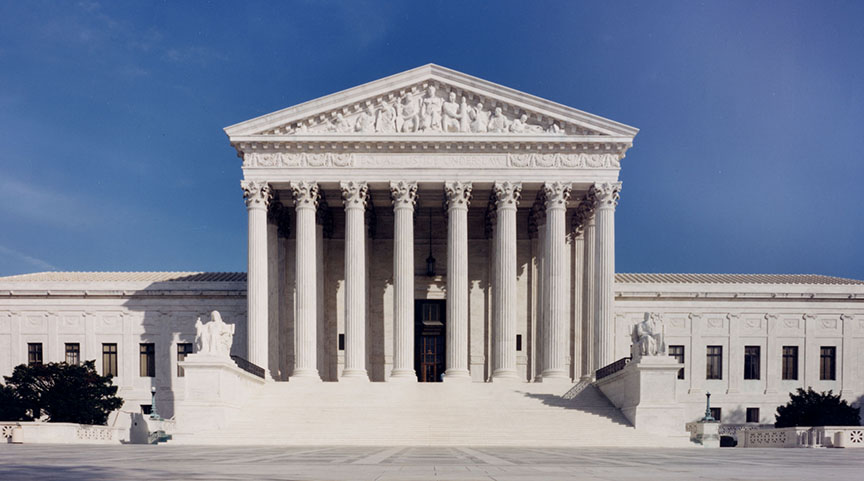
Rescission Changed The Cases Before The Courts Finished Them
Congress changed the litigation posture when the fiscal year 2023 National Defense Authorization Act required the Defense Department to rescind the vaccination mandate. Once the mandate was no longer in force, the government argued in multiple cases that prospective claims were moot. That argument did not say the mandate had been lawful. It said the courts no longer had a live controversy over forward-looking relief.
The Supreme Court's December 2023 action sharpened the point. The Court wiped lower-court rulings in three consolidated federal employee and military vaccine mandate cases through Munsingwear vacatur, a procedural remedy used when a case becomes moot before appellate review can be completed. Justice Jackson dissented, arguing that the government had not established equitable entitlement to that remedy.[5][6]
Munsingwear vacatur is not a merits ruling. It can prevent an unreviewed lower-court decision from producing continuing legal consequences after mootness blocks appellate review. In this context, it also made the public legal record less satisfying. Lower-court opinions that had done real work during the mandate period no longer stood as durable precedent, while the Supreme Court still had not answered the central statutory and constitutional questions.
The Chaplains' Case Followed The Mootness Path
The chaplains' lawsuit, Alvarado v. Austin, presented a different face of the same institutional problem. The plaintiffs alleged that refusal of COVID-19 vaccination harmed their military careers and religious exercise. The Fourth Circuit dismissed the case as moot after the mandate was rescinded, and the Supreme Court denied certiorari in April 2024, leaving that mootness dismissal in place.[7]
That denial did not approve or reject the chaplains' religious-liberty theory. It left the Fourth Circuit's procedural disposition as the last operative result. For a service member trying to understand whether courts recognized a completed RFRA injury, that is a thin answer. For a government lawyer defending a rescinded order, it is a familiar one: no live mandate, no prospective injunction.
Poffenbarger, Doster, And The Back-Pay Problem
By the time Poffenbarger v. Meink and Doster v. Meink reached the Supreme Court's certiorari docket, the dispute had shifted from stopping an active mandate to asking what remedies remained for people who had already borne consequences. The question was not only whether the original mandate was valid, but whether rescission and later reinstatement measures left room for judicial back-pay claims.
The lower courts treated the cases as moot, and the Supreme Court denied certiorari in February 2026. That left the lower-court mootness dismissals intact and effectively ended the back-pay route through those cases. Reporting on the litigation noted a pleading problem in Doster as well: the plaintiffs had not requested back pay in their original filing, which limited what the courts could do once the mandate was gone.[1][8]
The February 2026 denials are therefore status events, not merits endorsements. They tell practitioners that the Supreme Court declined to reopen the cases after rescission and remedial executive action changed the landscape. They do not tell future courts how RFRA, military deference, or emergency-use authorization statutes should apply if a similar order is litigated before it expires.
The EUA Informed-Consent Argument Remained A Litigation Theory
A separate statutory theory focused on 10 U.S.C. § 1107(f), which addresses informed consent for administration of drugs not approved for their applied use to members of the armed forces, unless the President waives the consent requirement. The New Civil Liberties Alliance argued that the Secretary of Defense lacked authority to mandate a vaccine administered under emergency-use authorization without a presidential waiver.[9]
That argument should be identified for what it is: a litigation theory, not settled doctrine from the Supreme Court. It matters because it would locate the problem in statutory authorization rather than only in religious accommodation. But the post-rescission procedural path prevented that theory from becoming the kind of final appellate holding that can be cited without qualification.
Reinstatement Became The Administrative Substitute For A Merits Remedy
After the litigation had already been reshaped by rescission and mootness, the January 27, 2025 executive order created a reinstatement pathway with back pay for service members discharged under the military's COVID-19 vaccination mandate.[10]
The pathway did not function like an automatic judicial remedy. By June 2025, only 13 of roughly 700 interested former service members had been reinstated. Reported bottlenecks included administrative hurdles, a four-year service commitment, and wage-offset calculations.[11] The reinstatement deadline was set for April 1, 2026.[12] The Coast Guard later announced that it had reinstated 56 members who had been dismissed for refusing COVID vaccines.[13]
Those reinstatement numbers belong beside the litigation chronology, not in place of it. They show that the practical consequences of the mandate continued after the cases became procedurally difficult. They also show why mootness can be a blunt instrument in military personnel cases: a rescinded order may end prospective enforcement, while records, pay, service commitments, and career paths remain unresolved in slower administrative channels.
Current Legal Status
As of Q3 2026, the mandate itself is no longer in force. The most important lower-court rulings did not mature into a clean Supreme Court merits decision. The Navy SEALs litigation produced a major preliminary injunction and a major Supreme Court stay order, but not a final Supreme Court RFRA holding. The chaplains' case ended with a mootness dismissal left undisturbed. The December 2023 Munsingwear vacatur removed several lower-court rulings from precedential use. Poffenbarger and Doster ended at certiorari denial, leaving lower-court mootness dispositions intact.
For legal research purposes, the safest characterization is narrow: the military vaccine mandate generated serious RFRA, Free Exercise, statutory authorization, and separation-of-powers challenges; some plaintiffs obtained meaningful interim relief; the Supreme Court protected military operational discretion at the stay stage; and the rescission of the mandate prevented much of the merits litigation from reaching a final answer. The unresolved posture is not a footnote to the story. It is the record the courts left behind.
References
- Supreme Court declines COVID vaccine mandate cases, Military Times, Feb. 23, 2026
- Supreme Court gives partial OK to Navy for vaccine mandate, NPR, Mar. 25, 2022
- Vaccine Mandates in the Military: Litigation over Religious Exemptions, Petrie-Flom Center, Harvard Law, Mar. 30, 2022
- Troops Suing Defense Department over Vaccine Mandate Reach $1.8 Million Settlement, Military.com, Oct. 10, 2023
- Supreme Court wipes rulings on federal employee, military vaccine mandates, The Hill, Dec. 11, 2023
- Supreme Court tosses federal vaccine mandate rulings, Becker's Hospital Review, Dec. 11, 2023
- Supreme Court Rejects Military Chaplains' Lawsuit Claiming Refusal of COVID-19 Vaccine Hurt Their Careers, Military.com, Apr. 30, 2024
- Supreme Court COVID vaccine mandates, SCOTUSblog, Aug. 6, 2025
- Firing Military Personnel for Refusing COVID Vaccine, New Civil Liberties Alliance, Apr. 10, 2025
- Reinstating Service Members Discharged Under the Military's COVID-19 Vaccination Mandate, The White House, Jan. 27, 2025
- After Offer of Back Pay, Only 13 COVID Vaccine Refusers Returned to Military Service, Military.com, Jun. 30, 2025
- Military service coronavirus vaccine reinstate, Stars and Stripes, Apr. 8, 2025
- Coast Guard Reinstates 56 Members Who Were Dismissed for Refusing COVID Vaccines, Department of Homeland Security, Feb. 24, 2026
Comments
Join the discussion with an anonymous comment.