
Full profile
On the facts now public, the NBC security guard likely does not have a viable wrongful-termination claim under New York law. A private employer in New York generally does not need good cause to fire a worker, so even a serious on-the-job mistake does not by itself create liability [1].
Why the default rule matters
The New York Attorney General states the rule in plain terms: your employer is not required to have good cause to fire you [1]. That matters here because the reported incident looks like a single security failure, not a case where the law automatically assumes the discharge was unlawful. In ordinary private employment, the legal question is not whether the firing was harsh; it is whether some exception takes the case out of at-will employment.
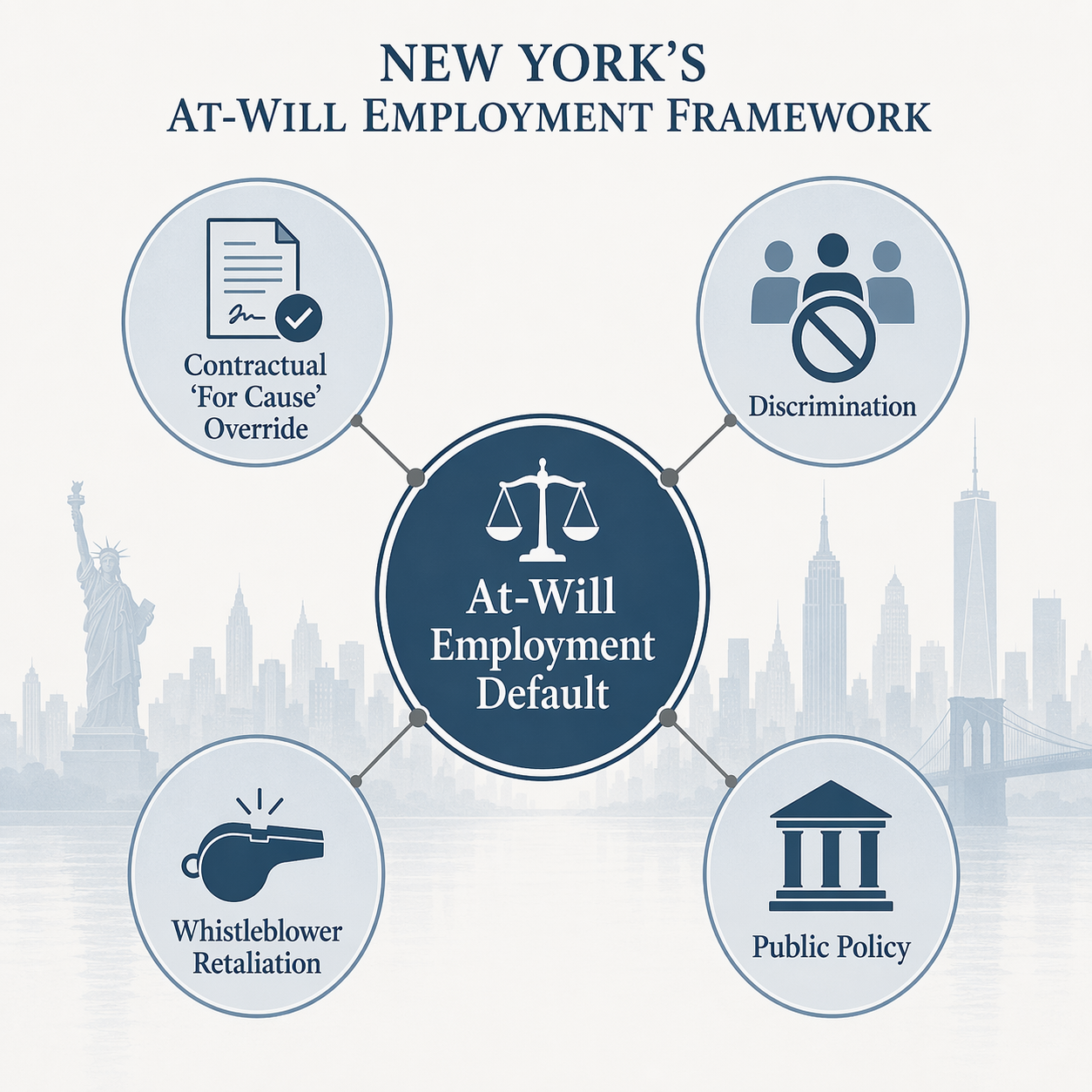
Practitioner explanations aimed at New York workers make the same point: an at-will employee can usually be discharged unless a contract, statute, or other narrow protection applies [2][3]. In practice, that means the guard would need facts showing one of a few recognized theories, not just an argument that the punishment was too severe.
- Contractual protection: a union agreement or individual employment contract could require cause, notice, or a discipline process before termination.
- Discrimination: if the firing was driven by a protected characteristic, the claim shifts from ordinary wrongful termination to a statutory discrimination case.
- Whistleblower retaliation: if the guard reported protected misconduct and was fired because of that report, the analysis changes again.
- Public policy: New York recognizes only a limited role for this theory, so it rarely saves a claim by itself.
What public reporting still does not show
The biggest missing fact is the employment relationship. Public reporting has not identified whether the guard was a direct NBC employee or a contractor from a security vendor. That distinction matters because the actual employer, the governing contract, and even the controlling law can differ from what the headline suggests. Public reporting also does not confirm any union agreement, individual for-cause clause, or prior discipline record.
If the guard was covered by a contract that limited termination, or if a third-party security company supplied the guard under a different agreement, the legal analysis could change quickly. The same is true if the firing was tied to protected activity, discrimination, or a law from another state rather than New York law. Those are the facts that would matter in a real intake, and none of them have been publicly reported.
Current risk read
So the current answer is narrow: based on the reported facts, a wrongful-termination suit against NBC looks unlikely to succeed under New York law. A single visible security failure can be enough for termination in an at-will setting, and no publicly reported exception currently appears to fit. The answer could change if contract coverage, discriminatory motive, whistleblower activity, contractor status, or different governing law emerges.
References
- Job Termination — New York State Attorney General
- What Does At-Will Employment Mean for NY Workers? — Kessler Matura P.C. — August 2025
- Fired Without Warning? Know Your Rights Under New York Labor Law — LawyerForWorkers
Comments
Join the discussion with an anonymous comment.