
Full profile
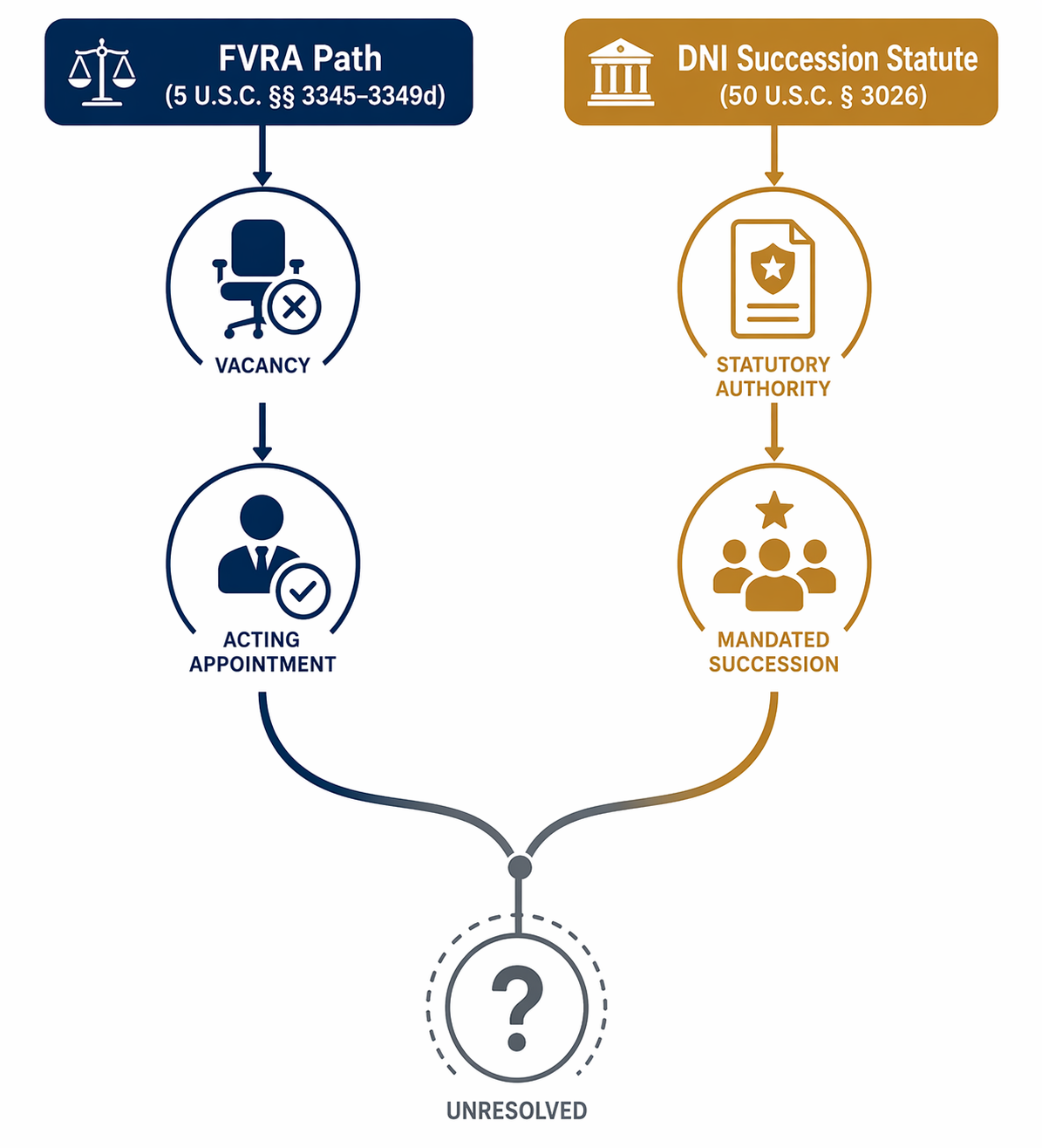
Bill Pulte's path to acting director of national intelligence is not a biography story; it is a collision between two vacancy rules. The DNI succession statute says the Principal Deputy DNI "shall" act when the office is vacant, but the Federal Vacancies Reform Act gives the president a separate route to choose another acting official from the pool of Senate-confirmed officers. Pulte fit that FVRA pool because he had been confirmed as FHFA director, even though he did not fit the DNI statute's "extensive national security expertise" requirement. That is the core puzzle: one reading makes succession mandatory, another makes it optional. [1][2]
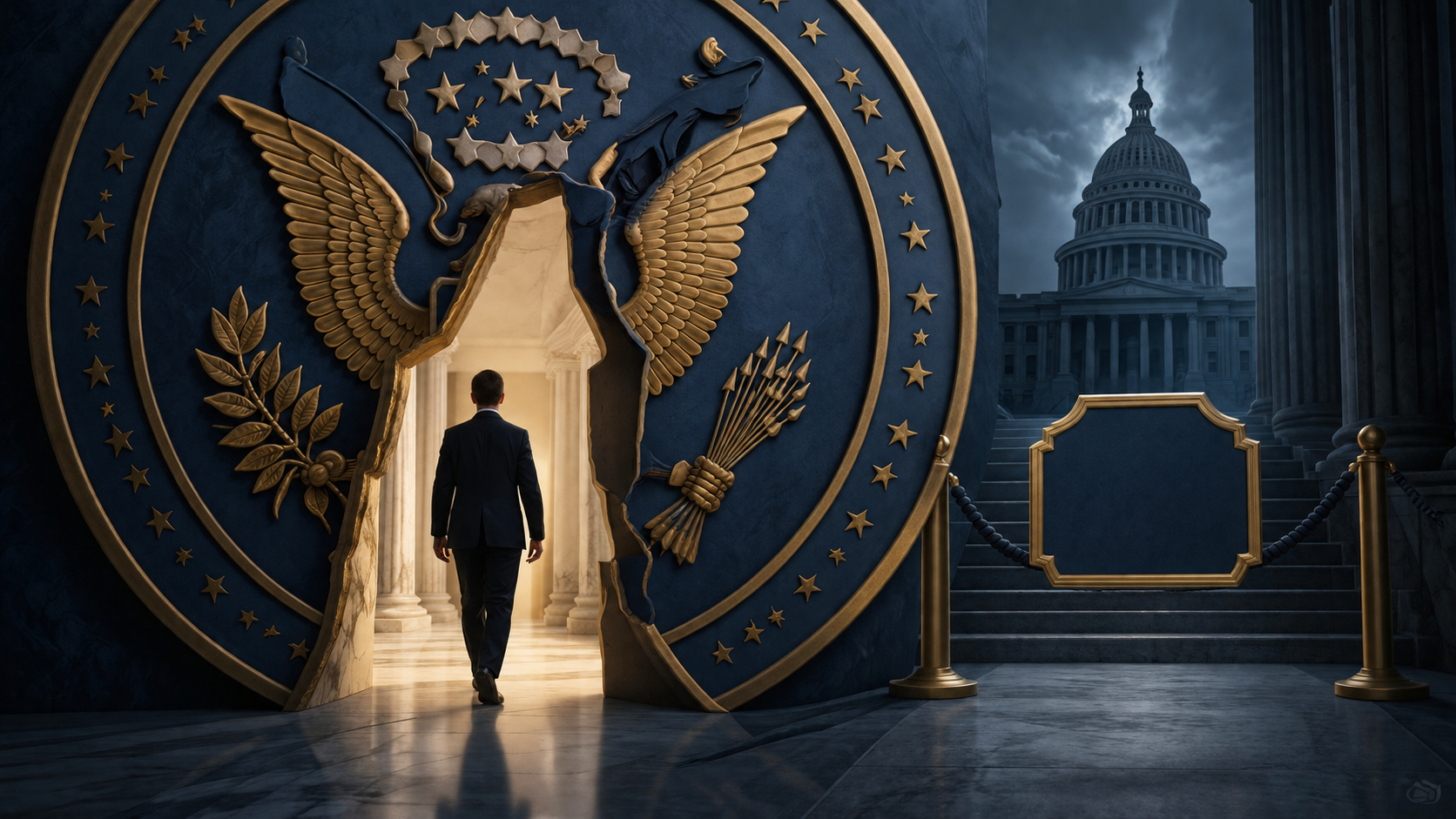
The Statutory Fork
The executive branch's bridge is a 2019 OLC opinion that treated the FVRA as still available for DNI vacancies. On that view, the DNI-specific succession statute is not exclusive; it is one path, while the FVRA is another. That matters because it gives the appointment an executive-branch pedigree, but it is still an executive-branch interpretation, not a judicial holding. [1][2]
The breadth of that reading is hard to miss. As Thomas Berry notes in Lawfare, the FVRA reaches roughly 350 currently serving Senate-confirmed officials, which is far wider than a narrow succession scheme would suggest. Once the president chooses that route, the vacancy can be filled by someone confirmed for a different office and with no DNI-specific background at all. [1]
Why the Qualification Rule Does Not Stop Him
The harder statutory objection is the DNI qualification rule itself. Section 3023 calls for "extensive national security expertise," but Anne Joseph O'Connell's framework, as summarized by Lawfare, is that qualification requirements do not apply to acting officers unless Congress says so expressly. Because no statute does that here, the qualification language blocks a permanent DNI nomination more obviously than it blocks an acting designation. That distinction is doing a great deal of work. [1]
The Constitutional Tension
Even if the FVRA gets Pulte into the acting chair, the Appointments Clause question does not disappear. Berry's Eaton-versus-Edmond argument is that the older Eaton precedent on temporary acting principal officers cannot be squared with Edmond's later emphasis on the constitutional status of principal officers. In that sense, the appointment may be workable as current executive practice, but the constitutional theory behind it is not settled enough to treat the issue as closed. [1]
That is why the lack of a federal court ruling matters. The legal arguments are real, but they remain arguments, not adjudicated law. The 2019 OLC opinion carries executive-branch weight, yet it was issued in a different administration and has not been tested against this appointment in court. [1][2]
What the Uncertainty Changes on the Ground
The uncertainty is not abstract once personnel decisions begin. Zachary West argues that firings ordered by an unlawfully appointed official can themselves be challengeable because, as he puts it, "you can't be lawfully fired by someone who has no authority to fire you, and since Mr. Pulte was illegally appointed, he does not have that power." Whether a plaintiff can clear standing and other threshold hurdles is another matter, but the authority problem is real. [3]
The FVRA also gives the dispute a clock. Its 210-day limit means the acting designation is temporary, not a permanent workaround, so the legal fight has to be read against a deadline rather than as an open-ended arrangement. Congress still has oversight and legislative tools if it wants to narrow the route or force a clearer test of it, but those remedies address the structure after the fact; they do not tell a court how to read the conflict today. [1][4]
So the narrower judgment is the sturdier one: Pulte's appointment is presently defensible under existing executive-branch interpretation of the FVRA, but it rests on a contested statutory reading and an unresolved Appointments Clause tension. That leaves the legality of his personnel actions exposed to challenge if the appointment itself is later attacked. [1][2][3]
References
- Pulte's Appointment Shows Flaws in the Vacancies Act — Lawfare
- The Acting DNI and the Intelligence Office Trump Wants — Just Security
- Trump Has a Bill Pulte Problem — The Atlantic
- Congress Should Vigorously Oppose Bill Pulte as Acting Director of National Intelligence — Executive Functions
Comments
Join the discussion with an anonymous comment.