
Full profile
For lawyers checking SDNY AI disclosure rules, the first answer is the one that prevents the most filing-room mistakes: as of Q3 2026, there is no single district-wide AI disclosure rule that covers every Southern District of New York filing. The operative obligation may come from the assigned judge’s individual rules, a criminal standing rule, or, in bankruptcy matters, the Bankruptcy Court’s local rule. That means the question is not “What does SDNY require?” It is “What does this judge or court require for this filing?”
The table below is a dated compliance reference, not a substitute for the judge’s current SDNY webpage. It uses the best available secondary sources, including Greenberg Traurig’s November 2025 New York court comparison, the Legal AI Governance tracker, and maintained court-order trackers that may be more complete but require interactive searching.[1][2]
Judge-by-Judge SDNY AI Disclosure Reference
| Judge or court | Rule source | Covered filings | Disclosure trigger | Certification or verification language | Exemptions or limits | Primary or best available source |
|---|---|---|---|---|---|---|
| Judge Vernon S. Broderick | Individual Civil Rules § J, revised Oct. 2025 | Civil filings covered by the judge’s individual civil rules | Disclosure required when generative AI is used in the preparation of any filing | Requires certification of human review | AI used solely for legal research is exempted from the disclosure requirement | Greenberg Traurig comparison table; Legal AI Governance tracker entry for SDNY AI orders[1][2] |
| Judge John P. Cronan | Individual Civil Rules § 2.E, revised Oct. 2025 | Civil filings covered by the judge’s individual civil rules | Certification must state whether the litigant personally reviewed the filing and address AI-generated content | Requires a signed certification describing in detail the verification steps taken for content generated by AI | No broad legal-research-only exemption is identified in the available sources; counsel should read the current standing order before filing | Legal AI Governance tracker entry; secondary survey materials identified in the available sources[2] |
| Judge Dale E. Ho | Criminal Rules § 1.e | Criminal filings covered by the judge’s criminal rules | Criminal-specific AI disclosure requirements apply | Must be checked against Judge Ho’s criminal rules before filing | Civil-side SDNY AI rules should not be assumed to apply or not apply in criminal matters | Secondary sources identify a separate criminal-side requirement; counsel should verify the current SDNY judge page before filing[1] |
| U.S. Bankruptcy Court for the Southern District of New York | Local Rule 9011-1(d), effective Sep. 2024 | AI-assisted bankruptcy filings governed by SDNY Bankruptcy Court local rules | No separate AI disclosure requirement identified in the rule | AI-assisted filings are folded into Rule 9011 verification through the existing signature obligation | No separate AI certification beyond Rule 9011 signature verification is identified in the available sources | Legal AI Governance tracker entry for NYSB Local Rule 9011-1(d)[3] |
| Other SDNY judges | Individual practices, standing orders, and judge webpages | Depends on the assigned judge and case type | May vary by judge; not all current orders are captured in every secondary table | May range from no special AI language to disclosure, certification, or verification requirements | Must be verified on the assigned judge’s current SDNY webpage | Ropes & Gray AI Court Order Tracker is identified as a comprehensive maintained tracker, but it requires interactive search[4] |
The practical difference among these entries is not cosmetic. A disclosure sentence can be handled near the end of drafting if the team catches it in time. A signed certification that describes verification steps affects the way the draft is reviewed, who must review it, and what record the team should keep before the filing is ready.
Judge Cronan’s Rule Changes the Filing Workflow
Judge Cronan’s Individual Civil Rules § 2.E, revised in October 2025, is the rule that most directly changes the pre-filing checklist. The requirement is not limited to telling the court that AI was used. It calls for a signed certification stating whether the litigant personally reviewed the filing and describing in detail what verification steps were taken for content generated by AI.[2]
That wording matters because it pushes the team beyond a binary “used” or “not used” answer. If generative AI helped draft a factual background, a procedural history, a case summary, or a proposed argument, the signer needs to know how the output was checked. A vague assurance that someone reviewed the brief may not answer the certification’s actual question.
A careful Cronan workflow should therefore identify AI-assisted portions while the draft is still moving, not after the PDF is ready. The person coordinating the filing should be able to point to the human reviewer, the source material used to verify citations and factual statements, and the steps taken to confirm that AI-generated text did not introduce unsupported propositions. The rule’s pressure falls on traceability.
This is also where internal documentation becomes useful even if it is never filed. A short matter note identifying the tool use, the affected sections, the reviewer, and the verification path is not the same thing as the court-facing certification. It is the backup that lets the signer make the certification without relying on a chain of hallway recollections.
Judge Broderick Requires Disclosure, but Preserves a Legal-Research Carveout
Judge Broderick’s Civil Rules § J, revised in October 2025, require disclosure when generative AI is used in preparing any filing and require a certification of human review. The important limiting language is the exemption for AI used solely for legal research.[1]
That carveout should be read carefully. If a lawyer uses an AI-assisted research platform to locate cases, the exemption may prevent unnecessary disclosure under the rule as summarized. If the same tool generates draft argument text, summarizes facts for insertion into a declaration, or proposes language that enters the filing, the analysis changes. The line is not whether a product has AI somewhere in its stack; the line is whether generative AI was used in preparing the filing in a way that triggers the rule.
Over-disclosure is usually less dangerous than missed disclosure, but imprecision has its own costs. A filing that announces AI use when the only use was exempt legal research may create confusion, especially if the judge’s rule draws that distinction on purpose. The better practice is to record the nature of the use and then match it to the rule’s trigger.
Judge Ho Should Be Checked Separately for Criminal Filings
Judge Ho’s Criminal Rules § 1.e are identified in available sources as imposing criminal-specific AI disclosure requirements. That placement matters. A civil-rule checklist should not be carried into a criminal case as if the obligations are interchangeable.[1]
For criminal filings, the assigned judge’s criminal rules should be consulted directly. The verification question may involve different sensitivities, including client communications, factual representations, discovery material, and constitutional claims. The narrow point for this reference is simple: do not assume the civil Broderick or Cronan language answers the Ho criminal-rule question.
The Bankruptcy Court Uses Rule 9011 Verification, Not a Separate AI Disclosure
The SDNY Bankruptcy Court’s Local Rule 9011-1(d), effective September 2024, treats AI-assisted filings through the familiar Rule 9011 verification structure. The Legal AI Governance tracker characterizes the rule as requiring verification for AI-assisted filings but not imposing a separate disclosure or certification requirement beyond the existing Rule 9011 signature obligation.[3]
That does not make AI use irrelevant in bankruptcy filings. It means the operative obligation is routed through the signature and verification framework rather than a standalone AI notice. If AI helped prepare a filing, the signer still owns the Rule 9011 problem: factual contentions, legal contentions, evidentiary support, and the reasonableness of the inquiry.
Why Secondary Trackers Help, but Do Not Finish the Job
Greenberg Traurig’s New York courts table is useful because it puts multiple judge-level requirements in one place, including distinctions among SDNY judges that a general ethics memo would flatten.[1] The Legal AI Governance tracker is useful because it provides freely accessible, structured entries for specific orders, including Judge Cronan’s order and the SDNY Bankruptcy Court rule.[2][3] Ropes & Gray’s AI Court Order Tracker is identified as the most comprehensive maintained list, but it requires interactive searching and was not fully crawled for every SDNY judge.[4]
Those sources are routing tools. They are not the filing authority. If a secondary tracker says a judge has no AI standing order, that is a reason to check the judge’s current SDNY page, not a reason to stop checking. Individual rules change, and the cost of missing a judge-specific requirement usually falls on the lawyer whose name is on the filing.
The Sanctions Ceiling Is No Longer Theoretical
The June 2026 Tyrone Blackburn disqualification and grievance referral, reported in the legal press, is the current consequence marker that should keep this from being treated as a clerical exercise. Not every AI mistake produces the same result, but federal judges now have a concrete menu of responses when filings, certifications, or litigation conduct do not meet the court’s expectations.
For filing teams, the risk is usually created earlier than the violation is discovered. A lawyer may use a tool during drafting, another lawyer may revise the language, the filing may move to cite-checking, and only at the end does someone ask whether the assigned judge has an AI rule. At that point, the team may know the final text but not the path by which it was generated and verified.
A Filing Workflow That Matches the Patchwork
The safest SDNY workflow is short enough to be used under time pressure and specific enough to catch judge-level variation. It should happen before final assembly, not after signature pages are circulating.
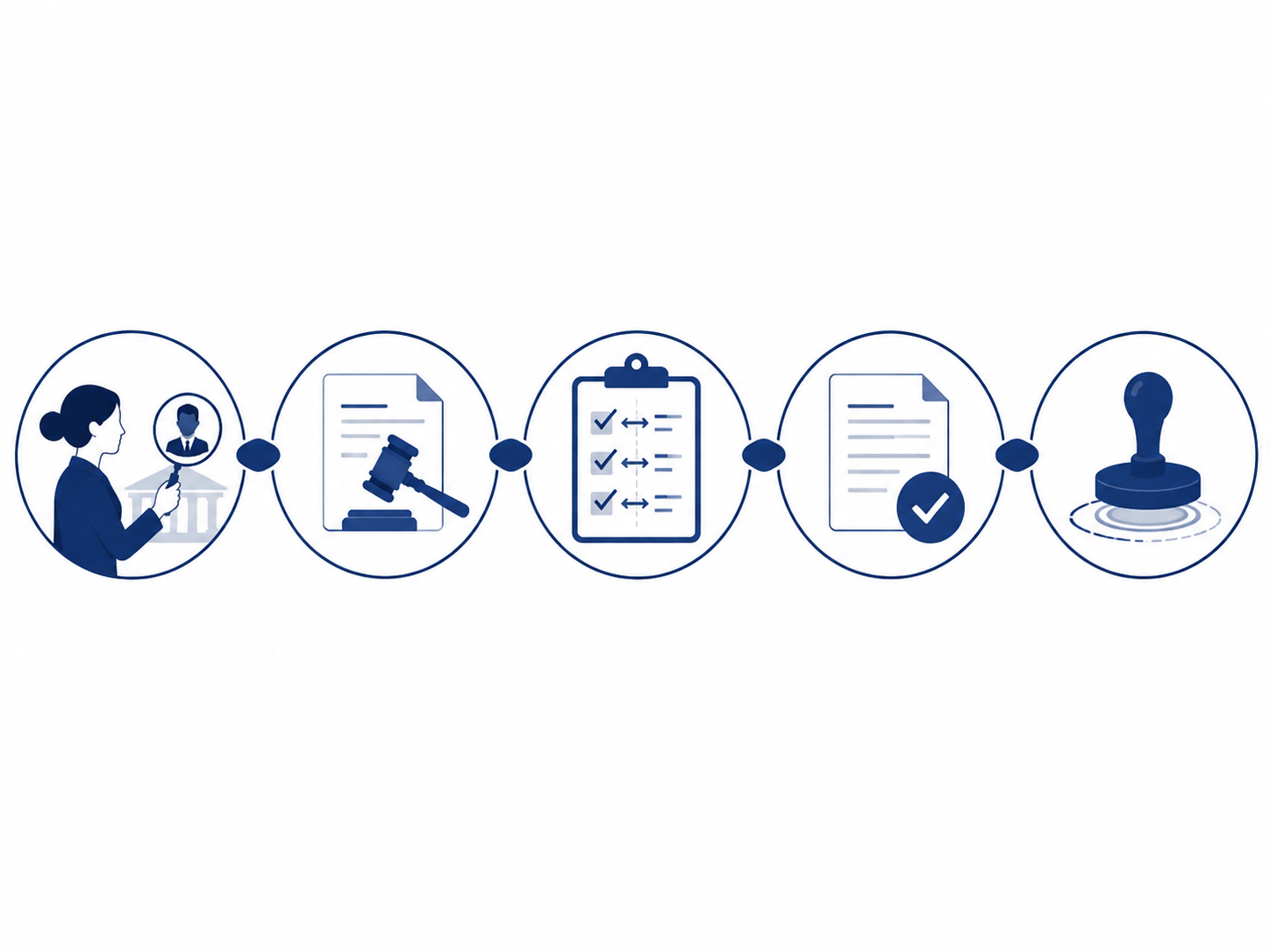
- Identify the assigned judge, the case type, and the court. Civil, criminal, and bankruptcy filings should not share one AI-rule assumption.
- Open the judge’s current SDNY webpage and standing orders. Treat that page as the authority for the filing.
- Compare the judge’s current language against maintained trackers and secondary tables. Use discrepancies as a prompt for further checking, not as a shortcut.
- Document internally whether generative AI was used, where it affected the filing, who reviewed the affected material, and how citations and factual assertions were verified.
- Add any required disclosure or certification before final filing, and make sure the signer has enough information to stand behind it.
This article should be treated the same way: a dated reference for Q3 2026, not legal advice and not a replacement for the operative standing order. SDNY AI compliance is risky less because the known rules are impossible to understand than because they are fragmented, judge-specific, and easy to miss when a team assumes there is one courtwide answer.
References
- Navigating AI Disclosure Rules in New York Courts, Greenberg Traurig LLP, Nov. 2025.
- NYSD Cronan AI Order, Legal AI Governance.
- NYSB LBR 9011-1(d), Legal AI Governance.
- Artificial Intelligence Court Order Tracker, Ropes & Gray.
Comments
Join the discussion with an anonymous comment.