
Full profile
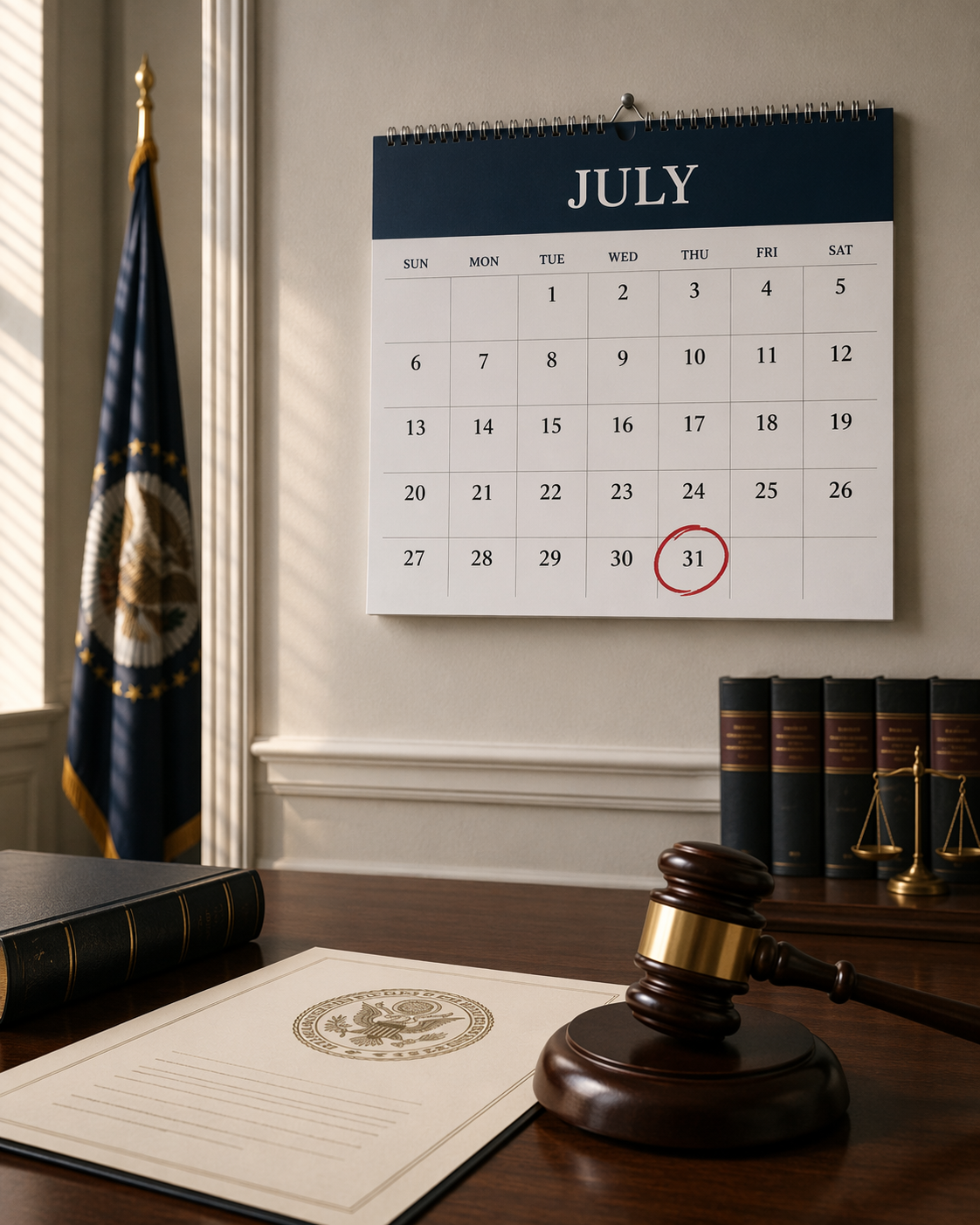
The operative Texas delta-8 THC ban date is July 31, 2026. On that date, non-delta-9 THC isomers, including delta-8, delta-10, THCP, delta-6, and other non-delta-9 forms of THC, are reinstated as Schedule I controlled substances under Texas Department of State Health Services rules. The date comes from DSHS’s July 10, 2026 Texas Register action reinstating its 2021 definitions, not from a new standalone statute passed in 2026.[1]
That answer needs one immediate limitation: hemp-derived delta-9 THC products containing less than 0.3% delta-9 THC by dry weight remain lawful under Texas state law as described in the available materials.[2] This article is informational and is not legal advice.
The Date Comes From Reinstated DSHS Rules
The clean chain is: Texas Supreme Court decision on May 1, 2026; mandate on June 5, 2026; DSHS Texas Register reinstatement on July 10, 2026; effective date on July 31, 2026.[1][3] For compliance purposes, that sequence matters more than a generalized statement that “Texas banned delta-8,” because each step did different work.
The May 1 decision in DSHS v. Sky Marketing Corp., No. 23-0887, ended the enforcement freeze that had blocked DSHS from treating manufactured delta-8 as a Schedule I controlled substance while the case proceeded.[3] The Court did not enact a new hemp statute. It held that the DSHS commissioner had authority to classify manufactured delta-8 as Schedule I and reversed the injunction that had prevented the agency from enforcing that classification.[4]
That distinction is not academic. If the date had come from a new statute, the compliance question would begin with statutory text and any transition provisions. Here, the operative move is administrative reinstatement after appellate relief. DSHS reinstated its 2021 definitions through the Texas Register on July 10 and set July 31, 2026, as the effective date for adding non-delta-9 THC isomers back to the controlled substances list.[1]
| Event | Compliance significance |
|---|---|
| May 1, 2026 Texas Supreme Court decision | Reversed the injunction blocking DSHS from treating manufactured delta-8 as Schedule I. |
| June 5, 2026 mandate | Ended the appellate pause after the rehearing window closed. |
| July 10, 2026 Texas Register reinstatement | DSHS reinstated the 2021 definitions covering non-delta-9 THC isomers. |
| July 31, 2026 effective date | Non-delta-9 THC isomers become Schedule I controlled substances in Texas. |
What Is Banned, and What Is Not
The safer shorthand is not “Texas THC ban.” The narrower and better-supported statement is that Texas’s reinstated DSHS definitions cover non-delta-9 THC isomers. The materials identify delta-8, delta-10, THCP, delta-6, and all other non-delta-9 THC isomers as becoming Schedule I controlled substances on July 31, 2026.[1]
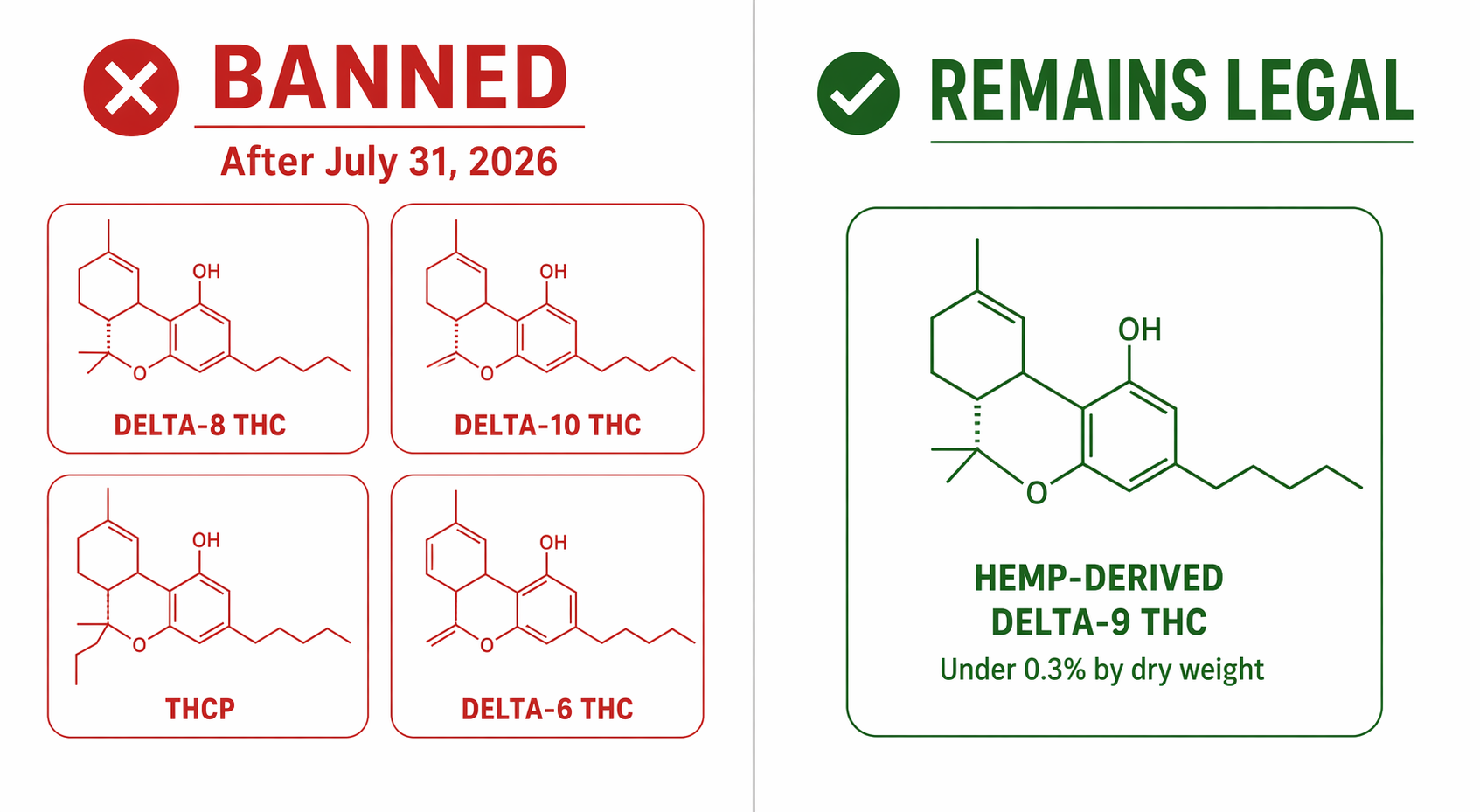
The carveout is also narrow but important. Products containing only hemp-derived delta-9 THC below 0.3% by dry weight remain legal under Texas law after July 31, according to the cited reporting.[2] That means the compliance question is not simply whether a product contains THC. It is which THC isomer is present, whether the product is hemp-derived, and whether the delta-9 concentration remains below the 0.3% dry-weight threshold.
| Product category | Status after July 31, 2026 under cited materials |
|---|---|
| Delta-8 THC | Schedule I controlled substance in Texas. |
| Delta-10 THC | Schedule I controlled substance in Texas. |
| THCP | Schedule I controlled substance in Texas. |
| Delta-6 THC | Schedule I controlled substance in Texas. |
| Other non-delta-9 THC isomers | Schedule I controlled substance in Texas. |
| Hemp-derived delta-9 THC under 0.3% by dry weight | Remains lawful under Texas state law as described in the cited materials. |
For inventory review, the table should not be read as a substitute for product-specific analysis. A label that markets a product as “hemp THC” does not answer the isomer question. A certificate of analysis that reports delta-9 compliance may still leave a separate issue if the product contains delta-8, delta-10, THCP, delta-6, or another non-delta-9 isomer.
Why the Supreme Court Decision Did Not Settle Every Hemp Issue
The Texas Supreme Court ruling is the controlling event behind the end of the delta-8 enforcement freeze, but it should not be cited as if it resolved every pending hemp dispute in Texas. The Court reversed the injunction and recognized the commissioner’s authority to classify manufactured delta-8 as Schedule I; the underlying case still had room for further proceedings on the merits.[4]
The Court also treated DSHS’s 2021 website notice carefully. Available reporting states that the Court said the website notice had “no independent legal effect.”[4] That point matters because the enforceable compliance date now comes from the reinstated administrative definitions and Texas Register action, not from a web posting by itself.
The July 15 Business Guidance Is Practical Context, Not Law
The Texas Hemp Business Council told businesses on July 15, 2026, to “sell through or pull” non-delta-9 THC inventory before July 31.[1] That is useful evidence of how the regulated industry understood the deadline, and it is a sensible compliance prompt for retailers, distributors, and counsel reviewing purchase orders. It is not the legal authority for the ban.
The legal authority remains the DSHS reinstatement, supported by the Texas Supreme Court ruling and mandate. A client alert can mention the trade-group guidance as practical notice, but the citation chain should run through the court action and the Texas Register reinstatement.
Enforcement and Related Litigation Still Need Monitoring
DSHS’s enforcement posture was not fully clarified in the available materials. On May 28, 2026, the agency told KUT it was “waiting for a few legal proceedings to wrap up before making any moves.”[4] That statement should not be converted into a safe harbor. It is an agency posture statement, not a binding non-enforcement policy.
Local enforcement may also vary. The research materials note that Austin police have a non-arrest policy for properly documented hemp products, while more conservative jurisdictions may enforce more aggressively. That is a jurisdictional risk point, not a change to the July 31 statewide effective date.
A separate Travis County injunction, granted May 1, 2026, continues to block DSHS’s total-THC rule affecting smokable hemp, and that case is pending in the Fifteenth Court of Appeals.[5] That injunction should not be confused with the delta-8 isomer issue. It concerns a different rule and a different product category.
There is also a federal date on the horizon. A redefinition under H.R. 5371 is scheduled to take effect November 12, 2026, and may further alter the hemp product landscape.[6] It does not move the Texas July 31, 2026 effective date for non-delta-9 THC isomers.
The Citable Answer as of July 19, 2026
As of July 19, 2026, the best source-cited answer is that Texas’s ban on delta-8 THC and other non-delta-9 THC isomers takes effect July 31, 2026. The date rests on DSHS’s July 10 Texas Register reinstatement of its 2021 definitions after the Texas Supreme Court’s May 1 decision and June 5 mandate.[1][3]
What is settled enough to cite: non-delta-9 THC isomers, including delta-8, delta-10, THCP, and delta-6, are treated as Schedule I controlled substances in Texas beginning July 31, 2026; qualifying hemp-derived delta-9 THC products under 0.3% by dry weight remain lawful under state law.[1][2] What still requires monitoring: DSHS enforcement posture, local enforcement practices, further merits proceedings, the separate smokable-hemp injunction, and the federal November 12, 2026 redefinition.
References
- DSHS Adds Non-Delta-9 THCs to Controlled Substances List, Effective July 31, 2026, Texas Hemp Business Council, July 15, 2026.
- THC products still legal in Texas, Yahoo/Austin American-Statesman.
- Texas' delta-8 ban may have hurt hemp businesses, but enforcement freeze must end, justices say, KUT, May 1, 2026.
- Austin TX delta-8 cannabis DSHS legal sales Schedule I Texas Supreme Court, KUT, May 28, 2026.
- Texas hemp THC smokeable flower joints regulations, Texas Tribune, March 24, 2026.
- What's next for the Texas hemp industry after court ruling on delta-8 THC, KSAT, May 6, 2026.
Comments
Join the discussion with an anonymous comment.