
Full profile
What the Rule Does
The operative document is the CDC's May 27, 2026 interim final rule at 91 FR 31362, which amends 42 CFR § 71.40(f) under Section 362 of the Public Health Service Act to suspend the introduction of persons from designated countries during a quarantinable-disease outbreak. The notice ties the rule to a Bundibugyo virus outbreak in the Democratic Republic of Congo, Uganda, and South Sudan, notes that WHO declared a public health emergency of international concern on May 18, 2026, and says there is no approved vaccine or therapeutic for this strain. It is scheduled to run for six months, allowed a 30-day comment period, and was issued as an economically significant rule under EO 12866 with emergency procedures instead of a full cost-benefit review. CDC then kept it alive through 30-day continuation orders on June 21 and July 13, 2026, extending the suspension through at least mid-August 2026. [1]
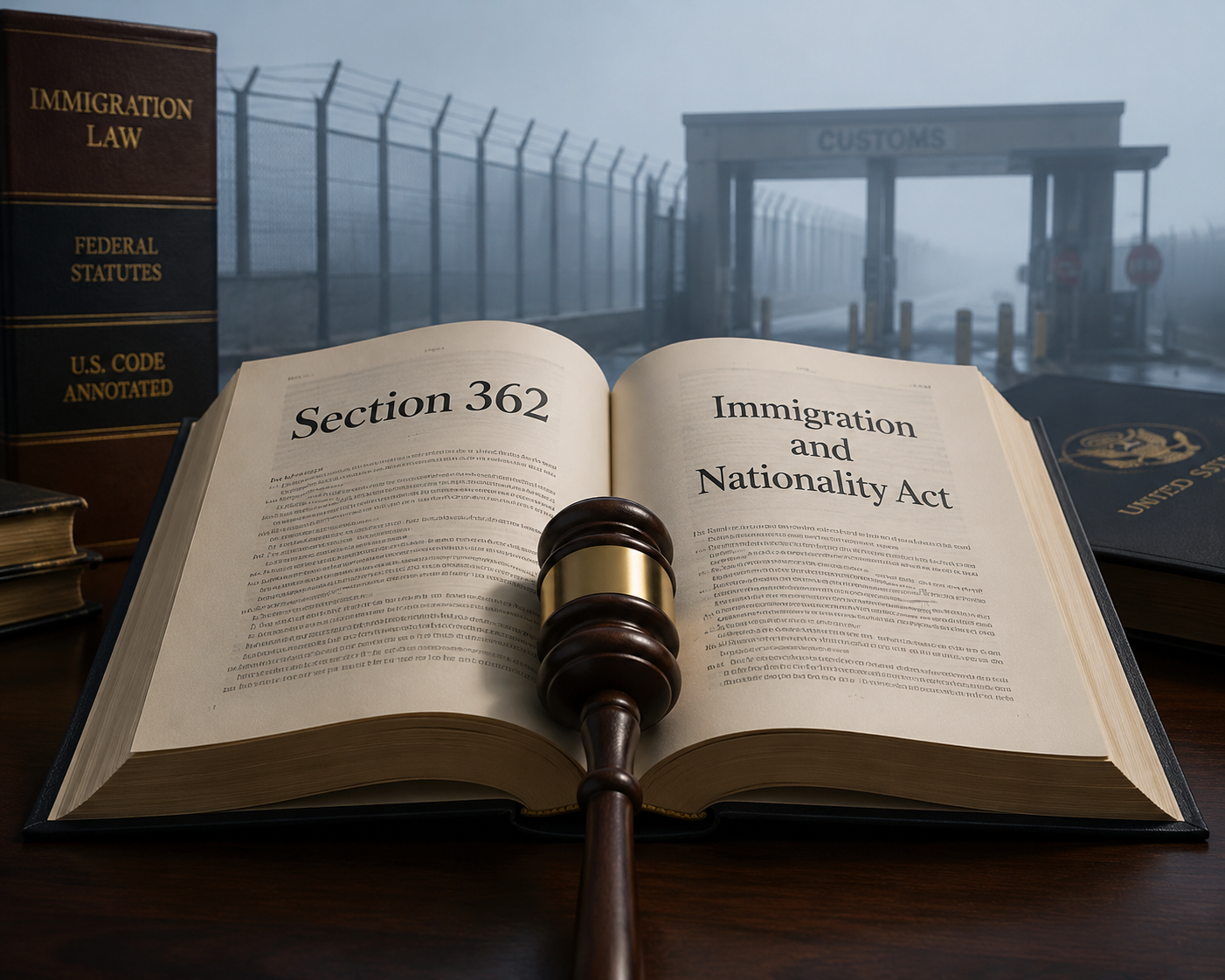
That framing matters because KFF described the rule as creating a standing administrative authority, not merely reacting to a one-off outbreak, and called it significantly more restrictive than past Ebola controls. The Hill's chronology shows how the policy moved from the initial May 18 order to the May 22 amendment that extended restrictions to lawful permanent residents, which is the point where a public-health measure starts to look like a repeatable entry-control tool rather than a narrow quarantine response. [2][3]
Section 361 and Section 362 Do Different Work
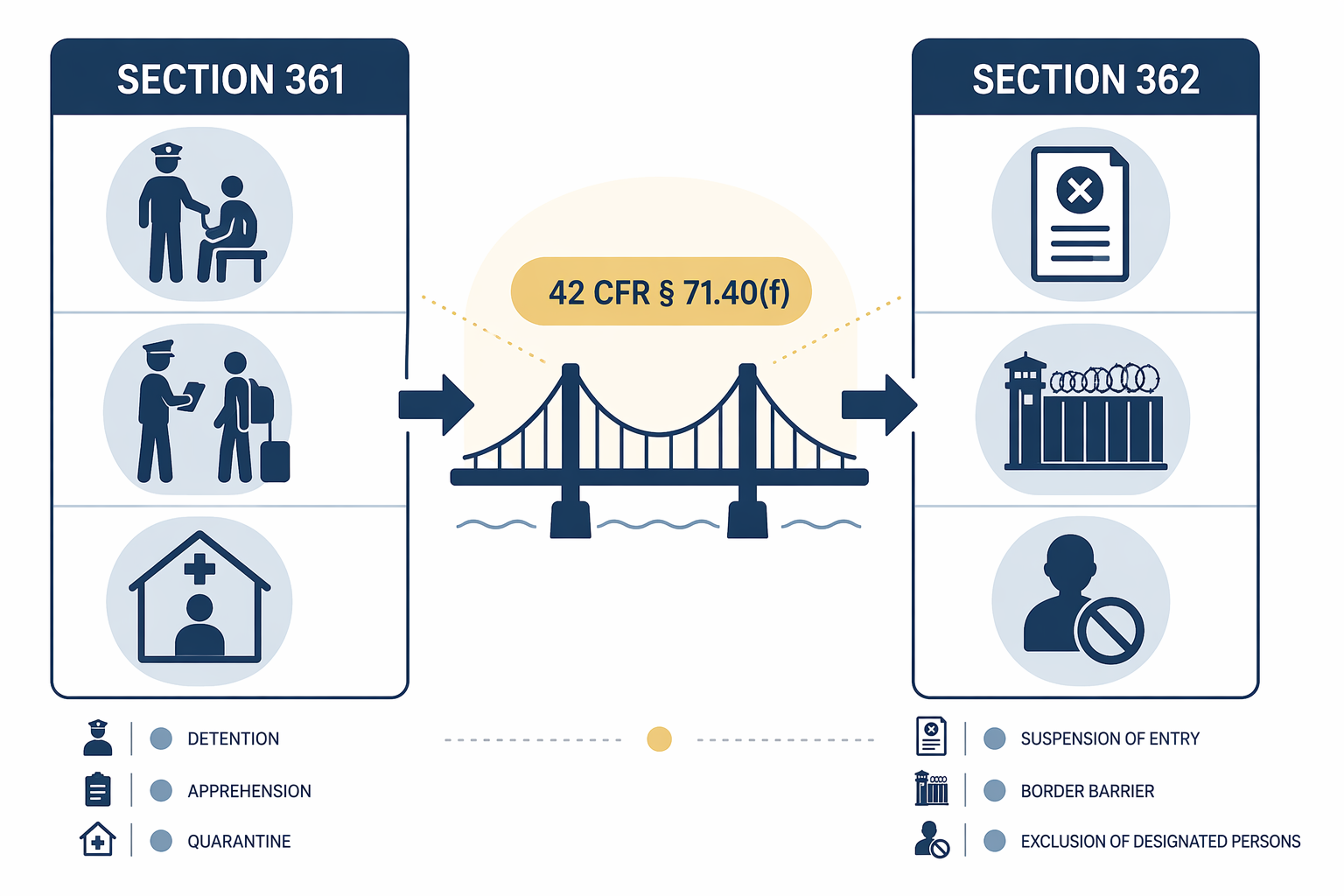
| Provision | Core function | Why it matters here |
|---|---|---|
| Section 361, 42 U.S.C. 264 | Apprehension, detention, and conditional release of persons to prevent the spread of communicable disease [1][4] | This is the traditional quarantine tool, but it is not the operative hook used for the 2026 Ebola entry suspension [1] |
| Section 362, 42 U.S.C. 265 | Suspension of the introduction of persons from foreign countries or places [1] | This is the authority the IFR uses to stop entry from designated countries during the outbreak [1] |
| 42 CFR § 71.40(f) | The regulatory text the CDC amended to carry that suspension power into practice [1][2] | It turns a statutory emergency power into a reusable administrative mechanism [2] |
The distinction is not cosmetic. Section 361 is about controlling exposure and movement once a person is within the quarantine system, while Section 362 lets the government suspend the introduction of persons from abroad. The 2026 rule sits in the second lane, which is why it reads less like a bedside quarantine order and more like an entry restriction built on public-health language. That shift is what makes the rule structurally important: the CDC is not just managing a case-by-case outbreak response, it is formalizing a standing power to close the door at the border when a quarantinable disease appears abroad. [1][2][4]
Why Lawful Permanent Residents Change the Analysis
The most legally exposed part of the rule is the inclusion of lawful permanent residents. HHS justified that choice by saying LPRs may have stronger ties to families and communities outside the United States, and that scarce quarantine capacity justified prioritizing returning U.S. citizens at the designated screening airports in Washington Dulles, Atlanta, and Houston. That is an operational explanation, but it also reveals the rule's legal ambition: it is not merely screening entrants, it is deciding which categories of people may be suspended from introduction in the first place. [1]
That is why KFF singled out the green-card issue as highly unusual and likely to face legal challenges. In ordinary immigration law, LPR status is tied to a durable right to live in the United States and to return after travel, subject to the usual admissibility rules. A disease-specific suspension of entry that sweeps in LPRs therefore creates a direct tension with the Immigration and Nationality Act, and the materials do not show any court having tested this exact arrangement yet. The question is not whether the government can manage disease exposure at the border in the abstract; it is whether Section 362 can be read so broadly that it overrides a class of people who usually have the strongest claim to reentry. [1][2]
That unresolved tension is where the challenge would most likely land. Expert commentary in the materials points to arbitrariness concerns and to the broader problem of using emergency disease powers in ways that look less like temporary quarantine and more like an entry regime. The same commentary also warns against collapsing Ebola, quarantine, and unrelated Title 42 disputes into one story. An Andes virus quarantine issue is separately described in the record, but it is a different legal question and should not be treated as the same fight. [4]
The Operational Record Is Narrower Than the Politics
The operational record gives context without answering the statutory question. AP reported that the administration sent Americans exposed to Ebola while abroad to a facility in Kenya, which shows how much the policy depended on extraterritorial logistics rather than a simple domestic quarantine order. The later Kenyan court block of that facility underscores the same point without making Kenya the central legal frame. The Guardian also reported WHO concerns that travelers and health workers may be deterred if return is not guaranteed, with Craig Spencer and Alexandra Phelan warning that the policy could chill deployment to outbreak zones. Those concerns do not answer whether Section 362 reaches this far, but they explain why the rule's practical reach matters beyond the language of the regulation. [5][6]
What remains open is the legal boundary itself. On the materials available, the May 2026 IFR is best understood as a meaningful expansion of quarantine power under Section 362, not just a temporary response to a single Ebola flare-up. Its vulnerability is clearest where it reaches lawful permanent residents, because that is where a disease-specific suspension of entry collides most directly with immigration law, and no court has yet answered whether this version of the rule can stand. [1][2]
References
- Control of Communicable Diseases; Foreign Quarantine — Interim Final Rule, Federal Register, May 27, 2026
- New Ebola Quarantine Rule Bars Entry of Noncitizens, Including Green Card Holders, from Affected Countries, KFF
- Trump administration expands Ebola travel restrictions to green card holders, The Hill, May 23, 2026
- Is the Ebola Quarantine in the US Legal? Expert Weighs In, Northeastern University, June 10, 2026
- Trump will send Americans exposed to Ebola while abroad to Kenya, AP News, late May 2026
- US curbs on travelers exposed to deadly viruses may infringe rights and deter volunteers, The Guardian, May 21, 2026
Comments
Join the discussion with an anonymous comment.