
Full profile
The 2026 World Cup tax story is being sold as a breakthrough, but the useful headline is narrower: the U.S., Canada, and Mexico have agreed on a match-based allocation method for the $871 million prize pool, while nonresident athletes still begin from a 30% U.S. withholding baseline on gross U.S.-source income [1][2]. That matters because the pool is large enough to make allocation mechanics consequential: $655 million is performance-based, the winner is reported to receive about $51 million, and all 48 teams are guaranteed at least $12.5 million [1].
The formula that does the federal heavy lifting
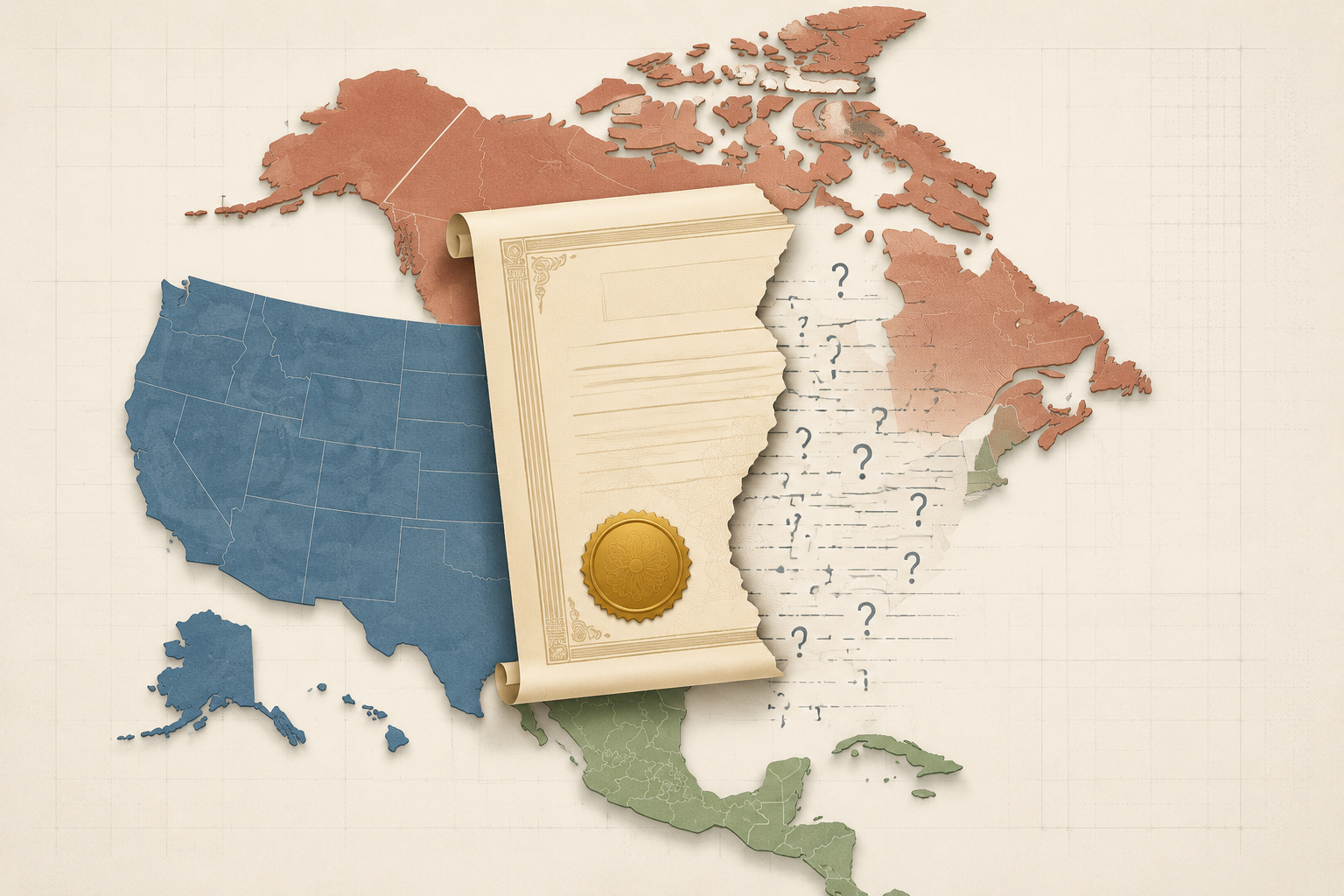
The core administrative move is simple: income equals total earnings multiplied by matches in a country divided by total matches [3]. That rule does not create a new tax rate. It gives the three tax authorities a shared sourcing convention for prize money and related tournament income, which is useful because it narrows the federal double-taxation argument before anyone starts fighting over credits, returns, or payroll withholding.

Just as important, the formula is an administrative consensus, not a binding regulation or audit shield. Taxpayers can still justify a different allocation on the facts, but the consensus formula is the part that will actually guide preparation work for withholding agents and return preparers.
The exemption path is narrower than the headlines
The second load-bearing piece is the federation exemption channel. PMAs may be able to seek a federal exemption, but the relief is application-based, not automatic, and if it is not secured, a 21% federal tax may apply to the federation-level income at issue [4]. The reporting on the underlying section is not perfectly aligned: KPMG and ACCA describe a 501(c)(6) pathway, while The Guardian described the talks as pointing to 501(c)(3) [4][5][6].

That classification conflict is not cosmetic. It changes how advisers think about eligibility, documentation, and what exactly the federation can tell its finance staff before the tournament starts. The relief also stops at the federation boundary; it does not turn player pay or staff compensation into exempt income [4][6].
Canada and Mexico are reported to have granted full federal tax exemptions to PMAs, while the U.S. has not, so the same tournament sits inside three different federal attitudes toward the same prize pool [6][11]. Mexico's SAT role is part of the framework, but the English-language record is thinner there than on the IRS and CRA side, which makes the public picture look cleaner than the paper trail.
What still gets filed
The federal deal does not clear the rest of the board. Players, staff, and their advisers still have to work through state jock taxes, treaty claims, withholding certificates, ITINs, and local filing calendars.
- State jock taxes remain untouched by the federal deal. Reported examples still include California at 13.3%, New Jersey at 10.75%, and Missouri's layered stack approaching 7% [7][8].
- Treaty relief is uneven. Twenty-one participating nations lack a U.S. double-tax treaty, including Brazil, Argentina, Saudi Arabia, Senegal, and Uruguay, which leaves those players exposed to the 30% federal withholding baseline [2][7].
- Timing still matters. Central Withholding Agreement applications are supposed to be filed 45 days before the event, and late applications can be rejected, which pushed the practical window into late April for the June 11 start [9].
- Documentation still matters too. ITIN processing can take 7 to 11 weeks during peak periods, and multi-jurisdictional compliance costs for a mid-tier player are reported at $5,000 to $15,000 [7][10].
The 2026 arrangement is meaningful because it gives federations a workable federal allocation path and a possible exemption route, but it is incomplete because players, staff, state tax regimes, late filings, and treaty gaps remain outside the cleanest relief. For advisers, the question is not whether the World Cup now has a tax deal. It is which parts of the deal actually reach the person who has to file, withhold, or defend the return.
References
- World Cup 2026: What is the prize money? BBC Sport, June 24, 2026.
- The Tax Playbook for Foreign Participants in the 2026 FIFA World Cup, IRS Taxpayer Advocate Service, June 2026.
- GOAL!!!! U.S. and Canada Agree on World Cup Prize Money Tax Rules, Bilzin Sumberg / Canada Revenue Agency, June 2026.
- Reported FIFA 2026 World Cup tax deal allows teams to seek section 501(c) tax-exempt status, KPMG LLP, June 2026.
- All World Cup teams poised for tax exemption after Fifa talks with US treasury, The Guardian, April 29, 2026.
- Tax exemptions cloud World Cup, ACCA AB Magazine, June 2026.
- 2026 FIFA World Cup & Cross-Border Tax Compliance (Jock Tax Report), Greenback Expat Tax Services.
- How Much Will World Cup Players Pay in Taxes? In 2026, FIFA is the Real Winner, CPA Practice Advisor, July 6, 2026.
- Overview of the Central Withholding Agreement program, IRS.
- How players will be taxed at the 2026 World Cup, Sprintax Blog.
- FIFA Secures Last-Minute Federal Tax Breakthrough for 2026 World Cup Teams, The Global Treasurer, April 30, 2026.
Comments
Join the discussion with an anonymous comment.