
Maxwell loses bid to overturn conviction in district court
Ghislaine Maxwell's bid to vacate her conviction was denied on Aug. 25, 2026 by Judge Paul A. Engelmayer of the Southern District of New York, who called the challenge meritless in a 67-page order. The ruling is a district-court collateral-review denial — not a Second Circuit or Supreme Court decision — and an appeal of the denial is the only realistic next step.
- Applicable role
- legal researcher
- Workflow stage
- review
- Primary source
- United States v. Maxwell, S.D.N.Y. docket gov.uscourts.nysd.539612, Doc. 869
Ghislaine Maxwell lost her bid to overturn her conviction on Aug. 25, 2026, but the court responsible matters: Judge Paul A. Engelmayer of the U.S. District Court for the Southern District of New York denied the petition. The ruling did not come from the Second Circuit or the Supreme Court.
The 67-page ruling appears in United States v. Maxwell, S.D.N.Y. docket gov.uscourts.nysd.539612, as Doc. 869. It left Maxwell’s conviction and 20-year sentence in force and did not order resentencing.[1][2][3]
| Verification point | Status as of Sept. 1, 2026 |
|---|---|
| Court | U.S. District Court for the Southern District of New York |
| Judge | Paul A. Engelmayer |
| Filing posture | Post-conviction collateral challenge seeking vacatur |
| Disposition | Petition denied |
| Docket reference | gov.uscourts.nysd.539612, Doc. 869 |
| Effect | Conviction and 20-year sentence remain in force; no resentencing ordered |
| Realistic next route | An appeal from this denial, if Maxwell chooses and is permitted to pursue one |
POLITICO reported that Engelmayer called the petition “demonstrably meritless” and said it was based on “speculation, distortions, and/or outright falsehoods.”[1] Axios reported that he described the evidence of guilt as “overwhelming” and concluded that the newly released Epstein materials invoked by Maxwell “hurt more than helped” her claims.[2] Those quotations are drawn from news coverage: the research materials for this article did not include the full text of Doc. 869, so they should not be treated as independently checked quotations or paired with unverified page references.
Three rulings, three different procedural jobs
The easiest way to misstate this development is to compress several years of review into one sentence. Maxwell did lose in the Second Circuit, and the Supreme Court later declined to hear her case. But neither event is the Aug. 25, 2026 ruling.
- Direct appeal: On Sept. 17, 2024, the Second Circuit affirmed Maxwell’s conviction in No. 22-1426. Among the issues addressed, the appellate court held that the non-prosecution agreement at issue bound federal prosecutors only in the Southern District of Florida.[5]
- Supreme Court review: After the affirmance, Maxwell sought certiorari. The Supreme Court denied the petition on Oct. 6, 2025, declining to review the case.[6]
- Collateral review in the trial court: Maxwell then pursued a post-conviction petition in the Southern District of New York. Engelmayer denied that challenge on Aug. 25, 2026.[1][2][3]
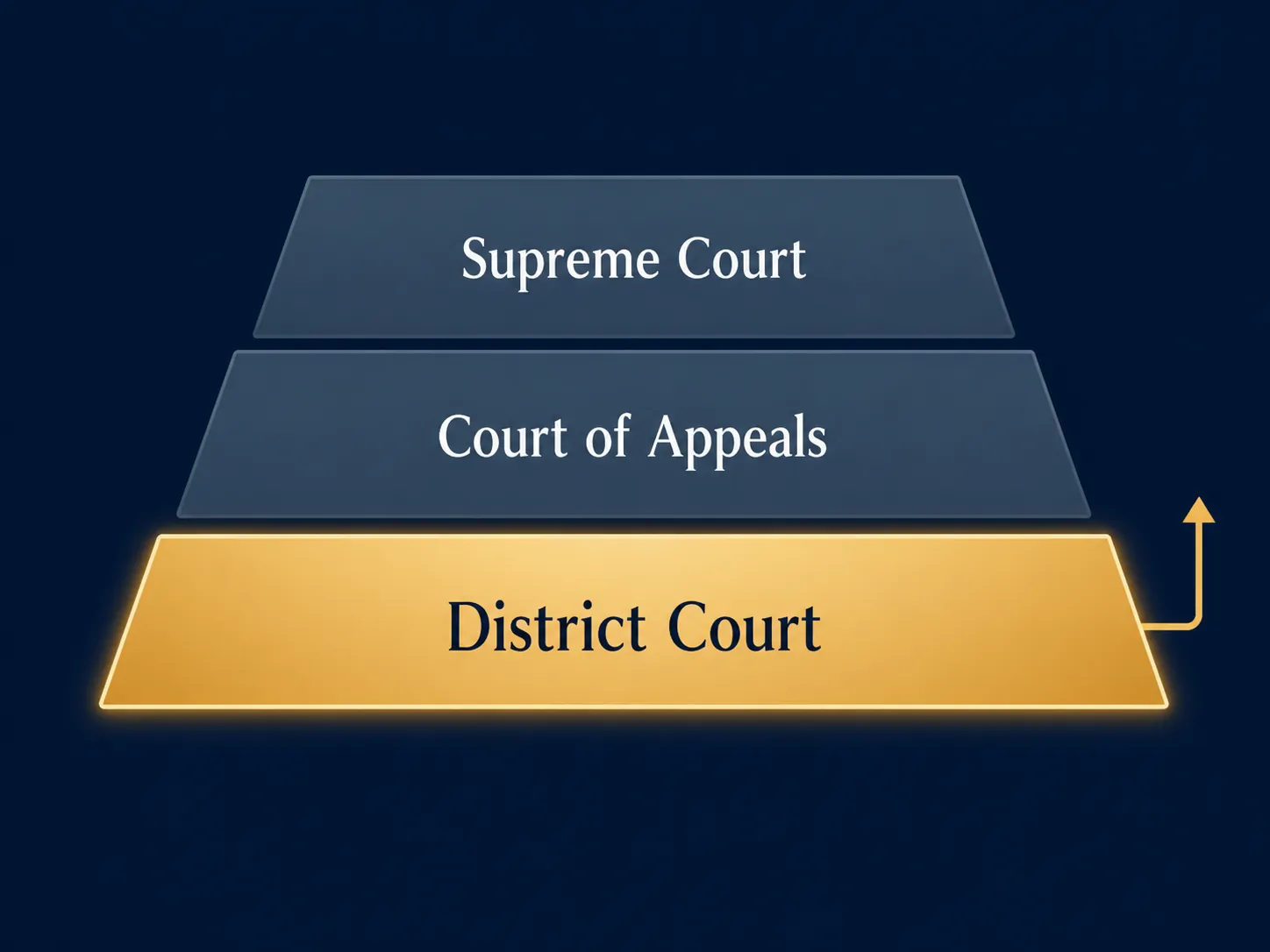
The sequence separates direct review from collateral review. On direct appeal, the court of appeals examines the conviction and rulings presented through the appellate record. A certiorari petition asks the Supreme Court to review the appellate judgment. A later collateral filing returns to the district court and attacks the conviction or sentence through a separate post-conviction route, often relying on allegations or materials that the petitioner says justify relief after direct review has ended.
That return to the district court does not reopen the completed Second Circuit appeal or undo the Supreme Court’s certiorari denial. It creates a new ruling with its own potential review path. Here, the operative event is Engelmayer’s denial of the collateral challenge—not a fresh appellate affirmance of the original judgment.
What Engelmayer was reviewing
News coverage described Maxwell’s petition as presenting nine grounds for setting aside her conviction. The reported allegations included juror misconduct and government suppression of evidence, with some claims tied to newly released Epstein materials.[4] Those grounds identify the scope of the challenge, but the available sources do not support reconstructing nine separate holdings from the order.
The same caution applies to the petition’s statutory identity. Coverage supports describing it as a post-conviction collateral petition seeking vacatur. The research packet does not independently verify the statutory label from Doc. 869 itself, so characterizing every aspect of the ruling as a specific statutory holding would go beyond the documents available here.
How to verify the ruling before repeating it
A reliable internal briefing should identify four items before summarizing the merits: the court, the filing, the disposition, and the next available route. In this matter, “a court rejected Maxwell’s challenge” is accurate but incomplete. “The appeals court upheld her conviction” is procedurally wrong if offered as a description of the Aug. 25 ruling.
The docket reference is especially useful because the Maxwell litigation has generated separate disputes over records as well as the merits of her conviction. The site’s account of the Maxwell grand-jury-record proceedings concerns the same criminal case and judge but a different docket event. A shared caption is not enough to establish that two reports concern the same motion or review path.
The references to newly released Epstein materials require the same separation. A document may be genuine yet fail to support the claim attached to it; it may also be relevant to a records dispute without changing the criminal judgment. The Epstein-files verification workflow provides a method for distinguishing the document, the assertion made about it, and the court proceeding in which it was used.
Present posture as of Sept. 1, 2026
Maxwell’s conviction and 20-year sentence remain in force. Her direct appeal ended with the Second Circuit’s 2024 affirmance, and the Supreme Court declined review in 2025. Engelmayer’s Aug. 25, 2026 denial therefore leaves an appeal from the collateral-review ruling as the only realistic next procedural route; it does not revive either completed path.
That describes an available route, not a confirmed filing. The materials reviewed here contain no current Southern District of New York docket confirmation that Maxwell had filed a notice of appeal by Sept. 1, 2026. They also do not verify whether Doc. 869 addressed a certificate of appealability. Either point should be checked against the live docket before a briefing states that an appeal has begun or characterizes the conditions under which it may proceed.
References
- Ghislaine Maxwell conviction challenge — POLITICO, August 25, 2026
- Ghislaine Maxwell’s bid to overturn conviction rejected — Axios, August 25, 2026
- US judge denies Ghislaine Maxwell’s ‘frivolous’ bid to throw out conviction — Al Jazeera, August 25, 2026
- Epstein associate Ghislaine Maxwell asks court to set aside conviction — ABC News
- Will the Supreme Court hear Ghislaine Maxwell’s case? — SCOTUSblog, July 2025
- Supreme Court declines to hear Ghislaine Maxwell’s appeal — SCOTUSblog, October 2025
Grounded in
This procedure is grounded in United States v. Maxwell, S.D.N.Y. docket gov.uscourts.nysd.539612, Doc. 869, independent of any single documented case. See the Regulation tracker for the governing text.
Cases this step would have prevented
No cases have been explicitly linked to this checklist yet. See Risk Digest for documented incidents generally.
← Back to WorkflowsReport a correction or tip
Spotted an outdated figure, a misstated fact, or a ruling this workflow checklist should reflect? Public comments are disabled for this content given the professional cost of a misreported case outcome, penalty amount, or rule text — use the structured correction channel instead.
Report a correction or tip for this record →