
Student loan repayment plan error? Verify before reapplying
A July 2026 Education Department message told thousands of IDR borrowers to reapply after a payment miscalculation — but the notice is an unverified claim, not a final fact. This workflow gives borrowers and their advisers a repeatable, evidence-preserving process for confirming the true payment on StudentAid.gov, reconciling family size and tax-filing status, and escalating if the servicer's number still doesn't match.
- Applicable role
- student loan borrower
- Workflow stage
- pre-filing
If you received, forwarded, or heard about the July 2026 Education Department message telling IDR borrowers to reapply after a student loan repayment plan calculation error, treat the message as the start of a verification file. It is not a final answer to what your payment should be. Business Insider and Newsweek reported that roughly 6,000 borrowers were told, “Due to an error, you received an incorrect monthly payment amount,” and were directed to submit a new IDR application.[1][2]
This is a verification-workflow record, not legal advice and not a court-sourced Risk Digest entry. That distinction matters. The July event is sourced to named press reports and agency spokesperson statements; the materials do not identify a formal public Education Department release confirming the full borrower universe, the full root cause, or the exact remedy for every affected account. Forbes also noted that, as of its July 28, 2026 article, Federal Student Aid’s statutory-changes page had not been updated since July 6, 2026.[3]
The practical consequence is simple: the notice is evidence that your account may need action, but it is not proof that the notice’s payment amount, your servicer’s bill, or a freshly generated calculator result is correct. Before reapplying, build the number you can defend later to a servicer, the FSA Ombudsman, a regulator, a credit bureau, or a PSLF reviewer.
Start with the status of the July 2026 notice
The department-stated explanation, as reported, was narrow: the affected group involved borrowers who manually updated family size where Federal Student Aid could not use tax information already on file.[1][2] That is not a small detail. Family size can change an IDR payment. So can tax-filing status, especially for married borrowers whose IDR calculation may differ depending on whether they filed jointly or separately.
The reported notice also pointed borrowers back to StudentAid.gov. Newsweek and Forbes described a direct-login verification step under My Activity, including a warning that an application for which the servicer had not confirmed eligibility “has been canceled.”[2][3] A cancellation flag is operationally important, but it still does not answer the calculation question. It tells you the system may require a new application. It does not tell you which income, family-size, filing-status, or plan inputs produced the amount now appearing on your bill.
That is why the first check should not be an email link and should not be a phone call memory. Open a browser yourself, go directly to StudentAid.gov, log in, and preserve what you see. If the My Activity page says an application was canceled, save that page with the date visible if possible. If it does not, save that too. An unaffected account and an affected account can both become hard to explain later if the borrower has no dated record of what the federal system showed at the moment of decision.
The shortest defensible workflow
| Step | What to preserve | Why it matters |
|---|---|---|
| Log in directly to StudentAid.gov | Dated screenshots of dashboard, plan, application status, and My Activity | Avoids relying on email links or summaries of what the notice said |
| Collect the account documents | The July notice, prior IDR application or recertification, servicer billing statement, and recent payment history | Creates the paper trail for the amount currently being charged |
| Rebuild the calculation | Loan Simulator output, at least one third-party calculator output, and the inputs used for each | Separates the payment estimate from the facts entered into the estimate |
| Reconcile the inputs | Family size, income source, adjusted gross income if used, tax-filing status, spouse income treatment, and plan selection | Targets the input categories implicated in the July 2026 error |
| Compare against the bill | System estimate, independent estimate, and actual billing statement side by side | Identifies whether the dispute is with the application status, the calculation, or the servicer bill |
| Decide whether to reapply | Submission confirmation, new application PDF or screenshots, and notes explaining why you reapplied or did not | Makes the borrower’s action defensible if the account is later reviewed |
| Escalate if unresolved | Servicer messages, call logs, complaint numbers, uploaded exhibits, and credit-report records if relevant | Keeps the dispute tied to documents rather than recollection |
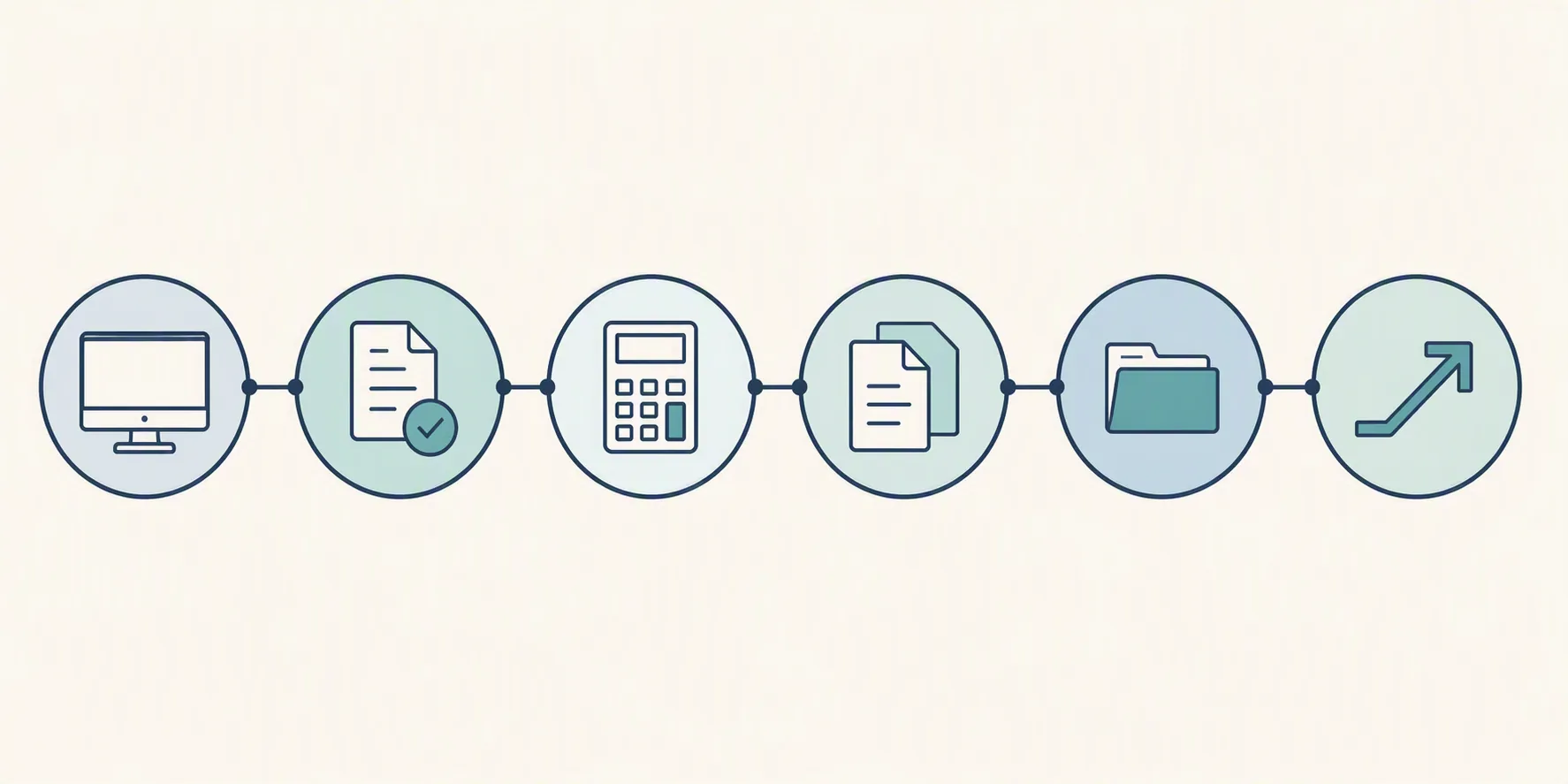
The workflow is intentionally more formal than a normal borrower task list because the consequence is not limited to one monthly bill. A borrower on a PSLF track may later need to explain why a month was paid, not paid, placed in a processing status, or corrected. A borrower who is not pursuing PSLF may still need to challenge an amount, late fee, delinquency notation, or credit-report entry. In both cases, the useful artifact is a dated reconciliation packet, not a vague statement that the website seemed wrong.
Where the calculation has to be rebuilt
The calculation check should begin with the inputs, not with the final payment number. A borrower can copy a payment estimate into a complaint and still lose the thread if no one can see how the estimate was produced. For this July 2026 issue, the first input to verify is family size, because that is the root-cause area the department reportedly identified.[1][2]
Do not assume family size carried over correctly from an older application. Do not assume a manual update was accepted just because the confirmation page looked complete. Write down the family size used in each place: the prior IDR application, the current StudentAid.gov view, the Loan Simulator run, the servicer statement if it discloses the assumption, and any third-party calculator you use. If the number differs across sources, the discrepancy itself becomes evidence.
The family-size check is especially important because servicers may default to a family size of one when family size is not submitted, which can raise IDR payments.[4] That default can make a bill look official while still resting on an incomplete borrower profile. A borrower who merely says “my payment seems too high” has a weaker record than one who can say, “The servicer appears to have calculated the payment using family size one; my application and calculator runs used family size three.”
The second input to slow down over is tax-filing status. Married filing jointly and married filing separately can affect whose income is counted under IDR rules. The verification question is not which filing status would have been best as tax planning; it is which status was actually used by the federal system, by the servicer, and by any calculator you are relying on. A calculator result using married filing separately does not verify a bill that was generated as if the borrower filed jointly, and the reverse is also true.
The income input needs the same treatment. If the application relied on tax information on file, record the tax year and income figure visible to you. If you manually entered income because tax data could not be used or did not reflect current income, keep the upload confirmation, the document type, and the exact figure entered. If a third-party calculator asks for monthly gross income while another uses adjusted gross income, label the difference. Otherwise two outputs can appear inconsistent when the real problem is that the borrower fed the tools different facts.
Use calculators as witnesses, not judges
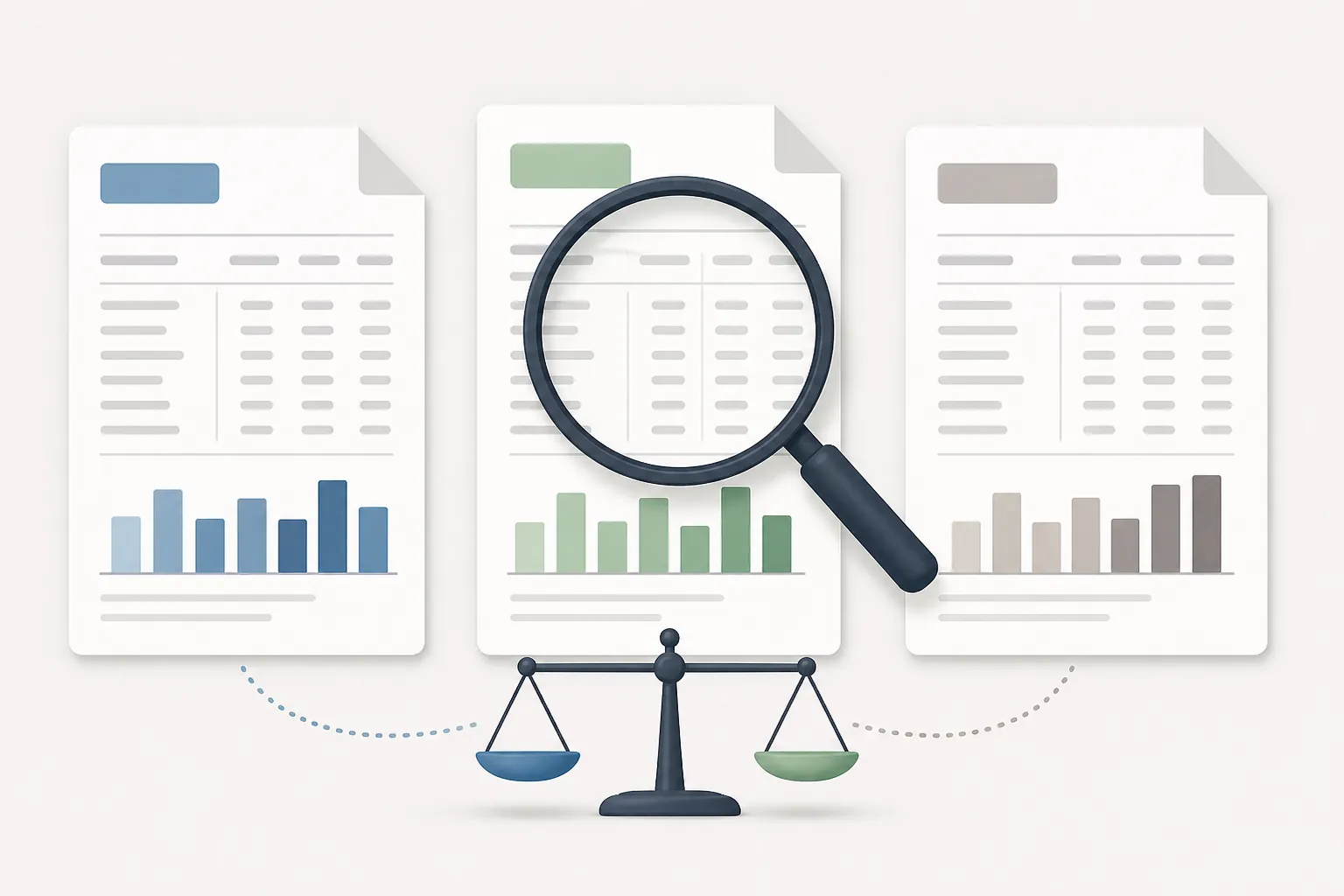
Run the Education Department’s Loan Simulator because it is the official starting point for a borrower trying to understand federal repayment options. Then run at least one reputable third-party calculator using the same inputs. The point is not to crown one calculator as the “true” payment. The point is to see whether independently rebuilt estimates cluster around the same amount and whether the servicer’s billing statement sits inside or outside that range.
For each run, save the inputs as carefully as the output. A screenshot of a final monthly payment without the family size, filing status, income figure, spouse-income treatment, and plan selected is only half a record. If the tool lets you export or print the result, save the export. If it does not, screenshot the input screens and the result screen in order.
The same verification habit applies outside student loans. In legal-tool evaluation, including this site’s work on Claude vs. ChatGPT for legal work, the safer workflow is not to trust a single generated answer. Here, the caution is not about AI. It is about any system-provided number that can change a borrower’s payment, delinquency status, or forgiveness record.
Compare the estimates to the billing statement
After rebuilding the estimate, put three documents next to each other: the StudentAid.gov or Loan Simulator estimate, the independent calculator estimate, and the actual servicer billing statement. The billing statement matters because it is the document that can trigger payment obligations, late-payment consequences, and later disputes. The simulator matters because it shows what the federal system estimates from stated inputs. The independent calculator matters because it can expose whether the result is plausible under the same assumptions.
If the three numbers are close, the borrower’s decision becomes cleaner. A reapplication may still be necessary if My Activity shows the relevant IDR application was canceled or if the official notice instructs action by a deadline, but the borrower can reapply using a verified baseline. Save the new submission confirmation and the inputs used. If the servicer later posts a different bill, the comparison is ready.
If the numbers do not match, label the mismatch before taking the next action. One mismatch means the federal system and the third-party calculator agree but the servicer bill differs. Another means the servicer bill and federal estimate agree, but the third-party calculator was built on a different input. A third means all three differ, which usually calls for a slower input audit before anyone can say the bill is wrong.
| What differs | Likely next check |
|---|---|
| Family size differs | Confirm whether the IDR application submitted family size, whether StudentAid.gov shows the manual update, and whether the servicer defaulted to one |
| Tax-filing status differs | Confirm whether the calculation treated the borrower as single, married filing jointly, or married filing separately |
| Income differs | Confirm whether the calculation used tax information on file, current income documentation, gross income, or adjusted gross income |
| Plan differs | Confirm the repayment plan used in each estimate and whether the borrower is being moved from or into a different IDR option |
| Billing statement differs from every estimate | Ask the servicer for the calculation basis in writing and preserve the statement being disputed |
A phone call can be useful, but only if it produces a record. Note the date, time, representative name or ID if given, the question asked, the answer, and any promised correction or processing timeline. If the representative gives a payment amount, ask which income, family size, filing status, and plan produced it. A call note that says “rep said it was fixed” is weak. A call note that identifies the calculation assumption can be compared against documents.
Why checking is reasonable, not paranoid
The July 2026 notice did not arrive in a spotless administrative record. In June 2026, CNBC reported that some IBR applicants with earnings between $60,000 and $265,000 were shown estimated payments of $50 per month, and Business Insider reported on borrowers being mistakenly told lower monthly payments before facing higher bills.[5][6] Those reports do not prove that any particular July 2026 borrower has the wrong bill. They do show why the borrower should not treat the first displayed amount as final.
Earlier problems point in the same direction. Student Loan Planner described October 2023 reports of about 400,000 borrowers receiving incorrect monthly payment amounts.[7] The National Consumer Law Center’s Student Loan Borrower Assistance project reported that more than 3.2 million borrowers did not receive timely billing statements during the first month after repayment resumed, with $9.3 million in penalties imposed on servicers.[8]
Oversight conditions also make verification more important. In March 2026, NCLC summarized a government watchdog finding that Federal Student Aid had stopped assessing servicer accuracy and call quality in February 2025, amid roughly halved Education Department staffing, and had not resumed those checks as of the watchdog report.[9] That finding is not account-level evidence. It is a reason not to skip account-level evidence.
Deadline pressure does not remove the calculation question
Some borrowers cannot wait indefinitely. The College Investor reported that 90-day SAVE-exit notices to more than 7 million borrowers began July 1, 2026, with the first decision deadline on September 29, 2026.[10] That timing can put borrowers under real pressure, especially if they are trying to avoid an unaffordable bill or preserve progress toward forgiveness.
The deadline changes the pace, not the standard. If the account shows a canceled application and the borrower must reapply to stay in motion, the reapplication should still be built from verified inputs. If the borrower cannot resolve a mismatch before the deadline, the submission record should show what was known at the time: the notice, the cancellation status if any, the calculator runs, the billing statement, and the unresolved discrepancy sent to the servicer.
Escalate from a dated discrepancy
The first escalation should usually go to the servicer with attachments, not accusations. State the payment amount on the bill, the payment amount produced by StudentAid.gov or the Loan Simulator, the third-party estimate, and the exact input that appears inconsistent. Ask for the calculation basis in writing. If the servicer says the account is corrected, ask for a corrected billing statement or written confirmation, then save it with the earlier bill.
If the servicer does not resolve the mismatch, escalate with the same packet to the FSA Ombudsman. If the account still remains unresolved or the borrower faces billing, servicing, or communication harm, submit a CFPB complaint and attach the same dated record. Do not rewrite the dispute from scratch at every level; preserve the chain so the next reviewer can see what changed and what did not.
If credit reporting becomes part of the harm, keep that issue separate and documented. Save the credit report, identify the disputed tradeline, and file an FCRA dispute with the bureau reporting the information. Attach the billing statement, payment records, servicer correspondence, complaint confirmations, and any correction notices. The goal is not to prove that every federal student loan system output is unreliable. The goal is narrower and more useful: if the numbers reconcile, act from the verified baseline; if they do not, preserve the discrepancy in a form that the next reviewer can test.
References
- 6,000 student-loan borrowers hoping for affordable repayment plans need to reapply — Business Insider, Jul 27 2026
- Student Loan Update: Thousands of Borrowers Told to Pay Incorrect Amount — Newsweek
- Student Loan Borrowers Must Reapply For Repayment Plans After Errors — Forbes, Jul 28 2026
- Common Errors Involving Income-Driven Repayment Plans — SavingforCollege.com
- Student loan borrowers glitches — CNBC, Jun 16 2026
- Student-loan borrowers mistakenly told monthly payments higher bills debt — Business Insider, Jun 18 2026
- What to Do If Your Student Loan Payment Amount is Wrong: 4 Steps — Student Loan Planner
- Over 3.2 Million Borrowers Impacted by Servicing Errors During First Month of Repayment — NCLC / Student Loan Borrower Assistance, Jan 16 2024
- Government Watchdog Report Sheds Light on How Mass Layoffs Put Borrowers At Greater Risk of Servicer Errors — NCLC, Mar 13 2026
- Department of Education Tells IDR Applicants To Reapply After Payment Error — The College Investor
Grounded in
This procedure is grounded in the cited rule or opinion, independent of any single documented case. See the Regulation tracker for the governing text.
Cases this step would have prevented
No cases have been explicitly linked to this checklist yet. See Risk Digest for documented incidents generally.
← Back to WorkflowsReport a correction or tip
Spotted an outdated figure, a misstated fact, or a ruling this workflow checklist should reflect? Public comments are disabled for this content given the professional cost of a misreported case outcome, penalty amount, or rule text — use the structured correction channel instead.
Report a correction or tip for this record →