
What the Data Shows About AI Legal Research Accuracy
Synthesizing the latest benchmarks, hallucination rates, and court sanction records, this assessment reveals that every major AI legal research tool hallucinates at measurable rates. The data supports a mandatory verification workflow, not blanket trust or rejection.
The accuracy question around ai for legal research no longer starts with whether lawyers will use it. They already are. The sharper problem in 2026 is that individual use has moved much faster than institutional control: 69% of legal professionals reported individual generative AI adoption, while only 9% of firms had an enforced AI policy, according to the 8am Legal Industry Report summarized by LawNext.[1]
That gap is where professional risk lives. A lawyer can quietly paste a research question into a tool in the afternoon; the firm may not learn about it until a citation check fails, opposing counsel notices a non-existent case, or a judge asks why a filing contains authority that cannot be found. Adoption is individual. Consequences are institutional.

The available data does not support panic, and it does not support trust. It supports something less exciting and much harder to skip: a mandatory verification workflow. Every major category of tool now has measurable error evidence attached to it, including legal-specific research platforms, general-purpose frontier models, and agentic systems tested for jurisdictional control.
The Accuracy Evidence Is Mixed, But Not Ambiguous
Legal AI accuracy numbers are easy to misuse because they measure different things. Some tests ask whether a tool invents citations. Others ask whether the cited authority supports the proposition. Others test whether an agent stays inside the governing jurisdiction. Those are related failures, but they are not the same failure.
| Evidence type | What it can show | What it cannot show |
|---|---|---|
| Independent legal research benchmark | How often tools produce wrong or unsupported answers under the study conditions | Whether the same rate applies to every matter type, jurisdiction, or updated product version |
| Vendor-published benchmark | How the vendor says its tool performed on disclosed tasks | Independent proof that the tool is best in ordinary practice |
| Jurisdiction-governance test | Whether a system can be constrained to a specified legal domain in the test design | Whether all downstream legal reasoning is correct |
| Court sanction record | That fabricated or unsupported AI-assisted filings are producing real professional consequences | The total frequency of unfiled or corrected hallucinations |
The distinction matters because a procurement slide can make a tool look excellent on one measure while leaving the working lawyer exposed on another. A system that rarely fabricates case names can still misread a real case. A system that cites real authority can still apply law from the wrong jurisdiction. A system that performs well in a vendor benchmark can still require the same human review in a live filing workflow.
HAQQ’s 2026 statistics page cites Stanford RegLab findings that Westlaw AI-Assisted Research erred on roughly 33% of tested queries and Lexis+ AI on more than 17%.[2] Because these figures are cited through HAQQ rather than directly from the original Stanford publication, they should be treated carefully until the original study is reviewed for methodology. Still, even taken cautiously, the numbers point away from any verification-free use of legal research AI.
The same HAQQ source reports its own 300-task benchmark for frontier models, with GPT-5.5 showing a 3% hallucinated-citation rate at the best end and Mistral Large at 64% at the worst end. It also reports that 24% of frontier-model answers cite or apply law that does not support the claim.[2] Those are vendor-published results from a company that ranks itself first in its own testing, so they should not be treated as neutral market proof. They are still useful in one respect: even the vendor’s framing does not produce a world where legal AI output can be accepted without checking.
For readers comparing specific products, the narrower product-level analysis in AI legal research accuracy benchmarks and hallucination rates is the better place to sort study designs. The operational point here is simpler: no cited evidence removes the lawyer from the verification loop.
A Real Citation Is Not the Same as a Correct Answer
The most dangerous AI research output is not always the obviously fake case. The obviously fake case is embarrassing, but at least it can be caught by a basic database search. The harder failure is a real case attached to a proposition it does not support, or a plausible rule stated without the limitation that matters.
That is why hallucination should not be reduced to invented citations. A lawyer checking only whether the case exists has not checked whether the proposition is true. In filing practice, the question is not, “Can I find this case?” It is, “Does this authority, in this jurisdiction, at this procedural posture, support the sentence I am about to file?”
The HAQQ-published frontier-model result that 24% of answers cite or apply law that does not support the claim is important for exactly that reason.[2] It describes a failure that survives a superficial citation check. If the associate verifies only that the cited case appears in a database, the mistake may remain in the brief.
This is also where legal-specific tools deserve neither automatic trust nor automatic dismissal. Purpose-built systems may reduce certain risks through retrieval, source linking, and domain constraints. But the reported error rates for Westlaw and Lexis tools, even with the caveat about indirect citation through HAQQ, show that legal branding does not convert generated research into reviewed legal work.[2]
Jurisdiction Control Is a Separate Risk
A jurisdiction failure can look like competence until someone reads the authorities closely. The answer may be coherent, the cases may exist, and the rule may sound familiar. The problem is that the law came from the wrong place.
HAQQ reports a jurisdiction-governance test in which an ungoverned agent scored 0% on jurisdiction adherence, while a governed agent scored 100%.[2] Because this is a vendor-published result, it should be read as a claim about HAQQ’s tested design, not as independent proof that one product has solved jurisdictional reasoning. But the contrast usefully isolates a real workflow issue: jurisdiction is not a formatting preference. It has to be constrained and checked.
The research brief also notes that many benchmarks focus heavily on common-law jurisdictions, especially the United States and the United Kingdom. That limits how confidently anyone should generalize the numbers to civil-law systems or mixed jurisdictions. It does not make the risk disappear; it narrows what the evidence can prove.
For a firm, the practical control is not merely asking the tool for “New York law” or “federal law.” The reviewer has to confirm that the answer uses the intended court system, governing date, procedural context, and hierarchy of authority. If the tool blends jurisdictions, the workflow should catch it before the draft reaches a client, court, or partner.
Court Records Turn Benchmark Error Into Professional Exposure
Benchmarks tell us a tool can fail. Court records show what happens when that failure reaches a filing. HAQQ’s summary of Damien Charlotin’s AI Hallucination Cases Database reports 1,348 court cases with AI-fabricated citations worldwide by April 2026, including 915 in U.S. courts.[2] The same source reports $145,000 in sanctions in Q1 2026 and a record $109,700 sanction against an Oregon attorney.[2]
Those figures should not be read as the total universe of AI research mistakes. They are visible failures: matters that reached court records, orders, sanctions, or public databases. Many bad outputs are likely corrected before filing; many may never be detected. The sanction record therefore does not measure ordinary frequency. It measures professional exposure after verification fails.
That exposure is changing judicial expectations. HAQQ reports that more than 300 federal judges have adopted AI disclosure or certification requirements for filings.[2] Whether a lawyer likes those standing orders is beside the point. Courts are no longer treating AI-generated research errors as a novelty that can be explained away by unfamiliarity.
The sanction cases also make one defense weaker with every passing month: “I did not know the tool could do that.” By Q3 2026, any lawyer using AI for legal research has enough public warning to know that citations, quotations, and propositions require independent verification.
The Ethics Question Is Supervision, Not Taste
Lawyers’ concern about hallucinations has increased alongside adoption. An ABA Business Law Today article reports that 75% of lawyers cited AI hallucinations as a main barrier to adoption, up from 58% the prior year.[3] That is an attitude measure, not proof of actual error rates. It does show that the profession understands the risk well enough that unmanaged use is hard to defend as harmless experimentation.
The same ABA discussion ties AI use to familiar professional responsibility duties: competence, confidentiality, candor to the tribunal, and supervision.[3] The important point is not that AI creates an exotic new ethics category. It presses on duties lawyers already have. Someone must understand the tool well enough to use it competently. Someone must protect client information. Someone must ensure that court submissions are accurate. Someone must supervise associates, paralegals, contract lawyers, and staff who use the tool.
That last duty is where the 69% versus 9% gap becomes more than a management statistic. If most individual users are moving ahead while few firms enforce policy, then verification depends on personal habits, uneven training, and whether the most overworked person on the matter remembers to slow down. That is not a control environment.
A firm evaluating tools can still compare retrieval design, source transparency, audit logs, jurisdiction filters, and confidentiality terms. The AI legal research tools comparison can help with that selection exercise. But selection is not supervision. Buying a better tool does not answer who checks the output, how that check is documented, and what work product may leave the firm without review.
The Verification Workflow the Data Now Requires
A usable AI research policy should not be a poster that says “verify all output.” Everyone agrees with that sentence until the brief is due, the partner is waiting, and the generated answer looks good enough. The workflow has to specify what verification means.
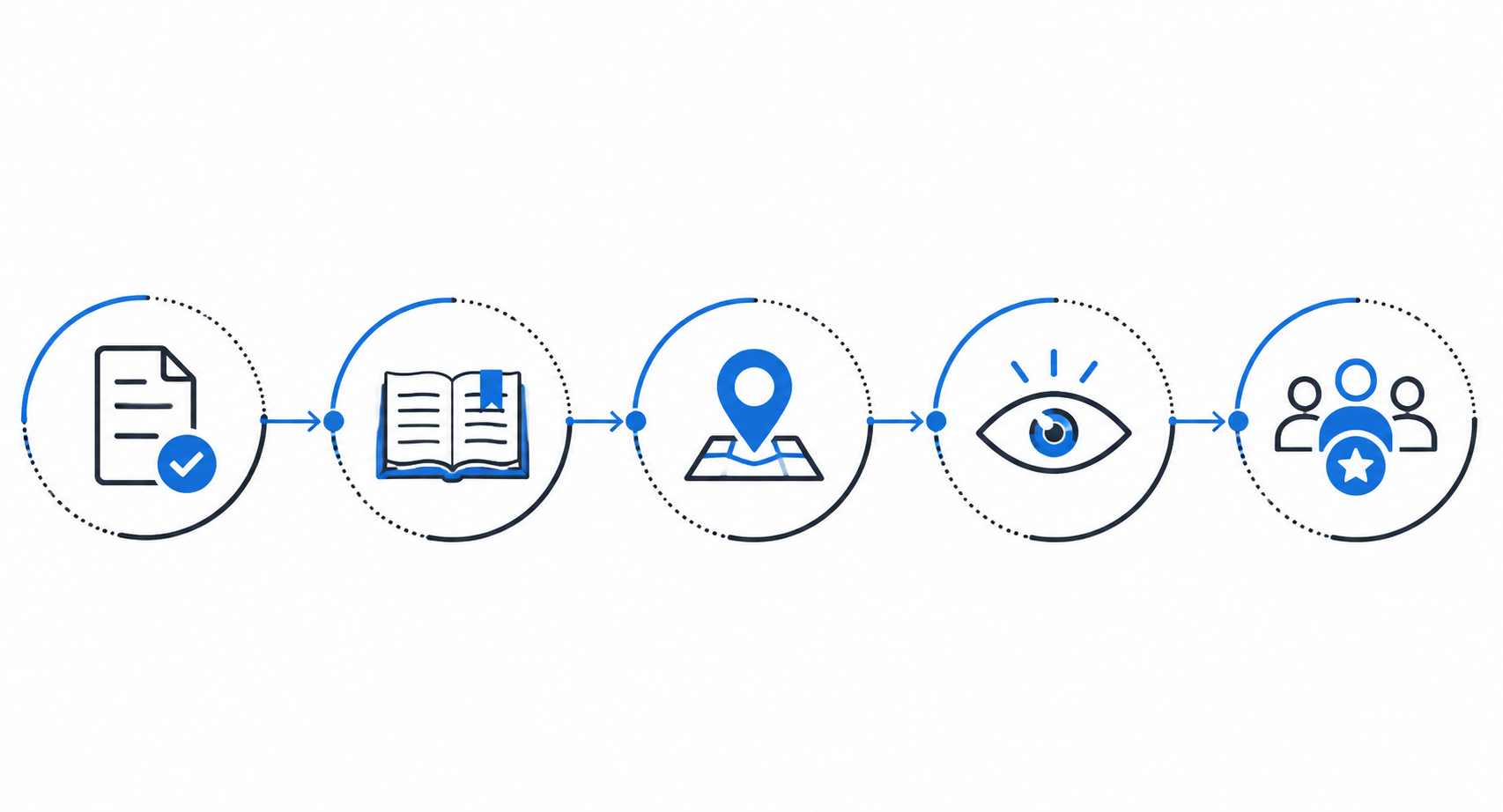
| Step | Required action | Failure it is designed to catch |
|---|---|---|
| 1 | Identify every AI-generated citation, quotation, rule statement, and case characterization | Untracked AI contribution embedded in work product |
| 2 | Confirm each cited authority in a trusted primary or official legal research source | Fabricated case names, docket numbers, quotations, or statutes |
| 3 | Read the relevant passage and confirm that it supports the proposition used | Real authority applied to an unsupported claim |
| 4 | Check jurisdiction, court hierarchy, date, procedural posture, and current validity | Wrong-law answers and outdated or overruled authority |
| 5 | Record human review and route staff or junior-lawyer use through supervision | Unreviewed output leaving the team as lawyer work product |
The first step is tracking. If the team cannot tell which parts of the draft came from AI-assisted research, later review becomes guesswork. A short matter note is usually enough: tool used, date used, research question in substance, output saved where appropriate, and reviewer assigned. The point is not ceremony. The point is making sure the verification burden is visible before the document is finalized.
The second step is existence checking, and it should happen in a source the firm already trusts for legal authority. That may be Westlaw, Lexis, Bloomberg Law, an official court site, a statutory database, or another approved source. The generated answer is not the source. A link inside the generated answer is not enough if it has not been opened, read, and matched to the claim.
The third step is support checking. This is the step most likely to be skipped when people are tired, and it is the one that catches the quieter error. The reviewer should locate the exact page, paragraph, section, or holding being used and ask whether the sentence in the draft would still be fair if the judge read the surrounding context. If the answer is no, the citation should not remain as written.
The fourth step is jurisdictional fit. The reviewer should confirm that the answer applies the correct governing law and that the authorities carry the weight the draft gives them. A federal district court decision, an intermediate state appellate decision, agency guidance, and a statute do different kinds of work. AI output often flattens those differences into a confident paragraph.
The fifth step is supervision. If a paralegal, summer associate, contract attorney, or junior associate uses AI research, the responsible lawyer should know that it happened and should review the legal propositions before they are used. A policy that silently permits staff use but leaves review to individual discretion is a policy in name only.
For firms building a broader evaluation process, the same controls should appear in procurement questions. Ask whether the product provides source trails, exportable research history, jurisdiction restrictions, administrative controls, and usage logs. The related legal AI software evaluation framework is useful for that stage. But do not let vendor controls substitute for lawyer review; they are inputs to supervision, not replacements for it.
What Should Be Mandatory, and What Can Be Risk-Based
Not every AI-assisted research task carries the same consequence. A lawyer using AI to generate search terms for an internal research plan is not in the same posture as a lawyer copying AI-supplied citations into a memorandum of law. The controls can scale, but the duty to verify legal propositions does not disappear.
- Always mandatory: verification of cited authorities, quotations, statutes, rules, and legal propositions before external use.
- Always mandatory: jurisdiction and current-validity checks for any authority used in client advice or court filings.
- Always mandatory: human review of AI-assisted research used by staff, contractors, or junior lawyers.
- Risk-based: how much documentation is required for early-stage internal research that does not leave the team.
- Risk-based: which tools are approved for brainstorming, search planning, summarization, or drafting, provided client confidentiality rules are satisfied.
The line should be drawn at reliance. Once AI-assisted output influences a legal conclusion, a client communication, a negotiation position, or a court filing, the lawyer needs a review record strong enough to explain what was checked. That record does not have to be elaborate in every matter, but it has to exist.
This is where many firm policies fail. They ban confidential inputs, list approved tools, and warn users about hallucinations, but they do not say what a reviewer must do before using an answer. A warning is not a workflow. If the firm cannot test compliance, train to it, or audit it after a problem, the policy will not help much when a filing goes wrong.
How to Read Vendor Accuracy Claims Without Ignoring Them
Vendor benchmarks are not useless. They can reveal what vendors think matters, how they define tasks, which failure modes they are willing to measure, and whether their tools are improving. But they need to be read as advocacy-adjacent evidence unless an independent party controls the test design, data, scoring, and publication.
HAQQ’s published results are a good example. The 300-task model benchmark, the jurisdiction-governance test, and the cost and latency comparisons may be relevant to procurement discussions.[2] The commercial-interest caveat is not a reason to throw them away. It is a reason to avoid treating “ranked first in our benchmark” as the end of the diligence process.
A sensible review asks different questions: Were the tasks representative of the firm’s practice? Were the answers scored by lawyers? Were primary sources checked? Did the benchmark test unsupported propositions, or only fabricated citations? Did it test the jurisdictions the firm actually uses? Has the vendor published enough methodology for the firm to reproduce or challenge the result?
If the answer to those questions is thin, the firm may still pilot the tool. It should not lower its verification requirements because the sales material uses the word “legal.”
The Practical 2026 Answer
AI legal research can be useful. It can accelerate issue spotting, generate search paths, summarize materials, and help a lawyer move faster from blank page to reviewable draft. The evidence does not require lawyers to reject it outright.
The same evidence does eliminate the defensible middle-of-the-night shortcut: treating a plausible generated answer as a verified answer. Purpose-built tools still show reported error rates. General-purpose models still hallucinate citations and misapply law. Vendor benchmarks still need conflict-aware reading. Court records now show sanctions, disclosure orders, and judges who expect lawyers to know better.
Accuracy benchmarks will change as tools are updated, and this article is not legal advice. But under the data available in Q3 2026, the governance question is no longer whether lawyers will use AI for legal research. They will. The question is whether firms will require the verification workflow that the data now makes impossible to treat as optional.
References
- AI Adoption Among Legal Professionals Has More Than Doubled In A Year, New 8am Report Finds, But Firms Lag Far Behind Individual Practitioners, LawNext, March 2026
- Legal AI Statistics 2026, HAQQ
- Legal Ethics and Practical Considerations for Lawyers Using AI in Modern Legal Practice, American Bar Association, July 2026
Grounded in
This procedure is grounded in the cited rule or opinion, independent of any single documented case. See the Regulation tracker for the governing text.
Cases this step would have prevented
No cases have been explicitly linked to this checklist yet. See Risk Digest for documented incidents generally.
← Back to WorkflowsReport a correction or tip
Spotted an outdated figure, a misstated fact, or a ruling this workflow checklist should reflect? Public comments are disabled for this content given the professional cost of a misreported case outcome, penalty amount, or rule text — use the structured correction channel instead.
Report a correction or tip for this record →