
Two McLarens can wear the Senna name and still stand on opposite sides of public-road law. The standard McLaren Senna was announced as a road-legal track car, limited to 500 units and priced at roughly $1 million; the Senna GTR was a 75-unit, $1.65 million track-only derivative built after McLaren removed the ordinary constraints of road use from the design problem.[1][2] That difference is the useful starting point: the question is not whether the car looks capable of surviving traffic, but whether it was certified, imported, modified, inspected, and documented through the legal systems that make a vehicle eligible for public roads.

The visual gap is obvious enough: wing, splitter, vents, ride height, stance. The legal gap is quieter. One car left the manufacturer as a road vehicle. The other left the manufacturer as something deliberately outside that category. Enthusiast shorthand tends to compress the difference into “street legal” or “track only,” but those phrases hide the actual work: federal safety standards, emissions-related modifications, lighting rules, import status, state inspection, insurance underwriting, and the uncomfortable question of who can prove what after the car changes hands.
The Senna Was a Road Car Before It Was a Spectacle
The road-legal Senna is extreme, but it is extreme inside a compliance frame. In the United States, that frame begins with the National Highway Traffic Safety Administration’s authority under Title 49 of the U.S. Code, Chapter 301, and the Federal Motor Vehicle Safety Standards collected in 49 CFR Part 571.[3] A manufacturer selling a new road vehicle into that market is not merely describing the car as usable on roads. It is certifying that the vehicle conforms to applicable federal safety standards.
That distinction matters because the Senna’s drama can make compliance look incidental. It is not. A road car must be made legible to the ordinary machinery of vehicle law: lamps, glazing, mirrors, crash-related requirements, restraint systems, tires, labels, braking standards, and the other less photogenic elements that sit behind a certification label. Whether a particular requirement feels relevant to a carbon-tub hypercar is not the legal test. The test is whether the vehicle falls within the regulated category and conforms to the standards that apply to it.
NHTSA’s reach is not reserved for mass-market vehicles. The same federal structure that supports defect reporting, safety standards, and recall oversight for ordinary SUVs also applies, in its own way, to boutique manufacturers and low-volume exotics. That is why a comparison with a mass-market matter such as the Ford Expedition seat belt recall is more than a rhetorical flourish. Federal oversight is not impressed by price. It asks different questions: who manufactured the vehicle, what standards applied, what was certified, what defect was reported, and what remedy followed.
The GTR Shows What Happens When Road Rules Are Removed
The Senna GTR was not a slightly louder Senna. TechCrunch described it as “liberated from road and motorsports regulations,” a phrase that sounds like a driver’s fantasy and a compliance lawyer’s warning label.[2] It was also described as too extreme for major racing series, a car built for track use but not shaped by the homologation discipline that makes many race cars fit into a rulebook.[2]
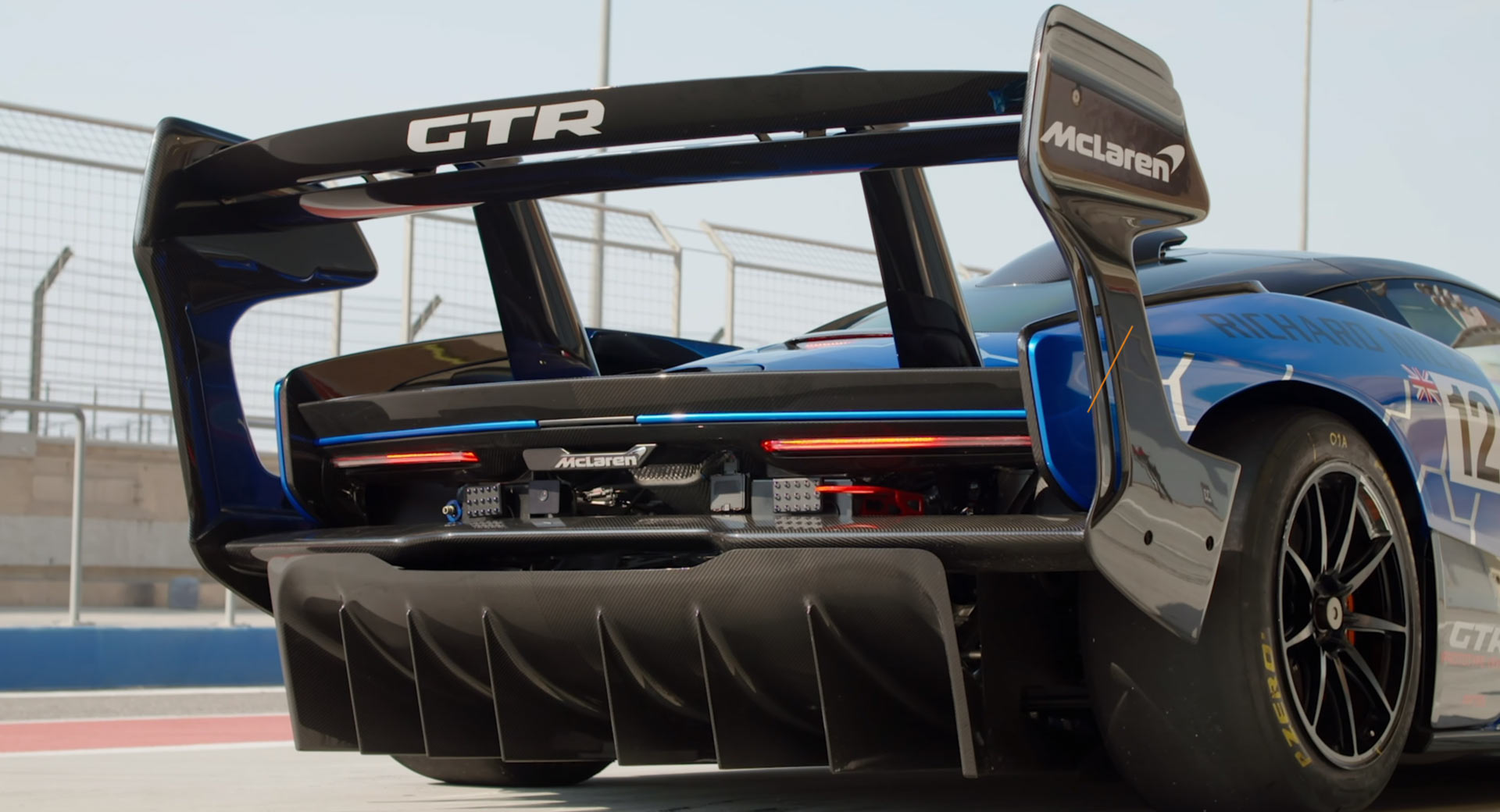
The engineering gains are useful because they identify the legal absence. The GTR was reported to produce 20% more downforce than the standard Senna and to achieve 50% better aerodynamic efficiency.[2] Those figures should not be treated as mere car-review seasoning. They show what becomes available when the design team is no longer solving for road clearances, street noise, everyday lighting, ordinary service assumptions, and the compromises that accompany registration.
A track-only vehicle can be more single-minded because it does not have to pretend to be a consumer road product. It can assume a controlled environment, a different maintenance culture, a different tolerance for noise and ride harshness, and a buyer who is accepting something closer to a private-use machine than a regulated transportation appliance. That does not make the GTR lawless. It means its original legal identity was not the identity of a vehicle certified for public-road operation.
NHTSA Certification Is Not the Same Thing as Later Road Use
The federal framework is easy to overstate in one direction and understate in another. NHTSA’s safety standards govern the manufacture and sale of new motor vehicles and motor vehicle equipment, and the FMVSS are the central federal safety standards for vehicles covered by that regime.[3] But there is no neat, single federal “race car to road car” statute for light vehicles that takes a track-only car, runs it through one checklist, and returns a universally road-legal answer.
| Vehicle | Original identity | Compliance significance |
|---|---|---|
| McLaren Senna | 500-unit road-legal hypercar, roughly $1 million | Sold as a road car inside the manufacturer certification framework |
| McLaren Senna GTR | 75-unit, $1.65 million track-only derivative | Designed outside ordinary road-regulation constraints |
| Lanzante-converted Senna GTR | Aftermarket road conversion of a track-only car | Depends on documented modifications, import/federalization status where relevant, and state-level road eligibility |
That is where legal conversations become less satisfying than the cars. A manufacturer-certified road Senna begins with a relatively clean answer: it was built and sold as a road vehicle. A converted GTR requires reconstruction. Was the car imported as a racing vehicle, a show or display vehicle, or through another pathway? Who performed the conversion? Which equipment was changed? Was any federalization work completed? Which state registered it, and what inspection standards did that state apply? The answer is not found in the size of the rear wing. It is found in records.
Lanzante Is the Bridge, Not a Magic Wand
Lanzante’s role is important because it turns the Senna GTR from a theoretical compliance problem into a practical one. Auction and enthusiast sources describe a conversion path that adds or changes the features a track-only GTR lacks for road use: catalytic converters, fuel-system work, indicators, reversing lights, a nose-lift system, suspension retuning, and compliance work around noise and emissions.[4][5][6] Those items sound ordinary only until they are being integrated into a limited-run carbon-fiber machine that was never sold as a normal road vehicle.
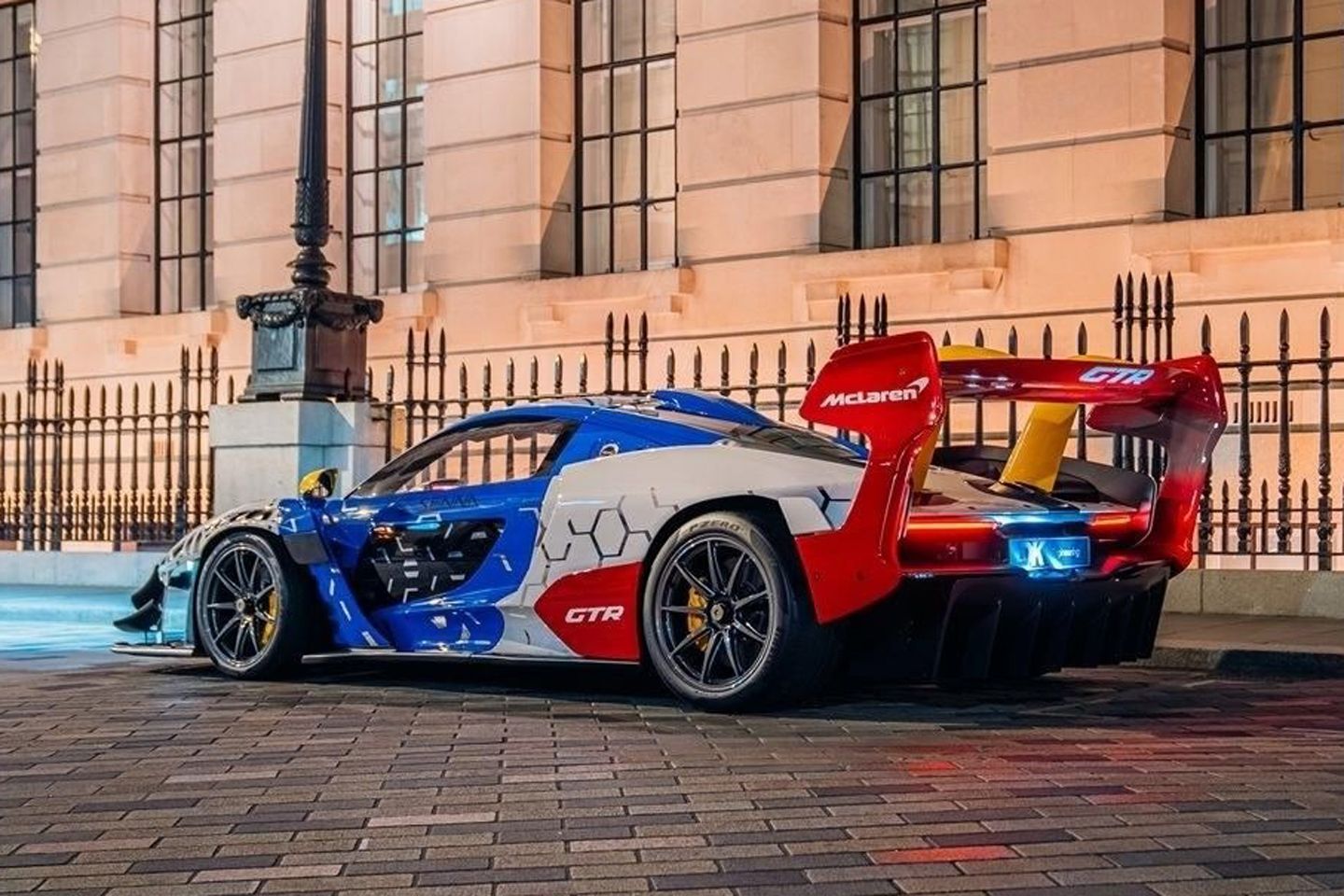
The striking part of the available descriptions is not that the list is long. It is that the list suggests the chassis and powertrain can pass through the conversion without structural re-engineering. If accurate, that narrows the compliance problem: the GTR does not need to become a different car in its bones, but it does need the equipment and calibration changes that make it acceptable to the road systems into which it is being placed.[4][5]
The cost makes the boundary visible. Reported conversion prices sit around £230,000 to £250,000 per car, and available auction and enthusiast reporting indicates that only about 8 of the 75 Senna GTRs have been converted for road use.[4][5][6] Those figures should be treated carefully because they come from automotive and auction sources rather than public regulatory filings. Still, they are useful evidence of friction. A conversion this expensive is not a decorative plate bracket and a friendly inspection station. It is specialized legal and mechanical translation.
The U.S. Federalization Example Is Concrete but Incomplete
The most concrete U.S. reference in the available material is RM Sotheby’s Miami 2026 listing for a 2020 McLaren Senna GTR LM 25 by Lanzante. The lot description states that U.S. federalization was completed in August 2024.[4] That is an important fact because it moves the discussion beyond European road-conversion publicity and into the American import-and-compliance environment.
It is also not the same as a full legal file. The listing does not, in the available material, lay out each NHTSA-related federalization step, identify the exact import mechanism, or publish the underlying compliance submissions. For a buyer, insurer, compliance officer, or claims lawyer, “federalized” is therefore a starting point for diligence, not the end of the inquiry. The useful question is not whether the word appears in a sale description. The useful question is what documents stand behind it.
State Road Eligibility Adds Another Layer
Even after federal issues are addressed, public-road use is not reduced to a single federal permission slip. State registration and inspection rules still matter. Dirt Legal’s general discussion of race-car street legality correctly frames the problem as a patchwork rather than a uniform national pathway, with equipment, emissions, titling, and inspection requirements varying by jurisdiction.[7] For a car like the Senna GTR, that patchwork is not a footnote; it is where the last mile of legality often lives.
That is why a converted GTR can be described as road legal in one context while still leaving unanswered questions in another. The phrase may mean road-registered in a particular country. It may mean modified to meet a converter’s understanding of road requirements. It may mean federalized for U.S. import. It may mean capable of passing a particular state inspection. Those meanings overlap, but they are not identical.
The legal consequence is easy to miss because the car is so rare. Scarcity does not simplify proof. In a later dispute over a crash, a sale representation, an insurance denial, a product defect, or an import issue, the converted car’s status would have to be reconstructed through documents: manufacturer records, converter invoices, customs and import papers, certification labels, inspection records, emissions paperwork, title history, and auction descriptions. The more casual the original claim, the more expensive that reconstruction becomes.
Why the Senna Boundary Matters
The McLaren Senna case matters because it refuses the comfortable idea that “road legal” is a stable adjective. For the standard Senna, the phrase points back to manufacturer certification and the federal standards applicable to a new road vehicle. For the Senna GTR, the phrase can only be earned later, if at all, through a chain of modifications and approvals that depends on where the car is being used and how it entered that legal environment.
There is no single federal race-to-road statute that neatly answers the question for light vehicles. The operative reality is a layered architecture: FMVSS obligations for covered vehicles, NHTSA authority over safety standards and defects, import and federalization procedures where applicable, emissions and equipment changes, and state registration and inspection rules. Lanzante’s work is impressive precisely because it operates across that architecture. It does not erase the boundary between track machine and road car. It shows how much craft, money, and documentation are required to cross it.
References
- McLaren Announces Senna Road-Legal Track Car, Tomorrow's Technician.
- Review: Driving the Track-Ready, Race-Banned McLaren Senna GTR, TechCrunch, December 5, 2019.
- Laws and Regulations, National Highway Traffic Safety Administration.
- 2020 McLaren Senna GTR LM 25 by Lanzante, RM Sotheby's.
- Lanzante-converted Senna GTR for sale, PistonHeads.
- McLaren Senna GTR Road Conversion by Lanzante Is Inspired by Gundam, CarBuzz.
- How to Make a Race Car Street Legal, Dirt Legal.
Comments
Join the discussion with an anonymous comment.