
When is a brewery license revocation a free speech case?
- Authority
- Wisconsin Department of Revenue
- Rule type
- statute
- Jurisdiction scope
- US state
- Effective date
- Aug 4, 2026
- Source text
- Read primary rule text ↗
Brewery permit revocation requires documented, content-neutral violations; protected label content, names, or expressive events cannot alone justify revocation, and retaliation must be shown as the but-for cause.
A free-speech challenge to a revoked brewery license starts with a prosaic question: what did the regulator say it was enforcing? In Wisconsin, Minocqua Brewing’s two brewer’s permits and one warehouse permit have been reported revoked effective Aug. 4, 2026, while owner Kirk Bangstad has alleged political retaliation and the state has described its grounds in content-neutral terms tied to tax, transport, and permit compliance rather than beer names, labels, or political messages.[1][2]
That status is time-sensitive. As of Aug. 3, 2026, the live permit posture should be checked against the Minocqua permit-status record, the Wisconsin revocation-grounds record, and the political-retaliation risk digest entry. This article is legal analysis, not advice, and it treats reported agency statements differently from adjudicated findings.
The doctrinal answer is less dramatic than the public framing. A brewery license revocation becomes a First Amendment case when the regulatory basis burdens expression, conditions a license on surrendering protected speech, or when the brewer can prove that protected speech was the but-for cause of the adverse action. It usually does not become one merely because a politically expressive licensee also has a documented violation record.
The three files counsel should not merge
Alcohol licensing brings out a recurring analytical mistake: every conflict is called censorship or, from the other side, every enforcement action is called ordinary regulation. The useful first cut is not the speaker’s politics. It is the operative legal file.
| Question | What matters | Typical First Amendment posture |
|---|---|---|
| Is the rule aimed at label text, product names, ads, events, or other expression? | The regulator is judging communicative content, taste, offensiveness, truthful commercial information, or expressive activity. | Strong First Amendment claim; Central Hudson may matter for truthful alcohol-related commercial speech. |
| Is the government attaching a speech condition to a license? | The license is available only if the business refrains from protected expression or accepts a speech burden unrelated to valid licensing interests. | Unconstitutional-conditions problem, with caution because alcohol licensing remains a regulated field. |
| Is the licensee being sanctioned for tax, transport, warehouse, permit, or similar non-speech violations? | The violation would support the same action even if the licensee had said nothing controversial. | Speech claim weakens unless retaliation can be proved as the but-for cause. |
Central Hudson belongs in the first category, not as a solvent poured over every revocation. When the government restricts truthful alcohol-related commercial speech, Rubin v. Coors Brewing Co. and 44 Liquormart provide the commercial-speech foundation.[5][6] When the government uses licensing leverage to pressure speech, Perry v. Sindermann supplies the unconstitutional-conditions warning, while California v. La Rue keeps the alcohol-licensing context from being overstated into a speech-free zone.[7]
Why the Minocqua/Hess record is the hard counterweight
The most useful comparison for the current Wisconsin dispute is not a colorful beer-label case. It is Minocqua Brewing Co. v. Hess, where the Seventh Circuit rejected a retaliation challenge against local licensing action after crediting a documented 2022–2025 willful-violation record.[3] A municipal-law analysis of the decision describes the court as upholding revocation where the record contained repeated permit-condition and zoning-related violations rather than a bare dislike of the brewery’s politics.[4]
That distinction does real work. Political hostility, if it exists, may explain why a dispute became combustible. It does not by itself answer whether the license would have been revoked anyway. A retaliation plaintiff has to move from motive allegations to causation: protected speech must be the but-for cause of the adverse action. A documented violation record gives the government an obvious non-speech explanation, and the plaintiff must defeat that explanation with record evidence rather than atmosphere.
The Hess posture is therefore uncomfortable for both easy narratives. It does not say alcohol boards may punish a brewery for politics. It says that a brewery with protected political speech can still lose a license when the adjudicated record independently supports revocation. That is exactly the point often lost in coverage of politically branded businesses: expressive identity is not immunity from neutral licensing rules.
For the 2026 Wisconsin revocation, the caution is narrower. The reported state grounds are content-neutral, and Bangstad’s retaliation theory is unproven on the materials presently described.[1][2] That does not prove the state will prevail in every forum or that the agency record is immune from challenge. It only means the First Amendment theory turns on record proof that the same revocation would not have occurred absent protected speech.
Where brewery speech claims are strongest
The cases breweries tend to win are not mysterious. They involve regulators saying, in one form or another, that the expression itself is the problem.
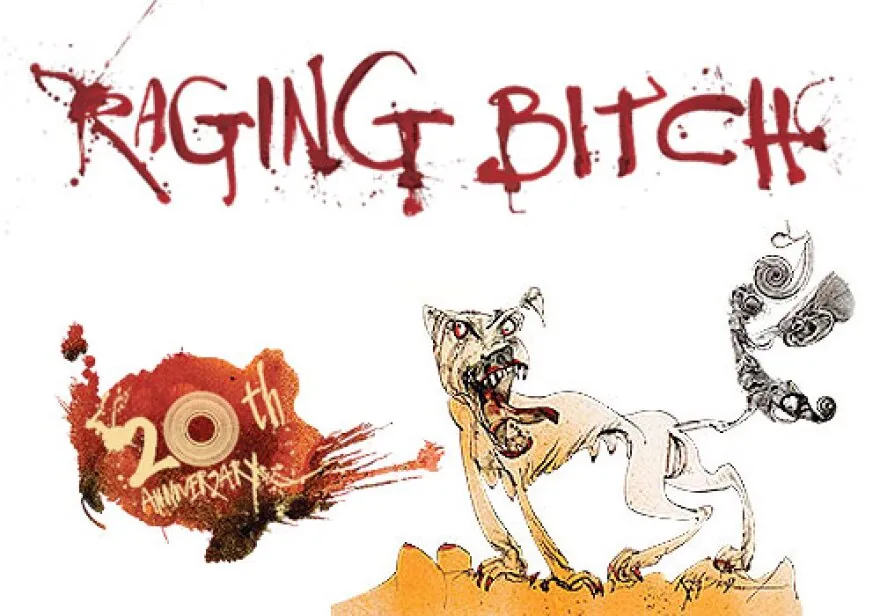
Flying Dog’s Michigan case is the clean label example. The Sixth Circuit held in 2015 that Michigan liquor commissioners violated the First Amendment when they rejected the brewery’s “Raging Bitch” label, and the court also denied the commissioners qualified immunity.[8] The offense was not a tax deficiency or an unlicensed warehouse. It was the label and the state’s judgment of it.
The North Carolina Flying Dog dispute followed the same fault line. A federal judge in 2022 ruled that North Carolina regulators were wrong to reject the brewery’s “Freezin’ Season” label under a “bad taste” rationale, treating the standard as vague and overbroad.[9] Once an alcohol board polices taste, offensiveness, or propriety, the litigation stops being about ordinary beverage control and becomes about discretionary censorship.
Rubin and 44 Liquormart sit underneath those disputes even when the facts are less rude. Rubin involved beer-label information, and 44 Liquormart involved liquor price advertising; both stand against the idea that alcohol sits outside First Amendment protection merely because the product is regulated.[5][6] For truthful, non-misleading commercial speech, the government needs more than discomfort with the message or a paternalistic hope that consumers will know less.
Expressive activity is not limited to the bottle

Alaska’s 2026 brewery-entertainment ruling matters because it moves the analysis beyond packaging. In January 2026, an Alaska Superior Court judge struck down limits on brewery entertainment, with reports describing the court as rejecting “pure protectionism” as a substantial government interest.[10][11] The challenged activity was not simply the sale of beer. It was a brewery’s ability to host expressive events.
That kind of rule invites a different record from a tax or transport case. The government has to explain why the expression-related restriction serves a legitimate regulatory interest, not merely why incumbent bars or restaurants would prefer less brewery competition. Protectionism wearing an alcohol-control badge is a poor fit for First Amendment review.
A revocation record can defeat a retaliation narrative
Retaliation claims are tempting in licensing disputes because the chronology often looks ugly. A licensee criticizes officials, attracts press, antagonizes political opponents, and then receives enforcement attention. Chronology can matter, but it is not the whole claim. The plaintiff still has to prove that protected speech caused the adverse action in the legally required sense.
That is where written enforcement records become decisive. If the agency file shows unpaid taxes, unlawful transport, unpermitted storage, warehouse violations, or repeated failure to comply with permit conditions, the free-speech case has to confront those entries one by one. Were they false? Were similarly situated quiet licensees treated differently? Did officials depart from ordinary procedure? Did the sanction exceed what the violation record would normally support? Those are record questions, not press-release questions.
The inverse is also true. If the written file shows a label rejected because it is vulgar, a beer name rejected because it is offensive, an event barred because officials dislike the expressive draw, or a license conditioned on staying out of politics, the regulator cannot rescue the action by invoking the general breadth of alcohol regulation. The regulatory basis is the hinge.
The litigation screen
For counsel evaluating a brewery license dispute, the useful screen is short and unforgiving:
- Identify the regulatory basis. Do not start with the brewer’s politics, brand identity, or media coverage. Start with the statute, permit condition, notice, revocation order, hearing findings, and agency correspondence.
- Ask whether the rule targets expression. Label text, beer names, truthful advertising, performances, expressive events, and taste-based approvals belong in the First Amendment file.
- If the claim is retaliation, test but-for causation. The question is whether the same action would have occurred without the protected speech, not whether officials disliked the speaker.
- Separate confirmed findings from reported agency statements. A revocation notice, an administrative finding, a court order, and a spokesperson’s summary do not carry the same weight.
- Compare treatment of similar licensees. Neutral rules can become retaliation evidence if the record shows selective enforcement against the speaker and tolerance for the same violations elsewhere.
Labels, names, and expressive events are where alcohol regulators keep losing when they regulate content or taste. Documented tax, transport, warehouse, and permit violations are where First Amendment claims weaken unless the brewer can prove the violation record was not the real cause. The live Wisconsin dispute belongs on that screen, not in a culture-war shortcut.
References
- State revokes brewing license of Kirk Bangstad, Wisconsin Public Radio
- Wisconsin’s ‘anti-Trump’ brewery gets operation permit revoked, New York Post, 2026-07-28
- Minocqua Brewing Co. v. Hess, Justia, 2025-11-26
- In Zone: Court Upholds Revocation of Conditional Use Permit, Ancel Glink, 2025-12
- Rubin v. Coors Brewing Co., The First Amendment Encyclopedia
- 44 Liquormart, Inc. v. Rhode Island, The First Amendment Encyclopedia
- Overview of Unconstitutional Conditions Doctrine, Cornell Legal Information Institute
- Flying Dog Brewery, LLLP v. Michigan Liquor Control Commission, Justia, 2015-03-05
- NC regulators were wrong to ban beer label that had naked man, judge says, WHQR, 2022-05-18
- Alaska breweries win First Amendment challenge, Pacific Legal Foundation
- Alaska Superior Court hands win to breweries, saying they can now host live entertainment regularly, Anchorage Daily News, 2026-01-15
Operationalizing workflow
No workflow has been explicitly linked to this obligation yet. See Workflows generally.
Illustrative cases
No illustrative case is currently tracked for this obligation. See Risk Digest for documented incidents generally.
← Back to RegulationReport a correction or tip
Spotted an outdated figure, a misstated fact, or a ruling this regulation entry should reflect? Public comments are disabled for this content given the professional cost of a misreported case outcome, penalty amount, or rule text — use the structured correction channel instead.
Report a correction or tip for this record →