
19 States Face a Permanent DST Preemption Puzzle
- Authority
- U.S. Congress
- Rule type
- statute
- Jurisdiction scope
- US federal, US state
- Source text
- Read primary rule text ↗
The opt-out clause, not the sunrise chart, is where the 2026 state impact of permanent daylight saving time becomes a compliance problem. H.R. 139, the Sunshine Protection Act of 2025, would make daylight saving time the year-round rule while preserving an exemption for jurisdictions already on permanent standard time and for any state that adopted permanent standard time before enactment.[1] As of July 27, 2026, the Senate bill, S.29, had not received a Senate vote on Congress.gov.[2] This is a regulation-tracking discussion, not legal advice.
That opening distinction matters because the existing federal baseline is almost the mirror image. Under the Uniform Time Act framework described by CRS, states may observe permanent standard time, but they may not independently adopt permanent daylight saving time.[3] The Sunshine Protection Act would flip the practical default: permanent DST would become the national rule unless an exemption applies.
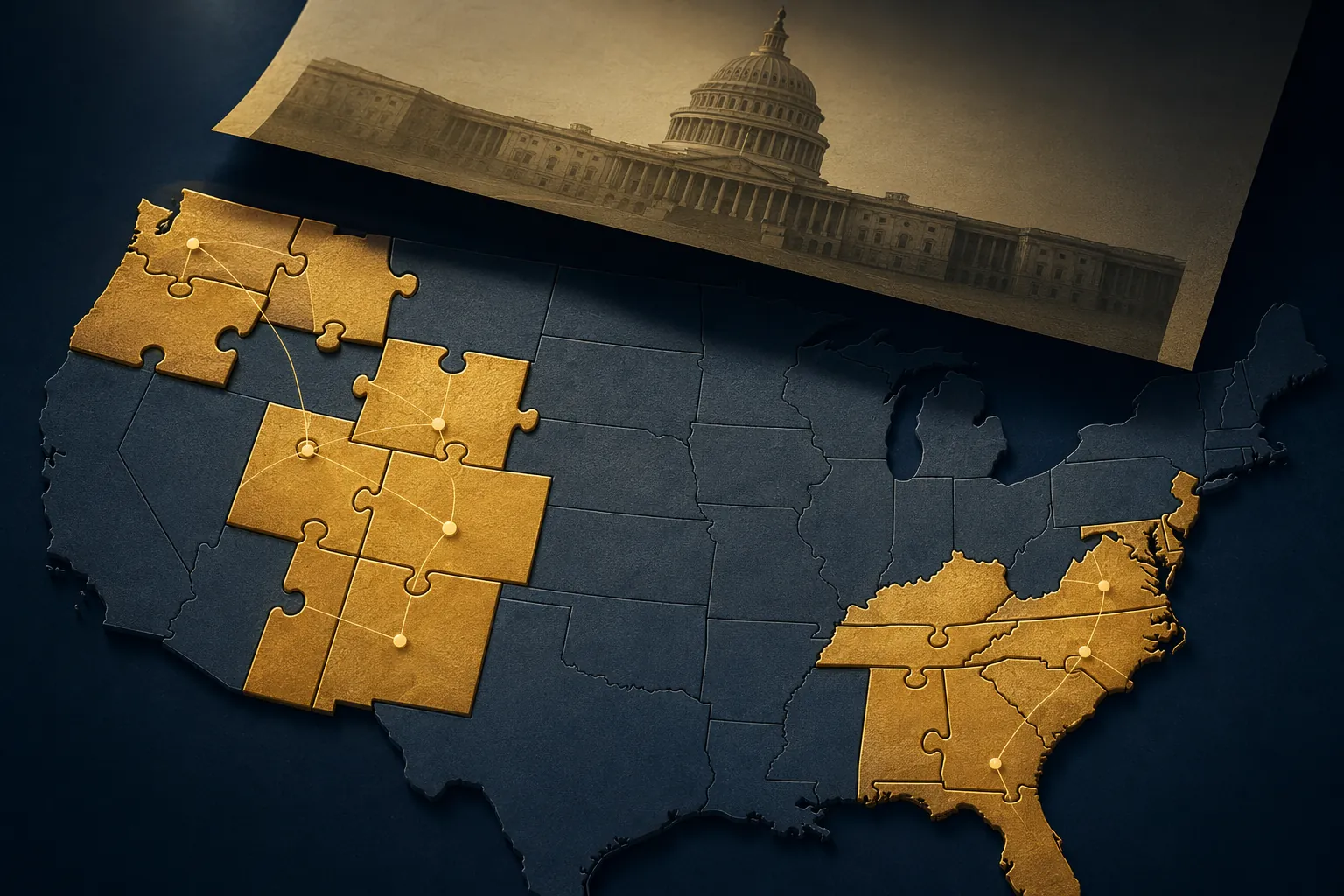
The opt-out window does not treat every state law the same way
A state that is already on permanent standard time sits in a different legal position from a state that enacted a permanent-DST trigger law. The former is inside the exemption structure described in H.R. 139. The latter has, at most, a state-law instruction waiting for federal permission that current law has not yet supplied.[1]
That is why the phrase “states that have already adopted permanent DST” is too blunt for this problem. Some states enacted laws expressing a preference for permanent DST if Congress allows it. Some attached conditions requiring other states to move too. Some states are instead considering permanent-standard-time bills, which would point toward the exemption side of the federal text rather than the trigger-law side. The legal switch is not the same in each bucket.
The 19 enacted permanent-DST trigger-law states
CRS Report R45208, updated July 24, 2026, identifies 19 states with enacted permanent-DST laws: Alabama, Colorado, Delaware, Florida, Georgia, Idaho, Louisiana, Maine, Minnesota, Mississippi, Montana, Oklahoma, Oregon, South Carolina, Tennessee, Texas, Utah, Washington, and Wyoming.[3] For the full map, the site’s state-by-state permanent DST tracker is the better routing page; the narrower issue here is what happens when those enacted laws meet a federal mandate.
| State-law position | States or examples | Why counsel should separate the category |
|---|---|---|
| Enacted permanent-DST trigger-law states identified by CRS | AL, CO, DE, FL, GA, ID, LA, ME, MN, MS, MT, OK, OR, SC, TN, TX, UT, WA, WY.[3] | These states are the main affected set if Congress makes permanent DST the federal default and the state has not taken a permanent-standard-time exemption path. |
| Conditional reciprocity trigger laws within the enacted-law set | At least 10 enacted trigger laws include multi-state conditions; examples discussed below include Colorado, Utah, and Montana.[4] | These clauses do not merely say “when Congress authorizes.” They ask whether other states have adopted, joined, or otherwise satisfied a reciprocal condition. |
| Pending permanent-standard-time bills | CA, KS, MA, NJ, NY, PA, VT.[3] | These bills matter for a different reason: if enacted before federal enactment, they may point toward the Sunshine Protection Act exemption path rather than permanent-DST activation. |
The registry should not be read as a finished state-law opinion. CRS supplies the national tracking set. Public compilations such as Wikipedia can point counsel toward individual session laws, but the operative language remains the enrolled state act, including effective dates, conditions, exceptions, and any later amendments.[4]
Conditional trigger clauses are where the preemption question lives
A clean trigger law says, in substance, that the state will observe daylight saving time year-round if federal law authorizes it. The Sunshine Protection Act would do something stronger than authorization: it would make year-round DST the federal rule, subject to exemptions.[1] That difference is where a conditional state clause can stop being administrative housekeeping and become a preemption question.
Suppose a state law activates only if a certain number of neighboring states also adopt permanent DST. If Congress later commands permanent DST nationwide, has the neighboring state “adopted” it, or has federal law displaced the state-choice mechanism entirely? If one neighbor moves onto a permanent-standard-time exemption path before enactment, does that state count against the condition? If a state agency must publish schedules, revise systems, or advise regulated entities before the first effective date, those are not academic questions.
The answer may ultimately depend on final bill text, the state statute’s verbs, and ordinary preemption doctrine. The site’s separate discussion of Congress’s power over permanent daylight saving time covers the federal authority question. This article assumes the harder day-after problem: Congress has acted, and counsel must decide whether an old state trigger clause still controls state implementation.
Colorado: the condition is doing real work
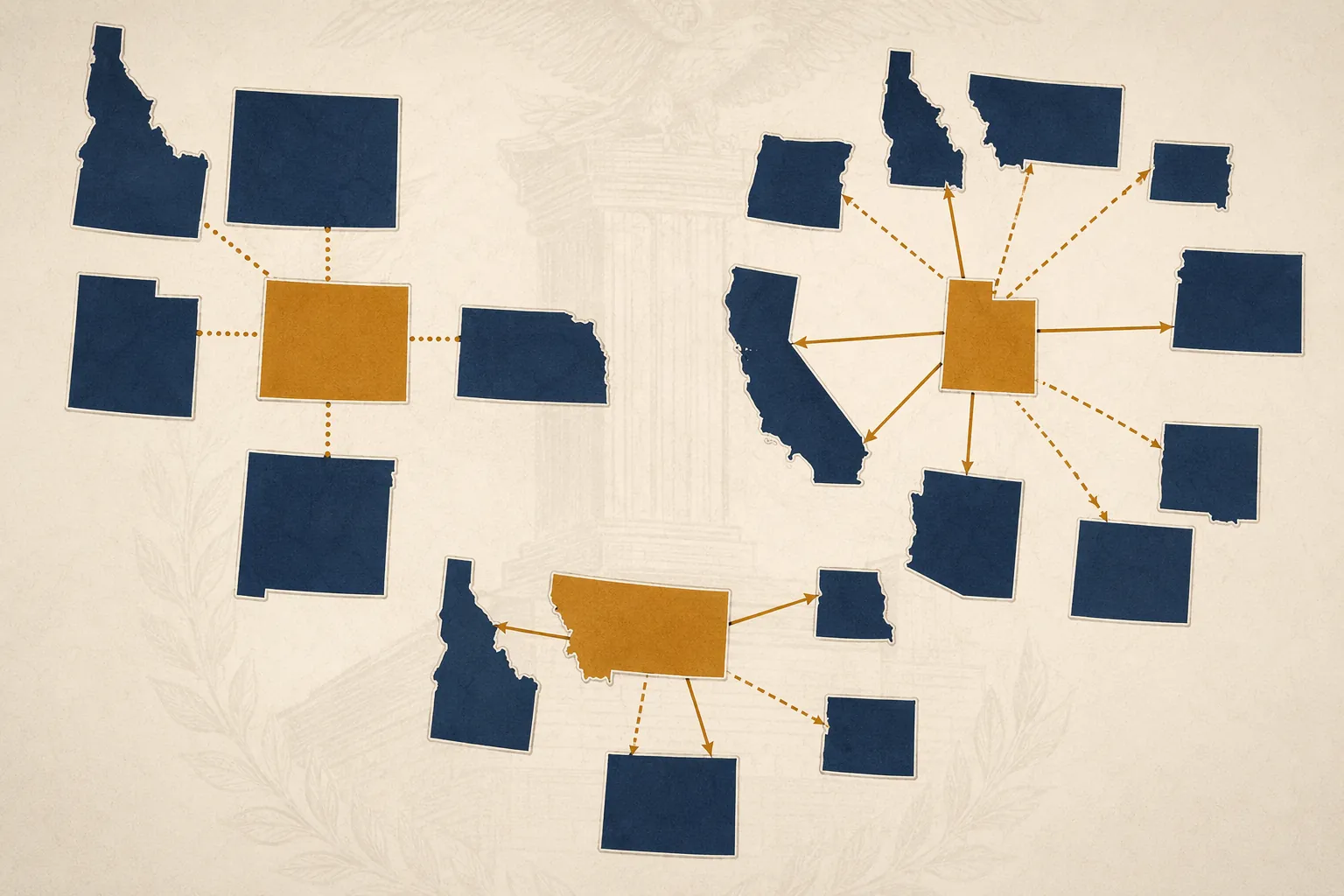
Colorado’s law is a useful example because the trigger is not simply federal permission. The public state-law compilation cited in the research materials describes Colorado’s condition as requiring four other Mountain Time Zone states to adopt permanent DST.[4] That clause assumes a world in which states choose whether to join a permanent-DST regime after federal permission becomes available.
A federal mandate changes the premise. If the Sunshine Protection Act makes permanent DST the default for all non-exempt states, Colorado may no longer be waiting for four other states to “adopt” anything in the ordinary state-legislative sense. The practical question becomes whether Colorado’s conditional clause is satisfied by the federal rule, rendered irrelevant by federal preemption, or left as an ambiguity that state counsel must resolve before agencies act.
Utah and Montana show why state-counting clauses are fragile
Utah’s trigger is described as requiring four of ten named states to adopt permanent DST. Montana’s is described as requiring three of five named states.[4] Those formulas are precise enough for a state-law activation regime, but they become harder to administer if federal law no longer treats permanent DST as a voluntary state adoption.
The counting problem is not just arithmetic. A named state might have an enacted permanent-DST trigger law. Another might do nothing and become subject to the federal default. Another might enact permanent standard time before federal enactment and claim the exemption. The state-counting clause may not say whether those outcomes are equivalent, disqualifying, or irrelevant.
That uncertainty is why a compliance memo should not stop at the 19-state headline. A multi-state employer may care about payroll cutoffs, operating hours, shift rules, transportation schedules, school-related obligations, or filing deadlines. The Mississippi discussion of how permanent DST can affect legal deadlines is a concrete example of the kind of downstream issue that follows once the time rule is no longer hypothetical.
The permanent-standard-time bills point in the opposite direction
California, Kansas, Massachusetts, New Jersey, New York, Pennsylvania, and Vermont are listed by CRS as states with pending permanent-standard-time bills.[3] Those bills should not be collapsed into the enacted permanent-DST trigger-law category. Under the Sunshine Protection Act structure, a state that adopted permanent standard time before enactment would be treated differently from a state that merely enacted a permanent-DST trigger.[1]
For counsel, the date matters as much as the policy preference. A permanent-standard-time bill adopted after federal enactment may not fit the same exemption language, depending on final text. A bill adopted before enactment may present a cleaner opt-out path. The research materials do not support a state-specific conclusion for any pending bill; they support only the monitoring point.
Atlantic Standard Time is a separate mechanism, not a substitute answer
Several New England states have studied moving to Atlantic Standard Time, including Massachusetts, Maine, New Hampshire, Rhode Island, and Vermont.[3][4] That route can resemble permanent DST in daily effect, but legally it is a time-zone-change route requiring Department of Transportation approval, not the same question as whether the Sunshine Protection Act’s opt-out clause applies.
That distinction is easy to lose in a public-facing map. A DOT time-zone petition asks whether a state or region should be placed in a different time zone. The Sunshine Protection Act asks which jurisdictions must observe daylight saving time year-round unless exempted. The same sunrise result can arrive through different legal machinery.
Federal coordination risk will not be limited to the clock statute
CRS also flags H.R. 9237 and S. 4744 in the 119th Congress as bills tying certain VA call-center requirements to time-zone and daylight-saving observance.[3] That is not the center of the Sunshine Protection Act analysis, but it is a reminder that federal programs sometimes incorporate time status indirectly.
If permanent DST becomes the federal default, lawyers should expect secondary questions in statutes, contracts, agency forms, collective bargaining agreements, school rules, and operating manuals that use local time without saying much more. The federal time rule may be simple. The documents that depend on it often are not.
What to monitor before advising on state impact
The Senate status is still a live threshold issue. Readers tracking enactment likelihood and procedure can use the site’s Senate opposition and procedural hurdles page for that separate question. For legal-impact work, the more useful monitoring list is narrower.
- The final Senate action on S.29 and any amendments to the opt-out language, effective date, or treatment of states with existing standard-time laws.
- Whether any state enacts permanent standard time before federal enactment, especially the states with pending bills identified by CRS.
- The enrolled session-law language in each of the 19 permanent-DST trigger-law states, including reciprocity clauses, effective dates, contingencies, and repeal or sunset provisions.
- Neighboring-state action where a trigger law uses a count, named-state list, regional condition, or time-zone condition.
- Any Department of Transportation time-zone petitions, especially if New England states revive the Atlantic Standard Time route.
- Secondary federal or state programs that incorporate local time, time-zone status, or daylight-saving observance by reference.
The decisive question is not simply whether permanent DST passes. It is whether a state’s existing trigger law still controls once Congress changes the default from state permission to federal command.
References
- H.R.139 - Sunshine Protection Act of 2025, Congress.gov.
- S.29 - Sunshine Protection Act of 2025, Congress.gov.
- CRS Report R45208, EveryCRSReport.com, July 24, 2026.
- Permanent time observation in the United States, Wikipedia.
Operationalizing workflow
No workflow has been explicitly linked to this obligation yet. See Workflows generally.
Illustrative cases
No illustrative case is currently tracked for this obligation. See Risk Digest for documented incidents generally.
← Back to RegulationReport a correction or tip
Spotted an outdated figure, a misstated fact, or a ruling this regulation entry should reflect? Public comments are disabled for this content given the professional cost of a misreported case outcome, penalty amount, or rule text — use the structured correction channel instead.
Report a correction or tip for this record →