
Water Rights Lawsuits Behind Phoenix Water Supply Cuts
- Authority
- Arizona Department of Water Resources
- Rule type
- regulation
- Jurisdiction scope
- US state
- Effective date
- Apr 21, 2026
- Source text
- Read primary rule text ↗
ADWR must use formal rulemaking before applying AMA-wide unmet-demand and depth-to-water criteria to groundwater applications.
The decided case comes first
The live record behind Phoenix water-supply-cut headlines starts in Maricopa County Superior Court, not at Lake Mead. In docket CV2025-002623, on April 21, 2026, the court struck down the Arizona Department of Water Resources’ AMA-Wide Unmet Demand Rule and AMA-Wide Depth-to-Water Rule after finding that ADWR “did not comply” with Arizona rulemaking law and was “utilizing criteria when reviewing applications that did not previously exist.” The order treated both criteria as “rules” under Arizona law, which meant ADWR had to use formal rulemaking before applying them as review standards. [1][2]
That is the first exposure item because it is already decided, even though not final. As of August 1, 2026, the ruling is being treated here as on appeal; that appeal posture should be checked against the current appellate docket before anyone relies on the order for client advice, financing assumptions, or entitlement strategy.
The practical effect is narrower than some headlines imply and more important than a routine procedural remand. The court did not decide Arizona’s groundwater balance. It did not allocate Colorado River water. It did not hold that ADWR can never impose development-limiting groundwater criteria. It held that the particular AMA-wide unmet-demand and depth-to-water criteria functioned as rules and therefore had to pass through the state’s rulemaking process before being used to review applications. A Holland & Hart summary frames the decision the same way: ADWR’s groundwater rules were rejected on procedural grounds. [3]

Why the rulemaking defect matters for Phoenix-area development
For Phoenix-area development, the holding matters because ADWR’s review criteria were not merely internal paperwork. They affected whether groundwater-dependent projects could clear the water-supply review framework in active management areas. Once a court classifies those criteria as rules, the agency’s path changes: it must either defend the order on appeal, move through formal rulemaking, revise its review posture, or operate under some combination of those choices while the appeal is pending.
The legal defect is the hinge. Agencies often defend technical criteria as expert application of existing statutory authority. Regulated parties often argue that the same criteria are binding standards in everything but name. CV2025-002623 placed ADWR’s criteria on the second side of that line. The court’s quoted language matters because it focuses on use: ADWR was applying criteria in application review that “did not previously exist,” and those criteria were consequential enough to qualify as rules. [1][2]
That creates a different kind of water-supply risk than a reservoir shortage. A hydrologic shortage can reduce available water. A rulemaking defect can unsettle the legal machinery used to decide which projects may proceed, under what criteria, and after what process. Counsel tracking Phoenix water exposure should not collapse those into the same event.
| Record item | Current posture as of August 1, 2026 | Why counsel should separate it from broader water-supply headlines |
|---|---|---|
| Maricopa County Superior Court, CV2025-002623 | April 21, 2026 ruling; treated here as on appeal | A decided state administrative-law ruling, not a federal shortage allocation |
| AMA-Wide Unmet Demand Rule | Held to be a rule requiring formal rulemaking | Targets the legality of ADWR’s application-review criteria |
| AMA-Wide Depth-to-Water Rule | Held to be a rule requiring formal rulemaking | Same procedural defect; same development-review significance |
| Post-2026 Colorado River operating framework | Federal agency process moving toward a Record of Decision and 2027–28 operating guidelines | Separate federal/interstate layer; not resolved by the state-court order |
Source posture is not a formality here. The operative document is the court order, not any advocate’s description of it. Goldwater Institute’s article is useful because it links the April 21 order and identifies the development-restriction stakes, but the order itself should be re-verified against court records before legal reliance. [1][2]
The Post-2026 Colorado River layer is not yet the same kind of record
The next exposure layer is federal and interstate. It is also less procedurally mature. The Bureau of Reclamation’s Post-2026 process moved into a critical window with a July 31, 2026 Final Environmental Impact Statement, followed by an expected Record of Decision and 2027–28 operating guidelines in the weeks after that release. The 2007 Interim Guidelines expire at the end of 2026. [4][5][6]
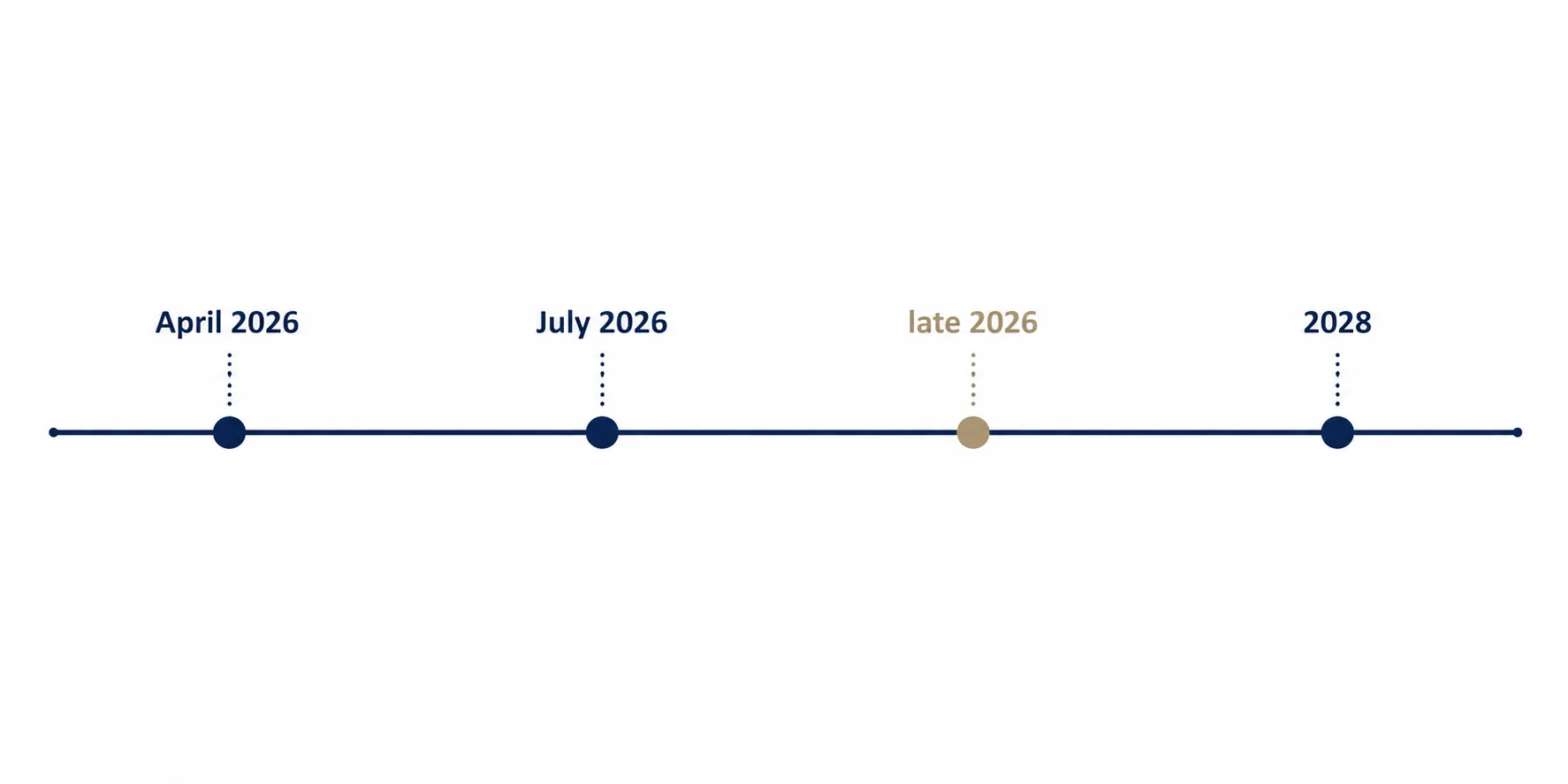
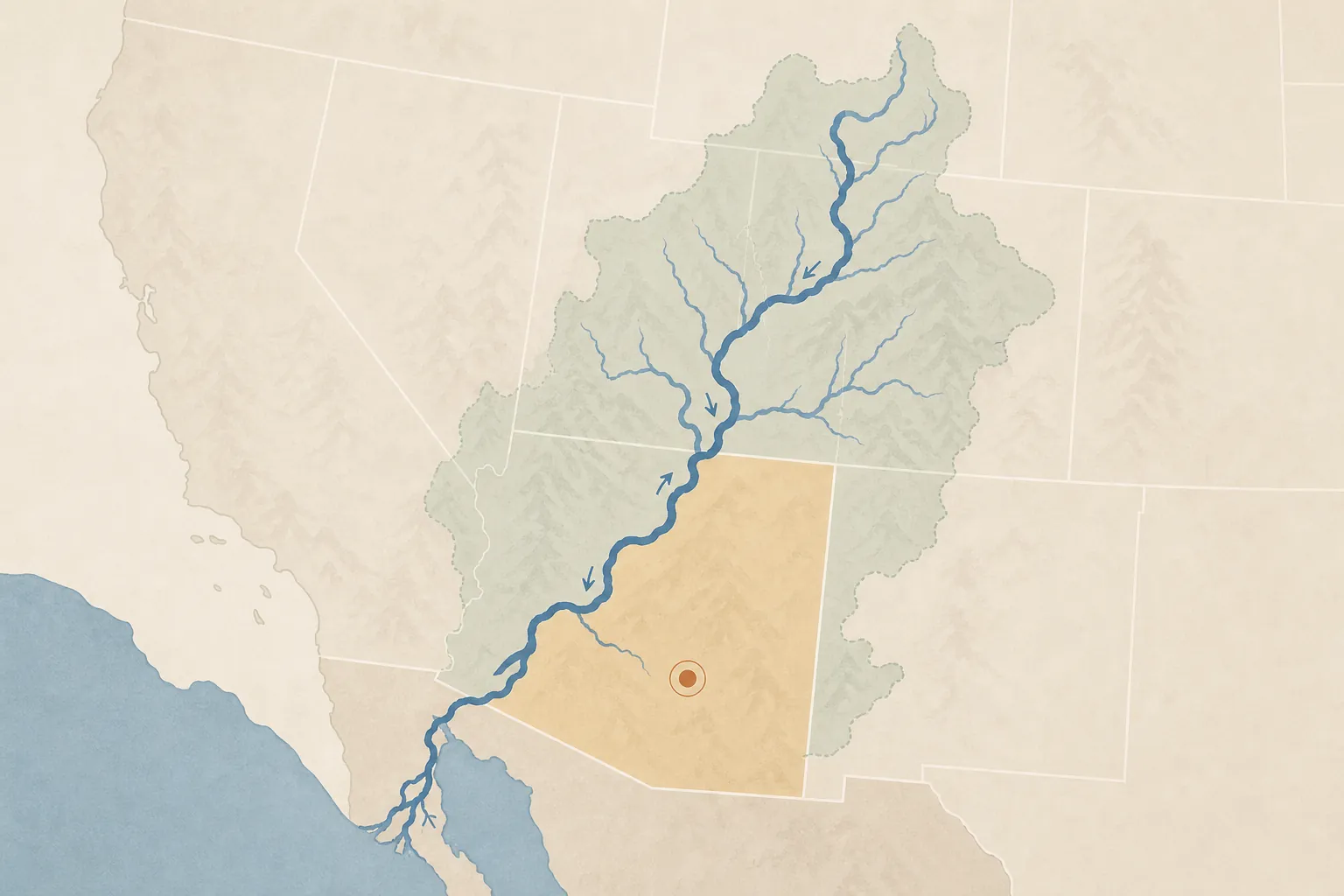
The reported supply figures belong in that dated posture. As of the July 31, 2026 federal-plan reporting, Arizona would forego roughly 760,000 acre-feet per year, about 31% of its 2.8 million acre-foot Colorado River allocation, under the Lower Basin proposal the federal plan was expected to adopt for 2027–28. Those are plan-context figures, not a final adjudicated cut and not a court order. [4][5]
The litigation risk is visible because affected institutions have already described their objections. Central Arizona Project said the federal framework “contains several fundamental legal flaws” and “inaccurately portrays Arizona’s rights.” Gila River Indian Community Governor Stephen Roe Lewis pledged to challenge the 2027–28 guidelines “in every forum available.” Arizona has also positioned itself to enforce what it describes as the Compact’s Lower Basin guarantee. Those are serious signals, but they should be labeled as threatened or pledged exposure unless and until complaints, petitions, or original actions are filed. [4][5]
Expected, pending, threatened: the docket distinction
The cleanest way to read the Phoenix water litigation picture is by procedural status. One state-court ruling exists. One appeal posture must be tracked. The federal operating regime is approaching final agency action. The Arizona, CAP, and GRIC challenges are not all filed cases on the same footing.
| Category | Item | Status | Tracking consequence |
|---|---|---|---|
| Decided | CV2025-002623 April 21, 2026 order | Superior Court ruling striking down ADWR’s AMA-wide criteria as rules requiring formal rulemaking | Read the order first; track appellate treatment and any agency rulemaking response |
| Pending / to verify | ADWR appeal | Treated here as pending as of August 1, 2026 | Check the current appellate docket before advising on finality or reliance |
| Expected agency action | Record of Decision and 2027–28 Colorado River operating guidelines | Expected after the July 31, 2026 Final EIS | Watch for the final text that could become the reviewable agency action |
| Threatened or pledged | Arizona, CAP, and GRIC challenges | Publicly signaled objections and litigation posture; not all filed as of August 1, 2026 | Do not brief them as active lawsuits until pleadings exist |
| Existing deadline | Expiration of the 2007 Interim Guidelines | End of 2026 | Creates the operating-regime transition window for 2027–28 |
If the threatened interstate fight becomes a Compact-enforcement action, the Article III(d) and Supreme Court mechanics are a separate analysis. This record does not need to re-derive that doctrine. For that layer, use The Lake Mead Crisis Is About to Test Water Rights Law and What a Compact Call Means for Lake Mead Water Rights. The Phoenix-specific work here is to keep the state administrative-law ruling and the Post-2026 federal-plan challenge window in separate lanes.
What to track through 2028
Through 2028, the risk file should stay organized around four documents or filings, not around generalized water-crisis language.
- The appellate record in CV2025-002623, including any stay, reversal, affirmance, remand instructions, or settlement posture affecting ADWR’s use of the unmet-demand and depth-to-water criteria.
- Any formal ADWR rulemaking response, because the April 21 order’s defect was procedural: if the agency rebuilds the criteria through rulemaking, the next dispute may look different from the one the Superior Court decided.
- The Record of Decision and the final 2027–28 Colorado River operating guidelines, because the July 31, 2026 Final EIS is not the last operative step in the federal process. [4][6]
- Filed actions by Arizona, CAP, GRIC, or other affected parties. Public statements about “fundamental legal flaws” and challenges “in every forum available” are litigation signals; pleadings will define claims, defendants, venue, remedies, and timing. [4][5]
That sequence is enough to frame the current legal risk. Phoenix’s near-term water future is not only a question of how much water is physically available. It is also a question of which agency criteria survive rulemaking review, which federal operating guidelines become final, and which threatened interstate challenges become filed cases.
References
- Victory! Arizona Court Strikes Down Water Bureaucracy’s Restrictions on Development — Goldwater Institute.
- CV2025-002623-926-04212026.pdf — Goldwater Institute.
- Court Rejects ADWR Groundwater Rules on Procedural Grounds — Holland & Hart.
- Feds release Colorado River plan with cuts to Lower Basin states — azcentral, July 31, 2026.
- Trump administration spares Southwest from harshest water cuts in new Colorado River plan — Los Angeles Times, July 31, 2026.
- Post-2026 Colorado River Operations — Bureau of Reclamation.
Operationalizing workflow
No workflow has been explicitly linked to this obligation yet. See Workflows generally.
Illustrative cases
No illustrative case is currently tracked for this obligation. See Risk Digest for documented incidents generally.
← Back to RegulationReport a correction or tip
Spotted an outdated figure, a misstated fact, or a ruling this regulation entry should reflect? Public comments are disabled for this content given the professional cost of a misreported case outcome, penalty amount, or rule text — use the structured correction channel instead.
Report a correction or tip for this record →