
Mapping Sanctions Liability for Russia-China Barter Trade
- Authority
- EU Council; U.S. Treasury/OFAC; UK OFSI; PRC State Council/MOFCOM
- Rule type
- regulation
- Jurisdiction scope
- EU; US federal; UK; China
- Effective date
- May 14, 2026
- Source text
- Read primary rule text ↗
Screen each goods leg and settlement/clearing function under EU, US, UK, and Chinese sanctions rules; verify license, wind-down, and blocking-rule status.
Non-advice note: This obligations record is for legal-background research and compliance mapping, not legal advice for any particular transaction. Legal-background reviewer: Daniel Cho, sanctions and export-controls counsel. Category: Regulation & Ethics. Last verified: Aug. 2, 2026, UTC.
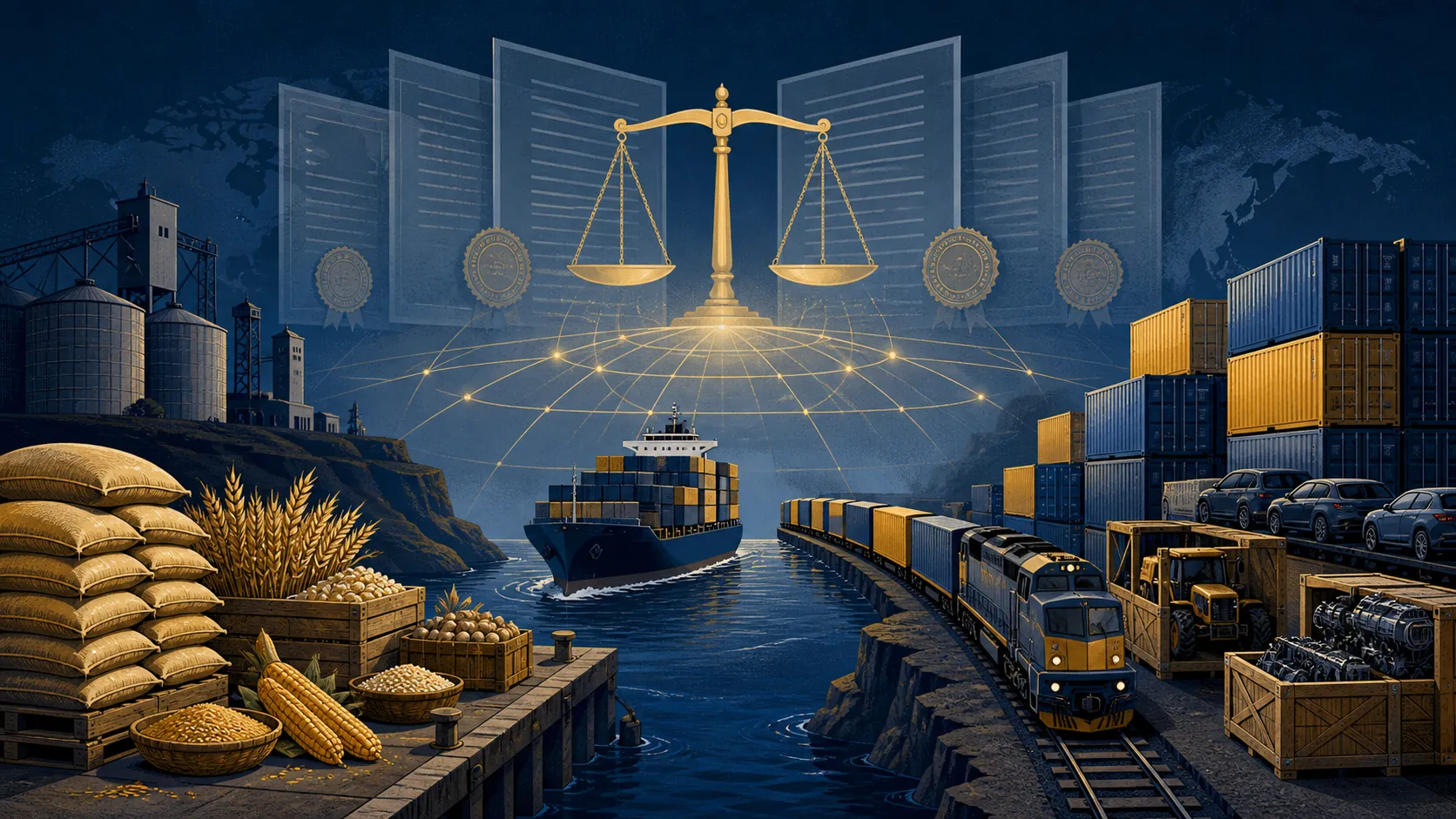
A non-cash settlement does not make a sanctioned transaction legally invisible. A wheat-for-cars arrangement still has a shipper, a consignee, a customs value, an invoice or equivalent record, an offset ledger, a bank or platform that may reconcile obligations, and someone who later has to explain why the transaction did not facilitate prohibited trade.
That is the first legal implication of Russia-China barter trade: the absence of dollars is not the absence of settlement. Reuters reported in September 2025 that Russian companies had revived goods-for-goods arrangements including wheat for Chinese cars, flax seeds for appliances and building materials, metals for machinery, and a Hainan Longpan proposal involving marine engines in exchange for steel and aluminum. The same report described a 14-page 2024 Russian “Guide to Foreign Barter Transactions,” eight identified barter deals, and an analyst-inferred roughly $7 billion gap between Russian central-bank and customs data; Reuters also cautioned that barter volume could not be established and that some arrangements were proposals or reported deals rather than adjudicated facts.[1]
The harder record begins where official sanctions language catches up with the workaround. On Jan. 15, 2025, the U.S. Treasury designated 15 regional clearing platform entities — six Russia-based and nine PRC-based — plus one individual for operating what Treasury called a “non-cash mutual settlement” scheme for sanctioned goods. Treasury also re-designated roughly 100 entities under Executive Order 13662, exposing facilitators to mandatory secondary sanctions consequences.[2]
That designation is the cleanest warning in the record. It does not prove every Russia-China barter arrangement is evasive. It does show that barter, netting, and clearing structures have already appeared in sanctions-designation reasoning. A lawyer reviewing a goods-for-goods file should therefore stop treating “barter” as a business descriptor and start asking which regulated function each participant performs.
What must be mapped before the regimes are even applied
The practical file usually looks less primitive than the sales team says it is. Someone records equivalent value. Someone decides whether the wheat offsets the vehicles in full or leaves a residual balance. Someone issues or reviews customs documents. Someone certifies origin, end use, transport, insurance, and tax treatment. If a platform reconciles the two sides, if a bank sees supporting documents, or if a logistics provider knows that one cargo leg is consideration for another, the transaction has not escaped regulated infrastructure. It has merely moved the payment question into a less familiar part of the file.
| Transaction element | Why it matters legally |
|---|---|
| Goods on both legs | Each leg must be screened separately against export controls, import bans, sectoral restrictions, asset freezes, and licensing exemptions. |
| Value and offset record | Customs, tax, sanctions, and anti-circumvention analysis depend on the assigned value, not just on whether cash moved. |
| Clearing or reconciliation platform | A platform that nets, reconciles, or settles obligations may itself be performing a regulated settlement function. |
| Banks, insurers, freight forwarders, and brokers | Gatekeepers may create facilitation exposure even when they do not transfer purchase money. |
| China nexus | Chinese blocking rules may prohibit compliance with certain foreign sanctions while Western regimes may punish facilitation. |
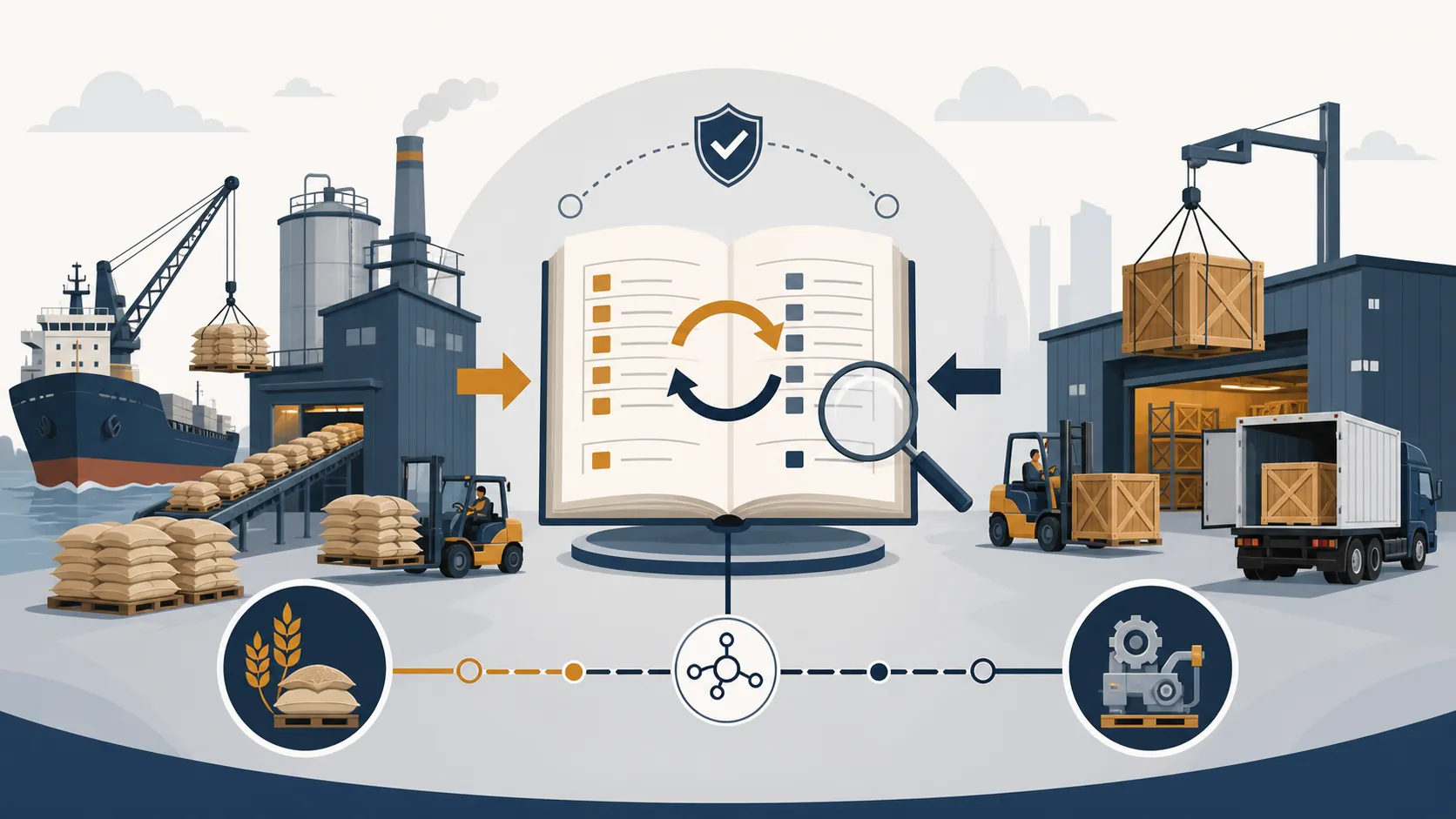
United States: secondary sanctions do not turn on dollar settlement
The U.S. layer is not limited to U.S.-dollar payments. Executive Order 14114 expanded Russia-related secondary-sanctions risk for foreign financial institutions, and Gibson Dunn’s analysis of the rule emphasized two points that matter for barter files: foreign financial institutions may face sanctions for facilitating significant transactions involving Russia’s military-industrial base, and the authority does not require a knowledge finding in the way many compliance teams instinctively expect.[3]
OFAC FAQ 1152, as discussed in that analysis, also addressed the non-U.S.-dollar point: activity does not fall outside the risk perimeter merely because it is denominated or settled outside dollars.[3] In a barter setting, that matters because the transaction may be presented internally as having no payment at all. The legal question is not whether a SWIFT message shows a dollar transfer. It is whether a foreign financial institution or other facilitator materially supported, processed, cleared, reconciled, guaranteed, financed, insured, or otherwise enabled a transaction that the sanctions program reaches.
Treasury’s January 2025 regional-clearing-platform designations make that point less theoretical. “Non-cash mutual settlement” was not treated as a charming workaround; it was named as part of a sanctions-evasion scheme involving sanctioned goods and Russia- and PRC-based entities.[2] A compliance reviewer should assume that the offset ledger, not only the bank transfer, can become the enforcement exhibit.
The tri-seal compliance note issued by the Departments of Justice, Commerce, and Treasury in March 2023 adds the operational red flags that tend to appear around this kind of file: intermediary and transshipment structures, unusual routing, inconsistent documentation, and attempts to obscure end users or destinations.[4] Those red flags do not become harmless because consideration is paid in steel, grain, engines, or machinery rather than cash.
The wheat example also needs discipline. Agricultural commodities can trigger licensing and exemption analysis, not a free pass. The U.S. International Trade Administration’s Russia sanctions page points to OFAC General License 6D for certain agricultural commodities, medicine, medical devices, replacement parts and components, or software updates, but a goods-for-goods structure still requires screening of the counterparty, the other leg of the exchange, the settlement mechanism, and any restricted services or technology.[5]
A wheat-for-cars deal, for example, cannot be cleared by saying “wheat is food.” Counsel would still need to identify who supplies the vehicles, whether any listed person owns or controls a counterparty, whether the cars or components are controlled, whether a Russian military-industrial-base nexus exists, whether a clearing platform is designated, and whether a bank, broker, insurer, or freight forwarder is being asked to facilitate a significant Russia-related transaction. The commodity nuance narrows the analysis; it does not end it.
For adjacent U.S. secondary-sanctions and non-bank-gatekeeper mapping, see New Secondary Sanctions Liabilities Under the 2026 Russia-Iran Bill and How the Graham Russia Sanctions Bill Changes Compliance Risk. The same habit is useful here: separate the legal authority from the political description, then identify the actor whose conduct the authority actually reaches.
EU and UK: netting, set-off, reconciliation, and settlement are now explicit words
The EU layer gives the most direct textual answer to the barter-settlement question. Law-firm alerts describing the EU’s 20th Russia sanctions package state that Council Regulation (EU) 2026/506, adopted on April 23, 2026, extended the Article 5ad transaction ban to nonfinancial entities that enable international payments through netting, set-off, reconciliation, or settlement where doing so frustrates EU sanctions. The alerts identify four entities listed in Part D of Annex XLV, with the relevant prohibition effective May 14, 2026.[6][7]
That drafting matters because barter advice often smuggles the payment function into soft words: balance, offset, swap, mutual account, reconciliation. Article 5ad, as summarized by the alerts, does not require the advisor to pretend those words are informal. It reaches the settlement architecture directly. If a nonfinancial entity enables the international payment equivalent through set-off or netting, the question is whether it is frustrating EU sanctions, not whether it calls itself a bank.
The effective-date work is not clerical. The 20th-package alerts describe phased wind-downs, including wind-down periods running to July 25, 2026, for certain measures.[6][7] As of this record’s Aug. 2, 2026 verification date, a file that looked temporarily manageable in May or June may have crossed into a different status. Advice that does not state the date checked is not advice; it is memory.
The EU’s 21st package then widened the anti-circumvention picture. Mayer Brown reported that the package adopted on July 23, 2026 added 14 China-based entities among 27 third-country anti-circumvention listings. Sullivan & Cromwell’s July 29, 2026 memorandum also describes the EU and UK escalation in scope and enforcement, including new transaction-ban timing and an oil-price-cap freeze until July 14, 2027.[8][9]
None of that establishes that a court has sanctioned a Russia-China barter deal as such. The stronger statement is narrower and more useful: EU measures now expressly cover settlement techniques associated with barter and offsetting, and China-based entities have appeared in Russia anti-circumvention listings. That is enough to require a regime-specific analysis before anyone signs an offset agreement.
The enforcement posture is also changing around the paperwork. Directive (EU) 2024/1226 creates a criminal-penalty frame for EU sanctions violations, while Sullivan & Cromwell’s memorandum notes OFSI’s May 26, 2026 penalty of GBP 1,000,920.59 against Sabre Global Technologies as OFSI’s first circumvention penalty. The same memorandum discusses Beloglazov v. Council, T-492/24, decided July 15, 2026, for an objective-intention circumvention standard.[9]
For UK and EU purposes, then, the compliance file should not stop at asset-freeze screening. It should show why the netting, set-off, reconciliation, or settlement function is lawful; who performs it; whether a listed or transaction-banned party benefits; whether an exemption or wind-down applies; and whether the conduct could be characterized as frustrating a restrictive measure. A barter agreement that is silent on those functions has not eliminated risk. It has left the most important part undocumented.
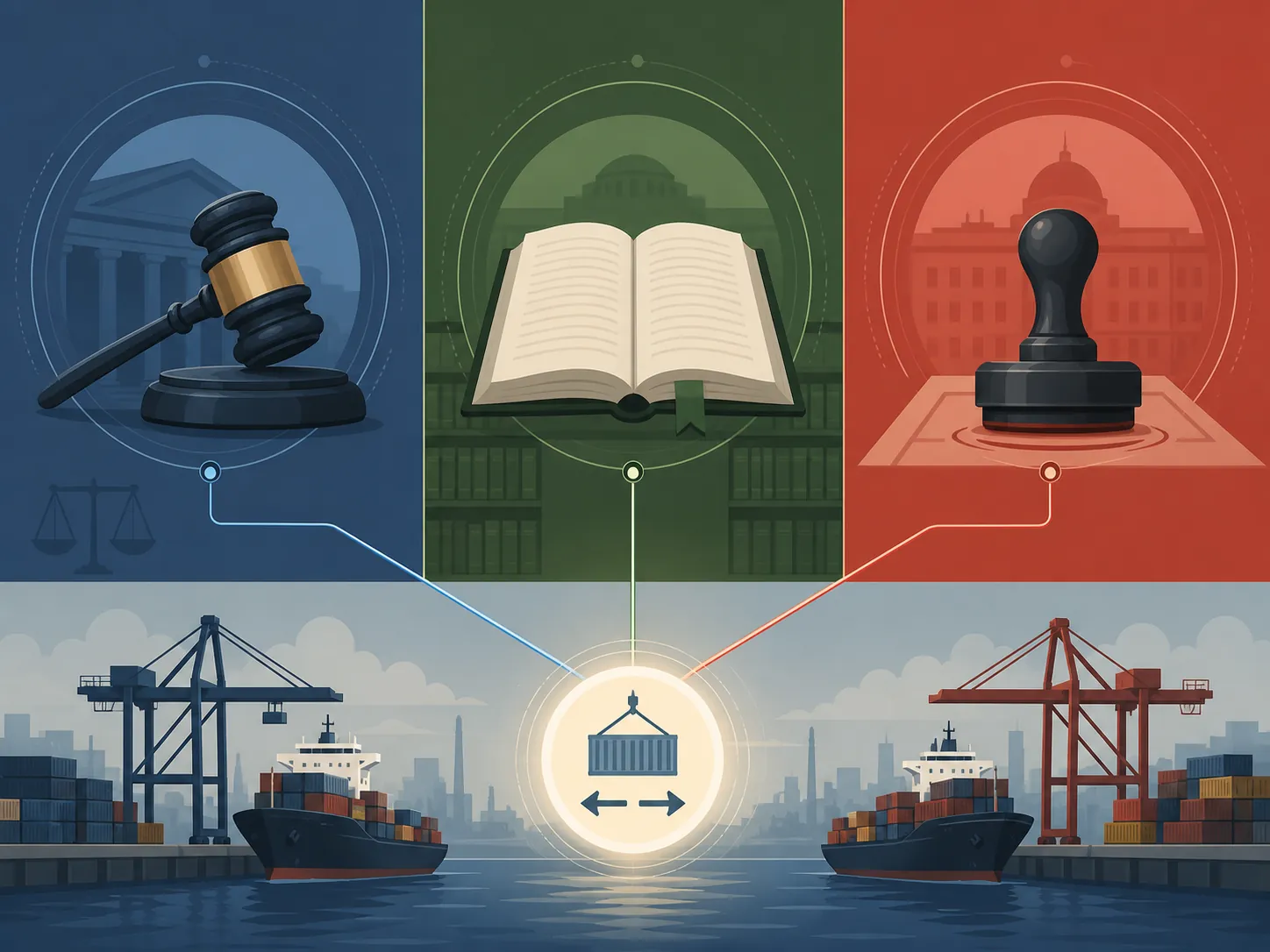
China: the blocking-rule conflict is not a footnote
Once the U.S., EU, and UK obligations are mapped, the China layer becomes harder, not easier. Reed Smith’s 2026 analysis describes China’s State Council Regulations on Countering Foreign Improper Extraterritorial Jurisdiction, Decree No. 835, effective April 13, 2026. The regulations create a Malicious Entity List, prohibition orders, a private right of action, and penalties. Reed Smith also describes MOFCOM’s first blocking order, issued May 2, 2026, which prohibits recognizing, enforcing, or complying with U.S. sanctions on five named petrochemical companies.[10]
That is a genuine conflict-of-laws hinge. A company may face U.S. secondary-sanctions expectations not to facilitate certain Russia-related activity, while Chinese rules may prohibit compliance with specified foreign sanctions against named Chinese companies. The hard question is not whether one regime is inconvenient. The hard question is how the company documents a defensible path when one regulator may view the transaction as facilitation and another may view refusal or termination as prohibited compliance with foreign sanctions.
This is the place where “just comply with sanctions” becomes sloppy. Comply with which binding obligation, imposed on which entity, for which conduct, on which date, and with what licensing or reporting path? The answer may differ for a Chinese supplier, a non-Chinese bank, a European freight forwarder, a U.S.-owned affiliate, and a board committee approving a group-wide risk decision.
The conflict pattern is not unique to barter. The China-nexus problem also appears in other areas where foreign sanctions or controls collide with Chinese counter-extraterritorial measures; see The Hidden Legal Risk in China’s DUV Semiconductor Rules and Compliance Roadmap for the US Ban on Chinese Humanoid Robots. The barter-specific wrinkle is that the settlement record may be more fragmented, making it harder to prove which decision was sanctions compliance, commercial refusal, credit control, export-control screening, or ordinary risk management.
Commercial opacity is a risk factor, not a safe harbor
The commercial record is still thin. Reuters could not establish total barter volume, and the roughly $7 billion figure in its report was an analyst inference from a central-bank/customs-data divergence, not a confirmed barter total.[1] Anadolu Agency reported a Russian Finance Minister statement that Russia and China conduct 99.1% of trade in national currencies, but that is a public official’s settlement-currency statement rather than independently verified transaction-level data.[11]
The U.S.-China Economic and Security Review Commission has identified barter trade as one of the tools associated with China’s facilitation of sanctions and export-control evasion, but the official page supports that point at a high level rather than proving the facts of any particular transaction.[12] That distinction matters. A sanctions file should not convict a counterparty by trend. It should use the trend to decide how much diligence is necessary.
Barter also creates mundane problems that become legal problems quickly: valuation, customs declarations, tax treatment, stamp duties, dispute resolution, and proof that both sides of the exchange were equivalent or lawfully adjusted. Global Trade Review and EL PAÍS have both described these practical gaps in the renewed Russia barter discussion.[13][14] Those gaps are exactly where a later regulator, bank, auditor, or board committee will ask why the file contains commercial enthusiasm but not a settlement analysis.
The wider enforcement environment gives counsel one more reason not to be casual. Debevoise reported on July 23, 2026 that DOJ had announced new trade-fraud enforcement initiatives, including a Trade Fraud Task Force with a $1 billion milestone and permanent status.[15] That is not a barter rule. It is a reminder that undervaluation, false declarations, and evasive customs narratives do not live in a separate universe from sanctions screening.
Verification posture before advice is finalized
The defensible review starts with the goods, not the label. Identify every item moving in both directions, its classification, origin, destination, end user, end use, and assigned value. If one side is agricultural, verify the precise exemption or license conditions rather than assuming food status controls the entire exchange. If the other side is cars, machinery, metals, engines, electronics, software, parts, insurance, freight, or repair services, screen that leg on its own terms.
Then identify every settlement function even if no money moves. Who calculates equivalence? Who records the receivable and payable? Who clears the offset? Who reconciles residual balances? Who hosts the platform? Who receives documents? Who finances, insures, transports, brokers, warehouses, certifies, or audits the exchange? The person saying “there is no payment” should be asked who closes the ledger.
Screen the file separately under U.S., EU, UK, and Chinese measures. Do not collapse secondary sanctions, transaction bans, asset freezes, export controls, import bans, anti-circumvention rules, and blocking regulations into one blended risk rating. The regimes attach liability to different actors and different conduct. The same fact can matter for different reasons: a PRC clearing platform may matter under U.S. secondary sanctions, EU anti-circumvention listings, bank risk controls, and Chinese blocking-law analysis, but those are not the same legal test.
Check dates in the file, not just in the law. The EU 20th and 21st packages include effective dates and wind-down periods; Chinese blocking measures have their own effective dates; OFAC designations and FAQ positions must be checked against the transaction date, shipment date, settlement date, and any amendment or novation. A barter deal negotiated before a listing may become a different transaction when the set-off is later reconciled.
Finally, preserve source-linked diligence. Keep the sanctions-list screenshots or system records, classification analysis, beneficial-ownership checks, customs valuation support, exemption analysis, board or committee approvals, and any China blocking-law assessment. If a conflict appears between Western sanctions expectations and Chinese prohibition orders, flag it before the business advice is finalized, not after a counterparty receives a termination notice.
Russia-China barter is not a loophole. It is a settlement channel now expressly reached by multiple regimes, and the audit gap created by non-cash settlement is part of the liability problem rather than evidence of safety.
References
- Russia revives barter trade to dodge Western sanctions, Reuters, Sept. 15, 2025
- Treasury Disrupts Russia's Sanctions Evasion Schemes, U.S. Department of the Treasury, Jan. 15, 2025
- OFAC Creates New Russia-Related Secondary Sanctions Risks for Foreign Financial Institutions, Gibson Dunn, Jan. 4, 2024
- Publication of Tri-Seal Compliance Note, Office of Foreign Assets Control, Mar. 2, 2023
- Russia Sanctions and Export Controls, International Trade Administration
- EU Adopts 20th Russia Sanctions Package, Skadden, May 2026
- EU adopts its 20th sanctions package, Curtis, May 21, 2026
- European Union Adopts 21st Package against Russia, Mayer Brown, July 24, 2026
- EU and UK Russia Sanctions – Escalation in Scope and Enforcement, Sullivan & Cromwell, July 29, 2026
- China issues regulations on countering foreign improper extraterritorial jurisdiction and first blocking order against US sanctions, Reed Smith, 2026
- Russia, China conduct over 99% of trade in national currencies, says official, Anadolu Agency, Nov. 4, 2025
- China's Facilitation of Sanctions and Export Control Evasion, U.S.-China Economic and Security Review Commission, Nov. 14, 2025
- Can Russia scale up barter trading to skirt sanctions?, Global Trade Review, Aug. 21, 2024
- Russia turns to bartering, EL PAÍS, Dec. 7, 2024
- DOJ Announces New Trade Fraud Enforcement Initiatives, Debevoise & Plimpton, July 23, 2026
Operationalizing workflow
No workflow has been explicitly linked to this obligation yet. See Workflows generally.
Illustrative cases
No illustrative case is currently tracked for this obligation. See Risk Digest for documented incidents generally.
← Back to RegulationReport a correction or tip
Spotted an outdated figure, a misstated fact, or a ruling this regulation entry should reflect? Public comments are disabled for this content given the professional cost of a misreported case outcome, penalty amount, or rule text — use the structured correction channel instead.
Report a correction or tip for this record →