
Silver Alert Design Shapes AI Incident Notification Rules
- Authority
- European Union
- Rule type
- regulation
- Jurisdiction scope
- EU
- Effective date
- Aug 2, 2026
- Source text
- Read primary rule text ↗
Report serious incidents to the market surveillance authority where the incident occurred within 15 days, or 10 days for incidents involving death and 2 days for widespread infringements; incomplete initial reports allowed.
Last verified: August 3, 2026, UTC. Category: Regulation & Ethics. This article is for operational issue-spotting and is not legal advice. If the phrase “silver alert issued today state notification rules” brought you here, the useful comparison is not that missing-person alert law and AI law share the same authority. They do not. The useful comparison is the alert-clock problem: someone has to define the trigger, name the recipient, choose the channel, start the timer, and accept the consequence of delay. As of today, California’s AI safety reporting law is already in force, EU AI Act Article 73 became applicable one day ago, New York’s RAISE Act is scheduled for January 1, 2027, and the federal AI Incident Reporting Act remains only a proposal.[1][2][3]

AI incident-notification tracker as of August 3, 2026
| Regime | Status as of Aug. 3, 2026 | Covered actor | Trigger | Recipient | Deadline | Penalty or consequence stated in this research set | Effective / applicability date | Source |
|---|---|---|---|---|---|---|---|---|
| California SB 53 / Transparency in Frontier Artificial Intelligence Act | In force | Frontier-model developers | Critical safety incidents; separate law-enforcement notice where death or serious injury is imminent | California Office of Emergency Services; law enforcement for imminent death or serious injury | 15 days to the California Office of Emergency Services; 24 hours to law enforcement where death or serious injury is imminent | Penalty amount not stated in the cited research source for this tracker | Jan. 1, 2026 | [1] |
| EU AI Act Article 73 | Applicable | Providers of high-risk AI systems | Serious incidents | Market surveillance authority where the incident occurred | 15 days generally; 2 days for widespread infringements; 10 days where the incident involves death; an initially incomplete report is permitted | Penalty amount not quantified in Article 73 material used for this tracker | Aug. 2, 2026 | [2] |
| New York RAISE Act | Enacted, prospective | Covered developers under the RAISE Act as summarized in the cited source | Covered AI safety incidents under the RAISE Act as summarized in the cited source | Designated AI oversight office | 72 hours | Civil penalties up to $1 million for a first violation and up to $3 million for subsequent violations | Signed Dec. 16, 2025; effective Jan. 1, 2027 | [1] |
| Federal AI Incident Reporting Act | Proposed; not enacted | Developers of high-capability AI models | Dangerous capabilities, security breaches, and safety incidents | Secretary of Commerce; congressional leadership for the most serious incidents | 7 days to the Secretary of Commerce; 48-hour notification to congressional leadership for the most serious incidents | No enacted penalty stated in the cited proposal summary | Introduced June 25, 2026 | [3] |
The table is deliberately uneven. California and Article 73 are live clocks. New York is a budget-and-build-now clock, not a today clock. The federal bill is a possible overlay, not a current mandate. Treating those four statuses as one “emerging AI incident reporting rule” is how an incident team ends up arguing about source law while the actual timer is already running.
California has two clocks, not one
California’s SB 53, the Transparency in Frontier Artificial Intelligence Act, is the cleanest example of why “notify promptly” is not a playbook. KPMG’s 2026 state-law summary describes an obligation, effective January 1, 2026, for frontier-model developers to report critical safety incidents to the California Office of Emergency Services within 15 days.[1] That is one branch of the runbook.
The second branch is faster and has a different recipient. Where death or serious injury is imminent, the same source describes a 24-hour notice to law enforcement.[1] A vendor incident-response schedule that says “legal will notify regulators within 15 days” does not cover that emergency route. The person triaging the incident has to know whether the matter is still in the California Office of Emergency Services lane or has crossed into the law-enforcement lane.
That difference changes the first meeting after escalation. Security may still be reconstructing logs. Product may still be determining whether model behavior, misuse, or deployment context created the harm. Communications may want one external statement. The reporting plan cannot wait for all of that to settle if the 24-hour branch is implicated. It needs a threshold question that can be answered early: is death or serious injury imminent?
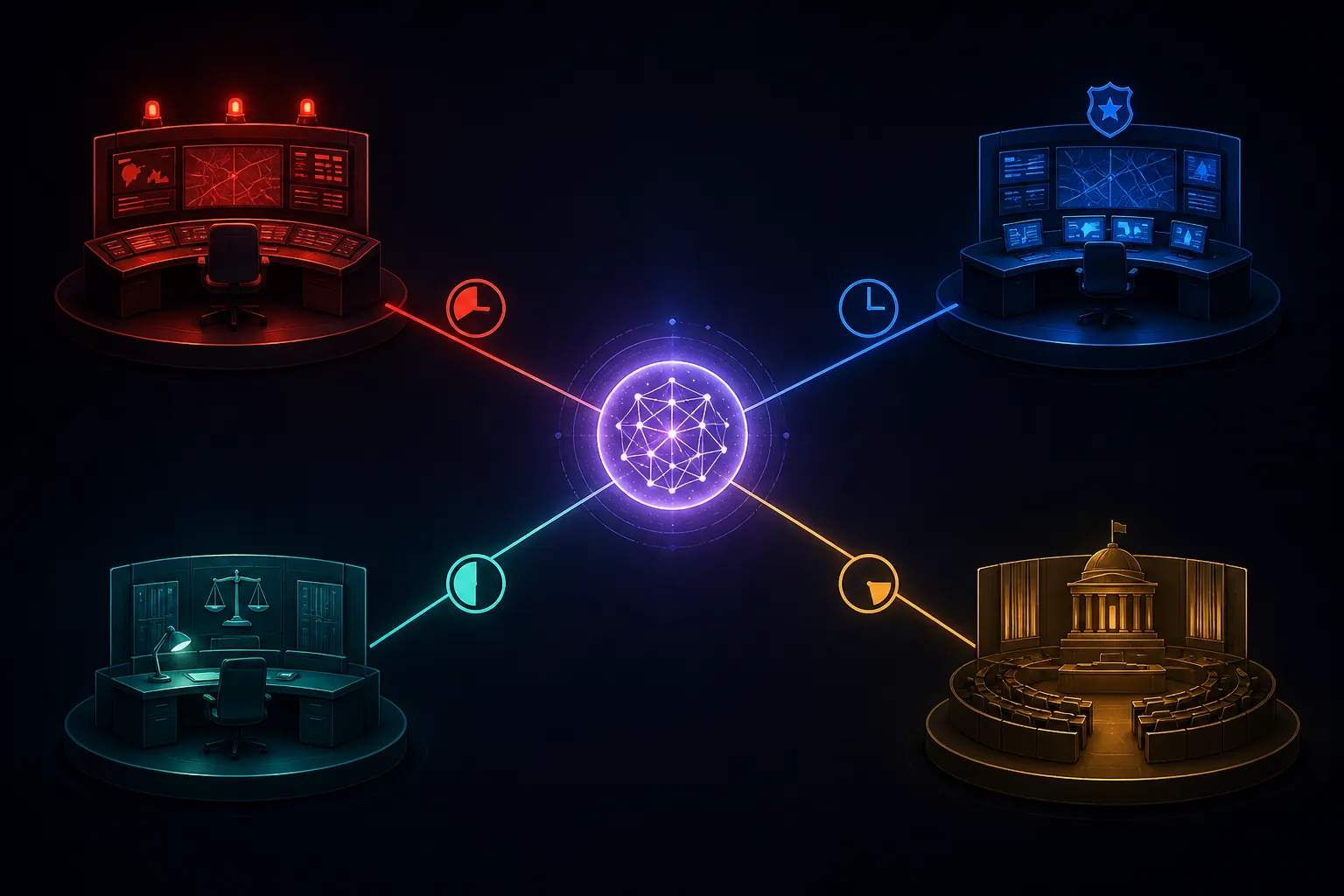
Article 73 became applicable yesterday, and its clock structure is not a simple 15-day rule
EU AI Act Article 73 became applicable on August 2, 2026.[2] For teams that have been tracking the Act through broader implementation milestones, that date matters because serious-incident reporting is no longer only a future governance topic. For deadline context around the same August 2026 transition, see the site’s prior EU AI Act deadline records on border-system timing and EU AI Act obligation timing.
Article 73 requires providers of high-risk AI systems to report serious incidents to the market surveillance authority of the Member State where the incident occurred.[2] The ordinary deadline is 15 days, but that is not the whole rule. The deadline shortens to 2 days for widespread infringements and to 10 days where the incident involves death.[2] The Article 73 text also permits an initially incomplete report, which is operationally important when the incident is serious enough to report before the causal record is complete.[2]
The recipient is also not a generic “EU regulator.” The notice goes to a market surveillance authority where the incident occurred.[2] For an incident spanning more than one Member State, that phrase should push counsel to resolve authority-mapping before the first real event. The unresolved work is not just legal interpretation; it is contact lists, intake portals, language capacity, evidence preservation, and who is allowed to submit an incomplete first report.
Article 73 implementation mechanics still deserve verification before a company freezes its template. The clock is applicable as of August 2, 2026, but teams should continue checking Commission guidance, reporting templates, and Member State market-surveillance routing. A live rule can still have moving intake mechanics.
New York is prospective, but the penalty column is already too large to ignore
New York’s RAISE Act should not be marked as an active August 2026 reporting clock. KPMG describes the Act as signed on December 16, 2025 and effective January 1, 2027.[1] That makes it prospective for today’s incident-response table.
It should still be in the tracker now. The cited summary describes a 72-hour reporting obligation to a designated AI oversight office, with civil penalties up to $1 million for a first violation and up to $3 million for subsequent violations.[1] Those figures are not a footnote for 2027. They affect vendor contract language, insurance review, internal escalation thresholds, and the amount of time a company has to test whether its incident intake system can find the right facts within three days.

The federal AI Incident Reporting Act is a proposed overlay, not the missing national clock
The federal AI Incident Reporting Act was introduced on June 25, 2026.[3] As summarized by Representative Moran’s office, it would require developers of high-capability AI models to report dangerous capabilities, security breaches, and safety incidents to the Secretary of Commerce within 7 days.[3] For the most serious incidents, it would also require notification to congressional leadership within 48 hours.[3]
That proposal matters because it shows what a national reporting layer could look like: Commerce as the executive-branch recipient, Congress notified quickly for the most serious matters, and high-capability model developers as the focal actor. It should not be inserted into a live compliance calendar as if enactment has already happened. A procurement questionnaire can ask whether a vendor is prepared for a 7-day federal report; an incident runbook should not list the bill as current law.
Model classification questions can sit beside, but should not swallow, the incident-clock map. For EU-specific treatment of open-weight and systemic-risk concepts, see the site’s explainer on what the EU AI Act requires of open-weight models. The reporting question here is narrower: if a reportable event occurs, who receives notice and when?
The common design questions produce different legal answers
A Silver Alert system works only after a state decides who may trigger the alert, what facts qualify, which public channels carry the message, how long the alert runs, and how much over-notification the public system can tolerate. AI incident reporting is not the same legal system, but it has the same design burden. The burden is now split across separate regimes.
| Design question | Why it matters in AI incident response | Current divergence |
|---|---|---|
| Who is covered? | The first legal question is whether the company is even inside the regime before the timer starts. | California focuses on frontier-model developers; Article 73 applies to providers of high-risk AI systems; the federal bill would apply to developers of high-capability AI models; New York coverage must be checked against the RAISE Act before its 2027 effective date.[1][2][3] |
| What starts the clock? | Incident teams need a trigger that can be recognized under uncertainty. | California uses critical safety incidents and a separate imminent death or serious-injury branch; Article 73 uses serious incidents; the federal bill would cover dangerous capabilities, security breaches, and safety incidents.[1][2][3] |
| Where does notice go? | The wrong recipient can be as damaging as late notice if the statute names a specific office. | California routes to the Office of Emergency Services or law enforcement depending on the branch; Article 73 routes to a market surveillance authority; New York routes to a designated AI oversight office; the federal bill would route to Commerce, with Congress notified for the most serious incidents.[1][2][3] |
| How fast is the clock? | The internal escalation path must be shorter than the legal deadline. | Current clocks range from 24 hours in California’s imminent-harm branch to 15 days under California’s general report and Article 73’s ordinary serious-incident rule; Article 73 also has 2-day and 10-day variants, New York will use 72 hours, and the federal bill would use 7 days plus a 48-hour congressional notice for the most serious incidents.[1][2][3] |
| Can the first notice be incomplete? | Waiting for a perfect root-cause analysis can break a short reporting clock. | Article 73 expressly allows an initially incomplete report; the cited research set does not provide the same incomplete-report detail for California, New York, or the federal bill.[2] |
The practical consequence is that one AI incident can create several workstreams that are not waiting for each other. One team may be determining whether California’s 24-hour law-enforcement path is open. Another may be preparing a 15-day California report. A third may be checking whether an EU deployment is a high-risk system with an Article 73 serious incident in a particular Member State. A fourth may be preserving facts that would matter if New York’s 72-hour rule is live by the time the next similar incident occurs.
Federal-state conflict is a posture note, not a suspension button
Executive Order 14365, dated December 11, 2025, directs an AI Litigation Task Force to challenge state AI laws, according to Gunderson Dettmer’s 2026 AI laws update.[4] That matters for the status column because state-law litigation pressure can change the risk environment. It does not, by itself, suspend existing state obligations.[4]
That distinction belongs in the tracker. A law can be in force and under challenge. A bill can be introduced and not enacted. A future effective date can be certain enough to build toward and still not govern today’s incident. Collapsing those categories gives a clean-looking compliance chart and a bad incident-response plan.
The same discipline applies to states not listed here. Colorado and Texas often appear in AI-law monitoring discussions, but this tracker does not add notice duties for them without verified primary text in the working record. Leaving a blank cell is better than giving an incident team a confident but weakly sourced deadline. For comparison with other state-by-state tracker structures, see prior obligation maps on water utility cyber liability and AI data center pollution rules.
What counsel should build before the incident
The runbook should not begin with a general duty to notify. It should begin with separate alert clocks. At minimum, the intake form needs fields for model category, deployment geography, incident type, known or possible harm, imminence of death or serious injury, affected EU Member State, and whether the first report can be incomplete. The escalation matrix should name the owner for each jurisdictional branch, not just “legal.”
- California branch: decide whether the facts fit the 15-day Office of Emergency Services path, the 24-hour law-enforcement path, or both.
- EU Article 73 branch: identify whether the system is high-risk, whether the event is a serious incident, where it occurred, and whether the 15-day, 10-day, or 2-day deadline applies.
- New York branch: keep the 72-hour process ready for January 1, 2027, including penalty-aware escalation and a designated-office contact path once confirmed.
- Federal proposal branch: monitor enactment status separately from current obligations; do not label the proposed 7-day Commerce report as live.
- Status branch: mark each line as in force, prospective, proposed, challenged, amended, or superseded, with a last-verified date.
Legal-tech buyers should ask vendors to mirror that structure. A service-level commitment that promises “prompt regulatory notification” is not enough if the vendor cannot say whether it can support a 24-hour law-enforcement notice, a 2-day EU widespread-infringement report, a 10-day death-related Article 73 report, a 15-day California or EU report, a future 72-hour New York report, and a proposed 7-day federal report. The operational promise should map to the clock that will actually be running.
There is no single AI incident-notification standard in Q3 2026. The safer compliance architecture is less elegant and more useful: maintain independent jurisdictional alert clocks, separate enacted rules from future and proposed ones, and update the tracker whenever guidance, litigation, or legislation changes the status of a line item.
References
- State AI safety laws: California and New York — KPMG, 2026
- Article 73: Reporting of serious incidents — Artificial Intelligence Act
- Moran, Warner, Kim Introduce AI Incident Reporting Act — Congressman Nathaniel Moran, June 25, 2026
- 2026 AI Laws Update: Key Regulations and Practical Guidance — Gunderson Dettmer, 2026
Operationalizing workflow
No workflow has been explicitly linked to this obligation yet. See Workflows generally.
Illustrative cases
No illustrative case is currently tracked for this obligation. See Risk Digest for documented incidents generally.
← Back to RegulationReport a correction or tip
Spotted an outdated figure, a misstated fact, or a ruling this regulation entry should reflect? Public comments are disabled for this content given the professional cost of a misreported case outcome, penalty amount, or rule text — use the structured correction channel instead.
Report a correction or tip for this record →