
What Did the Sunshine Protection Act Actually Change?
- Authority
- U.S. Congress
- Rule type
- statute
- Jurisdiction scope
- US federal
- Source text
- Read primary rule text ↗
Status snapshot — House passage is the trigger, not the legal change
- House vote anchor: GovTrack records House roll call 238 on July 14, 2026, as passage of H.R. 139, and the House Energy and Commerce Committee announced House passage of legislation to make daylight saving time permanent. [1][2]
- Current posture: House passage alone did not change federal time law or move any jurisdiction onto permanent daylight saving time. Senate action remains unresolved; for the moving Senate-status record, see the companion article No Senate Vote Yet on Permanent Daylight Saving Time Bill.
- Last verified: August 3, 2026, UTC. Because available materials flag a vehicle ambiguity between H.R. 139 and committee use of H.R. 7389, the final House Clerk roll call and engrossed text should be checked before reliance.
- Use of this record: general obligations tracking only; not legal advice and not a substitute for jurisdiction-specific review.
- Primary-source path: start with DOT’s current-law explanation, then compare the H.R. 139 and S. 29 text and summaries, then confirm the enacted vehicle and effective-date language if the Senate acts. [3][4][5]
The most common error in the Sunshine Protection Act status discussion is treating the July 14 House vote as if it already changed the clocks. It did not. As drafted, the Sunshine Protection Act would amend the Uniform Time Act framework by changing the federal default, preserving specific permanent-standard-time jurisdictions, and leaving a limited opt-out route for other states before the act takes effect. The operative word is “would.”

The current rule already gives federal law the lead role
Current law is not a free-for-all in which each state may select any clock regime it prefers. DOT’s Uniform Time Act guidance is the clean baseline: states may choose permanent standard time, but they may not choose permanent daylight saving time, and DOT cannot repeal or change daylight saving time on its own. DOT administers the federal time-zone framework, including time-zone boundaries reflected in 49 CFR part 71, but a move to permanent daylight saving time requires Congress. [3]
That allocation matters for contracts, filing deadlines, transportation schedules, trading cutoffs, and compliance calendars because “local time” is not merely a lifestyle label. It is often the operative standard for when a notice is timely, when a system closes, when a flight is crewed, or when a regulated act occurs. A bill that changes the national default without rewriting every deadline clause can still have large reliance consequences.
| Current-law feature | What it means operationally |
|---|---|
| Uniform Time Act framework governs standard time and daylight saving time nationally. [3] | The starting point is federal, even where states have a choice. |
| States may exempt themselves from daylight saving time and remain on standard time. [3] | Permanent standard time is available under current law. |
| States may not independently adopt permanent daylight saving time. [3] | A state permanent-DST statute generally waits on federal authorization. |
| DOT cannot repeal or change daylight saving time by administrative action. [3] | Implementation planning should track Congress, not just DOT rulemaking. |
What H.R. 139 and S. 29 would change
The Sunshine Protection Act is drafted as a targeted edit to the existing federal time-law regime. The House and Senate versions summarized on Congress.gov would make daylight saving time permanent, preserve the treatment of states and areas already exempt from daylight saving time, and provide a mechanism for other states to choose permanent standard time before the act takes effect. [4][5]
| Issue | Current Uniform Time Act / DOT baseline | As drafted in H.R. 139 / S. 29 |
|---|---|---|
| Federal default | Seasonal daylight saving time applies except where a jurisdiction has chosen permanent standard time under existing law. [3] | The default would flip to permanent daylight saving time. [4][5] |
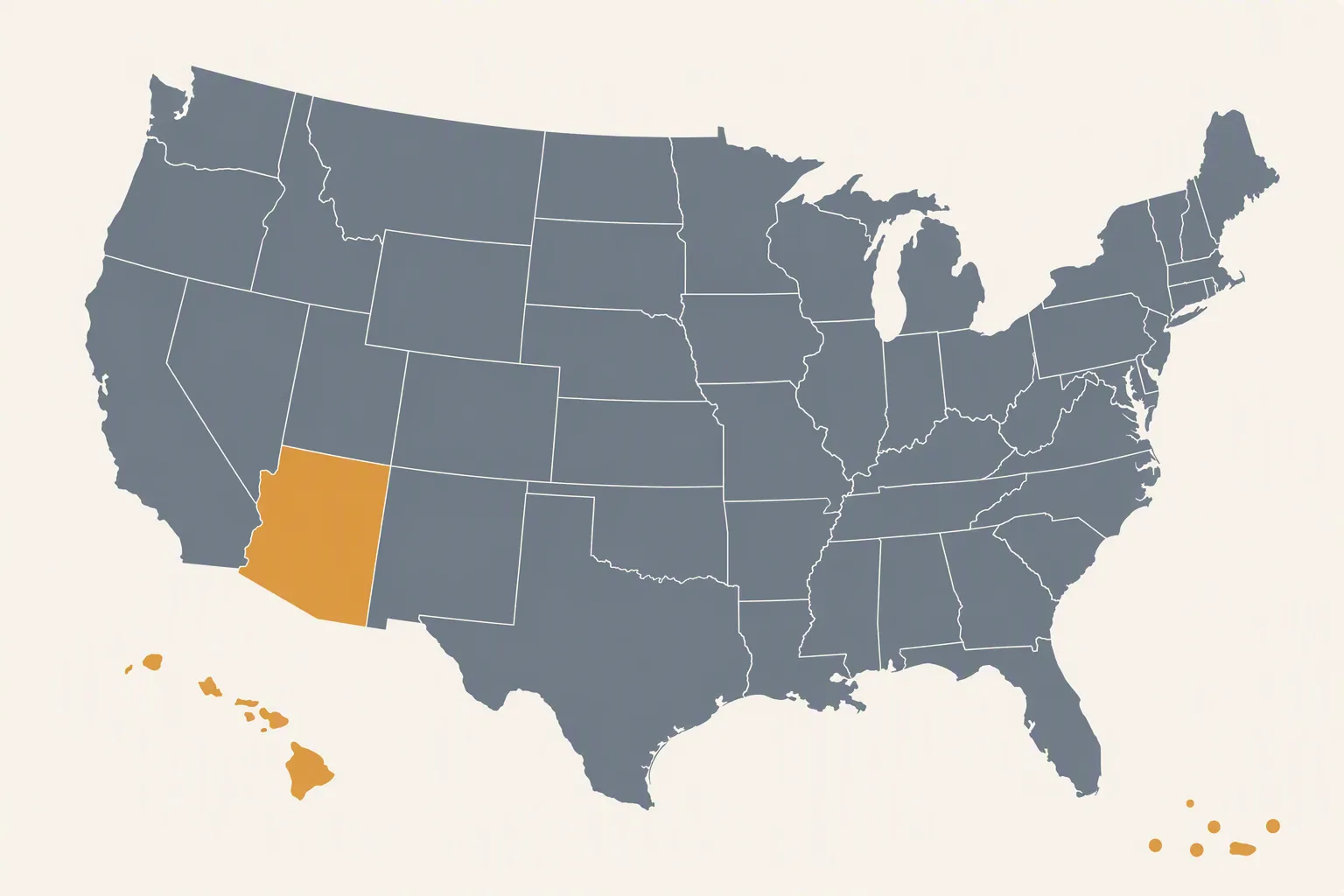
| Permanent standard time jurisdictions | Hawaii, most of Arizona, and U.S. territories remain outside ordinary daylight saving time observance under the current exemption structure. [3] | Those existing permanent-standard-time jurisdictions would be preserved. [4][5] |
| State self-exemption | States may choose to exempt themselves from daylight saving time and observe standard time. [3] | The current statutory basis for open-ended state self-exemption would be repealed as part of the new framework. [4][5] |
| New state opt-out window | A state can currently choose permanent standard time under the existing exemption route. [3] | Other states would have a limited pre-effective-date opportunity to lock in permanent standard time. [4][5] |
| DOT authority | DOT administers the time-zone framework but cannot itself repeal or change daylight saving time. [3] | The bill would change the statutory default; it is not simply a DOT implementation choice. [4][5] |
The preserved-jurisdiction point is where many shorthand descriptions become inaccurate. The bill does not appear to drag Hawaii, most of Arizona, and the U.S. territories into permanent daylight saving time. It instead changes the default for the rest of the country while preserving those current permanent-standard-time exceptions. [4][5]
The repeal of self-exemption is the quiet high-leverage change
Under current law, the state choice points in one direction: a state may leave daylight saving time and stay on standard time, but it may not put itself on permanent daylight saving time without Congress. The proposed amendment would reverse the practical pressure. Permanent daylight saving time would become the federal default, and the meaningful state decision would be whether to use the bill’s limited window to remain on standard time before the new default takes hold. [3][4][5]
That is not a wholesale federal time takeover. Federal law is already doing the coordinating work. The bill’s force comes from changing which clock regime the federal system supplies by default, and from closing the current open-ended exemption structure once the new scheme is in place. For counsel, the question is less “may states regulate time?” than “which state decisions still have legal effect, and by when?”
The state opt-out problem
NCSL’s daylight saving time legislation tracker and CRS’s federal daylight saving time report are useful state-law context sources, but they should be treated as secondary research paths for live advice because state bills, enactments, and conditional effective dates move. The legally important point for this record is narrower: the federal bill’s opt-out window matters because many state permanent-DST measures depend on federal authorization, while permanent-standard-time treatment has existed through the current federal exemption route. [7][8][3]
| Jurisdiction category | Likely treatment under the bill as drafted | Operational consequence |
|---|---|---|
| Hawaii, most of Arizona, and U.S. territories already on permanent standard time | Preserved on permanent standard time. [4][5] | Do not assume these jurisdictions follow the new permanent-DST default. |
| States that do nothing before the act takes effect | Would fall under the new permanent-DST default. [4][5] | Systems using state-by-state daylight saving assumptions would need review. |
| States that use the limited pre-effective-date window | Could lock in permanent standard time before the act takes effect. [4][5] | Time-law status could diverge from neighboring states that remain on permanent DST. |
| States attempting to act after the window closes | The current open-ended self-exemption mechanism would no longer be available as it is today. [4][5] | Do not assume a later state statute can recreate the current exemption without checking the enacted text. |
That last row is where deadline drafting becomes uncomfortable. A contract that says notices are due by 5:00 p.m. “local time” may remain intelligible inside one city, but less so across counterparties, service locations, or court systems if neighboring jurisdictions sort themselves differently. The answer is not to over-engineer every clause before enactment. It is to avoid representing that the legal environment has already changed and to identify provisions that rely on seasonal switching, UTC offsets, or assumed alignment among states.
Confirm the vehicle before treating the House vote as settled text
The vote record should be checked with more care than the headline requires. GovTrack identifies July 14, 2026, roll call 238 as House passage of H.R. 139, while committee materials describe the proposal being folded into the Motor Vehicle Modernization Act, H.R. 7389, during a May 2026 markup. [1][2] That discrepancy may be procedural rather than substantive, but it is not harmless for anyone citing enacted text, engrossed text, or an effective-date clause.
The safe reliance path is mechanical: verify the House Clerk roll call, identify the precise bill vehicle sent to the Senate, compare the operative text against the Congress.gov version, and then read the effective-date and transition language rather than inferring it from the policy label. The same discipline applies to internal trackers; this record sits alongside other obligations-tracker entries such as AI data center pollution rules now fall to the states and Has Georgia’s Gas Tax Suspension Expired?, where the controlling question is not momentum but operative legal status.
Implementation risk starts after the statutory question is answered
Airlines for America’s warning deserves attention because it names actual coordination failures. The group told Reuters that permanent daylight saving time would have “considerable implications for aviation, including passenger disruption, crew and aircraft positioning, and domestic and international connectivity,” and called for an implementation timeline. [6]
That is the practical reliance problem in one sentence. Airlines do not merely print a different time on a boarding pass. They coordinate crew duty periods, aircraft rotations, airport slots, connections, international schedules, and customer-facing systems across jurisdictions that may not all change in the same way. The same category of risk appears in court calendaring, regulated reporting windows, payroll systems, healthcare scheduling, logistics contracts, and automated notice provisions.
For now, the operational instruction is restrained: inventory the systems and documents that assume seasonal daylight saving time, but do not implement a new time rule until enactment, effective date, preserved exceptions, and state opt-outs are confirmed. A premature systems change is not compliance; it is a new source of error.
The 1974–75 experiment is a warning about reversibility
Congress has tried year-round daylight saving time before. The Emergency Daylight Saving Time Energy Conservation Act began on January 6, 1974, and the year-round experiment was cut short on October 27, 1974, before the originally planned end of the program. A secondary account reports that approval fell from roughly 80% in December 1973 to 42% by February 1974, amid complaints about dark-morning school safety. Those approval figures and complaints should be cited as reported secondary history, not as fresh empirical findings. [9]
The precedent does not decide the 2026 bill. It does, however, keep the analysis honest. A permanent-DST statute can be enacted, relied upon, criticized, and reversed in a short period. That matters for transition clauses and implementation timelines because the first enacted default may not be the last legal posture organizations have to administer.
The Sunshine Protection Act is therefore narrow in drafting and high-leverage in effect. It would flip the federal default to permanent daylight saving time, preserve Hawaii, most of Arizona, and the U.S. territories on permanent standard time, repeal the current self-exemption structure, and give other states a limited chance to lock in permanent standard time before the change takes effect. Until the Senate acts and the final vehicle is verified, it remains a pending legal change, not an operative clock change.
References
- House Vote #238 in 2026, GovTrack.
- House Passes Legislation to Make Daylight Saving Time Permanent, House Energy and Commerce Committee.
- Uniform Time, U.S. Department of Transportation, July 15, 2026.
- H.R.139 - Sunshine Protection Act of 2025, Congress.gov.
- S.29 - Sunshine Protection Act of 2025, Congress.gov.
- US House votes to make daylight saving time permanent, Reuters, July 14, 2026.
- Daylight Saving Time State Legislation, National Conference of State Legislatures.
- Daylight Saving Time, Congressional Research Service.
- Emergency Daylight Saving Time Energy Conservation Act, Wikipedia.
Operationalizing workflow
No workflow has been explicitly linked to this obligation yet. See Workflows generally.
Illustrative cases
No illustrative case is currently tracked for this obligation. See Risk Digest for documented incidents generally.
← Back to RegulationReport a correction or tip
Spotted an outdated figure, a misstated fact, or a ruling this regulation entry should reflect? Public comments are disabled for this content given the professional cost of a misreported case outcome, penalty amount, or rule text — use the structured correction channel instead.
Report a correction or tip for this record →