
Why Todd Blanche's Nomination Is Postponed, Not Blocked
- Authority
- U.S. Senate Committee on the Judiciary
- Rule type
- procedural rule
- Jurisdiction scope
- US federal
- Effective date
- Jul 30, 2026
- Source text
- Read primary rule text ↗
Verify PN1078 status against Senate records before reporting it as blocked; use postponed unless rejected, withdrawn, or returned.
The short answer: the record says postponed
Status check as of July 31, 2026: Todd Blanche’s attorney general nomination was postponed in committee, not rejected, withdrawn, returned, or finally blocked by the Senate. The load-bearing record is PN1078, received by the Senate on June 8, 2026; the Senate nominations-in-committee page showing the nomination pending in the Judiciary Committee; and the Senate Judiciary Committee’s July 30, 2026 executive business meeting page marked “POSTPONED.” [1][2][3]
This article is a regulation-and-ethics status check, not legal advice. Legal-background review: Mara Venn. Because Congress.gov access was limited for this check, the PN1078 status field should be re-verified live before publication or republication; the cross-check here uses the Congress.gov nomination record, Senate committee materials, and the Judiciary Committee agenda available as of July 31, 2026.
The useful correction is narrow. “Blocked” may describe a political fight, a whip-count problem, or a senator’s public opposition. It is not, by itself, a Senate disposition. If the sentence being checked is “Todd Blanche’s nomination was blocked by the Senate,” the record-level question is whether one of the procedural events that would make that claim accurate has happened. On the materials checked here, it had not.

Start with PN1078, not the headline verb
A clean verification path begins with the nomination number. PN1078 is the attorney general nomination at issue; the White House also recorded the June 8, 2026 transmittal to the Senate. That matters because Blanche has another Senate-confirmed DOJ office in the same general news cycle, and mixing the two records produces a bad status note almost immediately. [1][4]
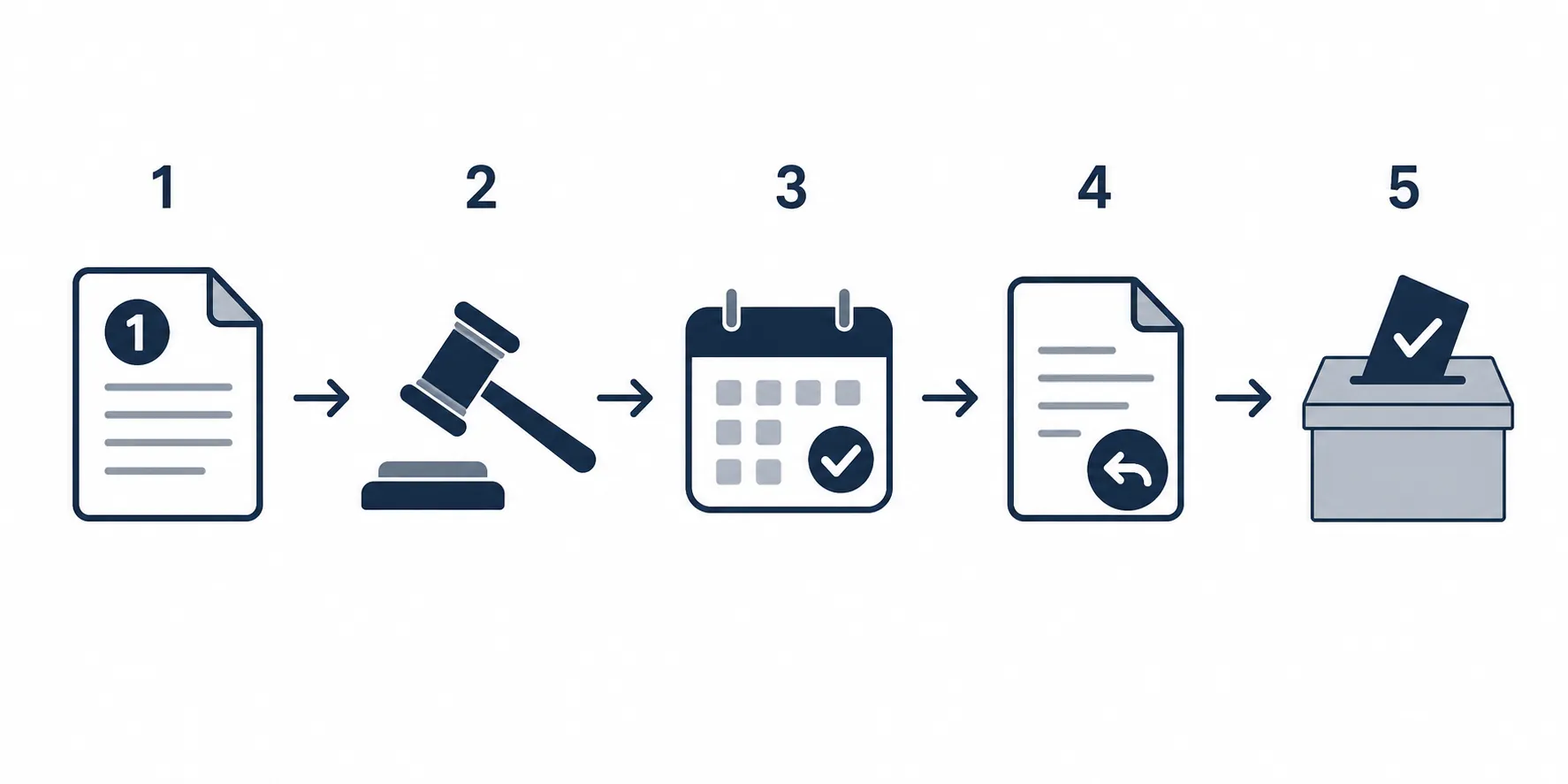
- Open the nomination record by number: PN1078. Confirm the office and the date received, rather than relying on a search-result headline or a news shorthand. [1]
- Confirm the committee location. For this check, the Senate nominations-in-committee page placed PN1078 in the Senate Judiciary Committee. [2]
- Check the committee’s most recent relevant agenda. The July 30, 2026 Judiciary Committee executive business meeting page was marked “POSTPONED.” [3]
- Check whether the nomination appears on Senate failed, returned, rejected, or withdrawn pages before using any of those words. Absence from those categories is not a forecast; it is a guardrail against overstating the current record. [6][7]
- Check for a floor vote only after confirming that the vote belongs to the same nomination. Senate Roll Call Vote 105 on March 5, 2025 confirmed Blanche as Deputy Attorney General under PN12-5 by 52-46. It was not an attorney general vote on PN1078. [5]
That last step is not clerical fussiness. A partner, client, judge, or editor reading “the Senate already voted” will not assume the writer meant a different office under a different nomination number. PN12-5 and PN1078 are separate records, and the March 2025 roll call does not answer the July 2026 attorney general status question. [1][5]
The four-status decoder
If “blocked” is being used as shorthand, translate it into one of four checkable categories before putting it in a memo. Each category leaves a different record trail.
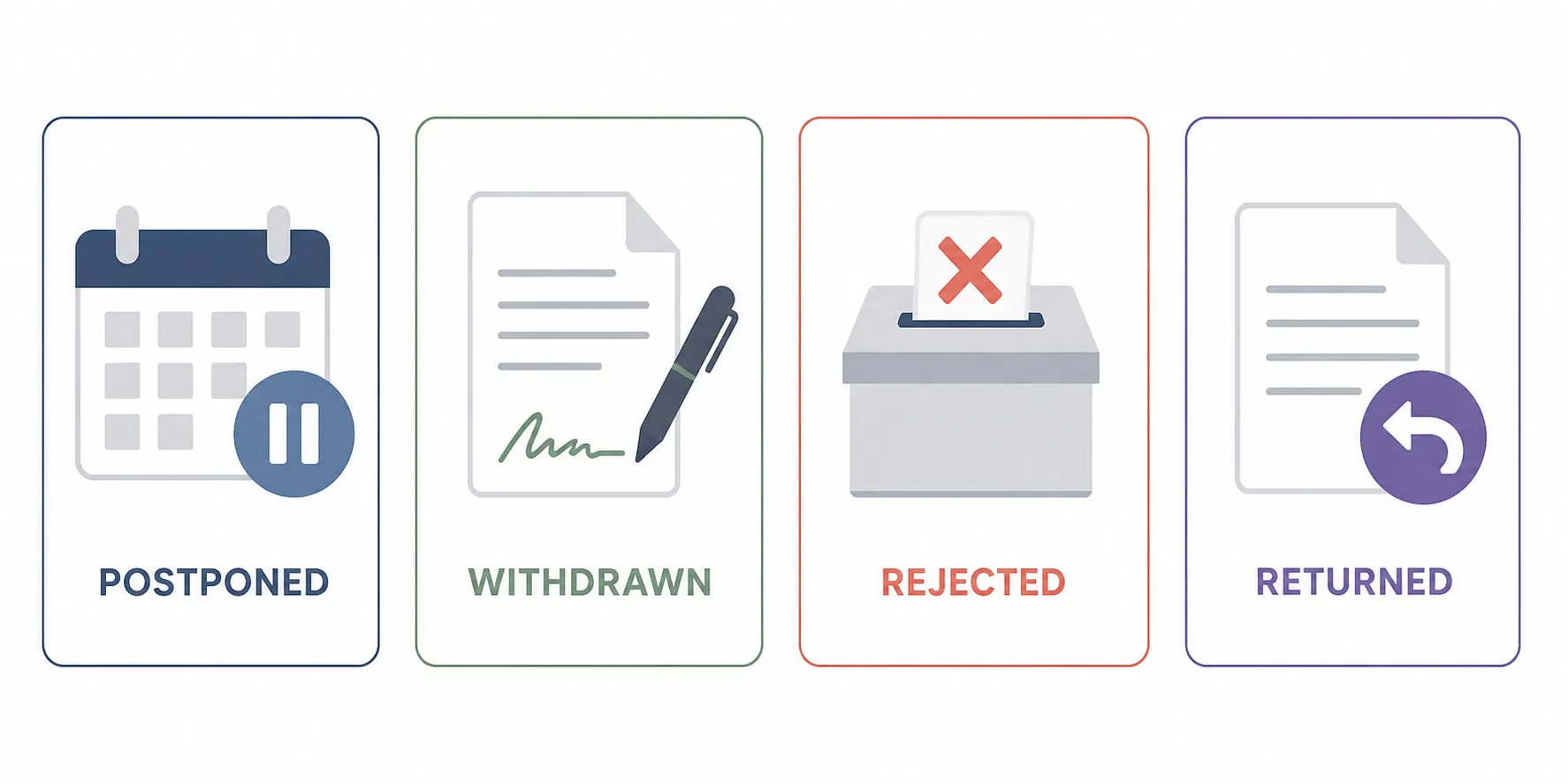
| Status word | What it would mean procedurally | What the July 31, 2026 check showed for PN1078 |
|---|---|---|
| Postponed | Committee action did not proceed at the noticed meeting. | Supported. The July 30, 2026 Judiciary Committee executive business meeting was marked POSTPONED. [3] |
| Withdrawn | The President withdraws the nomination, leaving a dated withdrawal trail. | Not shown. The checked Senate withdrawn-category materials did not establish PN1078 as withdrawn. [7] |
| Rejected | The Senate votes down the nomination on the floor. | Not shown. The March 5, 2025 roll call was for PN12-5, Deputy Attorney General, not PN1078. [5] |
| Returned | The nomination is returned to the President under Senate Rule XXXI mechanics, including at sine die adjournment or after a recess of more than 30 days unless an exception applies. | Not shown. The checked Senate returned-category materials did not establish PN1078 as returned. [6][8] |
Postponed
Postponed is the word supported by the July 30 committee record. It means the scheduled committee action did not go forward at that meeting. It does not mean the Senate rejected the nomination, the President withdrew it, or the nomination was returned to the White House. The next verification question is simply whether a later committee or Senate record changed that status. [3]
Withdrawn
Withdrawn requires a presidential act, not just deteriorating prospects. Senate historical materials list withdrawn Cabinet nominations with dated entries, including Zoe Baird on January 26, 1993 and Matt Gaetz on November 21, 2024. Those examples are useful only as category markers: they show the type of dated withdrawal trail a checker should expect before using the word “withdrawn.” [7]
Rejected
Rejected means a negative floor vote. The Senate’s own table gives John Tower’s nomination as rejected on March 9, 1989 by a 47-53 vote. That is different from a committee postponement, a senator’s hold, or a public claim that the votes are not there. [7]
Returned
Returned is a Rule XXXI disposition. Senate Rule XXXI paragraph 6 provides that nominations not finally acted on are returned to the President at sine die adjournment or when the Senate recesses or adjourns for more than 30 days, unless the Senate orders otherwise; it also says returned nominations are not again considered unless the President again makes them to the Senate. [8]
That is why “returned” is not a synonym for “waiting.” If PN1078 were returned and later revived, the verification path would need a fresh presidential submission trail, not just a resumed committee discussion. [8]
Committee delay may explain the politics; it does not prove a Senate block
There are plausible political and ethics explanations for delay, and they may matter in a fuller client briefing. Those issues are better handled through the existing records on ethics conflicts behind the Blanche confirmation delay, settlement enforceability and Cornyn’s opposition, Murkowski’s undecided vote, the DOJ ethics record, and acting-tenure deadlines. They are not, without more, proof that the Senate has procedurally disposed of PN1078.
The same caution applies to committee arithmetic. A nomination can be slowed by committee conflict, and a committee deadlock can create a real procedural problem. But the status sentence still has to ask what happened next: was the nomination reported, discharged, rejected, withdrawn, returned, or merely left pending after a postponed meeting? CRS testimony describes the basic route to Senate floor consideration as committee reporting or committee discharge, commonly by unanimous consent in practice. [9]
That distinction is the reason a status note should avoid writing “blocked by the Senate” when the verified record only shows “pending in committee after a postponed executive business meeting.” One phrase suggests a terminal or at least formal Senate action. The other tells the reader where the nomination actually sat.
A safe wording for a client alert or status memo
The safest current wording is:
“As of July 31, 2026, Todd Blanche’s attorney general nomination, PN1078, remained pending in the Senate Judiciary Committee after the committee’s July 30 executive business meeting was marked postponed. The checked Senate records do not show the nomination as rejected, withdrawn, or returned.” [1][2][3][6][7]
Use “blocked” only if the sentence is clearly describing a political assessment and not a Senate status. Even then, pair it with the record status so the reader does not mistake commentary for a disposition.
A later record would change the answer. The main events to watch are a Judiciary Committee report, a discharge path to the floor, a presidential withdrawal notice, a negative Senate floor vote, or a Rule XXXI return. Until one of those appears in the official materials, the record-supported answer is more precise and less dramatic: the nomination was postponed in committee and remained pending as of the July 31, 2026 check.
References
- PN1078 — Todd Blanche — Department of Justice, Congress.gov
- Nominations in Committee (Civilian), U.S. Senate
- Executive Business Meeting, U.S. Senate Committee on the Judiciary, July 30, 2026
- Nomination Sent to the Senate, The White House, June 8, 2026
- Roll Call Vote 119th Congress - 1st Session, U.S. Senate, March 5, 2025
- Nominations Failed or Returned to the President, U.S. Senate
- Cabinet Nominations Rejected or Withdrawn, U.S. Senate
- Standing Rules of the Senate, Senate Manual, GovInfo
- CRS Testimony TE10106, EveryCRSReport
Operationalizing workflow
No workflow has been explicitly linked to this obligation yet. See Workflows generally.
Illustrative cases
No illustrative case is currently tracked for this obligation. See Risk Digest for documented incidents generally.
← Back to RegulationReport a correction or tip
Spotted an outdated figure, a misstated fact, or a ruling this regulation entry should reflect? Public comments are disabled for this content given the professional cost of a misreported case outcome, penalty amount, or rule text — use the structured correction channel instead.
Report a correction or tip for this record →