
Transgender Athlete Eligibility Rules by State After B.P.J.
- Authority
- U.S. Supreme Court
- Rule type
- court ruling
- Jurisdiction scope
- US federal and state
- Effective date
- Jun 30, 2026
- Source text
- Read primary rule text ↗
Verify state statute, current court docket, federal enforcement actions, and governing-body policy before eligibility decisions.
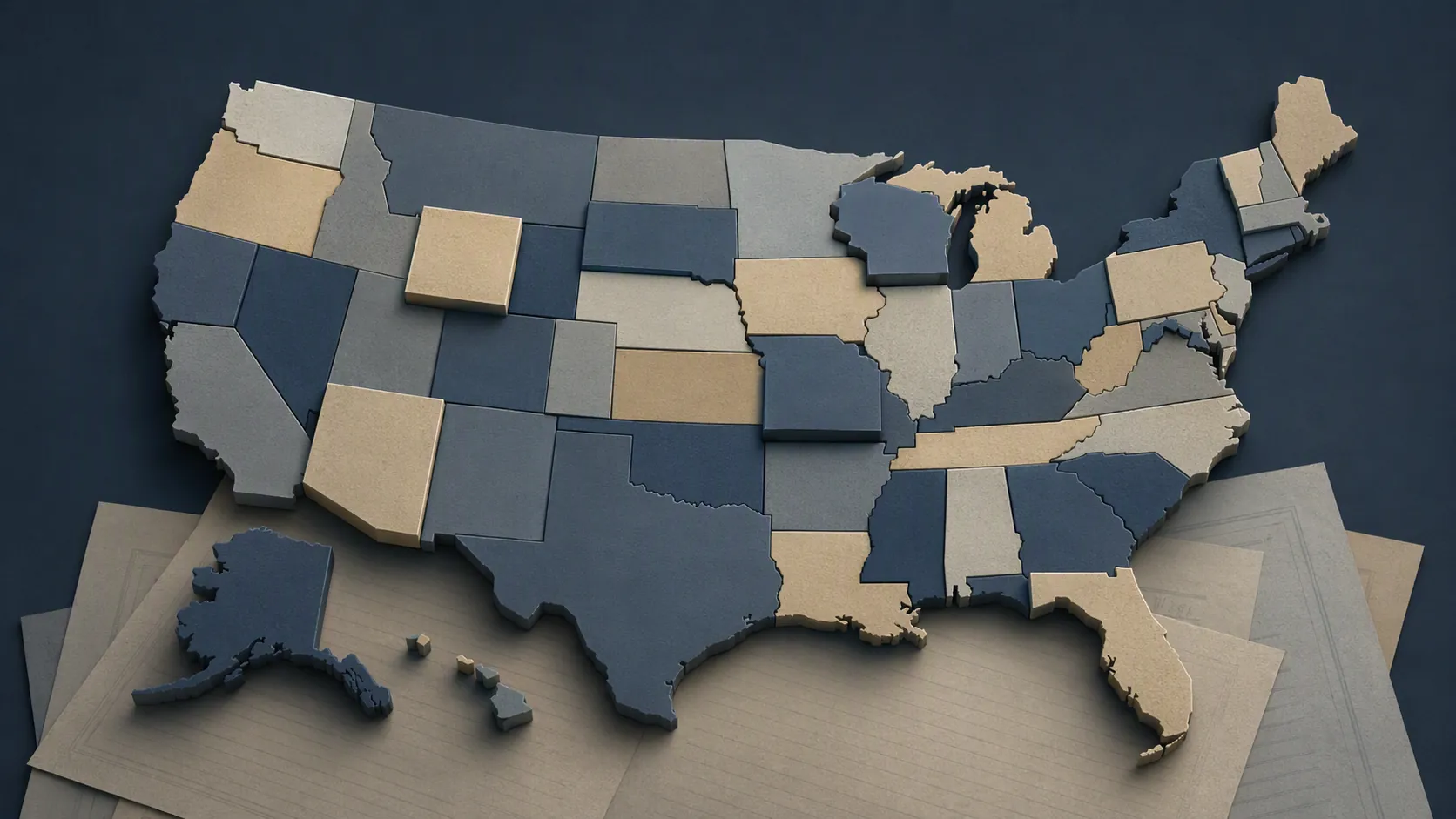
Last verified: August 2, 2026, UTC. This tracker is limited to U.S. athletics eligibility rules. It is not legal advice, it does not resolve bathroom, locker-room, housing, or other facility questions, and it should not be used as a substitute for checking the current statute, order, agency action, and athletics-governing-body policy in the jurisdiction that will actually host the contest.
The working question after West Virginia v. B.P.J. and Little v. Hecox is not whether there is now one national transgender-athlete eligibility rule. There is not. The Court held, by a 6-3 vote, that Title IX and the Equal Protection Clause permit states to reserve girls’ and women’s sports teams for biological females and to use biological sex rather than individualized physical-capability comparisons as the eligibility line. It reversed the Fourth Circuit in B.P.J. and the Ninth Circuit in Hecox, then sent the cases back down. That clears a major federal-law obstacle for exclusionary biological-sex rules. It does not tell a school in a no-ban state that a permissive participation policy is now unlawful. Footnote 1 says that “mirror question” remains the subject of litigation in lower courts.[1][2]
Read the rule in four layers, not one headline
For an administrator making an eligibility decision before tryouts, the safest first move is to separate the sources of obligation. A state statute may now be enforceable; a court order may have been reversed, dissolved, stayed, or not yet updated on the docket; federal agencies may be taking an enforcement position tied to federal funds; and the governing body for the competition may have its own eligibility rule.

| Jurisdiction or category | State statute or agency-policy layer | Court-order status | Federal enforcement exposure | Governing-body policy layer |
|---|---|---|---|---|
| West Virginia | State biological-sex sports law was the law challenged in B.P.J. | Fourth Circuit judgment reversed; remand posture means old injunction summaries should not be used without docket recheck.[1] | Federally funded institutions still face federal-agency enforcement risk discussed below. | Apply the governing body’s current rule for the competition, not last season’s chart. |
| Idaho | State biological-sex sports law was the law challenged in Hecox. | Ninth Circuit judgment reversed; the Court also rejected the mootness suggestion, so the remand matters operationally.[1] | Federally funded institutions still face federal-agency enforcement risk discussed below. | For college competition, NCAA policy may be decisive even where state law supplies the floor. |
| Arizona | Identified as a pre-ruling blocked state. | Do not rely on a pre-June 30 “blocked” label without confirming the post-B.P.J./Hecox docket posture. | Federal exposure turns on funding and current agency action, not only state-law status. | State association or league policy still has to be checked at the event level. |
| Utah | Identified as a pre-ruling blocked state. | Post-ruling enforceability should be verified against the current docket before an eligibility notice issues. | Federal exposure turns on funding and current agency action, not only state-law status. | State association or league policy still has to be checked at the event level. |
| Other statutory-ban states | MAP reported 27 states with statutory bans on transgender youth participation in sports, using data current to July 31, 2026.[3] | B.P.J./Hecox removes the broad Title IX and Equal Protection objections decided in those cases; local orders still need current verification. | Federal enforcement exposure may align with state exclusionary rules, but the funding and agency-action record still matters. | NCAA, state high-school associations, conference rules, and Olympic-sport bodies may add eligibility conditions. |
| Regulation or agency-policy ban states | MAP reported 2 states with regulation or agency-policy bans, distinct from statutory bans, as of July 31, 2026.[3] | The source of the rule matters: an agency policy can be amended or challenged through a different path than a statute. | Federal exposure remains a separate layer. | Competition-specific policy still controls where it is more detailed than the state rule. |
| States without bans in the MAP categories | No exclusionary state ban is identified in the MAP ban categories. | B.P.J./Hecox did not hold that permissive policies are unlawful; lower-court litigation remains relevant. | Federal agencies may still investigate or sue over permissive policies under the current administration’s Title IX theory. | A governing body may restrict participation even if state law does not. |
| California, Maine, Minnesota | The state-law layer must be checked locally; these states matter here because of the federal-litigation layer. | State-court or federal-court orders, if any, must be checked separately from DOJ filings. | CRS reported DOJ-initiated Title IX suits pending in California, Maine, and Minnesota as of July 2026.[6] | The applicable athletics body may impose a rule before the federal case reaches final judgment. |
The MAP state-law tracker is useful for the first sort, but it should be read as exactly that: a dated state-law tracker. MAP reported that, as of July 31, 2026, 27 states had statutory bans and 2 had regulation or agency-policy bans. It also estimated, using Williams Institute population estimates, that 50% of transgender youth ages 13 to 17 lived in statutory-ban states, 3% lived in regulation or agency-policy ban states, and 47% lived in states without such bans.[3] Those percentages describe residence under state-law categories. They do not measure the legality of any individual school’s decision, and they do not resolve federal enforcement or private-litigation exposure.
The stale-PDF problem is real in the four pre-ruling blocked states: Arizona, Idaho, Utah, and West Virginia. After June 30, a chart that still says “blocked” may be describing the old injunction posture, not the rule that can safely be applied today. Idaho and West Virginia are especially easy places to misread because the Supreme Court cases themselves came from those states; the Court’s mandate and the lower-court docket should be checked before a school sends an eligibility determination or denies an appeal.
What the Supreme Court decided — and the sentence it did not write
The June 30 decisions were argued on January 13, 2026 and decided together in practical effect. Justice Kavanaugh wrote the majority opinion. Justices Thomas and Gorsuch wrote concurrences, and Justices Sotomayor and Jackson wrote separately in dissent. The Court reversed the Fourth Circuit’s decision in B.P.J., reported at 98 F.4th 542, and the Ninth Circuit’s decision in Hecox, reported at 104 F.4th 1061.[1][2]
The holding is narrower than some public descriptions and broader than others. The Court accepted the state interest in protecting girls’ and women’s sports categories and held that states may draw the eligibility line by biological sex. It rejected the argument that schools must instead conduct individualized physical-capability comparisons for each athlete. That point matters at the form level: if a state law now requires eligibility by biological sex, an administrator should not assume that a case-by-case strength, speed, puberty, or hormone review is the federally required substitute.
The Court also declined to import Bostock wholesale into this athletics question. Bostock was a Title VII employment-discrimination case. The majority treated Title IX school athletics differently, including because Title IX itself contemplates sex-separated athletic opportunities. That distinction is now part of the compliance file whenever someone argues that a Title VII employment rule automatically answers a Title IX sports-eligibility dispute.[1]
The negative holding is just as important. Footnote 1 states that the cases did not present the mirror question: whether a state, school, or athletics association violates Title IX or equal protection by allowing transgender athletes to participate consistent with gender identity. The Court said that question is currently being litigated in lower courts.[1] That is why a state without a ban should not be colored the same way as a state with a post-B.P.J. enforceable statute. The first may still face federal-agency or private-litigation risk, but the Supreme Court did not turn permissive participation policies into per se unlawful policies.
The federal layer is enforcement exposure, not a replacement for state law
Executive Order 14201, issued February 5, 2025, directs federal policy toward “keeping men out of women’s sports” and frames Title IX enforcement around biological-sex separation in athletics.[4] That order is not the same instrument as a state eligibility statute. It matters because federal funding, agency investigations, resolution agreements, and DOJ suits can pressure institutions even where no state ban supplies the rule.
The San José State matter shows how that federal layer can operate. On January 28, 2026, the Department of Education’s Office for Civil Rights found that San José State University’s transgender student-athlete policies violated Title IX. Reported proposed resolution terms included biology-based definitions, separation of sports and facilities by biological sex, restoration of records and titles, and personalized apologies.[5] That is an enforcement posture and a proposed resolution template; before treating it as a binding rule for another institution, counsel should confirm the current status of the SJSU agreement and any later Education Department or DOJ action.
CRS also reported DOJ-initiated Title IX suits pending in California, Maine, and Minnesota as of July 2026.[6] Those suits matter even after B.P.J. because they are part of the still-open mirror-question and enforcement landscape. A state without a statutory ban may still be on the federal enforcement map. A state with a statutory ban may still require a separate check of federal funding conditions, settlement terms, and agency instructions.
For the separate procedural shift in Title IX enforcement roles between Education and DOJ, use the site’s Title IX Project 2025 enforcement-shift tracker. The point for eligibility decisions is simple enough: the current federal layer must be checked as an active enforcement docket, not as a footnote to the state statute.
Governing-body rules may decide the event before a court does
A school can be right about state law and still wrong about the competition rule. The Supreme Court noted that the NCAA, USOPC, and IOC had drawn a similar sex-based line. The opinion quoted IOC findings that biological males retain a 10% to 12% performance advantage in most running and swimming events, that some events show larger advantages, and that the record did not show testosterone suppression or gender-affirming hormone treatment eliminates the advantage.[1] Those figures are being used here because the Court used them; this tracker does not independently expand them into a sports-science review.
The NCAA separately announced a transgender student-athlete participation policy change, and college compliance staff should check the current NCAA policy, conference rules, and sport-specific championship rules before relying on a state-law memo.[7] For high schools, the same practical point applies to state associations and event sponsors. The governing-body layer may be stricter, more detailed, or simply more current than the district memo sitting in the eligibility binder.
Advocacy-origin figures should stay in their lane. GLAAD’s reporter fact sheet attributes to NCAA President Charlie Baker’s testimony the statement that there were fewer than 10 transgender athletes among more than 500,000 NCAA athletes, and it estimates sex-verification costs at roughly $1,000 to $15,000 or more per athlete.[8] Those figures may clarify scale and administrative stakes. They do not answer which rule applies in a particular state, and they should not be dropped into an eligibility notice as if they were the legal test.
For a broader discussion of how binary eligibility structures can leave nonbinary athletes without a clear fit across state, NCAA, and Olympic frameworks, see the site’s Nikki Hiltz sports-law patchwork explainer. That is a related governance problem, but it should not be allowed to blur the narrower holding in B.P.J. and Hecox.
A Monday-morning verification sequence
If a district, university, or athletics association has to make an eligibility call before the next season, the useful sequence is procedural rather than rhetorical:
- Pull the current state statute, regulation, or agency policy. Do not rely on a pre-June 30 summary label if the state was previously blocked.
- Check the docket for any injunction, stay, mandate, remand order, or local settlement affecting that rule. Idaho and West Virginia need particular attention because their Supreme Court reversals do not make last year’s district-court paperwork self-updating.
- Check federal enforcement exposure: federal funding, OCR or DOJ correspondence, pending suits, resolution agreements, and any agency deadline already issued to the institution.
- Check the governing body for the actual competition: state high-school association, NCAA, conference, national governing body, or event sponsor.
- Separate athletics eligibility from facilities. B.P.J. and Hecox were athletics cases; they do not answer locker-room, restroom, housing, or travel-room questions.
- If the institution is in a no-ban state and permits participation consistent with gender identity, mark the mirror question as unresolved rather than pretending the Supreme Court has already decided it.
That last line is the one most likely to be lost in public summaries. B.P.J. and Hecox resolved the permissibility of exclusionary biological-sex rules under the federal theories before the Court. They did not resolve the legality of permissive policies. Until lower courts or the Supreme Court answer that mirror question, transgender athlete eligibility laws and court cases have to be tracked jurisdiction by jurisdiction, with the state rule, the current order, the federal enforcement file, and the governing-body policy all open on the desk.
References
- West Virginia v. B.P.J., Supreme Court of the United States, June 30, 2026.
- Court rules that states can exclude transgender athletes from girls’ and women’s sports teams, SCOTUSblog, June 2026.
- Bans on Transgender Youth Participation in Sports, Movement Advancement Project, data as of July 31, 2026.
- Keeping Men Out of Women’s Sports, The White House, February 5, 2025.
- U.S. Department of Education Finds University’s Transgender Student-Athlete Policies Violated Title IX, Ogletree Deakins.
- LSB11454, Congressional Research Service via EveryCRSReport, July 2026.
- NCAA announces transgender student-athlete participation policy change, NCAA.
- Fact Sheet for Reporters: Supreme Court Cases on Transgender Participation in Sports, GLAAD.
Operationalizing workflow
No workflow has been explicitly linked to this obligation yet. See Workflows generally.
Illustrative cases
No illustrative case is currently tracked for this obligation. See Risk Digest for documented incidents generally.
← Back to RegulationReport a correction or tip
Spotted an outdated figure, a misstated fact, or a ruling this regulation entry should reflect? Public comments are disabled for this content given the professional cost of a misreported case outcome, penalty amount, or rule text — use the structured correction channel instead.
Report a correction or tip for this record →