
The US Gavi funding restoration is a conditional settlement
- Authority
- U.S. Department of State and U.S. Department of Health and Human Services
- Rule type
- media note
- Jurisdiction scope
- US federal
- Effective date
- Jul 29, 2026
- Source text
- Read primary rule text ↗
Gavi must meet five conditions for $600M release: mercury-free vaccine transition; end routine COVID-19 vaccine promotion/procurement; Geneva staffing reorganization; WHO accountability framework reducing WHO funding; vaccine-science monitoring.

The operative record is a conditional release, not a clean restoration
For an obligations record, the U.S. Gavi funding restoration begins with the July 29, 2026 State-HHS media note. That note released $600 million in congressionally appropriated funds: $300 million from FY2025 and $300 million from FY2026. The release resolved the immediate payment hold, but it did so through stated conditions tied to vaccine sourcing, COVID-19 vaccine activity, Geneva staffing, WHO engagement, and vaccine-science monitoring.[1]
Gavi’s July 30 response welcomed the release and framed it as closing “critical gaps” in immunization work, while also citing its own institutional claim that 1.2 billion children have been immunized since 2000.[2] That public-health scale matters, but it does not alter the transaction record: the U.S. released already-appropriated money under conditions, and future support remained performance-based rather than assured.[1]
| Item | Verified record |
|---|---|
| Operative U.S. instrument | State-HHS media note dated July 29, 2026.[1] |
| Counterparty public response | Gavi welcome statement dated July 30, 2026.[2] |
| Funds released | $600 million total: $300 million FY2025 and $300 million FY2026, described as congressionally appropriated funds.[1] |
| Immediate legal effect | Release of the payment hold on the identified funds, subject to Gavi commitments stated in the media note.[1] |
| Key conditions | Mercury-containing vaccine transition; end to promotion/procurement of COVID-19 vaccines for routine immunization; Geneva staff reorganization and downsizing; WHO-engagement accountability framework; dedicated vaccine-science monitoring function.[1] |
| Board status | The United States “expects to resume its place on the Gavi Board”; the wording is expectation-based, not confirmation that board participation had already resumed.[1] |
| Future support | To be evaluated on demonstrated performance, not guaranteed by the July release.[1] |
| Lapse deadline | September 30, 2026, identified in reporting as the deadline by which the funds would otherwise lapse.[5] |
Congressional pressure supplies important date anchors but not the primary obligation text. Senator Susan Collins announced on July 28, 2026, that the Administration would release the funds, one day before the State-HHS media note.[3] The earlier Collins-Murray letter of May 4, 2026, pressed Secretary Rubio over the withheld Gavi funding and is useful evidence of the political and appropriations track.[4] Neither document should be substituted for the July 29 media note when identifying the conditions Gavi accepted.
For the legality of the hold itself, including the Impoundment Control Act analysis, that record belongs elsewhere: How RFK Jr.’s Gavi Funding Blockade Violated the Impoundment Control Act. This record tracks what was released, what was promised in exchange, and what remained unresolved.
The five commitments attached to the release
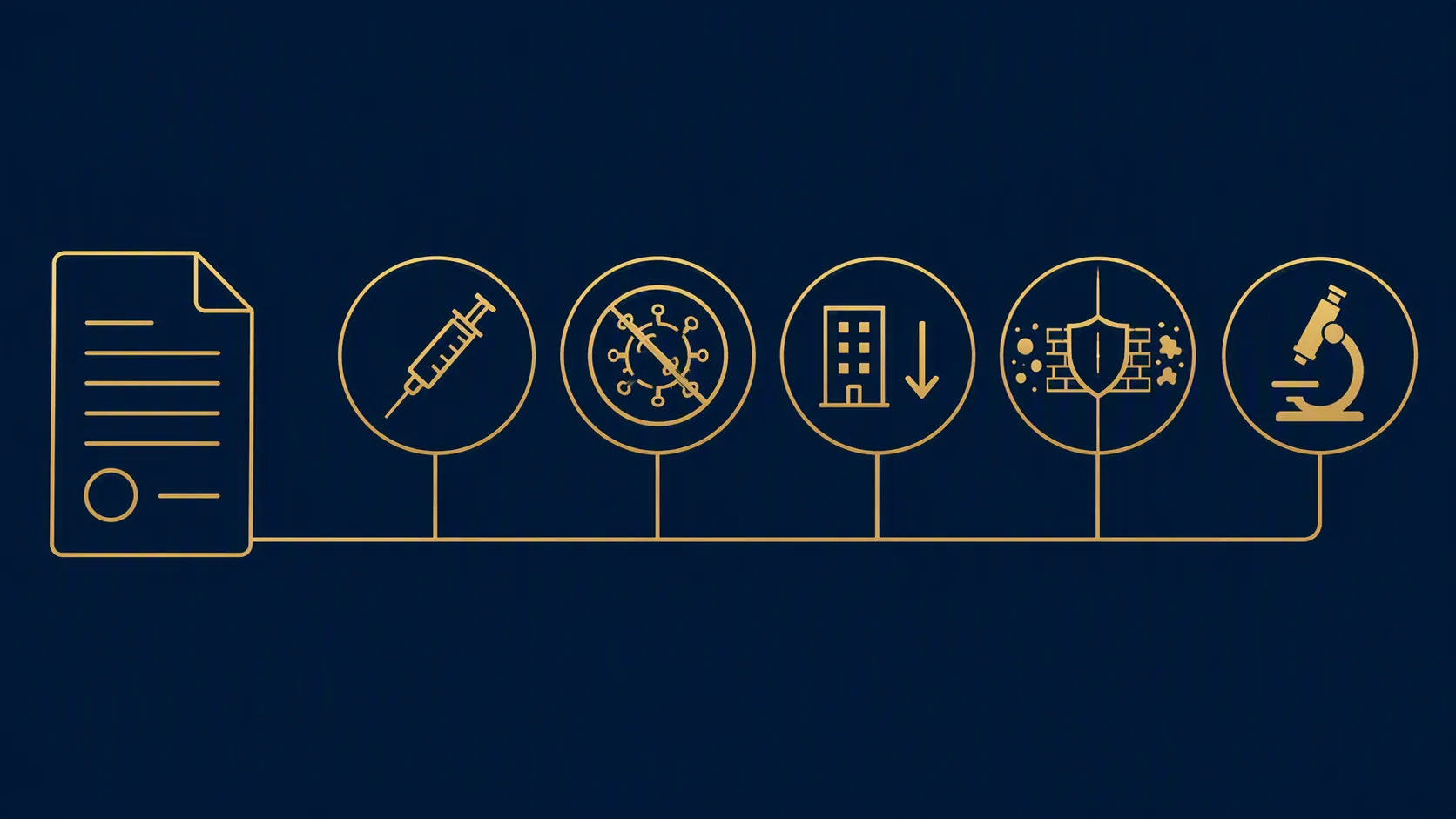
The release conditions are not interchangeable reform language. They are distinct commitments that affect procurement choices, program messaging, internal structure, WHO-related funding, and scientific review capacity. They should be tracked separately because a future performance assessment could treat implementation unevenly.
- Transition specified mercury-containing vaccines to mercury-free alternatives, including meningococcal A, pentavalent, pneumococcal, and hepatitis B vaccines.[1][5]
- End promotion or procurement of COVID-19 vaccines for routine immunization.[1]
- Reorganize and downsize Geneva staff.[1]
- Implement a partnership accountability framework that decreases funding for and reforms engagement with WHO.[1]
- Establish a dedicated vaccine-science monitoring function.[1]
Mercury-containing vaccines: the condition is specific, but the phase-out mechanics are not yet complete
The thimerosal-related condition is narrower than a general vaccine-safety review. The State-HHS note ties the release to a transition from mercury-containing versions of specified vaccines to mercury-free alternatives.[1] CIDRAP’s July 29 report separately identified the same condition and named the vaccine categories, including meningococcal A, pentavalent, pneumococcal, and hepatitis B vaccines.[5]
The open compliance question is operational. Health Policy Watch reported ambiguity over how Gavi would phase out thimerosal-containing products, meaning a briefing should not treat the State-HHS condition as proof that procurement specifications, supplier availability, implementation timing, and country-level substitution are already settled.[8]
COVID-19 vaccines: routine immunization is the stated line
The COVID-19 condition should be quoted with care. The State-HHS media note concerns promotion or procurement of COVID-19 vaccines for routine immunization.[1] That is not the same as a public finding about every emergency-use, outbreak-response, or country-specific COVID-19 vaccine policy. The obligation record should preserve the limiting phrase because it defines the conduct the United States said it obtained in exchange for release.
Geneva staffing: a structural condition, not just a budget note
The staff condition is also express. Gavi committed to reorganize and downsize Geneva staff.[1] The media note does not, on the materials available here, supply headcount targets, severance terms, affected departments, or a completion date. For a compliance tracker, that means the commitment can be logged now, but satisfaction requires later evidence from Gavi governance records, staffing disclosures, or U.S. performance determinations.
WHO engagement: the firewall enforces a U.S. position without resolving the WHO dispute
The WHO-related condition is the most legally exposed part of the settlement. Gavi committed to implement a partnership accountability framework that decreases funding for and reforms engagement with WHO.[1] In practical briefing terms, this is the “WHO firewall”: a mechanism through which the United States conditions Gavi support on reduced or reformed WHO engagement.
That firewall should not be described as settling whether the United States legally left WHO. HHS/CDC materials assert that the United States “formally exited WHO on January 22, 2026.”[9] Galbraith and Helfer, writing in Just Security, argue that the 1948 withdrawal condition precedent was not satisfied because it required one-year notice and full payment of dues.[10] The WHO Director-General’s EB158 report likewise treated the United States as still subject to the 1948 conditions, with arrears reported at more than $133 million.[11]
The cautious formulation is therefore procedural: the July 29 arrangement conditions Gavi’s U.S. support on reduced and reformed WHO engagement. It does not require the reader to decide, in this record, whether U.S. withdrawal from WHO was legally effective.
Vaccine-science monitoring: a new function still needs institutional shape
The fifth commitment is the creation of a dedicated vaccine-science monitoring function.[1] The media note establishes the obligation category, not its internal design. A later review should look for mandate, staffing, reporting line, publication practice, and whether the function can affect procurement or only advise on it.
The deadline pressure did not disappear when the money was released

CIDRAP reported September 30, 2026, as the lapse deadline for the funds.[5] That date matters because the July 29 release occurred inside an appropriations clock, not in a vacuum. It also explains why the distinction between newly granted money and already-appropriated money is not clerical. The settlement released funds Congress had already appropriated before the lapse risk matured.
The exact start date of the hold is not uniformly reported in the materials. KFF describes the funding as withheld since mid-2025, but the safest dated record for this article runs from the May 4, 2026 Collins-Murray letter, through the July 28 Collins announcement, to the July 29 State-HHS release and July 30 Gavi response.[3][4][7][1][2]
| Date | Record significance |
|---|---|
| May 4, 2026 | Collins-Murray letter to Secretary Rubio pressing for release of Gavi funds.[4] |
| July 28, 2026 | Senator Collins announcement that the Administration would release the funds.[3] |
| July 29, 2026 | State-HHS media note releasing $600 million and stating conditions.[1] |
| July 30, 2026 | Gavi welcome statement accepting the release as filling critical gaps.[2] |
| September 30, 2026 | Reported lapse deadline for the funds.[5] |
Board participation and future support remain open items
The board-seat language is narrower than some press formulations. The State-HHS media note says the United States “expects to resume its place on the Gavi Board.”[1] That wording should not be converted into “the United States has resumed its seat” unless a later Gavi governance record or U.S. notice confirms the event.
The same discipline applies to future support. The July 29 arrangement released the identified FY2025 and FY2026 funds and stated that future support would be evaluated on demonstrated performance.[1] It did not make a verified commitment to a full future U.S. pledge for the FY2026-2030 Gavi replenishment period.
The replenishment gap is real, but the figures must stay in their lanes
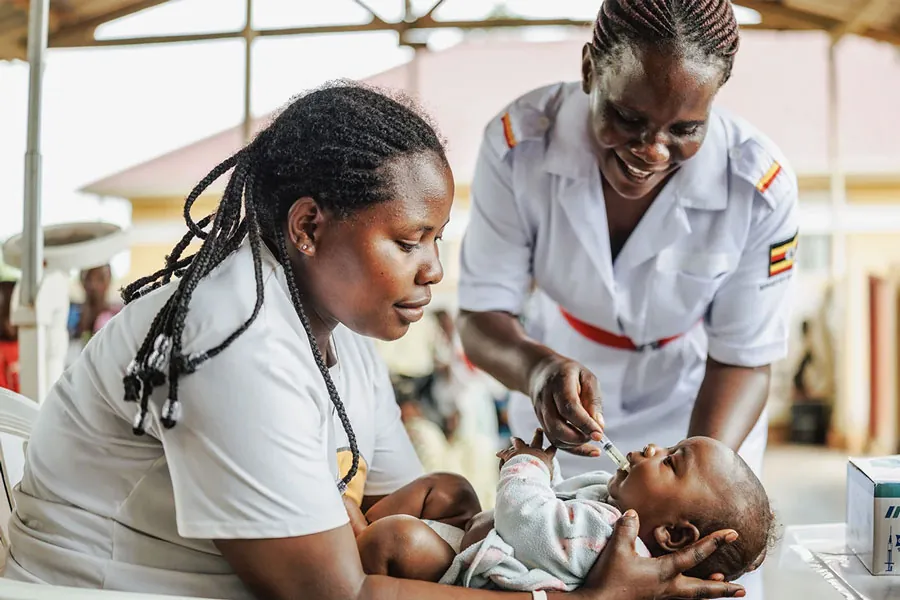
The released $600 million mattered because Gavi’s funding model depends on large donor pledges and because U.S. participation has historically been material. KFF identifies the United States as Gavi’s third-largest government donor and reports that the U.S. has provided about 13% of Gavi’s funding historically.[6] KFF also states that Gavi had a $11.9 billion replenishment target for its 2026-2030 strategy and that more than $9 billion was pledged at the June 2025 Brussels summit.[7]
Health Policy Watch gives a different, narrower set of numbers: it reported that recent Gavi board projections showed $9.3 billion secured against a recalibrated $10.2 billion budget.[8] Those figures should be presented as Health Policy Watch’s account of board projections, not as a confirmed Gavi primary-document number unless the underlying Gavi board record is separately obtained.
The impact figures also should not be blended. Gavi says it has helped immunize 1.2 billion children since 2000.[2] KFF separately reports more than 1.1 billion children immunized and 20.6 million deaths averted through Gavi-supported programs.[6] KFF’s updated account also discusses a projection, attributed through reporting by The New York Times and MSF, that a funding disruption could leave 75 million children unvaccinated and result in 1.2 million deaths.[7] Those are separate source claims, not ingredients for a composite statistic.
KFF adds one more point that prevents overstatement: the foreign-aid stop-work order was not applied to Gavi or other multilaterals.[7] That does not make the Gavi hold immaterial. It does mean the July 2026 transaction should be analyzed as a specific appropriated-funds release, not folded into every foreign-aid suspension category.
For the broader funding-risk and human-rights context, see Legal Risks of the US Gavi Funding Withdrawal. The replenishment shortfall belongs in that larger frame; this record uses it only to show why the conditional $600 million release did not complete the funding picture.
Verification checklist and watchlist
- Confirm the July 29, 2026 State-HHS media note before describing the release terms, the $600 million amount, the FY2025/FY2026 buckets, or the five Gavi commitments.[1]
- Confirm Gavi’s July 30, 2026 welcome statement before using Gavi’s “critical gaps” framing or its 1.2 billion children immunized claim.[2]
- Use the July 28 Collins announcement and May 4 Collins-Murray letter as congressional pressure and date anchors, not as substitutes for the operative State-HHS release instrument.[3][4]
- Track September 30, 2026 as the reported lapse deadline and avoid implying that the deadline became irrelevant merely because the release was announced.[5]
- Quote the board language as expectation-based unless later records confirm that the United States actually resumed its Gavi Board place.[1]
- Do not treat the WHO firewall as a legal resolution of U.S. WHO withdrawal status; the competing HHS/CDC, Just Security, and WHO positions should remain named if that issue is briefed.[9][10][11]
- Separate the thimerosal transition commitment from proof of completed procurement substitution; Health Policy Watch reported unresolved ambiguity about phase-out mechanics.[8]
- Keep replenishment figures attributed: KFF’s $11.9 billion target and $9 billion-plus pledged at Brussels are not the same as Health Policy Watch’s reported $9.3 billion secured and recalibrated $10.2 billion budget.[7][8]
- Describe future U.S. support as performance-based and unresolved unless a later pledge, appropriation, or implementing instrument supplies a new operative verb.[1]
References
- U.S. Department of State and HHS Media Note, U.S. Department of State and U.S. Department of Health and Human Services, July 29, 2026.
- Gavi welcome statement, Gavi, July 30, 2026.
- Senator Collins announces release of Gavi funding, U.S. Senate Committee on Appropriations, July 28, 2026.
- Collins-Murray letter to Secretary Rubio, U.S. Senate Committee on Appropriations, May 4, 2026.
- CIDRAP July 29, 2026 report on Gavi funding release, CIDRAP, July 29, 2026.
- KFF fact sheet on Gavi, the Vaccine Alliance, KFF, July 23, 2025.
- KFF updated fact sheet on Gavi and U.S. funding, KFF, May 4, 2026.
- Health Policy Watch report on Gavi funding and board projections, Health Policy Watch.
- HHS/CDC materials asserting U.S. formal exit from WHO, U.S. Department of Health and Human Services and Centers for Disease Control and Prevention.
- Galbraith and Helfer analysis of U.S. WHO withdrawal, Just Security.
- WHO Director-General’s EB158 report, World Health Organization.
Operationalizing workflow
No workflow has been explicitly linked to this obligation yet. See Workflows generally.
Illustrative cases
No illustrative case is currently tracked for this obligation. See Risk Digest for documented incidents generally.
← Back to RegulationReport a correction or tip
Spotted an outdated figure, a misstated fact, or a ruling this regulation entry should reflect? Public comments are disabled for this content given the professional cost of a misreported case outcome, penalty amount, or rule text — use the structured correction channel instead.
Report a correction or tip for this record →