
The legal anatomy of the Virginia-class Block VI award
- Authority
- U.S. Department of War
- Rule type
- regulation
- Jurisdiction scope
- US federal
- Effective date
- Jul 29, 2026
- Source text
- Read primary rule text ↗
Definitize UCAs under DFARS 217.74 and comply with NTE, schedule, and obligation limits.
Classification: Regulation & Ethics / slug: regulation-ethics. This record is legal information for procurement-risk analysis, not legal advice. Reviewed by Maya Chen, J.D., legal-background reviewer for government procurement and ethics coverage. Last verified: Aug. 2, 2026, 00:00 UTC.
This article uses the same obligations-tracker discipline as the site’s Georgia gas tax suspension record and AI-literacy legal requirements tracker: identify the authority, the certification, the vehicle, the funding record, and the unfinished compliance obligation before drawing conclusions.

The July 29 record is a legal stack, not a single contract
A careful analysis of the Virginia-class Block VI submarine contract award has to start with the award notice, because that is where the public record stops looking like a ceremony and starts looking like a government-contract file. On July 29, 2026, the Department of War announced awards tied to Virginia-class Block VI attack submarines, Columbia-class Build II ballistic-missile submarines, and shipyard productivity work, with Naval Sea Systems Command in Washington, D.C., identified as the contracting activity.[1]
The public-facing shorthand is “$76.6 billion.” The legal record is more granular: $42.1 billion for nine Block VI Virginia-class submarines, hulls SSN 814 through SSN 822; $29.5 billion for five Columbia-class Build II submarines, hulls SSBN 828 through SSBN 832; and $5 billion for shipyard productivity. The announced period of performance runs through July 2038, with fiscal year 2024 through fiscal year 2026 funding identified in the award materials.[1]
| Public award component | Record-level detail | Why it matters legally |
|---|---|---|
| Virginia-class Block VI | $42.1B for nine SSNs, hulls 814–822 | This is the multiyear procurement component most directly tied to the Block VI statutory and certification analysis. |
| Columbia-class Build II | $29.5B for five SSBNs, hulls 828–832 | The award notice packages Columbia work with the Virginia work, but the legal obligations still sit in identified contract actions and funding lines. |
| Shipyard productivity | $5B | This part should not disappear inside the submarine-count headline; it is a distinct portion of the announced value. |
| Performance window | Work through July 2038 | The long work-through date makes definitization, schedule documentation, and incentive administration continuing obligations, not closing details. |
| Contracting activity | Naval Sea Systems Command, Washington, D.C. | NAVSEA is the contracting activity that has to administer the vehicles, modifications, and audit trail after the announcement. |
The Navy press-release text reproduced by Naval News, and the contractor announcements from Huntington Ingalls Industries, give the award its industrial description: submarines, shipyards, long-lead material, and production continuity.[2][3] Those materials help explain why the award was politically and industrially significant. They do not change the central legal point: the July 29 event was assembled through existing authorities and vehicles rather than created by a single standalone contract document.
The statutory layer: multiyear authority had to exist before the award
The first legal layer sits outside the July 29 award notice. A multiyear procurement contract of this scale requires statutory authorization. CRS’s multiyear procurement summary explains the 10 U.S.C. 3501 framework under the terminology then used by the Department of Defense; this article uses current Department of War nomenclature, while preserving the substance of the cited CRS and DFARS materials.[4]
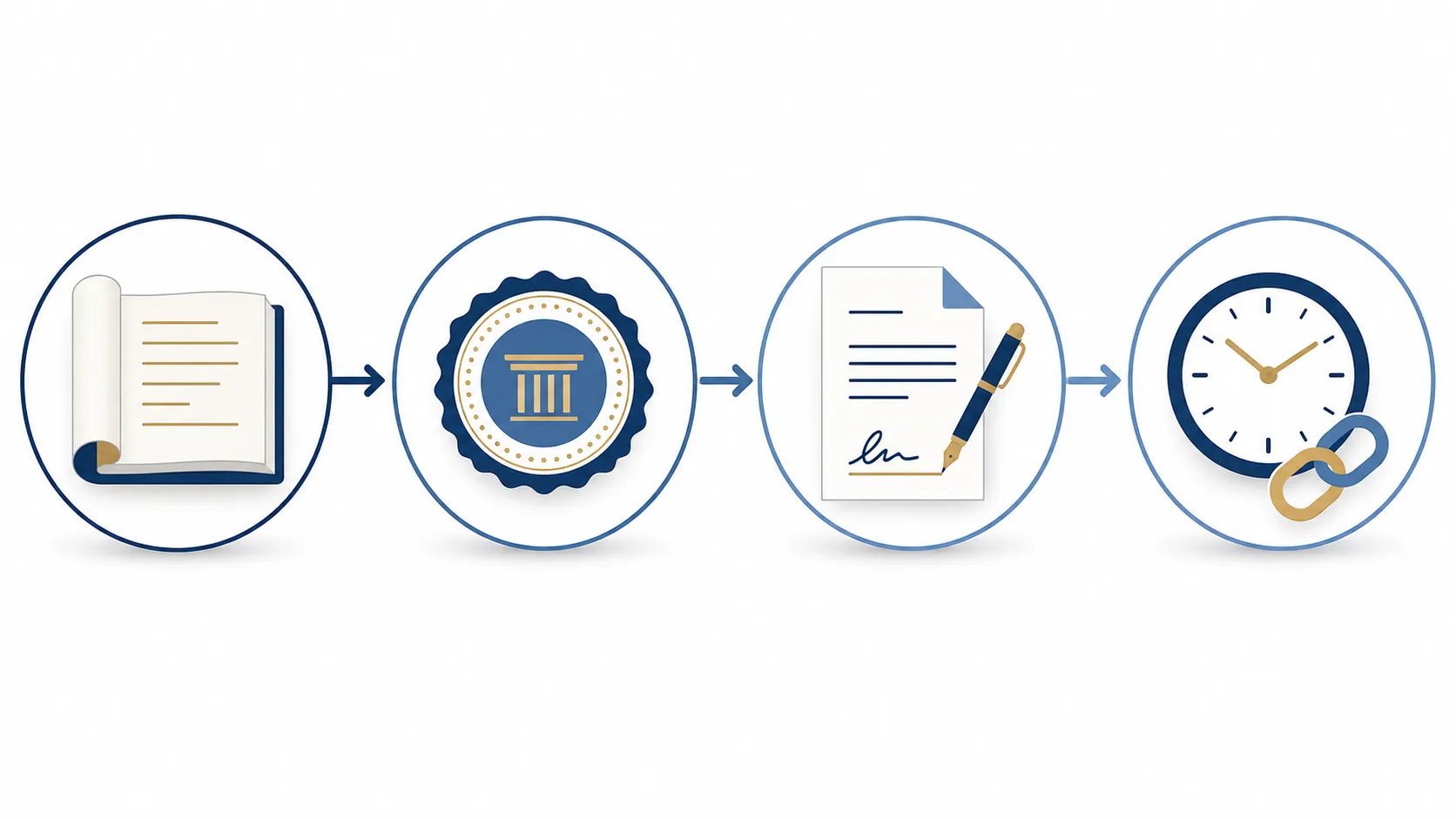
For a multiyear contract exceeding $500 million, the 10 U.S.C. 3501 structure requires more than ordinary procurement preference. The contract must be specifically authorized by law in an act other than an appropriations act, the responsible acquisition official must provide written certification at least 30 days before award, and the contract must use a fixed-price type, subject to the statutory conditions and exceptions described in the source text.[4]
The FY2024 National Defense Authorization Act matters because it authorized the Navy’s use of multiyear procurement for the relevant submarine work and added criteria tied to significant savings or necessary industrial-base stability. That does not mean the later award became automatic. Authorization opens the door; it does not itself sign the certificate, modify the contract vehicles, or resolve later undefinitized pricing exposure.[4]
Rep. Joe Courtney later described the path from authorization to award as taking “29 months,” a useful chronology marker for why the program needed interim contract actions before the July 2026 announcement.[12] It is not, by itself, a legal conclusion. The legally operative sequence is still authorization, certification, contract action, and then post-award administration.
The certification layer is where savings claims become record risk
The second layer is the written 10 U.S.C. 3501 certification. Army Recognition, citing Bloomberg, reported that the Pentagon approved the Block VI Virginia-class procurement on June 29, 2026, and reported a projected multiyear-procurement savings figure of roughly $2.4 billion.[5] Because the underlying Bloomberg report was not independently reviewed for this record, that date and savings figure should be treated as reported public-account facts, not as independently verified primary-record facts.
The distinction is not pedantic. A multiyear certification does not merely say that the Navy would prefer to buy several submarines in a batch. It is the written bridge between congressional authorization and a fixed-price procurement commitment. The certification is where the government has to memorialize why the multiyear approach satisfies the statutory standard, including the savings or industrial-base-stability rationale added for this authorization cycle.[4][5]
The reported $2.4 billion number therefore belongs in the file as a projection tied to certification logic, not as money already saved. The award can be legally formed on the basis of a forward-looking judgment, but that judgment leaves a trail. If realized labor constraints, supplier delays, or material escalation consume the projected benefit, the issue is not that the award was never made. The issue is whether the file continues to support the assumptions that justified using the multiyear form.
That is also why the fixed-price requirement deserves attention. A fixed-price incentive structure can allocate cost and performance consequences differently from a cost-type arrangement, but it does not make schedule slip disappear. It puts pressure on target cost, target profit, ceiling price, share lines, and negotiated assumptions. Those terms become the machinery through which the certification’s savings premise is tested over time.
The execution layer: incentive modifications to standing NAVSEA vehicles
The July 29 action was not a clean new contract in the way the phrase is often used in headlines. The Department of War notice identifies contract actions through existing NAVSEA vehicles, including N00024-17-C-2100 and related standing contract vehicles, rather than a single newly competed umbrella contract.[1] That vehicle structure matters because rights, obligations, clauses, funding, and prior modifications travel through the contract records already in place.
The five-vehicle structure also narrows how to talk about protest posture. As of Aug. 2, 2026 UTC, this record identifies no GAO bid protest challenging the Block VI award. More importantly, the structure is different from a freshly competed procurement with disappointed offerors waiting outside the award door. Sole-source or negotiated modifications to standing vehicles can still raise oversight, authority, scope, and funding questions, but those are not the same posture as a conventional post-award competition protest.
The December 2019 Block V award is a useful precedent for form, not a parallel history to retell. The Navy described that earlier Virginia-class multiyear award as a $22.2 billion fixed-price incentive-fee contract for Block V submarines.[7] Block V shows that fixed-price incentive-fee multiyear submarine procurement was already an established contracting model. Block VI’s legal question is what changed after the FY2024 authorization, the reported 2026 certification, and the intervening undefinitized actions.
The UCA layer: the clock that survived the signing ceremony
The most live legal exposure now sits in undefinitized contract actions. DFARS Subpart 217.74 covers undefinitized contract actions under the terminology used in the acquisition regulations. The subpart requires a not-to-exceed price, a definitization schedule, and controls on obligations before final terms are definitized.[6]
The basic discipline is straightforward but unforgiving. A UCA lets work begin before all terms, specifications, or price are finally agreed. That flexibility is valuable when a submarine program cannot wait for a perfect negotiation record. It also creates a paper burden: the government has to state the not-to-exceed amount, move toward definitization, and manage how much money is obligated before the final bargain exists.
DFARS 217.7404-3 sets the definitization schedule, including the 180-day benchmark described in the regulation. DFARS also constrains obligations before definitization: the record has to account for the 50 percent and 75 percent obligation limits and the circumstances requiring higher-level approval, including Head of the Contracting Activity involvement. For large actions, unilateral definitization above $50 million carries its own approval sensitivity.[6]
| UCA control point | What the file must show | Why counsel should track it |
|---|---|---|
| Not-to-exceed price | A ceiling amount for work authorized before final terms are definitized | The NTE amount controls exposure before the final price is settled. |
| Definitization schedule | A schedule tied to the DFARS 180-day framework | A missed schedule can become an audit and oversight issue even if performance continues. |
| Pre-definitization obligations | Compliance with the 50% and 75% obligation limits and approval rules | Funding momentum cannot outrun the regulatory cap without a documented approval basis. |
| HCA approval | Required approvals where DFARS calls for higher-level review | The signature chain becomes part of the defensibility of the action. |
| Unilateral definitization | Additional approval sensitivity for large unilateral definitizations, including actions above $50M | If negotiations stall, the government’s unilateral path must be procedurally clean. |
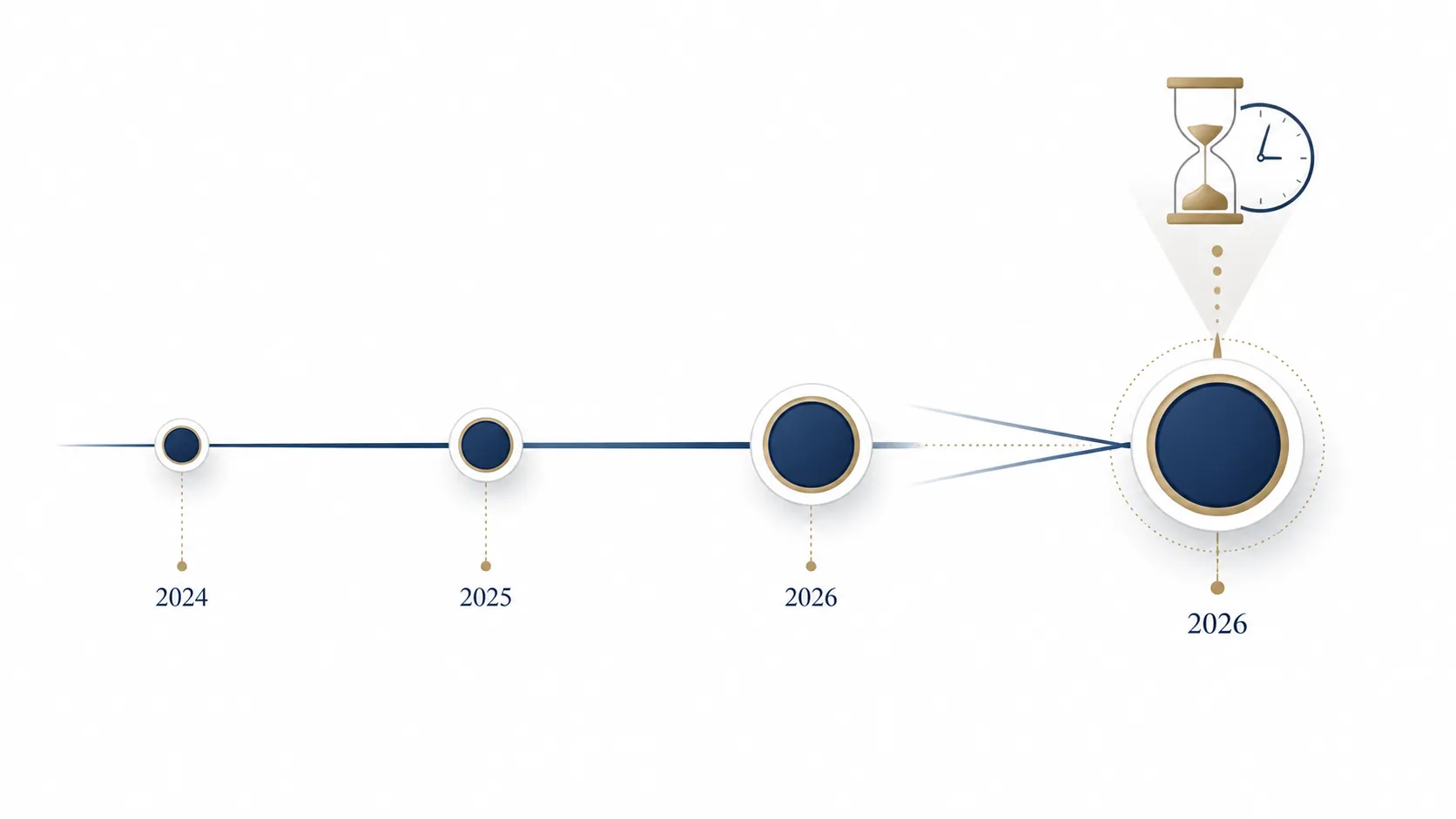
The UCA issue is not theoretical for this award. Public records and contractor releases show interim actions that helped carry the program before the final July 2026 award, including a reported $1.3 billion August 2024 action, a March 25, 2025 General Dynamics Electric Boat announcement of a $1 billion modification for Virginia-class long-lead-time material, and a May 2026 public award account describing a $2,305,530,000 action for Block VI preparation.[9][10][11]
Breaking Defense also described the July 2026 award against the backdrop of prior delay and interim contracting activity, while noting the Navy’s need to keep submarine work moving.[11] That context explains the practical reason UCAs appear in the chain. It does not excuse the definitization file. The more necessary the bridge action, the more important the bridge records become.
Cost and schedule facts test the certification assumptions
The savings case for a multiyear submarine buy rests on assumptions about stable production, supplier continuity, and price discipline. CRS’s Virginia-class program materials and later public reporting describe production-rate pressure and schedule concerns in the submarine industrial base.[8][11] Those facts do not prove the July 29 award is legally defective. They do explain why a projected savings certification should be read with a pencil in hand.
A fixed-price incentive arrangement is supposed to make cost performance matter to both sides. If actual costs stay within the negotiated assumptions, the structure can support the savings case. If costs rise or work slips, the incentive terms decide who absorbs how much of the pain and when renegotiation pressure appears. The legal file should therefore preserve the government’s basis for believing the fixed-price incentive terms were still suitable when signed.
That is the narrow relevance of AUKUS and submarine production-rate politics here. They help explain why Congress and the Navy cared about buying and sustaining more hulls, including the nine-boat Virginia authorization. They do not supply the legal answer. The legal answer still runs through the FY2024 authorization, the written certification, the NAVSEA modifications, and the DFARS obligations that remain open after award.
What remains open after July 29
The July 29 award appears legally assembled from the public record: Congress authorized the multiyear form, a written certification was reportedly signed at least 30 days before award, NAVSEA executed the work through standing contract vehicles, and earlier UCAs bridged the delay into the final award structure.[1][4][5][6]
The open risk is not whether the press release used a large number. It is whether the contract file can keep carrying that number. Counsel and compliance teams should be watching the definitization deadlines, NTE-to-final-price movement, obligation caps, HCA approvals, schedule-slip documentation, and the distance between projected multiyear savings and realized cost growth.
That is where the award now lives: not in the sentence announcing $76.6 billion, but in the administrative record that has to survive invoices, negotiations, audits, and congressional questions through July 2038.
References
- Contracts for July 29, 2026 — Department of War, July 29, 2026
- US Navy Awards Historic $76.6B Contract For 9 Block VI Virginia SSNs And 5 Columbia SSBNs — Naval News, July 2026
- HII is Awarded Contracts for Construction of Block VI Virginia-Class and Build II Columbia-Class Submarines — HII
- Multiyear Procurement (MYP) and Block Buy Contracting in Defense Acquisition: Background and Issues for Congress — Congressional Research Service
- Pentagon approves Block VI Virginia-class submarines procurement — Army Recognition
- Subpart 217.74 - Undefinitized Contract Actions — Defense Federal Acquisition Regulation Supplement
- Navy Awards Largest Shipbuilding Contract in Service History — U.S. Navy, Dec. 2, 2019
- Navy Virginia (SSN-774) Class Attack Submarine Procurement: Background and Issues for Congress — Congressional Research Service
- Electric Boat awarded contract modification for Virginia-Class submarines long lead time material — General Dynamics, Mar. 25, 2025
- Electric Boat Wins $2.3B for Virginia-Class Block VI Submarine Prep — ClearanceJobs, May 12, 2026
- Navy awards $76.6B in contracts for new Virginia, Columbia-class subs — Breaking Defense, July 2026
- Ranking Member Courtney Statement on New $2.3B Virginia-Class Submarine — Office of Rep. Joe Courtney, May 12, 2026
Operationalizing workflow
No workflow has been explicitly linked to this obligation yet. See Workflows generally.
Illustrative cases
No illustrative case is currently tracked for this obligation. See Risk Digest for documented incidents generally.
← Back to RegulationReport a correction or tip
Spotted an outdated figure, a misstated fact, or a ruling this regulation entry should reflect? Public comments are disabled for this content given the professional cost of a misreported case outcome, penalty amount, or rule text — use the structured correction channel instead.
Report a correction or tip for this record →