
Aeon Kumamoto Blast Probe Findings and Their Legal Impact
As of August 1, 2026, no official cause determination has been made in the Aeon Mall Kumamoto explosion; this record tracks what investigators have confirmed, what remains unverified, and which legal liabilities hinge on each unresolved fact.
- Jurisdiction
- Japan
- Court
- No court proceeding reported
- AI tool named
- No AI tool implicated
- Ruling date
- Jul 28, 2026
- Source document
- View primary court order ↗
- Last verified
- Aug 1, 2026
Lex Machina Review is an independent risk-tracking and reference resource. Nothing on this site is legal advice, and using it does not create an attorney-client relationship. Every record is reviewed against primary sources but may not reflect the most current status of a matter — always verify directly against the cited court order, rule text, or a licensed attorney before relying on it.
Companion explanation — secondary to the source document above
Last verified: August 1, 2026. This record tracks the cause investigation and legal consequence map for the Aeon Mall Kumamoto explosion. It is not legal advice and should be reviewed by licensed counsel before publication or reliance. The broader force-majeure and foreseeability framework is addressed separately in the companion liability analysis; this page stays closer to the present evidentiary record.
As of this verification date, there is no official cause determination, no reported criminal charge, and no reported civil filing tied to the July 28 blast at Aeon Mall Kumamoto. A gas explosion remains the leading reported theory: rescuers reported a gas smell, and Aeon President Yoshida said the possibility of a gas explosion was “very high.” But a likely mechanism is not yet a legal finding. The still-unproven facts are narrower and more consequential: whether the seismic gas shut-off device operated, where any leak originated, what ignited the gas, and whether employees were instructed or allowed to re-enter after evacuation.
What is established as of August 1
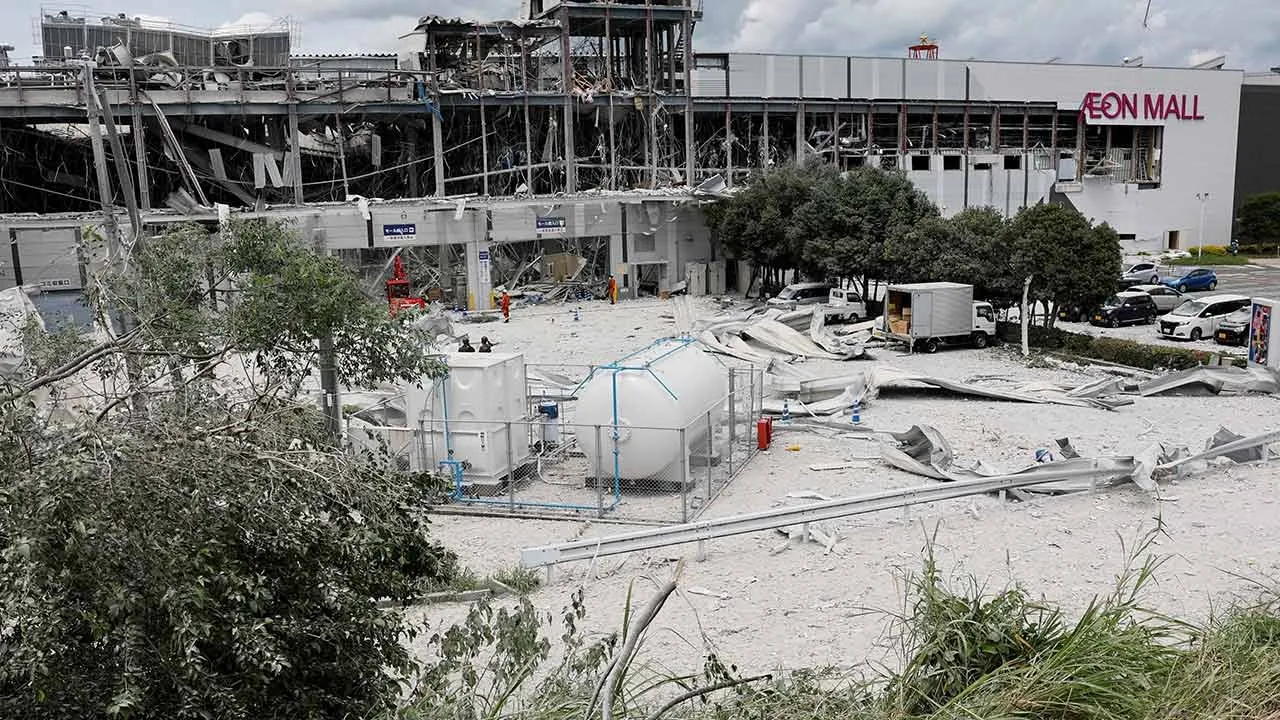
The earthquake struck at 16:27 on July 28, 2026, with a reported magnitude of 7.1. Aeon Mall Kumamoto evacuated about 3,000 customers, and the evacuation was reported complete at about 17:00. The explosion occurred at about 17:50 on the second floor, on the south-central side of the mall. That makes the blast both roughly 80 minutes after the quake and roughly 50 minutes after the reported completion of customer evacuation; those are not competing timelines so much as two different reference points for the same interval.[1]
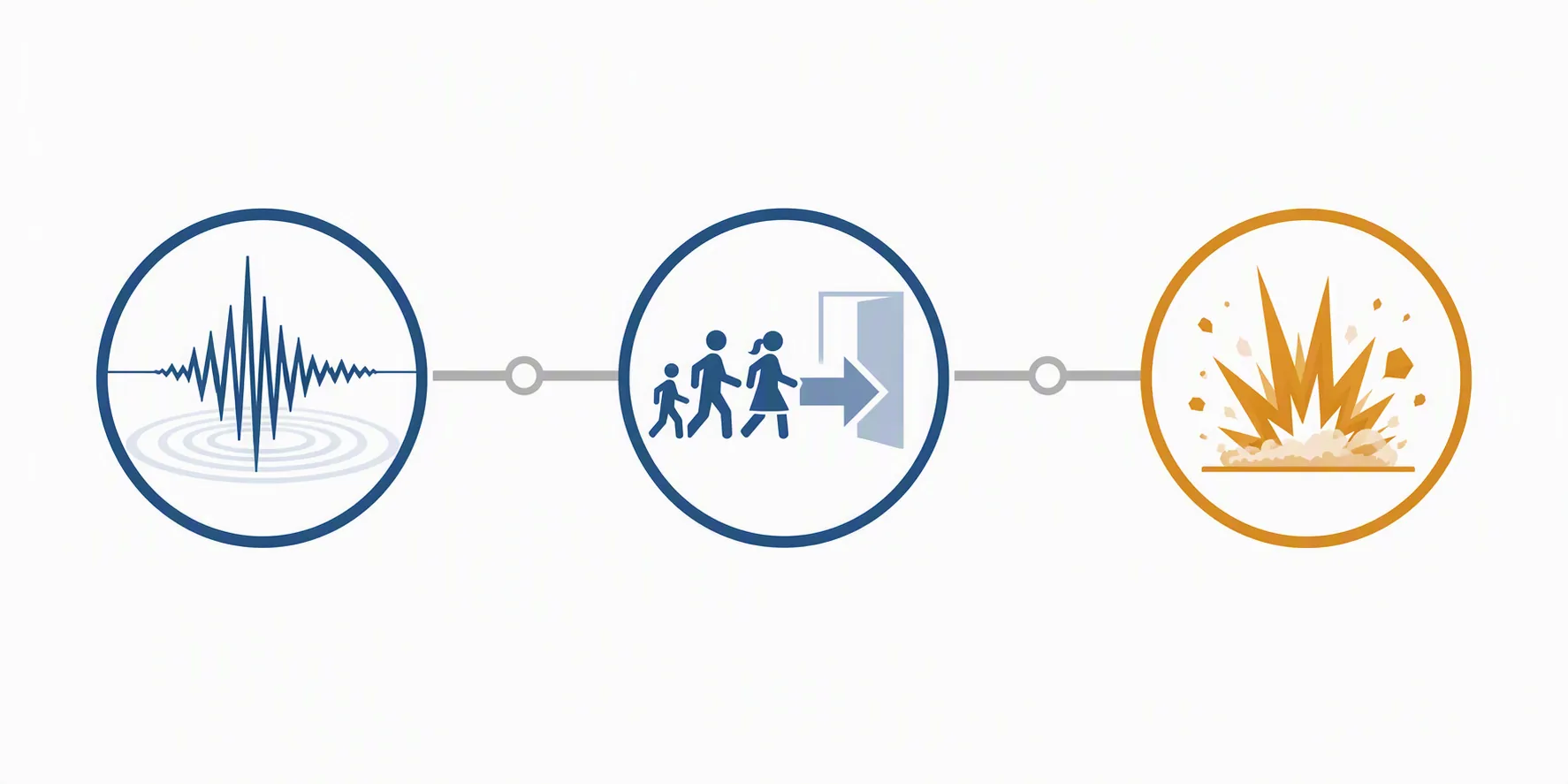
That interval matters because the confirmed mall deaths were not ordinary shoppers caught at random during the quake. By July 30, seven mall deaths had been confirmed, and the victims were reported as tenant employees. NHK also reported that the wider earthquake death toll had risen to 35 while rescue efforts continued.[2] The difference between customers already out and workers still inside is not a minor narrative detail. It is the fact that keeps the legal question attached to workplace control: who remained, who had authority over their movement, and what emergency instructions governed the post-evacuation period.
The casualty record changed quickly across early cutoffs. At Aeon’s July 29 press conference, the reported mall toll was three dead, one person in cardiopulmonary arrest, and three missing.[3] By the following day, the mall death count had moved to seven.[2] For that reason, early counts should be cited with their date and source rather than treated as contradictions.
Officially, the cause remained under detailed investigation. The bodies identified in available reporting include Kumamoto prefectural police, fire authorities, the Ministry of Economy, Trade and Industry, and the High Pressure Gas Safety Institute. Yomiuri reported that METI and the institute began an on-site voluntary probe on July 30.[4] That institutional posture is important: investigators were not merely accepting a corporate explanation or a press-conference theory; they were still collecting the facts needed to distinguish equipment failure, earthquake damage, maintenance issues, emergency management, and ignition.
The four facts that decide the legal direction
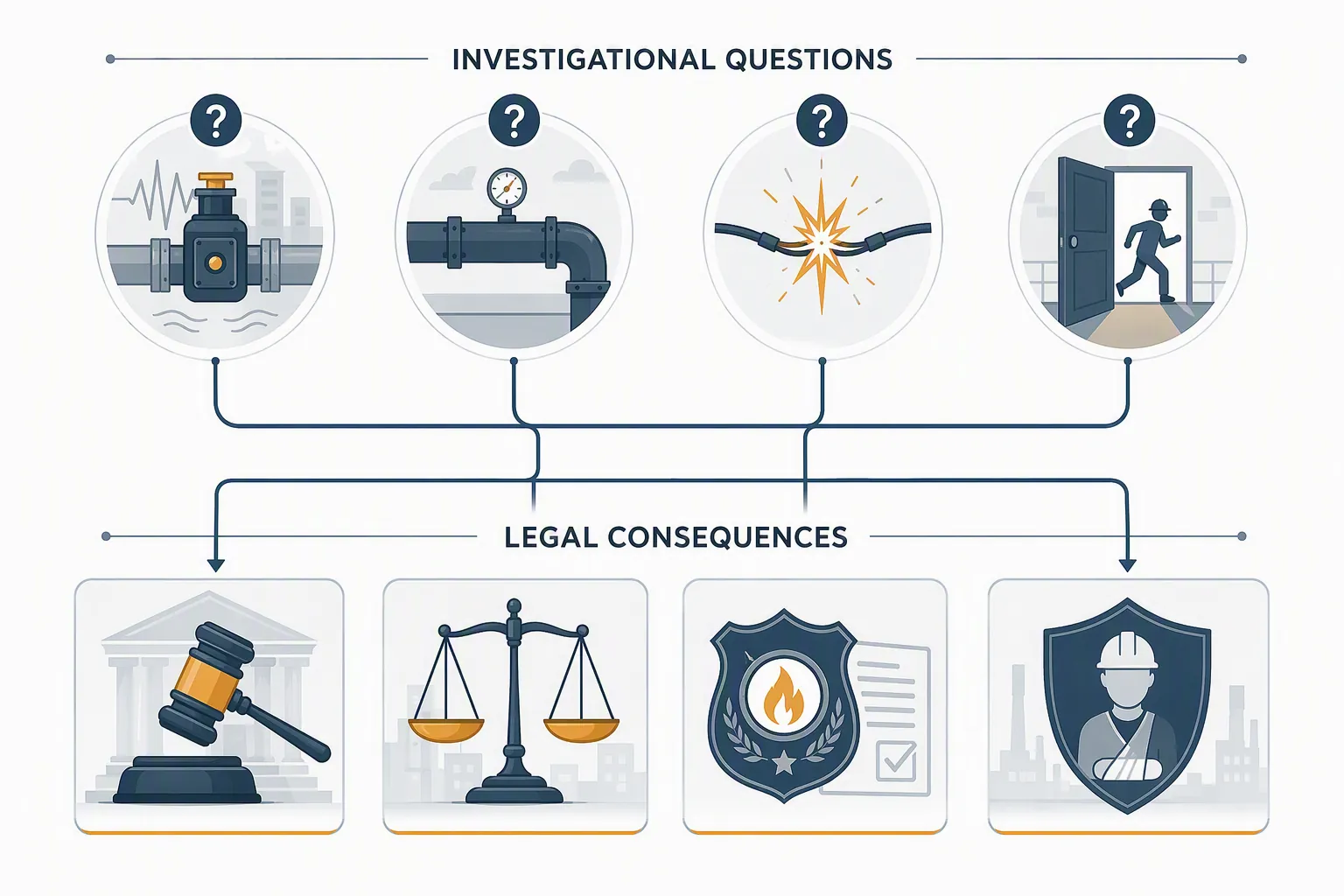
Legal exposure does not turn on the word “gas” alone. A gas-explosion theory may explain the physical event, but it does not identify whose duty failed, whether the failure was foreseeable, or whether the relevant channel is criminal, civil, regulatory, or workers’ compensation. The investigation needs to answer four fact questions before the legal assessment can be made responsibly.
| Unresolved fact | Why it matters legally | Current status in this record |
|---|---|---|
| Whether the seismic shut-off device operated | A non-operation finding could support regulatory scrutiny and may become relevant to professional negligence analysis if a responsible person or contractor had a maintenance, inspection, or response duty tied to that device. | Not officially determined as of August 1. |
| Where the gas leak originated | A leak from internal piping, damaged connections, or another component points to different maintenance, installation, inspection, and earthquake-damage questions than a leak from the outdoor tank itself. | Reported theories differ; the outdoor tank was described as intact in the research record, but the leak origin remains unproven. |
| What ignited the accumulated gas | The ignition source may identify an avoidable post-quake act, an electrical system condition, a device failure, or an unforeseeable sequence. Without it, causation remains incomplete. | No official ignition-source finding. |
| Whether employees were instructed or allowed to re-enter | Re-entry evidence could shift attention from facility condition alone to post-evacuation duty of care, tenant-employer obligations, workers’ compensation channels, and possible tort claims against those controlling the premises. | No confirmed instruction record in the reviewed sources. |
1. The seismic shut-off device
The first legal hinge is mechanical but not merely technical. If a legally required seismic shut-off system was supposed to stop gas flow at strong shaking and did not, the next questions are who installed it, who inspected it, what logs or physical traces show about its condition, and whether any post-quake manual action affected the system. If it did operate, the inquiry changes: investigators would need to explain how gas still accumulated after shut-off, whether gas was already in the system downstream, whether piping ruptured in a way the device could not prevent, or whether another fuel source was involved.
This is where premature certainty does damage. “The device failed” and “gas exploded” are not interchangeable statements. One is a finding about a safety component; the other is a theory about the blast mechanism. Until investigators publish device records, physical inspection results, or a formal finding, the legal consequence remains conditional.
2. The leak origin
The second hinge is the source of the gas. A leak from earthquake-damaged piping raises a different foreseeability and inspection question than a leak from a storage tank, a valve, a connection, or equipment within a tenant area. Available reporting notes an outdoor LPG tank holding 9,367 kilograms and describes it as intact, which tends to move attention away from a simple tank-rupture theory and toward piping, connections, or downstream equipment. But that is still a narrowing move, not a final answer.
Leak origin also affects the identity of the potentially responsible actor. A common-area pipe, a tenant-side appliance, a contractor-serviced component, and a utility or LPG-supply interface do not produce the same duty map. The investigation therefore needs more than “gas was present.” It needs a traceable path from gas storage or supply to the place where an explosive mixture accumulated.
3. The ignition source
The ignition source is the missing link between a leak and the blast. In legal terms, it can determine whether the event was the unavoidable culmination of earthquake damage, an avoidable result of post-quake operation, or the product of a separate device or electrical condition. If investigators identify a switch, appliance, generator, electrical fault, open flame, or other source, causation becomes more concrete. If they cannot, liability arguments may still proceed, but they will rest on a less complete chain.
This is also the point at which expert commentary can outrun the record. A plausible accumulation theory can explain how a blast became possible. It does not, by itself, prove what ignited the gas or whether anyone could reasonably have prevented that ignition during the post-quake interval.
4. Re-entry instructions and workplace control
The fourth hinge is not a pipe or device. It is the human command chain after the customers were out. If tenant employees remained inside or returned after evacuation, the decisive evidence may be mundane: a manager’s instruction, a cash-handling routine, a security log, a radio message, a tenant manual, a mall-wide emergency protocol, or surveillance footage showing who went where and when.
The present record does not confirm that any employee was ordered back inside. That distinction should hold. A reported family account from RKK/TBS may be relevant to the re-entry duty-of-care question if confirmed, but it would still be a single-source report unless Aeon, a tenant employer, investigators, or documentary evidence confirms the instruction. The legal weight is not in the anecdote alone; it is in whether the instruction can be tied to someone with authority and to a known or knowable hazard.
Inspection history complicates the negligence story
Aeon reported that a statutory inspection on June 10, 2026, and a voluntary inspection on March 12, 2026, found no abnormalities in the gas equipment.[3] Those records do not exonerate anyone. They also cannot be ignored. A recent clean inspection can affect foreseeability, the reasonableness of maintenance practices, and whether a defect should have been discovered before the earthquake.
The inspection dates are especially important because they sit close to the disaster. If investigators later identify a pre-existing defect that should have been found, the inspection record becomes a potential failure point. If they identify sudden earthquake damage to previously normal equipment, the same inspection history may support an argument that the dangerous condition was not reasonably detectable before July 28. Neither conclusion follows automatically from the dates alone.
Aeon also announced emergency gas inspections at its facilities nationwide after the Kumamoto blast.[3] That measure has a different evidentiary character. It may be prudent risk control and may matter to regulators or corporate governance reviewers, but it does not prove what happened at Kumamoto before the explosion.
Expert theories are useful signals, not findings
After the confirmed timeline and inspection record, the expert theories help define what investigators may be testing. They should not be promoted into findings unless the official record catches up.
University of Tokyo professor Hiroyuki Mogi was reported by NHK as citing gas buildup in a windowless enclosed space as a possible cause of the mall blast.[5] That theory speaks to accumulation: how leaked gas could reach an explosive concentration. It does not identify the exact leak origin or ignition source.
The Straits Times reported a different but related expert view: Tokyo University of Science professor Kiyoshi Kuwana said broken gas pipes were likely behind the deadly blast, with gas accumulating in an open space before ignition.[6] That view moves attention toward pipe rupture and distribution of gas after earthquake damage. Again, it remains a mechanism signal rather than an official finding.
Kansai TV’s explainer included former Tokyo Fire Department official Tanaka Akira’s concern that the automatic shut-off stop function appeared not to have operated.[7] That is the most legally charged of the expert comments because it points toward a safety system that may have been expected to interrupt gas flow. But “appeared not to have operated” is still not the same as an inspection-backed conclusion about why it did not operate, whether it was required to operate in the observed conditions, or who bore responsibility for its condition.
How each unresolved fact changes the liability channel
The legal implications of the Aeon Kumamoto explosion depend less on selecting one headline theory than on matching proven facts to the correct legal channel. The channels may overlap, but they do not require the same evidence.
- Professional negligence under Penal Code Article 211: this channel becomes more concrete if investigators identify a person or professional actor whose required safety step, inspection duty, repair duty, or emergency-response duty was breached and causally connected to death or injury. Device-operation records, maintenance documentation, and command decisions would matter more than generalized statements that gas was involved.
- Civil tort claims against the operator or other responsible parties: these would turn on duty, breach, causation, damages, and foreseeability. The inspection record, earthquake severity, post-quake hazard recognition, evacuation completion, and any re-entry instruction would all become fact-sensitive inputs.
- LPG Act or Fire Service Act regulatory action: this route depends on whether investigators find noncompliance with gas-storage, shut-off, inspection, reporting, fire-safety, or emergency-control obligations. A clean inspection history matters here, but only after regulators test whether the inspected system matched legal requirements and operated as expected.
- Workers’ compensation channels through tenant employers: because the confirmed mall victims were tenant employees, workplace-injury systems may be implicated even before a tort defendant is identified. That does not answer whether Aeon, a tenant, a contractor, or another party was negligent; it identifies a compensation route tied to employment status and workplace presence.
The re-entry issue may be the most morally immediate, but it should not be isolated from the physical investigation. An instruction to return to a safe area has one meaning; an instruction to return when gas odor, structural damage, or system warnings were known has another. The record still needs the surrounding facts: who knew what, when they knew it, and what procedure governed the decision.
What would change the legal assessment
The next legally meaningful update would not be another general statement that gas was likely involved. It would be a document or official finding that narrows one of the four hinge facts.
- A device log, physical inspection report, or official statement on whether the seismic shut-off system activated.
- A finding that locates the leak in a specific pipe, valve, connection, appliance, tank component, or tenant-side installation.
- An ignition-source determination, especially if tied to a post-quake human act or an electrical or mechanical condition that could have been isolated.
- A confirmed emergency-instruction record showing whether employees were told to remain, return, retrieve property, handle cash, check stores, or avoid re-entry.
- A regulator’s finding that the March 12 voluntary inspection or June 10 statutory inspection missed a condition that should have been detected.
- A police, fire, METI, or High Pressure Gas Safety Institute report converting one of the current reported theories into an official conclusion.
Until then, the strongest formulation remains limited: a gas explosion appears highly likely on the present reporting, but the legally decisive facts have not been officially proven. The confirmed timeline, the tenant-employee deaths, the clean March and June inspection reports, and the ongoing official probe all point in different legal directions. The record is not empty; it is unfinished.
References
- After the quake came the blast: Inside Japan's shopping mall disaster — Reuters, July 29, 2026
- Death toll after earthquake rises to 35 as rescue efforts continue — NHK WORLD-JAPAN, July 31, 2026
- Aeon Apologizes for Deaths in Kumamoto Mall Blast after Quake — Nippon.com/Jiji Press, July 29, 2026
- METI, High Pressure Gas Safety Institute begin on-site probe at Kumamoto blast site — Yomiuri Shimbun, July 30, 2026
- Expert cites gas buildup as possible cause of Kumamoto mall blast — NHK WORLD-JAPAN, July 30, 2026
- Kumamoto quake: Broken gas pipes likely behind deadly mall blast, say experts — The Straits Times
- Kumamoto earthquake explainer on Aeon Mall blast — Kansai TV, July 29, 2026
Related records
Tool profile
How Meta's AI Spending Reshapes Law Firm ProfitabilityGoverning regulation
Browse the obligations tracker →Preventive workflow
Browse verification workflows →
Report a correction or tip
Spotted an outdated figure, a misstated fact, or a ruling this case record should reflect? Public comments are disabled for this content given the professional cost of a misreported case outcome, penalty amount, or rule text — use the structured correction channel instead.
Report a correction or tip for this record →