
Three Legal Risk Layers in Amazon's D2D Satellite Approval
Amazon's FCC approval for direct-to-phone satellite service involves three distinct regulatory layers—spectrum control, constellation licensing, and operational conditions—each carrying separate legal obligations and risks for contracting parties. This analysis maps the approval stack for in-house counsel tracking compliance exposure.
- Jurisdiction
- US Federal
- Court
- Federal Communications Commission
- AI tool named
- Amazon D2D
- Ruling date
- Apr 23, 2026
- Source document
- View primary court order ↗
- Last verified
- Jul 30, 2026
Lex Machina Review is an independent risk-tracking and reference resource. Nothing on this site is legal advice, and using it does not create an attorney-client relationship. Every record is reviewed against primary sources but may not reflect the most current status of a matter — always verify directly against the cited court order, rule text, or a licensed attorney before relying on it.
Companion explanation — secondary to the source document above
The wrong first question is whether Amazon has FCC approval for direct-to-phone satellite service. The better contracting question is which permission Amazon is asking for, which entity controls the spectrum today, which conditions would travel with the service, and what happens if one layer matures before the others.
The July 2026 headlines were useful as a filing alert: Amazon sought FCC authority for a direct-to-device satellite constellation, with reports describing a 5,105-satellite system and a service path tied to Globalstar spectrum and the FCC’s supplemental coverage from space framework.[1][2] They were less useful if read as a clean approval event. For a lawyer reviewing a future service agreement, the approval stack has at least three moving parts, and each fails differently.
| Layer | Control Point | Why It Matters In A Contract |
|---|---|---|
| Spectrum control | Amazon/Globalstar transfer review in GN Docket No. 26-134 | If the transaction is delayed, denied, or materially conditioned, Amazon’s pathway to the relevant MSS spectrum changes before service commitments can be treated as mature. |
| Constellation licensing | SAT-LOA-20260601-00224 for the proposed D2D constellation | A constellation grant would not, by itself, erase spectrum-transfer risk or all operating conditions. |
| Operational conditions | SCS secondary status, emergency routing, power limits, and orbital-debris rules | Even an authorized service may have to stop, reroute, lower power, redesign, or deorbit under conditions that affect service levels. |

The Spectrum Layer Is Not Just A Business Partnership
The spectrum layer carries the most immediate legal weight because Amazon’s D2D path is built around Globalstar’s MSS spectrum position, not around a free-floating right to transmit from space to ordinary phones. The FCC’s April 23, 2026 order, DA-26-398, dismissed SpaceX’s petition to share Big LEO spectrum and preserved Globalstar’s MSS exclusivity under the current record.[3] That order is not a side note to Amazon’s deal structure. It is one reason the Globalstar transaction matters as infrastructure, not decoration.
Once the FCC declined to open the sharing route SpaceX sought, Globalstar’s spectrum rights became the narrow gate. A party contracting with Amazon should therefore separate “Amazon has announced or filed for D2D service” from “Amazon controls the spectrum rights needed for that service.” Those are not the same sentence in legal terms.
The transfer proceeding has its own docket, GN Docket No. 26-134. The FCC opened review of the Amazon/Globalstar deal in June 2026, with a reported comment deadline of July 6, 2026.[4] The deal is expected to close in 2027 and remains subject to multiple regulatory approvals, including antitrust, foreign-investment, and telecom review. That expected closing window matters because it creates a period in which commercial planning can outrun the entity-level authority needed to make the service durable.
ITIF’s July 21, 2026 comments in GN Docket No. 26-134 support the transfer as pro-competitive and as a route for Amazon to enter the D2D market.[5] That is a public-interest argument for approval, not approval itself. It may help explain why the transaction could be attractive to the FCC, but it does not move the spectrum rights into Amazon’s hands by citation.
For diligence, the drafting consequence is plain. Spectrum-transfer risk belongs in a condition precedent, termination right, regulatory-change clause, or service-availability carveout. It should not be hidden inside a general force-majeure provision, because the risk is known, docketed, and specific.
A Constellation License Would Not Make The Service Primary
The second layer is Amazon’s constellation application, identified in the research record as SAT-LOA-20260601-00224. Reports describe the filing as seeking authority for 5,105 satellites for a direct-to-device network.[2] As of the July 2026 filing reports, the FCC had not granted that constellation authority. A procurement file should therefore treat the application as pending, not as an operating license.
Even if the constellation license is granted, the SCS framework matters because supplemental coverage from space operates on a secondary basis to primary mobile satellite service rights. Secondary service status is not a polite regulatory adjective. It means the SCS operation must yield if harmful interference occurs with primary MSS operations. In ordinary contracting language, that can affect uptime, coverage representations, remedies, and whether an outage is treated as a breach or as a regulatory compliance event.
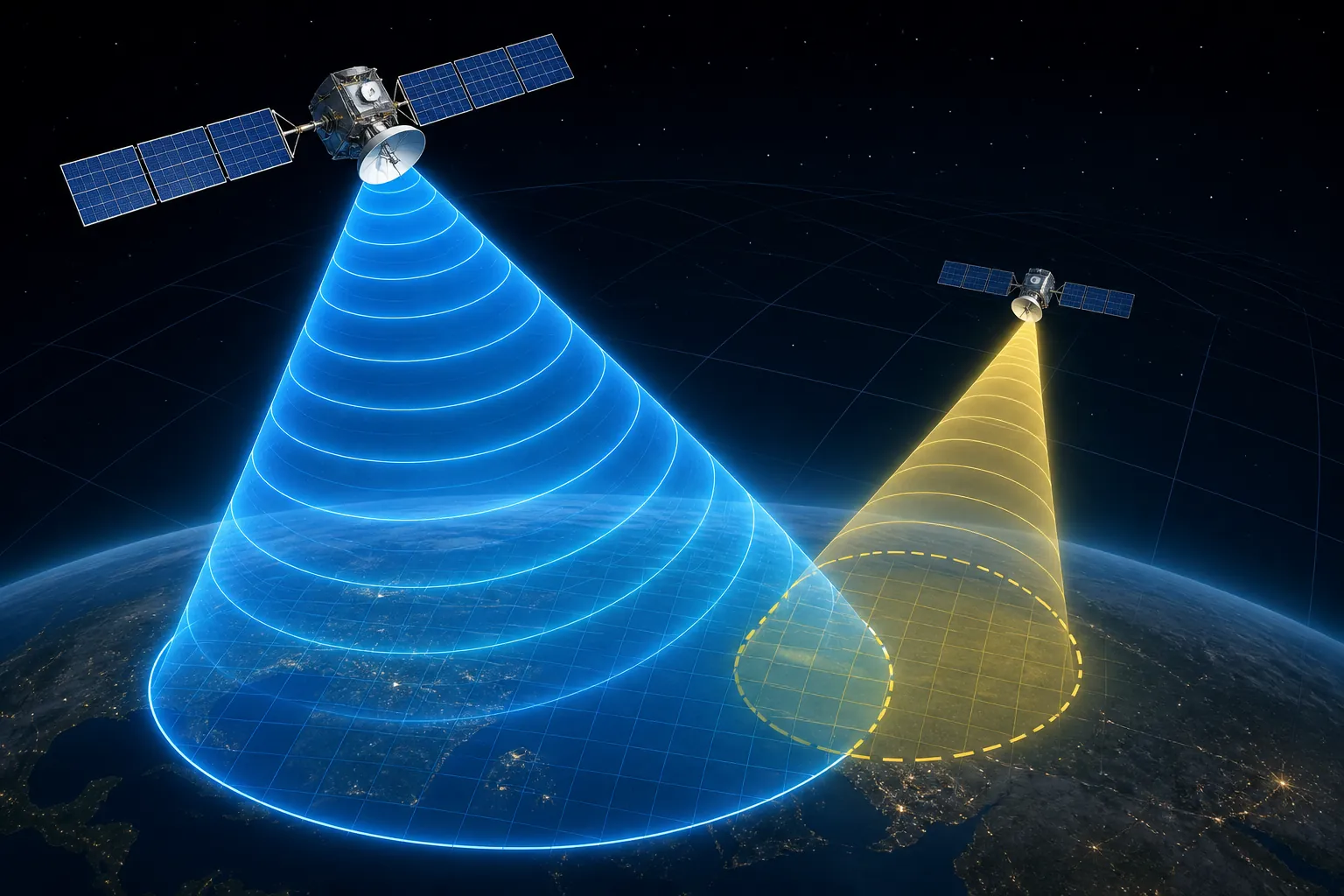
This is where loose approval language does the most damage. A granted satellite license may authorize deployment and operation only within specified technical and regulatory boundaries. It does not guarantee that the service can continue through an interference event, and it does not make a secondary SCS service equivalent to a primary terrestrial mobile service for service-level purposes.
Morgan Lewis’s June 2026 practitioner analysis usefully frames the private-law side of that problem: D2D agreements need to allocate gaps around regulatory approval, service availability, emergency obligations, interference, and responsibility across satellite and mobile-network partners.[6] That is not a substitute for the FCC record, but it is a useful reminder that the permission stack eventually lands in indemnities, suspension rights, representations, and customer-facing disclaimers.
Emergency Routing, Power, And Debris Rules Are Operating Constraints
The third layer is narrower than the spectrum and license layers, but it is not housekeeping. Interim 911 location-based routing rules can shape network architecture before a D2D business model is fully mature. If a service depends on satellite-to-phone connectivity in areas without terrestrial coverage, the question is not merely whether the handset connects. It is where emergency traffic is routed, what location information is available, and which party has promised performance it cannot independently control.
Power limits raise a different contract problem. The FCC’s DA-25-197 order granted SpaceX a conditional waiver for higher-power operations, creating a precedent Amazon may need to navigate if ordinary voice or data performance requires power levels beyond baseline limits.[7] The point is not that Amazon will receive the same treatment. It is that throughput claims may depend on technical authority that is conditional, precedent-sensitive, and reviewable.
Orbital-debris compliance also belongs in the operating layer. The FCC’s five-year deorbit rule is not a broad philosophical statement about space sustainability; it is a licensing condition that can affect design, replenishment, insurance, and end-of-life obligations. For the adjacent liability ecosystem, the same diligence file should keep debris attribution and reentry exposure distinct from spectrum authority. Those questions sit closer to satellite-operator liability and evidence than to headline approval status; related analysis on satellite reentry pollution liability and space debris attribution is useful precisely because it does not collapse those regimes into one permission.
Timing Pressure Does Not Cure A Missing Layer
Amazon’s satellite program already carries deployment pressure. Ars Technica reported in June 2026 that the FCC lifted a looming deployment deadline for Amazon’s LEO broadband constellation, with Chair Brendan Carr noting Amazon would fall roughly 1,000 satellites short of the milestone.[8] That fact is relevant because schedule pressure can affect commercial commitments. It does not answer the separate D2D questions: who controls the necessary spectrum, whether the new constellation application is granted, and what conditions attach to actual SCS operations.
A launch schedule may be commercially impressive and still legally incomplete. A transfer approval may solve spectrum control and still leave constellation conditions. A constellation grant may authorize satellites and still leave secondary-service interruption risk. A waiver may improve technical capability and still carry conditions that make the resulting service unsuitable for unqualified uptime promises.
How The Approval Stack Should Show Up In Agreements
A disciplined agreement does not need to recite the whole FCC docket history. It needs to allocate each regulatory dependency to the clause that will matter when the dependency fails, slips, or changes shape.
- Define the service by reference to granted authority, not merely to filed applications or announced network plans.
- Make the Amazon/Globalstar transfer a separate condition if the promised service depends on Globalstar-controlled spectrum.
- Treat SCS secondary status as operationally material, especially for availability, suspension, and interference provisions.
- Avoid service-level credits that assume continuous operation through harmful-interference events unless the agreement expressly allocates that risk.
- Separate emergency-routing obligations from ordinary coverage promises, because 911 handling can depend on location, routing, carrier integration, and interim FCC requirements.
- Draft orbital-debris and end-of-life compliance as licensing obligations with operational consequences, not as generic environmental boilerplate.
The clause work is not glamorous, but it is where the approval stack becomes enforceable. If spectrum control fails, the contract needs a different answer than if an SCS operation must stop because of harmful interference. If a power waiver is conditioned, the remedy should not look the same as a missed deployment milestone. If emergency routing rules require an architectural adjustment, the agreement should identify who bears cost, delay, and customer-notice obligations.
The Tracker Question
The useful answer is not a yes-or-no approval label. It is an obligations tracker: GN Docket No. 26-134 for spectrum-transfer status, SAT-LOA-20260601-00224 for constellation authority, and the SCS operating conditions for interference priority, emergency routing, power limits, and deorbit compliance.
Counsel should verify the live docket status before treating any layer as settled, keep spectrum-transfer risk separate from constellation-license risk, treat secondary status as a real operational limit, and avoid drafting service commitments as though all three layers mature at the same time.
References
- Amazon Seeks FCC Nod to Beam Satellite Coverage to Mobile Phones, Bloomberg, July 27, 2026
- Amazon files application for direct-to-device satellite constellation, SpaceNews, July 27, 2026
- DA-26-398, Federal Communications Commission, April 23, 2026
- FCC Kicks Off Review of Amazon/Globalstar Deal, Satellite Today, June 8, 2026
- Public-Interest Comments in GN Docket No. 26-134, Information Technology and Innovation Foundation, July 21, 2026
- Connecting the Dots (and the Satellites): Legal Considerations for Direct-to-Device Services, Morgan Lewis, June 2026
- DA-25-197, Federal Communications Commission
- FCC lifts looming deadline for Amazon Leo satellite broadband constellation, Ars Technica, June 2026
Related records
Tool profile
Browse tool evaluations →Governing regulation
Browse the obligations tracker →Preventive workflow
Browse verification workflows →
Report a correction or tip
Spotted an outdated figure, a misstated fact, or a ruling this case record should reflect? Public comments are disabled for this content given the professional cost of a misreported case outcome, penalty amount, or rule text — use the structured correction channel instead.
Report a correction or tip for this record →