
What Amazon Prime Air complaints can cities act on?
Residents and cities facing Amazon Prime Air overflights now have a documented complaint record — noise, altitude and frequency, camera privacy, and package damage — but FAA and Airline Deregulation Act preemption block the most direct local responses. The levers that survive are narrower: FAA environmental review and public comment, hub zoning and permit conditions, HOA covenants and account opt-outs, and the official FAA and Amazon filing channels.
- Jurisdiction
- United States
- Court
- U.S. federal courts
- AI tool named
- Amazon Prime Air
- Ruling date
- Aug 5, 2026
- Source document
- View primary court order ↗
- Last verified
- Aug 5, 2026
Lex Machina Review is an independent risk-tracking and reference resource. Nothing on this site is legal advice, and using it does not create an attorney-client relationship. Every record is reviewed against primary sources but may not reflect the most current status of a matter — always verify directly against the cited court order, rule text, or a licensed attorney before relying on it.
Companion explanation — secondary to the source document above
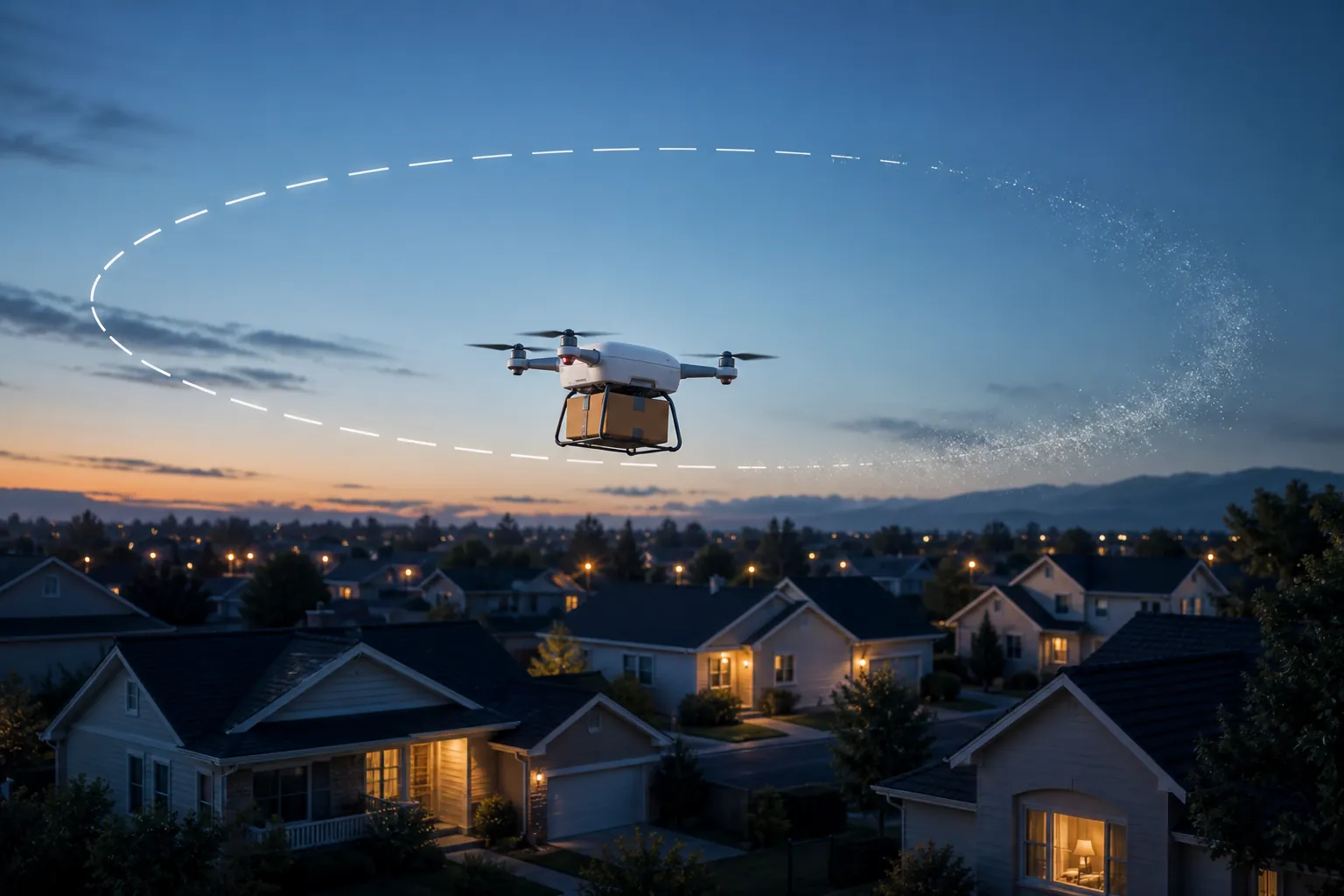
The Richardson problem is the hard version of Amazon Prime Air drone-delivery complaints and regulation: a resident brought a log, not just a mood. At a February 2, 2026 council meeting, she said she had counted 122 Prime Air overflights over her home during one 10-hour day; Richardson’s city manager also confirmed “dozens” of formal complaints after Amazon’s December 2025 launch there.[1] By March, Amazon had changed operations: average ascent altitude was raised to 225 feet, a church overflight path was avoided, and routes were shifted toward commercial areas.[2]
That sequence matters because it shows both power and limit. Complaints can become evidence. Evidence can produce operational changes. But the move from “residents are being repeatedly overflown” to “the city should ban the flight path” runs straight into federal aviation law. This article is not legal advice; it is a public-record analysis of reported Prime Air complaints and U.S. regulatory constraints as of Q3 2026.
The complaint record is real, but not all complaints do the same legal work
The public complaint record around Prime Air clusters into four recurring categories: noise, repeated or low-feeling overflights, privacy concerns from onboard sensing, and damaged packages. Those categories should not be treated as equally developed. Noise and frequency have the strongest municipal record because they show up in council meetings, city-manager statements, local measurements, FAA-facing requests, and operational responses. Privacy concerns are important, but the available material is more often resident- or advocacy-framed than independently audited. Package damage is concrete for customers, but it usually points toward product design, customer service, or safety reporting rather than broad municipal control over routes.
| Complaint category | What the public record shows | Most plausible regulatory or legal channel |
|---|---|---|
| Noise | Repeated reports of audible drones in Richardson, College Station, and Ferndale; one College Station measurement was reported at 47–61 dB. | FAA noise inquiries, FAA environmental review when available, operational pressure through documented complaints; local aircraft-noise ordinances are legally vulnerable. |
| Altitude and frequency | Richardson resident log of 122 overflights in a 10-hour day; later Amazon changes to ascent altitude and routing. | Complaint logs, FAA/public-comment record, hub siting and permit leverage; direct route control by ordinance is weak. |
| Privacy | Residents and advocacy groups raise concerns about cameras and sensing over homes. | Potentially state/local privacy law depending on facts; not a substitute for airspace control. |
| Package damage or safety/property incidents | Customers have reported cracked or leaking deliveries after packages were dropped from roughly 10 feet. | Amazon customer-service channel for delivery issues; FAA hotline for safety or property-damage concerns. |
Noise and frequency are carrying the municipal record
Noise is the complaint that keeps surviving the meeting. It is immediate, repeatable, and difficult to resolve with customer-service language. A single overflight may be tolerable; a day of repeated passes over the same roof is a different civic fact. That is why the Richardson log has more force than a general statement that drones are annoying. It tied a count to a place, a time window, and a public meeting, and it was followed by a documented change in Amazon’s operation.[1][2]
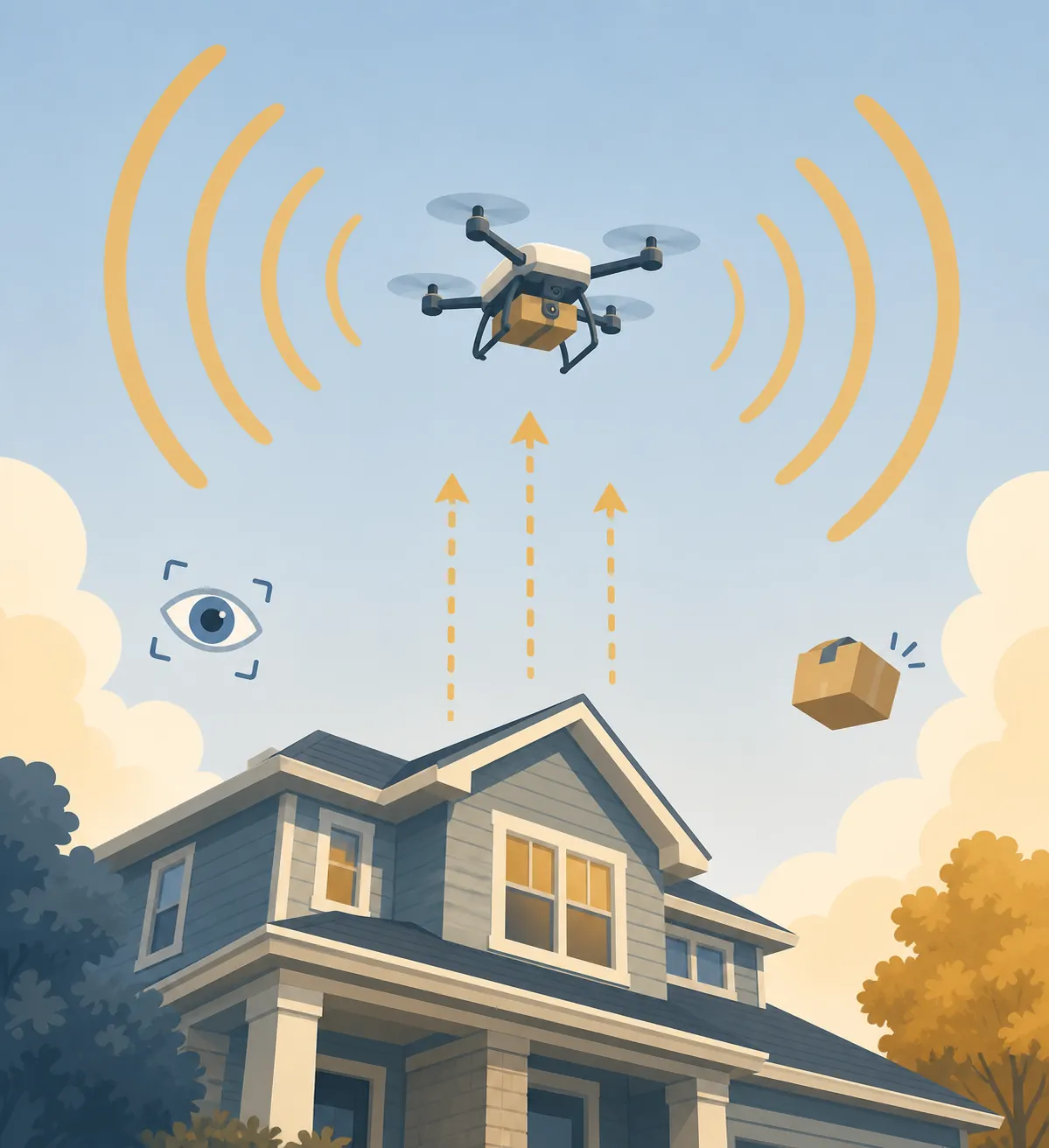
College Station supplies the cleaner measurement point. In 2024, the city manager reportedly measured one Prime Air drone between 47 and 61 dB, in coverage that described some residents comparing the sound to a “giant hive of bees.” The mayor wrote to the FAA asking for a delay in Amazon’s expansion.[3] Amazon later exited College Station on August 31, 2025, citing lease terms, not a concession that noise complaints had legally defeated the program.[4] The distinction is not cosmetic. A measured nuisance may justify pressure, comment, and scrutiny; it does not automatically prove causation for a later business decision.
Ferndale, Michigan, shows the quieter but still contested 2026 version. Axios reported roughly five documented complaints as of July 2026. Amazon told Axios that fewer than 1% of Prime Air customer-service inquiries in 2026 related to noise and that drones are audible for about 30 seconds per pass.[5] Those figures may be useful to a council, but they should stay in their lane: they are Amazon’s customer-service and audibility framing, not an independent noise study, and they do not answer whether one household is receiving a disproportionate share of passes.
The frequency issue is often where the engineering answer and the resident answer pass each other in the hallway. If Amazon raises ascent altitude, shifts a path toward a commercial corridor, or avoids a church, that is a meaningful operational response.[2] It still does not mean the person under the remaining path is unreasonable for keeping a log. In municipal terms, the useful record is not “drones are loud.” It is date, time, address or block, approximate duration, number of passes, observable flight pattern, and whether the same condition repeats.
Privacy and package complaints matter, but they point to different levers
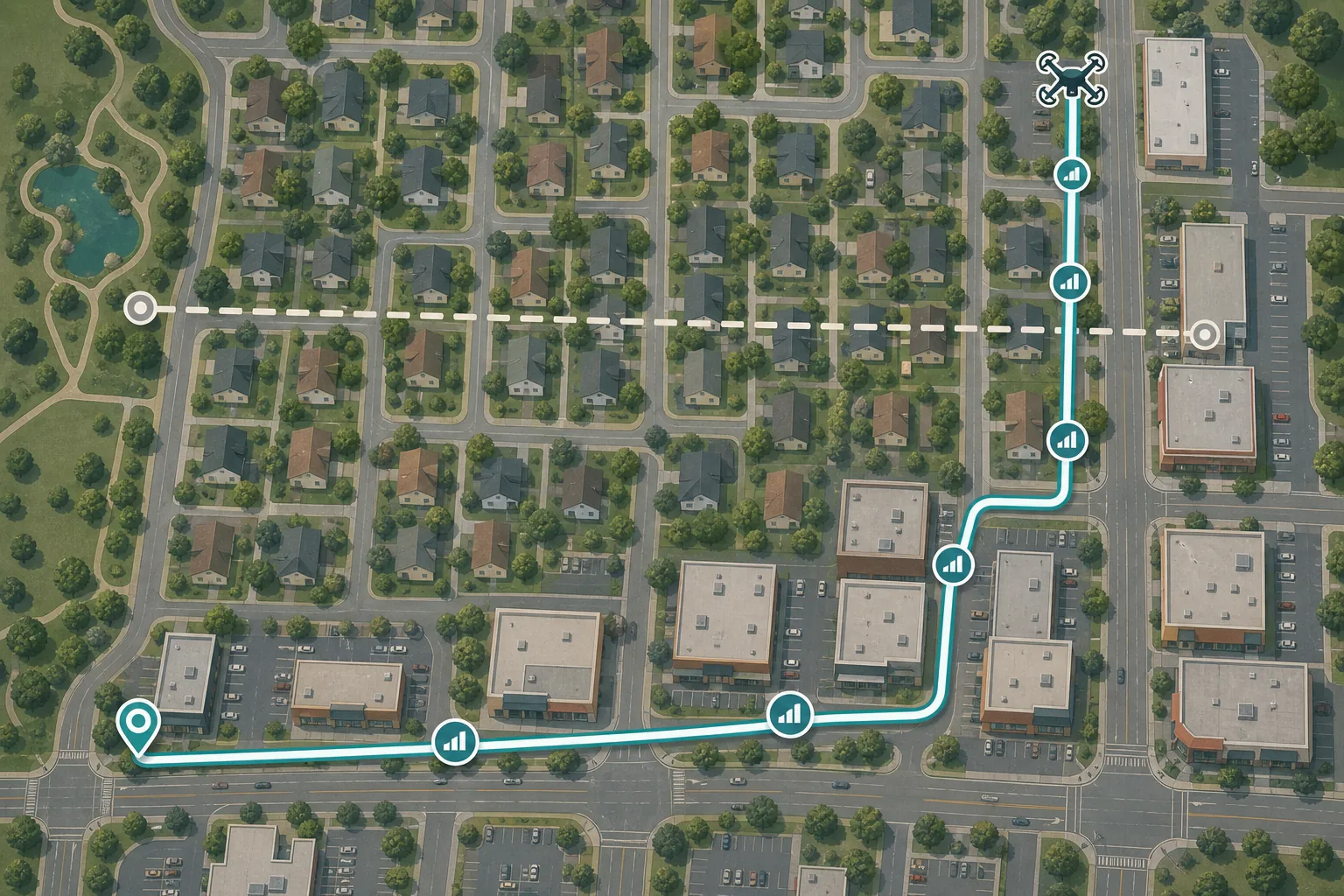
Privacy complaints deserve attention without being overloaded. Residents are understandably uneasy about aircraft with cameras or sensors passing over yards and windows. But the available public material does not support treating every privacy concern as a proven surveillance violation. Some of the sharper privacy claims in the public debate come through resident or advocacy channels, not independent technical audits. That does not make them worthless; it means a city attorney should ask what was observed, what data is allegedly collected, what policy governs it, and which state or local privacy law is actually implicated.
Package damage sits even farther from the airspace fight. Customers have reported packages dropped from roughly 10 feet arriving cracked or leaking, while Amazon has framed the hover-drop design as a way to reduce rotor risk by avoiding closer contact with people and property.[6] A damaged bottle or broken item can be a valid complaint, and a falling-object or property-damage incident may become a safety report. But ordinary delivery damage does not give a city the power to draw a local no-fly circle over a subdivision.
The first instinct — ban the flights — is the weakest legal tool
When residents fill a chamber, the ordinance everyone wants is usually the one a city is least likely to defend: no drone deliveries over this neighborhood, no flights below this height, no routes over homes, no noise above this level. The difficulty is not that complaints are irrelevant. The difficulty is that airspace, routes, and aircraft noise sit close to federal authority.
The Colorado Municipal League’s June 2026 local-government analysis puts the problem bluntly: local governments generally cannot ban drone flights, create local no-fly zones, or regulate aircraft noise, while some regulation of takeoff and landing locations, zoning, land use, privacy, and registration may survive.[7] That is a narrower world than many residents expect, but it is not the same as no local role at all.
Noise is the most tempting place to overstate certainty. The old airport-noise line of cases favors federal control, and local aircraft-noise ordinances are hazardous drafting territory. But the drone question is not answered by pretending every municipal concern is automatically erased. A 2024 SMU Journal of Air Law and Commerce article describes the doctrine more carefully: noise precedent favors federal regulation, while federal courts have not found the entire field of drone regulation preempted.[8] That leaves room for local land-use work, privacy enforcement, and siting conditions, but not much room for a city-written flight manual.
The Airline Deregulation Act adds another layer. Prime Air operations are commonly analyzed through the Part 135 air-carrier frame, and the ADA preempts state or local laws related to a carrier’s prices, routes, or services.[9] That doctrine is not unique to drones; for readers tracking how broadly ADA preemption can cut into local or state theories, the site’s prior discussion of Airline Deregulation Act preemption is a useful companion. In the Prime Air setting, it means a local rule that functions as route control or service restriction is likely to draw a preemption challenge even if it is dressed as a neighborhood protection measure.
Where cities still have leverage
The workable municipal question is not “How do we regulate the drone in flight?” It is “Which parts of the operation still touch land use, permitting, documented public comment, and official safety channels?” That is where councils and staff can do useful work without writing an ordinance that invites a preemption letter before the ink dries.
FAA review and public comment
When FAA environmental review or other FAA public-comment processes are available, resident logs become more than council-room testimony. They can be organized into an agency-facing record: frequency by address or block, time of day, observable routing, duration of audibility, and any safety or property incident. A city does not need to claim control of airspace to say that the federal reviewer should consider repeated overflights, cumulative noise exposure, or operational alternatives.
Hub zoning, special-use permits, and launch-site conditions
The ground is where local law has more footing. Drone delivery needs facilities: launch and recovery areas, charging, package staging, vehicle access, lighting, hours of operation, employee activity, and sometimes a special-use or zoning approval. A city may be on firmer ground regulating those land-use impacts than attempting to dictate the aircraft’s route after takeoff. Conditions should be tied to the site: setbacks, screening, traffic circulation, hours for ground operations, emergency access, complaint reporting, and compliance documentation.
That distinction can feel unsatisfying to a resident whose problem is overhead. But it is the difference between a condition that may survive and a flight restriction that may not. If a proposed hub is the source of concentrated neighborhood effects, the permitting record should make those effects visible before approval, not after residents start counting passes from the porch.
HOA covenants and account-level opt-outs
Private-law tools can sometimes reach places a city ordinance cannot. An HOA may have covenants governing delivery locations, common areas, roof access, nuisance, or use of private property. Those tools still need to be read carefully; an HOA cannot simply assume it controls navigable airspace. But it may have more practical influence over whether residents authorize deliveries, where packages may be received, and what the association will permit on common property.
At the customer level, account settings and delivery preferences may be more immediate than a public-law fight. Residents who do not want to receive drone delivery should use the company’s available account or customer-service channels and keep a record of the request. For noncustomers who are affected by overflights, the better record is still a dated complaint, not an assumption that opting out of service will remove all nearby aircraft activity.
Where to file, and how to separate the complaint
Richardson and Ferndale both point residents toward a divided complaint path. Noise complaints are routed to FAA noise inquiries and Amazon; Richardson also lists Amazon’s 1-888-280-4331 number and an online form using “Amazon Drone Delivery.” Safety or property-damage complaints are routed to the FAA hotline at hotline.faa.gov.[10][11] That division is worth preserving in resident records. A noise complaint, a near-contact safety concern, a damaged package, and a privacy concern should not be folded into one general “drone problem” if the goal is official review.
- For noise and repeated overflights: record date, time, location, number of passes, approximate duration of audibility, and whether the route appears recurring.
- For safety or property damage: preserve photos, video if available, the damaged item or area, delivery information, and the exact time of the incident.
- For privacy concerns: write down what was observed, where the aircraft was, what feature or behavior caused concern, and whether the concern involves a specific window, yard, common area, or repeated pattern.
- For customer-service issues: separate broken or leaking packages from broader neighborhood overflight objections, because the company and regulators will not process them the same way.
A city can help by publishing a plain routing page, as Richardson and Ferndale have done, and by converting resident reports into a staff-maintained record. That record should distinguish source basis: resident log, city complaint, Amazon response, FAA filing, council testimony, or observed operational change. The discipline is similar to any good risk-digest record: jurisdiction, date, source, action taken, and last verification.
The Richardson lesson is narrower than residents may want, and more useful than Amazon may suggest
Richardson does not prove that every complaint will force a reroute. It also does not prove that Amazon’s customer-service percentages settle the public question. What it shows is more practical: a dated, attributable, repeatable record can move an operator, especially when it lands in an official process and points to a fix that does not require the city to seize control of airspace.
That is the safer lane for cities. Turn resident records into FAA comments where review is open. Put serious pressure on hub siting, land-use approvals, and permit conditions. Keep HOA and account-level tools separate from public regulation. File noise, safety, property, privacy, and customer-service issues through the channels built for each one. The ordinance that directly legislates the flight path may feel like the strongest response in the room; it is often the one most likely to fail first.
References
- Richardson residents sick of drone highway above homes, NBC 5 Dallas-Fort Worth, link
- Amazon Drone Delivery Richardson Texas Changes, DRONELIFE, Apr. 7, 2026, link
- Amazon Prime Air delivery drones are too loud, Texas, Business Insider, Aug. 2024, link
- Amazon Shifts Drone Delivery Strategy to New U.S. Cities, DRONELIFE, Sep. 1, 2025, link
- Amazon drone noise Ferndale response, Axios Detroit, Jul. 23, 2026, link
- Amazon’s Delivery Drones Are Dropping Packages From 10 Feet, Customers Say, ExtremeTech, link
- Legal Corner: Limitations on regulating drones at the local level, Colorado Municipal League, June 2026, link
- Preempting the Buzz, SMU Journal of Air Law and Commerce, 2024, link
- Drone Delivery, J. Rupprecht Law, link
- Drone Delivery, City of Richardson, link
- Amazon Drone Delivery Information, City of Ferndale, link
Related records
Tool profile
How Meta's AI Spending Reshapes Law Firm ProfitabilityGoverning regulation
Browse the obligations tracker →Preventive workflow
Browse verification workflows →
Report a correction or tip
Spotted an outdated figure, a misstated fact, or a ruling this case record should reflect? Public comments are disabled for this content given the professional cost of a misreported case outcome, penalty amount, or rule text — use the structured correction channel instead.
Report a correction or tip for this record →