
Which Brij Bhushan Sharan Singh case ended in acquittal?
The Brij Bhushan Sharan Singh matter produced two distinct outcomes that share one 'acquittal' label: a May 26, 2025 POCSO closure report acceptance, which is not a trial verdict, and an August 3, 2026 trial acquittal. This workflow shows how to verify each docket from primary sources, and what remains unconfirmed while the reasoned order is unpublished and the appeal window is open.
- Jurisdiction
- India (Delhi)
- Court
- Rouse Avenue Courts, Delhi
- Judge
- ACJM Ashwini Panwar
- AI tool named
- No AI tool implicated
- Ruling date
- Aug 3, 2026
- Source document
- View primary court order ↗
- Last verified
- Aug 3, 2026
Lex Machina Review is an independent risk-tracking and reference resource. Nothing on this site is legal advice, and using it does not create an attorney-client relationship. Every record is reviewed against primary sources but may not reflect the most current status of a matter — always verify directly against the cited court order, rule text, or a licensed attorney before relying on it.
Companion explanation — secondary to the source document above
Short answer: the Brij Bhushan Sharan Singh matter has two separate criminal tracks that should not share the same case-status label. The POCSO track at Patiala House Court ended on May 26, 2025 when ASJ Gomti Manocha accepted the Delhi Police cancellation report; that is a closure-report acceptance, not a trial acquittal.[1] The sexual-harassment trial at Rouse Avenue Courts ended on August 3, 2026 with ACJM Ashwini Panwar acquitting Singh and co-accused Vinod Tomar; that is the proceeding where “acquittal” is procedurally apt, subject to the important caveat that the reasoned order was not yet publicly available in the sources reviewed.[2]
That distinction is not cosmetic. A cancellation report accepted before trial, after the investigating agency says it does not find sufficient material to proceed, is not the same procedural event as a court trying charges and returning a verdict of acquittal. If the phrase “Brij Bhushan Sharan Singh acquittal case” is being used in a memo, pleading, explainer, or research note, the first check is not whether the public shorthand sounds familiar. It is: which court, which date, which charges, and which procedural act?
| Proceeding | Court and date | What happened | Status label that the record supports |
|---|---|---|---|
| POCSO track involving the minor complainant | Patiala House Court, May 26, 2025 | Delhi Police cancellation/closure report accepted | Closure-report acceptance; not an acquittal |
| Sexual-harassment trial involving women wrestlers | Rouse Avenue Courts, August 3, 2026 | Singh and Vinod Tomar acquitted after trial | Trial acquittal, with reasoning still to be checked against the published order |
The Patiala House POCSO entry: “Cancellation accepted” is doing the work
The most common semantic trap sits in the POCSO proceeding. LawBeat reported that ASJ Gomti Manocha of Patiala House Court accepted the Delhi Police closure report on May 26, 2025, with the case status showing “Cancellation accepted.” The closure report had been filed on June 15, 2023. The reporting also states that the minor complainant withdrew allegations in an in-camera proceeding on August 1, 2023, and that police found no corroborative evidence.[1]
That is a complete enough procedural description for most status checks, but it is not an acquittal. There was no trial verdict in that track. There was no finding after appreciation of trial evidence that the accused was not guilty of charged offenses. The court accepted a police cancellation report. The safe citation form is therefore: the POCSO proceeding was closed after the cancellation report was accepted by the Patiala House Court on May 26, 2025.
This matters because at least one public headline characterized the POCSO closure as an “acquittal” in a “POSCO case.”[3] That wording is the kind of search-result residue that later gets copied into a timeline and then into a legal summary. Once copied, it looks reassuringly specific because it contains a familiar name and a statutory label. It is still the wrong procedural label for the Patiala House event.
There is a second source of confusion: complainant counts. The POCSO track concerned the minor complainant. The later Rouse Avenue trial concerned charges framed on the basis of five complainants, after Singh was discharged as to the sixth complainant at the charge stage.[2] A “six wrestlers” summary may be describing the broader allegation history or FIR-era reporting, not the final shape of the trial. Before using a number, tie it to the stage being described.
The Rouse Avenue trial: this is the acquittal, but the reasoning still needs the order
The August 3, 2026 event is different. Bar and Bench reported that ACJM Ashwini Panwar at Rouse Avenue Courts acquitted Brij Bhushan Sharan Singh and Vinod Tomar in the sexual-harassment case filed by women wrestlers.[2] The Hindu also reported the acquittal and identified the charges framed earlier against Singh under IPC Sections 354, 354A, 354D, and 506(1), with Tomar charged under Section 506(1).[4]
On the charge-stage posture, the important date is May 10, 2024. The court framed charges against Singh under provisions including assault or criminal force to woman with intent to outrage modesty, sexual harassment, stalking, and criminal intimidation. It discharged him as to one complainant and proceeded on five complainants. Tomar, the former WFI assistant secretary, faced the criminal-intimidation charge.[2][4]
So, yes: if the question is whether there was a Brij Bhushan Sharan Singh acquittal in 2026, the answer is yes, in the Rouse Avenue sexual-harassment trial. But a careful status note should not yet recite the court’s reasoning as if the written judgment has been checked. The sources reviewed reported the outcome and some counsel-relayed explanations; they did not provide a published, reasoned district-court order available for line-by-line verification as of August 3, 2026.
That affects phrasing. “The court acquitted Singh and Tomar” is supported by the reporting. “The court held X because of Y” requires the reasoned order, unless the sentence is expressly attributed to counsel or to a news report’s account of what counsel said. The difference is not academic. A disposition can be verified before its reasoning is independently usable.
Current verification status
| Item to verify | Current status | How to phrase it |
|---|---|---|
| POCSO proceeding | Reported docket/status language: “Cancellation accepted” at Patiala House Court on May 26, 2025 | The POCSO track ended with acceptance of a cancellation report |
| Whether the POCSO track was an acquittal | Not supported by the procedural act reported | Do not call it an acquittal |
| Rouse Avenue sexual-harassment trial outcome | Reported acquittal of Singh and Tomar on August 3, 2026 | The Rouse Avenue trial ended in acquittal |
| Reasons for the August 2026 acquittal | Not fully verifiable from a published reasoned order in the materials reviewed | Attribute reported reasoning, or wait for the order |
| Appeal posture | Public statements indicated possible appeal or further action; no Delhi High Court filing was confirmed in the reviewed sources | Caveat finality until any appeal position is confirmed |
The appeal point is open enough to require a footnote in any serious use. The Indian Express reported that public prosecutor Manish Rawat said appropriate action would be considered after the judgment was received, and that Vinesh Phogat said the fight would continue and spoke of appeal.[5] Those statements are not the same as a filed appeal. A docket statement should therefore say that the trial court acquitted the accused, while any appellate challenge was not confirmed in the reviewed material as of the last verification.
A primary-source workflow for checking the case status
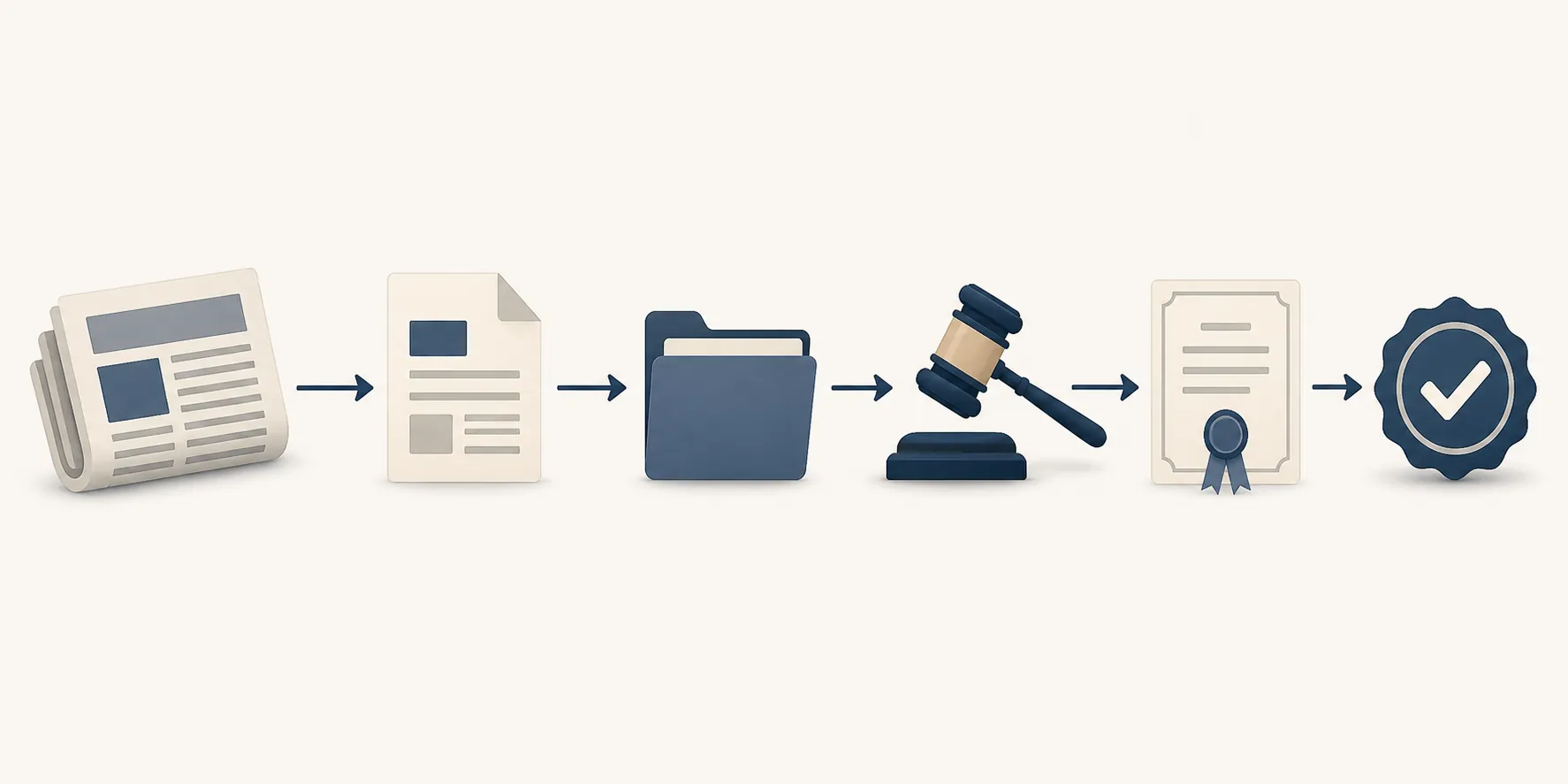
For this case, the workflow should start with separation, not search volume. A headline search will find both the POCSO closure and the Rouse Avenue acquittal under the same name. The verification task is to keep the tracks apart until each has its own court, case type, charge set, and disposition.
- Start with the court and date. Patiala House Court on May 26, 2025 is the POCSO cancellation-report acceptance. Rouse Avenue Courts on August 3, 2026 is the sexual-harassment trial acquittal.
- Check the procedural verb. “Cancellation accepted,” “closure report accepted,” and “acquitted after trial” are not interchangeable. Preserve the verb used by the docket or order.
- Tie complainant counts to the stage. The POCSO track concerned the minor complainant; the Rouse Avenue trial proceeded on charges involving five complainants after discharge as to the sixth at the charge stage.
- Confirm the charge set from the chargesheet or charge order where available. For the Rouse Avenue trial, the reported charge-stage sections were IPC 354, 354A, 354D, and 506(1) for Singh, and 506(1) for Tomar.
- Look for the reasoned order on the Delhi district-court system once released. Until then, separate the fact of acquittal from the court’s reasons.
- Record a last-verified date. For a status note prepared on August 3, 2026, say that the reasoned order and any appeal filing had not been confirmed in the reviewed sources as of that date.
An internal case note can be blunt. For example: “Do not cite the May 26, 2025 POCSO closure as an acquittal. The reported Patiala House status is acceptance of the cancellation report. The acquittal is the separate August 3, 2026 Rouse Avenue trial outcome.” That sentence prevents most of the downstream damage.
For a fuller case artifact on the August 2026 trial outcome, see the companion record on the Brij Bhushan Sharan Singh acquittal. The present workflow is narrower: it is meant to stop a POCSO closure and a trial verdict from being collapsed into one status line.
Why this is an AI-risk problem, even if no AI error is shown here
There is no basis in the reviewed materials to say that an AI system caused the public confusion in this matter. The risk is more practical: multi-docket, fast-moving case-status checks are exactly the kind of query where both rushed humans and AI-assisted tools can compress distinct procedural events into one plausible-sounding answer.
Indian courts had already become less tolerant of unreliable AI-assisted legal material by 2025 and 2026. The Supreme Court Observer summarized the Supreme Court’s July 2, 2026 decision in Pooja Ramesh Singh v. Jammu and Kashmir Bank Ltd., where the Court addressed reliance on AI-generated fake precedents and took a zero-tolerance approach to fabricated legal authorities.[6] MediaNama separately collected ten Indian cases involving AI hallucination issues in courts.[7]
The same caution applies to case-status work. Stanford HAI and RegLab reported benchmark results showing that retrieval-augmented legal AI tools hallucinated between 17% and 34% of the time, depending on the system and query conditions.[8] That finding does not say anything about this case specifically. It does make the professional habit clear: use AI or search summaries as pointers, then verify the docket, order, and procedural verb before citing the result.
For Indian litigation-risk context on AI citation enforcement, the school-van liability risk record tracks the same underlying discipline: a legal proposition is only as usable as the source that supports it.
Safe wording as of August 3, 2026
A careful status paragraph can read:
“The POCSO proceeding involving Brij Bhushan Sharan Singh was closed after the Patiala House Court accepted the Delhi Police cancellation report on May 26, 2025. Separately, on August 3, 2026, the Rouse Avenue Court acquitted Singh and Vinod Tomar in the sexual-harassment trial involving women wrestlers. The reasoned acquittal order was not available in the reviewed public sources as of August 3, 2026, and any appeal position should be checked before treating the trial outcome as final.”
That is the line the present record supports. The May 2025 POCSO event should be described as closure-report acceptance. The August 2026 Rouse Avenue event may be described as a trial acquittal. Statements about the court’s reasoning or the finality of the acquittal need the published order and a fresh appeal check.
References
- POCSO Case: Delhi Court Accepts Closure Report Against Ex-WFI Chief Brij Bhushan Singh — LawBeat — link
- Delhi Court Acquits Brij Bhushan Sharan Singh In Sexual Harassment Case Filed By Women Wrestlers — Bar and Bench — link
- Whoever conspired against me was destroyed: Brij Bhushan on his acquittal in POSCO case — The Statesman — link
- Brij Bhushan Sharan Singh, Vinod Tomar acquitted in women wrestler sexual harassment case — The Hindu — link
- Vinesh Phogat reaction Brij Bhushan acquittal appeal WFI court — Indian Express — link
- Reliance on AI-generated fake precedents — Supreme Court Observer — link
- 10 Cases AI Hallucination Cases In Indian Courts — MediaNama — link
- AI on Trial: Legal Models Hallucinate in 1 out of 6 or More Benchmarking Queries — Stanford HAI — link
Related records
Tool profile
How Meta's AI Spending Reshapes Law Firm ProfitabilityGoverning regulation
Browse the obligations tracker →Preventive workflow
Browse verification workflows →
Report a correction or tip
Spotted an outdated figure, a misstated fact, or a ruling this case record should reflect? Public comments are disabled for this content given the professional cost of a misreported case outcome, penalty amount, or rule text — use the structured correction channel instead.
Report a correction or tip for this record →