
Human rights limits on Ceuta and Melilla border rejections
The June 2026 Supreme Court ruling narrowed Ceuta and Melilla's special border-rejection regime to physical border elements, while sea interceptions and child migrants remain governed by separate human-rights obligations. Practitioners get the full legal-instrument stack, verified enforcement data, and the compliance points where exposure remains.
- Jurisdiction
- Spain
- Court
- Spanish Supreme Court
- Judge
- María Luisa Balaguer Callejón
- AI tool named
- No AI tool implicated
- Ruling date
- Jun 29, 2026
- Source document
- View primary court order ↗
- Last verified
- Aug 3, 2026
Lex Machina Review is an independent risk-tracking and reference resource. Nothing on this site is legal advice, and using it does not create an attorney-client relationship. Every record is reviewed against primary sources but may not reflect the most current status of a matter — always verify directly against the cited court order, rule text, or a licensed attorney before relying on it.
Companion explanation — secondary to the source document above
Verification frame: this record is legal information, not legal advice. Legal-background reviewer: to be assigned before publication. Last verified: August 3, 2026, 00:00 UTC. The June 2026 Supreme Court layer should be checked against official Spanish court databases before publication because the “STS 814/2026” label is supplied in secondary legal analysis, while the official Judicial Power notice confirms the operative point: Spanish law does not permit the special Ceuta and Melilla “hot return” procedure for migrants attempting to enter by swimming.
The practical implication is narrow and important. After the Supreme Court’s 29 June 2026 ruling, the special Ceuta and Melilla border-rejection regime is tied to physical border containment elements. A person intercepted in the water is not simply another version of a person on the fence. Nor does a drone, thermal camera, sensor, or other surveillance device turn the sea into the statutory fence. The official court notice states that the law does not allow “devoluciones en caliente” of migrants who seek to enter Ceuta or Melilla by swimming; EJIL: Talk identifies the ruling as STS 814/2026 and explains the distinction between physical “containment elements” and surveillance elements on the sea side.[1][2]
That is what changed. What did not change is the rest of the stack. The 2015 statute still exists. The Constitutional Court’s approval in STC 172/2020 still matters. The ECtHR Grand Chamber’s judgment in N.D. and N.T. v. Spain still matters, but only for what it actually decided. And the UN Committee on the Rights of the Child’s D.D. v. Spain views still stand for the child-protection layer that Spain has not legislatively absorbed. Anyone treating “pushback” as one undifferentiated word is likely to miss the procedure that should have been triggered.

The immediate hinge: physical containment, not surveillance
The June 2026 Supreme Court ruling enters the record because it answers the point most likely to be blurred in operational language. The special Ceuta and Melilla regime is not a portable summary-return power that follows every detection of an irregular entrant. It attaches to the statutory border setting: the physical line and the physical elements built to contain unlawful entry.
The distinction matters on the sea side of the enclaves. If a person is swimming toward Ceuta, the officer’s power does not come from the same clause used at the fence. If a person is detected by a drone or thermal camera, the device may help locate the person, but it is not itself the “containment element” the 2015 provision contemplated. EJIL: Talk notes that the Supreme Court left some room, in obiter, for physical structures at sea to raise harder questions; that is precisely the kind of point that must be checked against the full judgment text before anyone builds an operational protocol around it.[2]
| Situation | Current legal consequence |
|---|---|
| Person at or over a physical border containment element in Ceuta or Melilla | Potentially within the 2015 special rejection regime, but only if the safeguards required by STC 172/2020 are observed. |
| Person entering or attempting to enter by swimming | Outside the special Ceuta/Melilla hot-return regime after the June 2026 Supreme Court ruling; ordinary removal, protection, asylum, and non-refoulement rules must be tested. |
| Person detected by drone, thermal camera, sensor, or similar surveillance tool | Detection does not itself create the statutory physical-border category identified by the Supreme Court. |
| Unaccompanied child or other person in a vulnerability category | Requires a different procedure; the child-rights and vulnerability-screening duties cannot be displaced by the fence regime. |
For a practitioner, the first question is therefore almost physical: where is the body? At the fence, in the water, before a physical obstacle, after a surveillance alert, or in a child-protection category? Only after that question is answered does the 2015 provision even become the right instrument to read.
The 2015 statute legalized a special rejection regime, not a general exemption
The domestic starting point is the Tenth Additional Provision added by Organic Law 4/2015 to Spain’s Aliens Law framework. It created a special regime for rejecting foreigners detected at the Ceuta and Melilla territorial delimitation while attempting to overcome the border containment elements, and it required that those rejections be carried out in accordance with international human-rights and international-protection standards.[3]
That statutory design explains why the June 2026 ruling is not a side note. If the statutory trigger is the attempt to overcome border containment elements, then an attempt to enter by sea is not automatically captured because it is administratively inconvenient. One cannot cure a location problem by relabeling the person as part of the same border phenomenon.
The 2015 legalization also did not erase the ordinary consequences of Spanish, EU, and international protection law. It gave the state a specific rejection mechanism at the enclaves. It did not abolish asylum access, child-protection duties, non-refoulement, or the need to identify vulnerability. That boundary is not rhetorical; it is where later cases do their work.
STC 172/2020 upheld the regime with conditions that have to be used
The Spanish Constitutional Court did not strike down the Tenth Additional Provision in STC 172/2020. That is the part often quoted. The more useful part is the interpretive price of that approval. The Court read the provision as constitutional only within a frame that keeps it tied to the Ceuta and Melilla border setting and subject to human-rights guarantees, including effective judicial control, legal assistance, and attention to especially vulnerable persons.[3]
Those conditions are not decorative. If an operational return leaves no realistic route to identify a protection claim, no opportunity for legal assistance, and no screening for a child or other vulnerable person, the return is no longer being defended on the version of the statute the Constitutional Court accepted. It is being defended on a broader version the Court did not bless.
The dissent by Justice María Luisa Balaguer Callejón is worth keeping in the file because it pinpoints the discomfort inside the constitutional settlement. The dissent challenged the majority’s willingness to save the provision by interpretation and warned against a regime that could operate without the individualized guarantees normally attached to removal and protection decisions.[3]
STC 13/2021 sits in the same constitutional line rather than supplying a clean new permission. It matters because it confirms that the 2020 reading is the domestic constitutional frame through which the special regime must be applied, not merely a commentary appended to the judgment.[4]
That domestic frame is why the existing Ceuta border-law records should be kept separate. The site’s earlier piece on the Ceuta asylum ruling behind the Morocco border crisis and its map of Ceuta’s three border and asylum regimes help with the domestic taxonomy. This record adds the Strasbourg, Geneva, constitutional, and enforcement-data layers that become decisive when a shortcut is defended after the fact.
N.D. and N.T. was a fence case, not a sea-interception license
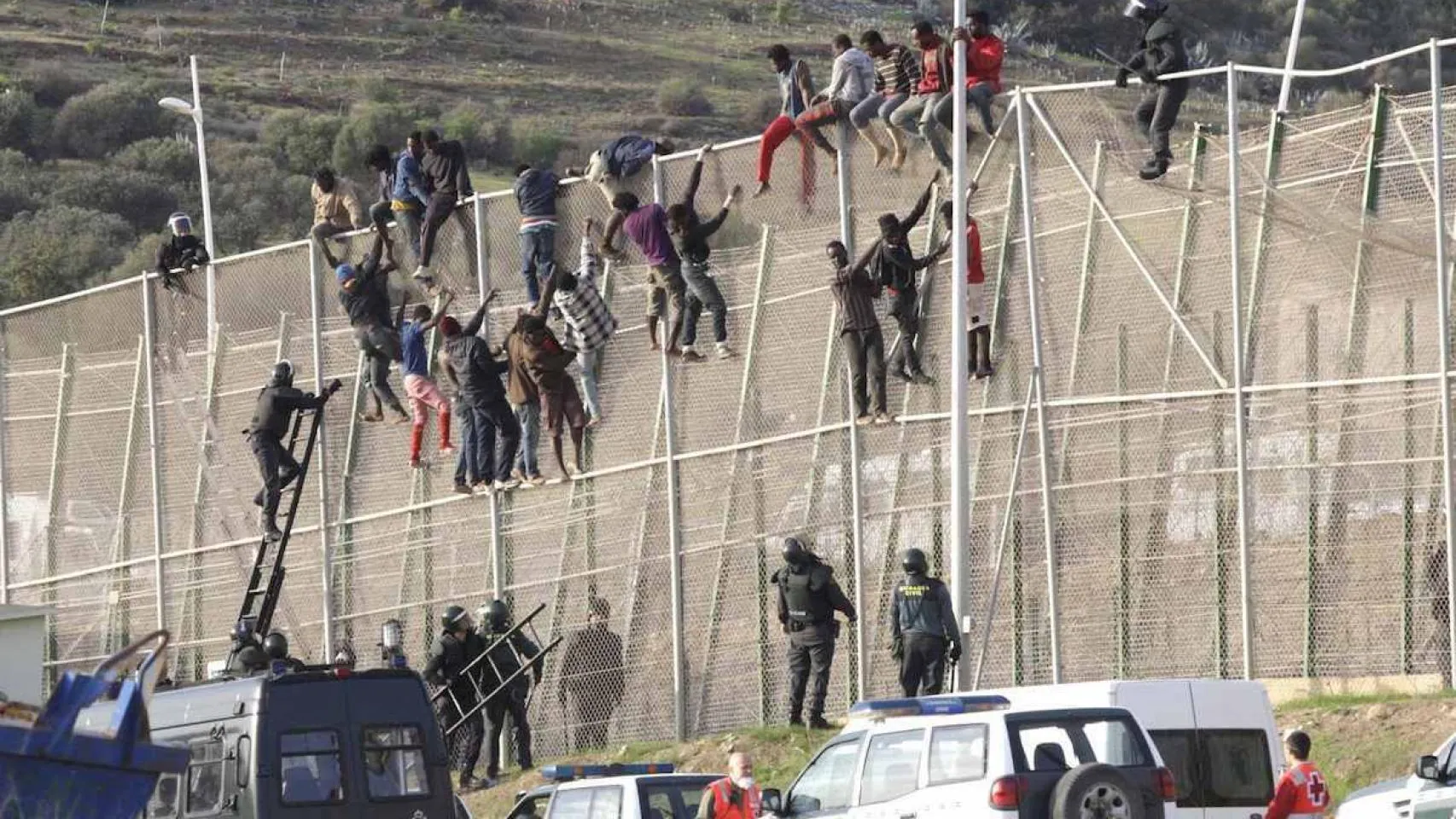
The ECtHR Grand Chamber judgment in N.D. and N.T. v. Spain is the most overread instrument in this field. The Chamber had found violations of Article 4 of Protocol No. 4, the prohibition on collective expulsion of aliens, and Article 13, the right to an effective remedy. On 13 February 2020, the Grand Chamber reversed that result and found no violation on the facts before it.[5]
But the Grand Chamber did not announce that summary returns are generally lawful at Ceuta and Melilla. Its reasoning was built around the applicants’ conduct during a collective attempt to cross the Melilla fences and the Court’s assessment of whether Spain had made genuine and effective legal means of entry available. That combination matters. Remove the fence-storming facts, or move the person into the sea, or add a child-protection status, and the case no longer answers the operational question by itself.[5]
That is also why N.D. and N.T. cannot be used to flatten the Hirsi Jamaa line on interception at sea. The research boundary here is deliberately narrow: the Grand Chamber ruling supports Spain on a specific fence-crossing record; it does not displace the need for individual assessment in sea-interception settings outside that factual frame.[5]
For risk review, the safe phrasing is not “Strasbourg approved hot returns.” The safer and more accurate phrasing is that Strasbourg found no violation in N.D. and N.T. on its particular Melilla-fence facts. That difference will decide whether a legal memo survives contact with a swimmer case, a minor case, or a case in which no functioning route to protection was realistically available.
D.D. v. Spain keeps minors outside the shortcut
The child-rights layer is not an optional humanitarian gloss on the border regime. In D.D. v. Spain, adopted on 12 February 2019 in communication No. 4/2016, the UN Committee on the Rights of the Child found violations under Articles 3, 20, and 37 of the Convention on the Rights of the Child in connection with Spain’s treatment of an unaccompanied child at the Melilla border.[6]
Article 3 requires the best interests of the child to be a primary consideration. Article 20 protects children deprived of their family environment. Article 37 concerns liberty, detention, and protection from unlawful or arbitrary deprivation of liberty. Those obligations do not wait politely while an adult border category is applied first.
The implementation point remains live. ECCHR’s case material states that Spain has not implemented the Committee’s views through legislation.[7] That does not mean every minor-related dispute has the same facts. It means a removal file involving an unaccompanied child cannot be treated as a routine fence-rejection file without first asking whether the child-protection procedure should have displaced it.
The site’s separate record on legal responsibility for Ceuta’s child migrants should be read for the minors track. This article uses D.D. for a narrower point: age and vulnerability are legal triggers, not sympathetic details to be noticed after rejection.
After STS 814/2026, a swimmer is not a fence case
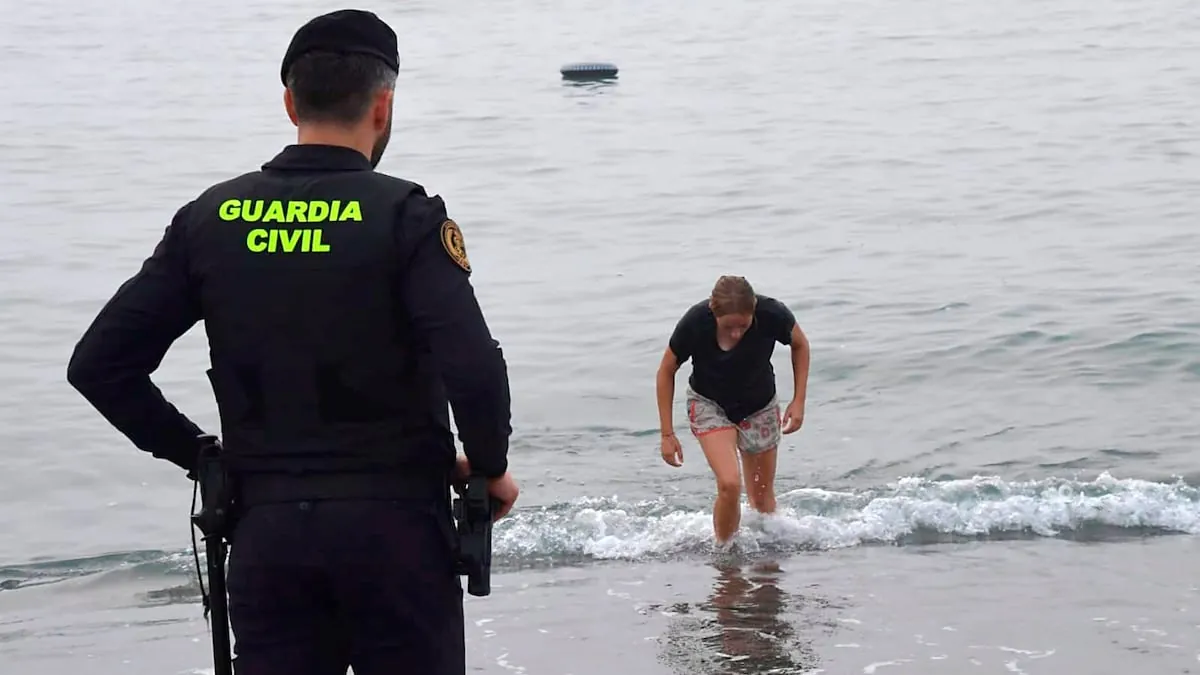
The June 2026 ruling is best read as a correction to category drift. The state may still argue that the 2015 regime applies where a person attempts to cross the physical containment elements at Ceuta or Melilla, subject to STC 172/2020. It may not treat a person in the water as though the person had climbed the fence simply because both situations are politically described as pressure at the border.
The official Judicial Power notice makes the swimmer point explicit. The Supreme Court confirmed that Spanish law does not permit “devoluciones en caliente” of migrants who try to enter by swimming into Ceuta and Melilla.[1] EJIL: Talk’s account adds the analytical layer: the Court distinguished physical containment elements from surveillance elements and discussed the problem of sea-side structures in terms that may become important if Spain attempts a regulatory or physical workaround.[2]
This is where the interaction between the instruments becomes concrete. The 2015 provision supplies the domestic door. STC 172/2020 says how narrowly that door must be kept. N.D. and N.T. prevents a simplistic claim that every immediate fence return is automatically a Strasbourg violation, but it does not answer the sea case. STS 814/2026 then removes swimmers from the special domestic door altogether.
That sequence leaves ordinary questions back on the table: identification, access to asylum, individual risk, non-refoulement, legal assistance where required, review, and vulnerability screening. The law may still permit removal. It does not permit pretending the sea is the fence.
What the enforcement numbers can and cannot show
The numbers should be read only after the categories are in place. “Refusals of entry,” “forced returns,” “border returns,” and “immediate returns” are not interchangeable labels. They come from different reporting channels and do not all measure the same legal event.
| Reported figure | Source and warning |
|---|---|
| 54,530 refusals of entry from 2018 to 31 August 2025 | Reported in AIDA’s Spain country report from a parliamentary-answer dataset; not a count of only Ceuta/Melilla hot returns.[8] |
| 23,958 forced returns from 2018 to 31 August 2025 | Reported in the same parliamentary-answer dataset; category must not be merged with border rejections.[8] |
| 19,392 border returns from 2018 to 31 August 2025 | Reported in the same parliamentary-answer dataset; useful for scale, but methodology remains distinct from Eurostat refusal data.[8] |
| 493,455 border refusals in 2019 | Eurostat figure cited in AIDA; it reflects a broader border-refusal methodology and should not be treated as a Ceuta/Melilla immediate-return count.[8] |
| At least 658 immediate returns in 2018 | Government figure reported in AIDA; closer to the practice under discussion but still source-specific.[8] |
The temptation is to use one large figure as proof of either administrative necessity or systemic illegality. The legal record does not support that shortcut. A refusal of entry at an airport, a forced return after a procedure, a border return, and an immediate return at a fence are not the same act for human-rights analysis.
The current-pressure layer is real but unstable. Euronews reported on 31 July 2026 that Spain was facing a legal dilemma behind record migrant arrivals in Ceuta, including the interaction between arrivals, returns, minors, and the Supreme Court layer.[9] Because the July 2026 situation was ongoing when this record was last verified, changing arrival or return figures should not be treated here as fixed baseline data.
A compliance file should separate the decision points
A defensible file starts by refusing the umbrella word. It records which legal trigger was used and why. If the case later reaches a court, a bar complaint, an ombudsman, or an international body, that is where the weakness will be found first.
- Location and border element: identify whether the person was at a physical containment element, in the sea, detected only by surveillance, or already within a protection setting.
- Legal basis: state whether the Tenth Additional Provision is being invoked, or whether ordinary removal, refusal, asylum, child-protection, or rescue rules govern instead.
- Individualization: record how the person was identified sufficiently to test protection, age, vulnerability, and non-refoulement issues.
- Access to procedure: record whether asylum access, legal assistance, interpretation, and remedy were realistically available where required.
- Child and vulnerability screening: record the basis for treating the person as an adult or as not otherwise requiring a different protection procedure.
- Evidence preservation: keep the operational record, including location, timing, route, decision-maker, assistance offered, and any reasons for urgent action.
The checklist is not a guarantee of legality. It is a way to prevent the most common analytical failure: using a valid instrument for the wrong person, in the wrong place, after the wrong trigger.
The remaining exposure is concentrated, not erased
Three exposure points remain after the June 2026 ruling.
- Sea interceptions: a swimmer or person intercepted at sea is outside the special Ceuta/Melilla rejection category identified by the Supreme Court. Ordinary protection and removal safeguards must carry the decision.
- Unaccompanied minors: D.D. v. Spain keeps the child-rights layer in view, especially best interests, protection without family care, and liberty safeguards.
- Re-expansion attempts: any legislative, regulatory, or infrastructure strategy that tries to stretch “containment elements” beyond the physical-border category will have to confront STC 172/2020, N.D. and N.T., D.D., and the June 2026 Supreme Court reasoning together.
The record does not support saying that Spain has no lawful border-rejection regime at Ceuta and Melilla. It supports the stricter proposition that the regime is lawful only within its category: physical border containment elements, the constitutional safeguards required by STC 172/2020, and no displacement of the procedures owed to people at sea or to children. N.D. and N.T. does not answer those cases. The 2015 statute does not either.
References
- El Tribunal Supremo confirma que la ley no permite las ‘devoluciones en caliente’ de los migrantes que pretenden entrar a nado en Ceuta y Melilla — Poder Judicial de España
- The Spanish Supreme Court on Rejection at the Borders of Ceuta and Melilla: What About Human Rights at Sea? — EJIL: Talk!, 30 July 2026
- STC 172/2020 — Tribunal Constitucional
- STC 13/2021 — Tribunal Constitucional
- N.D. and N.T. v. Spain — European Court of Human Rights, 13 February 2020
- D.D. v. Spain, communication No. 4/2016 — UN Committee on the Rights of the Child, 12 February 2019
- UN Committee condemns Spain’s push-back policy — ECCHR
- Country Report: Spain — Access to the territory and push backs — AIDA, updated 17 July 2026
- Spain’s legal dilemma behind Ceuta’s record migrant arrivals — Euronews, 31 July 2026
Related records
Tool profile
How Meta's AI Spending Reshapes Law Firm ProfitabilityGoverning regulation
Browse the obligations tracker →Preventive workflow
Browse verification workflows →
Report a correction or tip
Spotted an outdated figure, a misstated fact, or a ruling this case record should reflect? Public comments are disabled for this content given the professional cost of a misreported case outcome, penalty amount, or rule text — use the structured correction channel instead.
Report a correction or tip for this record →