
Colin Gray's legal consequences in the Apalachee shooting
Source-linked record of Colin Gray's legal consequences in the Apalachee High School shooting: 29 counts charged, 27 tried and convicted, a concurrent 15-year sentence, and an appeal announced on sentencing day. Each item is flagged confirmed or reported and tied to a named source, including the count discrepancy, statutory basis, and exposure-figure variances.
- Jurisdiction
- US-GA
- Court
- Barrow County Superior Court
- Judge
- Nicholas Primm
- AI tool named
- No AI tool implicated
- Ruling date
- Jul 30, 2026
- Source document
- View primary court order ↗
- Last verified
- Aug 3, 2026
Lex Machina Review is an independent risk-tracking and reference resource. Nothing on this site is legal advice, and using it does not create an attorney-client relationship. Every record is reviewed against primary sources but may not reflect the most current status of a matter — always verify directly against the cited court order, rule text, or a licensed attorney before relying on it.
Companion explanation — secondary to the source document above
Record status as of August 3, 2026
The available public record begins with a public state-source identifier, not a public sentencing order: the Georgia Bureau of Investigation’s Apalachee High School shooting FAQ identifies the September 4, 2024 shooting and the contemporaneous state investigation, including four people killed and the GBI’s then-current injury figures of eight students and one teacher injured, with six students and one teacher shot.[1] The criminal-consequence record for Colin Gray is then supplied by named court reporting: Barrow County Superior Court in Winder, Georgia; Judge Nicholas Primm; conviction on March 3, 2026; sentencing on July 30, 2026; 27 convictions; and an aggregate 15-year prison sentence imposed through concurrent terms.[2][3][4]
The operative answer is narrower than several same-case summaries make it look: Colin Gray was charged in a 29-count posture, tried and convicted on 27 counts after two cruelty-to-children counts were dropped, and sentenced to an aggregate 15 years. Defense counsel Brian Hobbs was reported as announcing an appeal on sentencing day, but this review did not locate a publicly accessible notice of appeal or sentencing order on a primary docket link as of August 3, 2026.[2][3]
No reviewed source identifies an AI tool as part of the conduct, investigation, prosecution, defense, trial, sentencing, or reported appeal posture. That is a record-status finding, not a missing theory. It follows the same non-AI case-record convention used in the Lekaysha Lockhart arrest-and-case-status record and the Clackamas Town Center shooting identification record: say what the sources support, then stop.
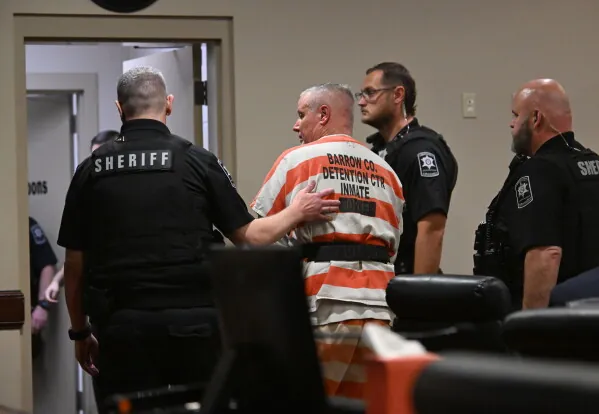
The count ledger: 29 charged, 27 tried, 27 convicted
Most of the apparent conflict in the public record comes from using different points in the case as if they were the final result. A pretrial count list can be accurate at the charging stage and still mislead a reader who is trying to state the verdict. The clean ledger is:
| Stage | Number | What the number measures | Verification status |
|---|---|---|---|
| Charged / indicted posture | 29 counts | Pretrial summaries described a 29-count case against Colin Gray before trial narrowing.[5] | Reported; useful for explaining why some summaries still say 29. |
| Counts tried | 27 counts | Two cruelty-to-children counts were dropped before trial, leaving 27 counts for the jury.[3][6][7] | Confirmed by named court reporting; no public primary docket link located in this review. |
| Counts convicted | 27 counts | The jury convicted Gray on all 27 tried counts on March 3, 2026.[3][6] | Confirmed by named court reporting. |
| Sentence imposed | 15-year aggregate prison term | Judge Nicholas Primm imposed 15-year terms on the second-degree murder counts and 10-year terms on involuntary manslaughter counts, with the terms running concurrently.[2][4] | Confirmed by named sentencing reporting; public sentencing order not located. |
| Appeal posture | Announced, not docket-verified | Defense counsel was reported as announcing an appeal after sentencing.[2] | Reported litigation posture; notice of appeal not verified from a public docket link. |
The 29-versus-27 discrepancy is not a mystery if the sentence is briefed chronologically. Everytown’s pretrial explainer is useful for the charged-count posture, while CNN and ABC are the better fit for the verdict posture because they report the 27-count conviction after the two dropped counts.[3][5][6] Wikipedia’s case page is useful mainly as a warning label here: crowd-edited summaries and infoboxes may preserve earlier or mixed count figures unless the reader checks which procedural stage the number describes.[8]
The same discipline matters when comparing this record with other legal-consequence stacks. A criminal indictment, a jury verdict, a sentence, an announced appeal, and a potential civil claim are not interchangeable consequences. For a broader version of that sorting problem, see What Legal Consequences Follow a Counterfeit Goods Bust.
Sentence mechanics: why the aggregate term is 15 years
The sentence turns on concurrency. Georgia’s second-degree murder provision was reported with a statutory range of 10 to 30 years, and involuntary manslaughter was reported with a one-to-10-year range.[2][9] Judge Primm imposed 15 years on each second-degree murder count and 10 years on each involuntary manslaughter count, but ordered the terms to run concurrently, leaving an aggregate prison term of 15 years.[4]
That is why exposure figures in the public record should not be quoted as if they were the sentence. CBS Atlanta reported exposure of up to 180 years; The New York Times reported 243 years; ABC described the possible punishment as more than 100 years.[7][13][6] Those figures reflect different stacking assumptions about what could happen if counts were added consecutively or counted differently. The sentence actually imposed was not 180 years, 243 years, or more than 100 years. It was 15 years aggregate, because the controlling terms were concurrent.[4]
The competing sentencing positions also help locate the judge’s result. Prosecutors sought an 80-year sentence, while the defense sought a 10-year prison term followed by probation.[9][10][11] The imposed 15-year aggregate sentence was above the defense request and far below the prosecution request, but it was not a mathematical midpoint. It came from the court’s choice to impose the longest single concurrent term at 15 years.
The court’s stated reasoning
Judge Primm’s sentencing remarks matter because they explain the moral and legal lens applied at sentencing, but they do not change the count ledger. Reporting quoted the judge telling Gray, “It is clear you failed as a parent,” and saying that “the warning lights were flashing.”[4][12] WABE’s account likewise framed the sentencing around the court’s view that Gray ignored escalating warning signs, while also reporting defense arguments that Gray did not know his son would carry out the shooting.[11]
The judge also acknowledged a limiting fact that belongs in any accurate consequence record: Colin Gray did not pull the trigger and did not seek to harm anyone.[4][12] That acknowledgment did not prevent conviction or a prison sentence. It does, however, keep the father’s legal consequences distinct from the son’s criminal liability.
Companion case: Colt Gray’s sentence is not Colin Gray’s sentence
The companion prosecution explains the underlying case but should not be merged into the father’s result. Colt Gray, Colin Gray’s son, pleaded guilty on July 24, 2026 to 55 counts and was sentenced on July 28, 2026 to life without parole.[2][3][6] That sentence belongs to Colt Gray’s case. Colin Gray’s consequence is the 27-count conviction and concurrent 15-year aggregate sentence described above.
The public-history marker is real but secondary to the sentence mechanics. The GBI said in September 2024 that this was the first time in Georgia history that a parent of a school-shooting suspect had been charged in this posture, and CNN later reported Colin Gray as the first parent of a U.S. school shooter convicted of murder.[1][3] Those labels identify why the case drew national attention; they do not supply the sentence.
Primary-record gap and source hierarchy
No publicly accessible Barrow County Superior Court docket entry, verdict form, notice of appeal, or sentencing order URL was surfaced in the materials reviewed for this article. The GBI FAQ is the strongest public state-source anchor for case identification, but it is not a sentencing order.[1] FOX 5 Atlanta reported a camera-access order grounded in Barrow County Superior Court filings, which is useful as court-document-based reporting, but it is still secondary unless the underlying filing is available for inspection.[14]
That leaves the sentencing record supported by named courtroom and wire reporting rather than a primary order. AP, CNN, BBC, ABC, NBC, PBS, WABE, Al Jazeera, CBS Atlanta, and The New York Times are therefore used for the facts each actually reports. Everytown and Wikipedia are not treated as final adjudicative sources; they are used where they help explain why count and exposure figures differ across summaries.[2][3][4][5][6][7][8][9][10][11][12][13]
Confirmed vs. reported items
| Item | Status | Source treatment |
|---|---|---|
| Case identification | Confirmed | Apalachee High School shooting; Georgia state investigation identified by GBI FAQ.[1] |
| Court and sentencing judge | Confirmed by named reporting | Barrow County Superior Court; Judge Nicholas Primm.[2][4] |
| Charging posture | Reported as 29 counts | Use only as the pretrial or indictment-stage figure, not the conviction figure.[5] |
| Trial posture | Confirmed as 27 tried counts | Two cruelty-to-children counts dropped before trial.[3][6][7] |
| Verdict | Confirmed as 27 convictions | Jury convicted Gray on all 27 tried counts on March 3, 2026.[3][6] |
| Sentence | Confirmed as 15 years aggregate | 15-year terms on second-degree murder counts and 10-year terms on involuntary manslaughter counts, all concurrent.[2][4] |
| Exposure figures | Reported, inconsistent | 180 years, 243 years, and more-than-100-years formulations reflect stacking assumptions, not the imposed sentence.[7][13][6] |
| Prosecution request | Reported | 80-year sentence requested.[9][10][11] |
| Defense request | Reported | 10 years plus probation requested.[9][10][11] |
| Appeal | Reported but not docket-verified | Appeal announced by counsel; notice of appeal not located in a public docket link in this review.[2] |
| Civil lawsuits by victims’ families | Not treated as filed consequences here | Reviewed materials did not surface a filed civil complaint suitable for inclusion as a confirmed case consequence. |
| AI involvement | Not implicated in reviewed sources | No reviewed source identifies an AI tool as part of the conduct, investigation, prosecution, sentencing, or appeal posture. |
As of this review, the safe short form is: Colin Gray was charged in a 29-count posture, tried and convicted on 27 counts, and sentenced in Barrow County Superior Court to 15 years in prison through concurrent terms. The appeal posture remains provisional until a notice of appeal or docket entry is verified.
References
- Frequently Asked Questions: Apalachee High School Shooting — Georgia Bureau of Investigation, September 13, 2024
- Colin Gray, who gave his son the gun used in Georgia school shooting, sentenced to 15 years — AP News
- Colin Gray: Father of Georgia school shooter set to be sentenced on murder charges — CNN
- Father of teen school shooter sentenced to 15 years in prison — BBC
- What You Need to Know About the Colin Gray Trial — Everytown
- Father sentenced for murder in Georgia high school shooting by son — ABC News
- Colin Gray Apalachee High School shooting conviction sentencing date — CBS Atlanta
- 2024 Apalachee High School shooting — Wikipedia
- Father who gave gun to Apalachee High School shooter to be sentenced — PBS NewsHour
- Apalachee High School shooter's father sentenced to 15 years — NBC News
- Father who gave his son the gun used in Apalachee High School shooting to be sentenced — WABE
- Father of Georgia Apalachee school shooter sentenced to 15 years in prison — Al Jazeera
- Colin Gray, Father of Teenage Shooter in Georgia, Sentenced to 15 Years in Prison — The New York Times
- Barrow County judge bans video at Colin Gray sentencing — FOX 5 Atlanta
Related records
Tool profile
How Meta's AI Spending Reshapes Law Firm ProfitabilityGoverning regulation
Browse the obligations tracker →Preventive workflow
Browse verification workflows →
Report a correction or tip
Spotted an outdated figure, a misstated fact, or a ruling this case record should reflect? Public comments are disabled for this content given the professional cost of a misreported case outcome, penalty amount, or rule text — use the structured correction channel instead.
Report a correction or tip for this record →