
What Colin Gray's Murder Sentence Signals for Parents
Colin Gray's 15-year sentence makes him the first parent of a U.S. school shooter convicted of murder, resetting the risk baseline for parents and gun owners whose conduct can be tied to a shooter's weapon access. This risk analysis maps the Georgia charging theory, the Crumbley-to-Gray escalation, and the pending appeal that keeps the precedent non-final.
- Jurisdiction
- US-GA
- Court
- Barrow County Superior Court
- Judge
- Nicholas Primm
- AI tool named
- No AI tool implicated
- Penalty amount
- 15 years imprisonment
- Ruling date
- Jul 30, 2026
- Source document
- View primary court order ↗
- Last verified
- Aug 2, 2026
Lex Machina Review is an independent risk-tracking and reference resource. Nothing on this site is legal advice, and using it does not create an attorney-client relationship. Every record is reviewed against primary sources but may not reflect the most current status of a matter — always verify directly against the cited court order, rule text, or a licensed attorney before relying on it.
Companion explanation — secondary to the source document above
Colin Gray got 15 years in prison. The sentencing date was July 30, 2026; the court was Barrow County Superior Court; the judge was Nicholas Primm; and the legal event is that Gray became the first parent of a U.S. school shooter convicted of murder in connection with the shooting deaths his child was accused of causing at Apalachee High School.[1]
The companion Risk Digest sentence-verification record is the place for the core sentencing check. This piece is doing the next job: reading what the sentence changes for parents, gun owners, defense counsel, and risk managers who now have to ask whether conduct around a minor’s weapon access can be charged above manslaughter.
That is an unusual subject for a site whose Risk Digest center of gravity is AI and legal-practice failure. The reason to treat it here is the same reason the site tracks exceptional non-AI matters such as the Shiloh Hendrix appeal-status record: when a case is non-final but risk-significant, the useful work is not pretending it has settled the law. The useful work is marking the exposure signal and watching the appellate posture.
The sentence is modest compared with the ask, not compared with the old baseline
The 15-year prison term matters because of the conviction it follows. It was far below the 80 years prosecutors sought and nowhere near the roughly 180-year statutory maximum reported for the case.[2] That gap should cool off any instant claim that the court embraced the most punitive version of the prosecution’s theory.
But compared with the prior parental-liability map, 15 years attached to a murder conviction is not a small outcome. It moves the discussion from whether a parent may be punished for reckless or grossly negligent failure around a child’s access to guns, to whether that failure can serve as the route into homicide liability carrying the murder label.
The appeal posture keeps the signal provisional. Gray’s case is headed to a mandatory direct appeal to the Georgia Supreme Court; defense counsel Brian Hobbs said an appeal was planned, and the 30-day appeal window runs into late August 2026, with no notice of appeal in the record as of July 30.[1]
The liability ladder prosecutors will now point to
Gray did not appear out of nowhere. The risk signal is visible only if the earlier cases stay in the frame. AP’s comparative round-up placed Gray alongside other recent cases involving parents or adults charged after minors were accused of gun violence, including Robert Crimo Jr., Deja Taylor, the Crumbley parents, and pending Wisconsin charges involving Jeffrey Rupnow.[3]
| Case or parent | Reported posture or outcome | Why it matters for risk |
|---|---|---|
| Robert Crimo Jr. | Misdemeanor reckless-conduct outcome; 60 days reported by AP.[3] | Shows an earlier, lower-rung theory: the adult’s conduct is chargeable, but not as homicide. |
| Deja Taylor | Child-neglect case in Virginia, included in AP’s parent/gun-violence comparison.[3] | Keeps the focus on adult conduct around a child’s access, without turning every case into a murder template. |
| James and Jennifer Crumbley | Involuntary-manslaughter convictions; AP reported sentences of at least 10 years, with maximum terms of 15 years.[4] | Established that parents of a school shooter could face serious homicide punishment for their own conduct. |
| Pending Wisconsin charges involving Jeffrey Rupnow | Pending matter identified in AP’s comparison.[3] | Relevant as a charging signal only; it cannot be treated as an outcome. |
| Colin Gray | Second-degree murder conviction; 15-year prison sentence.[1] | The new high-water mark: murder liability tied to a parent’s conduct around weapon access. |
The Crumbley cases are the obvious predecessor because they proved juries would convict parents for their own failures before a school shooting. James and Jennifer Crumbley were convicted of involuntary manslaughter and sentenced to prison terms with 10-year minimums and 15-year maximums.[4] That was already a severe correction to the old assumption that the shooter’s parent stood outside the homicide case unless the parent supplied the weapon in an overtly criminal way.
Gray is different because the conviction label moved. The sentence length overlaps with the Crumbley maximums, but the charge category does not. For a lawyer advising a parent or gun-owning client, that distinction matters more than the round number of years. A manslaughter conviction says the client may be punished for a fatal failure of care. A murder conviction says the state has found a statutory route to treat the failure as predicate conduct for murder.
Georgia’s mechanism: second-degree murder through cruelty to children
The Georgia structure is the part that should keep national commentary disciplined. GPB reported the relevant statutory contrast this way: second-degree murder in Georgia carries 10 to 30 years, while involuntary manslaughter carries one to 10 years; the second-degree murder theory used cruelty to children as the predicate.[1]
That is not the same as saying every state can now convert negligent gun storage into murder. It means prosecutors in a jurisdiction with a usable predicate offense may try to climb from child-endangerment or cruelty conduct into a homicide charge when the child’s access to a weapon leads to deaths. The statutory bridge is doing work. Without a comparable bridge, the same moral facts may not support the same charge.
This is where risk advice becomes more concrete than ideology. A client does not need a lecture on whether gun ownership is lawful. The question is whether the client’s conduct has created a record that a prosecutor can later describe as cruelty, endangerment, recklessness, or some other predicate state-law violation. Once that record exists, the shooting is not the only event in the charging story; the adult’s omissions become part of the causation narrative.
The omissions Judge Primm treated as charge-bearing
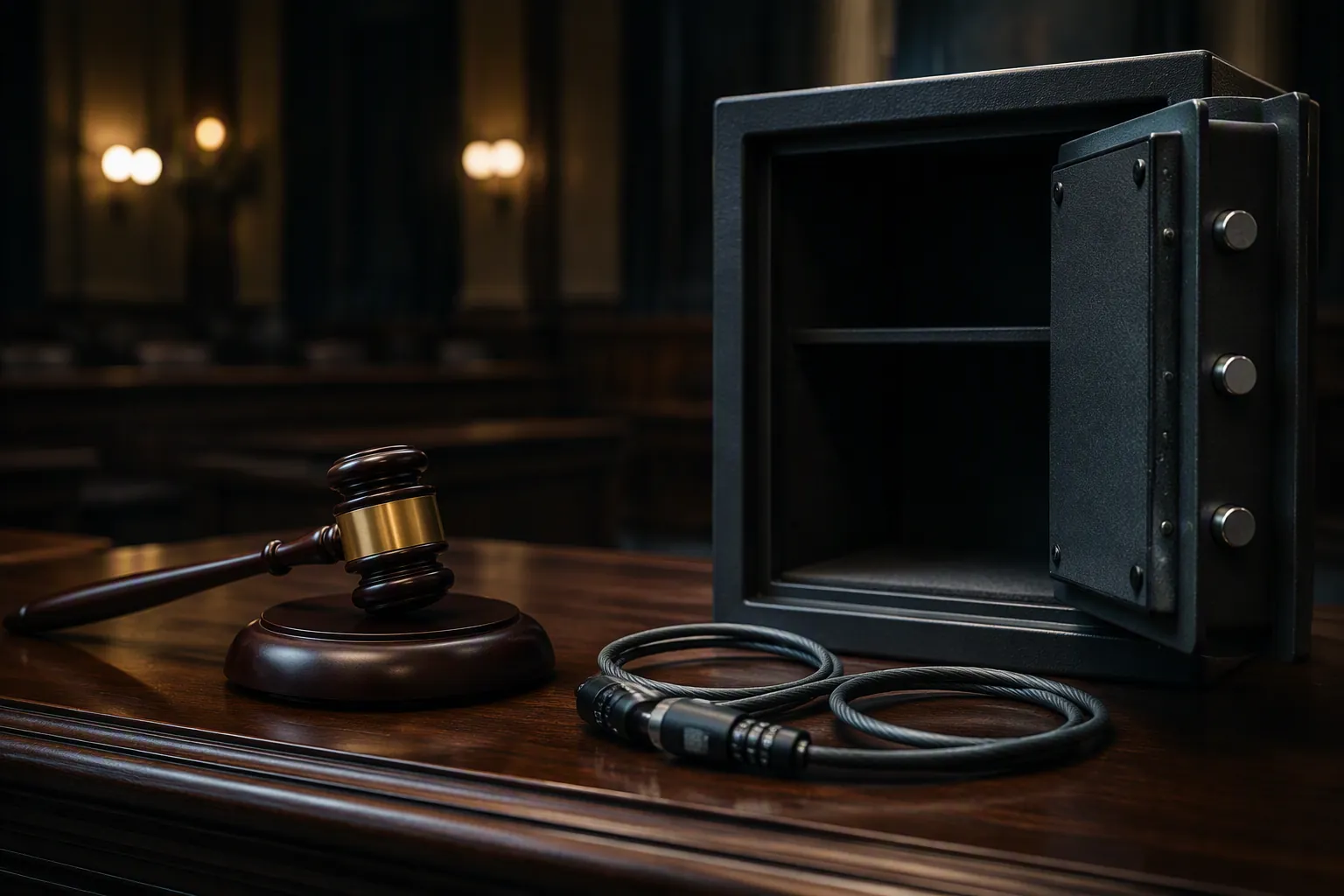
Judge Primm’s sentencing reasoning was not abstract. Courthouse News reported his statement that Gray “failed to do the simplest things.”[5] The storage evidence made that phrase legally useful: reports identified unused gun locks and a gun safe Gray had searched for online but never bought.[5][6]
That is the uncomfortable center of the case for gun-owning parents. The state did not have to argue only that Gray should have been a better parent in some generalized way. It could point to remedial acts that were available, simple, and allegedly not taken. Locks already present. A safe contemplated but not purchased. A weapon-access risk that could be framed as managed in theory and unmanaged in fact.
For defense counsel, that kind of record is harder to soften than a broad debate over family discipline or hindsight. It gives prosecutors verbs: searched, did not buy, had locks, did not use them. Those verbs are why the sentencing hearing is not just a punishment story. It is a warning about what ordinary pre-incident evidence may become after a shooting.
What changed after the Crumbleys
CNN’s March 2026 analysis quoted Boston defense attorney Elyse Hershon saying the trend “started with the Crumbleys,” and it quoted District Attorney Brad Smith saying he wanted to “move the needle.”[7] Those comments are useful because they describe the prosecution-side appetite for escalation. They are not a substitute for the Georgia statute.
NBC’s post-sentencing analysis framed Gray’s sentence as affirming new legal jeopardy for parents of school shooters.[8] That is fair as a risk description if it is kept narrow. The jeopardy is not that every parent of a shooter will face murder charges. The jeopardy is that prosecutors now have a concrete example of a parent convicted of murder where the adult’s own conduct around access to guns was tied to the child’s alleged shooting.
The broader access-to-firearms backdrop also requires care. Everytown, an advocacy organization, has said that in an analysis it attributes to the U.S. Secret Service, 76% of school shooters obtained firearms from the home of a parent or close relative.[9] That figure may explain why prosecutors and policymakers focus on household access, but it does not prove effectiveness of any particular prosecution theory, and it does not erase the need for state-specific statutory fit.
How to treat Gray while the appeal is unresolved
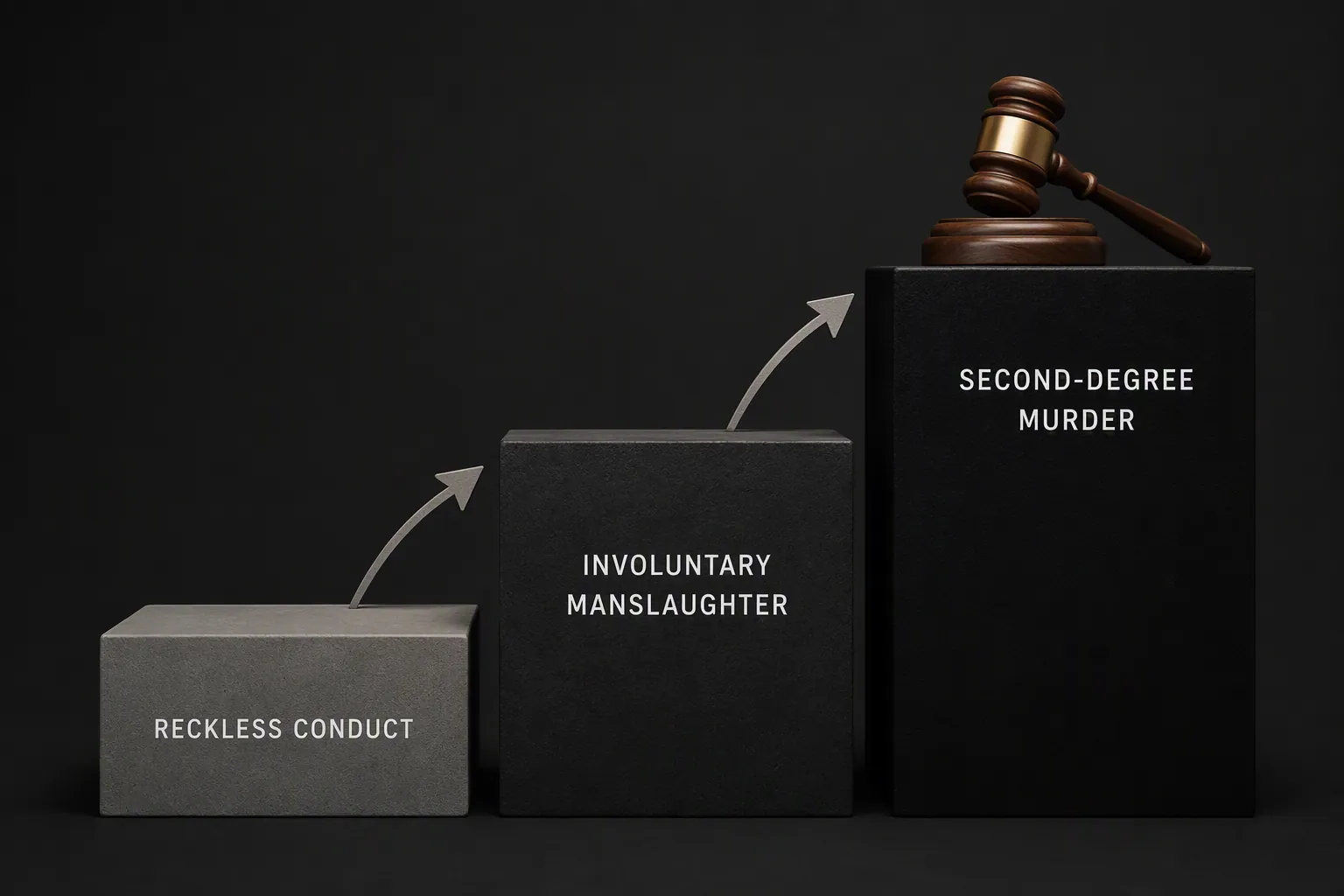
The safest way to use Gray now is as a live risk marker, not a settled national rule. As sentenced, the case raises the top end of the visible parental-liability ladder: reckless conduct, child neglect, involuntary manslaughter, and now second-degree murder. As precedent, it remains non-final, Georgia-specific, and dependent on a statutory theory that may not travel cleanly.
That distinction should shape advice. A defense lawyer representing a gun-owning parent after a child-access incident should preserve objections as if the state may try the highest plausible homicide theory, while still challenging the predicate fit. A risk manager advising an institution, insurer, or organization with firearm-access exposure should not describe safe storage as a values statement. The file should show concrete controls: locks used, safes purchased and used, access limited, warnings acted on, and decisions documented.
None of that requires treating Gray as final appellate law. It requires treating it as evidence that prosecutors have already climbed one rung higher than the Crumbley-era baseline and obtained a 15-year sentence on a murder conviction. The direct appeal will decide what survives. The risk signal exists now.
References
- Colin Gray, father of Apalachee school shooter, sentenced to 15 years in landmark Georgia case, GPB, July 30, 2026
- CNN July 30, 2026 sentencing story, CNN, July 30, 2026
- Georgia dad is the latest parent to be convicted when a child is accused of gun violence, AP News
- Michigan school shooter Ethan Crumbley's parents sentenced to 10 years in prison, AP News
- First parent convicted of murder for son's school shooting sentenced to 15 years in prison, Courthouse News Service
- Father of teen school shooter sentenced to 15 years in prison, BBC News
- What Colin Gray's murder conviction means for gun-owning parents, CNN
- Colin Gray's 15-year sentence signals new legal risks for parents of school shooters, NBC News
- What You Need to Know About the Colin Gray Trial, Everytown
Related records
Tool profile
How Meta's AI Spending Reshapes Law Firm ProfitabilityGoverning regulation
Browse the obligations tracker →Preventive workflow
Browse verification workflows →
Report a correction or tip
Spotted an outdated figure, a misstated fact, or a ruling this case record should reflect? Public comments are disabled for this content given the professional cost of a misreported case outcome, penalty amount, or rule text — use the structured correction channel instead.
Report a correction or tip for this record →