
Why Diddy's Early Release 2028 Isn't a Court Order
Headlines about Diddy's 2028 release describe a Bureau of Prisons sentence-computation, not a court-ordered early release. This verified record tracks how the projected date has moved at least five times since sentencing and flags each claim as confirmed, reported, or contradicted as of August 3, 2026.
- Jurisdiction
- US-Federal
- Court
- U.S. District Court for the Southern District of New York
- Judge
- Arun Subramanian
- AI tool named
- No AI tool implicated
- Ruling date
- Oct 3, 2025
- Source document
- View primary court order ↗
- Last verified
- Aug 3, 2026
Lex Machina Review is an independent risk-tracking and reference resource. Nothing on this site is legal advice, and using it does not create an attorney-client relationship. Every record is reviewed against primary sources but may not reflect the most current status of a matter — always verify directly against the cited court order, rule text, or a licensed attorney before relying on it.
Companion explanation — secondary to the source document above
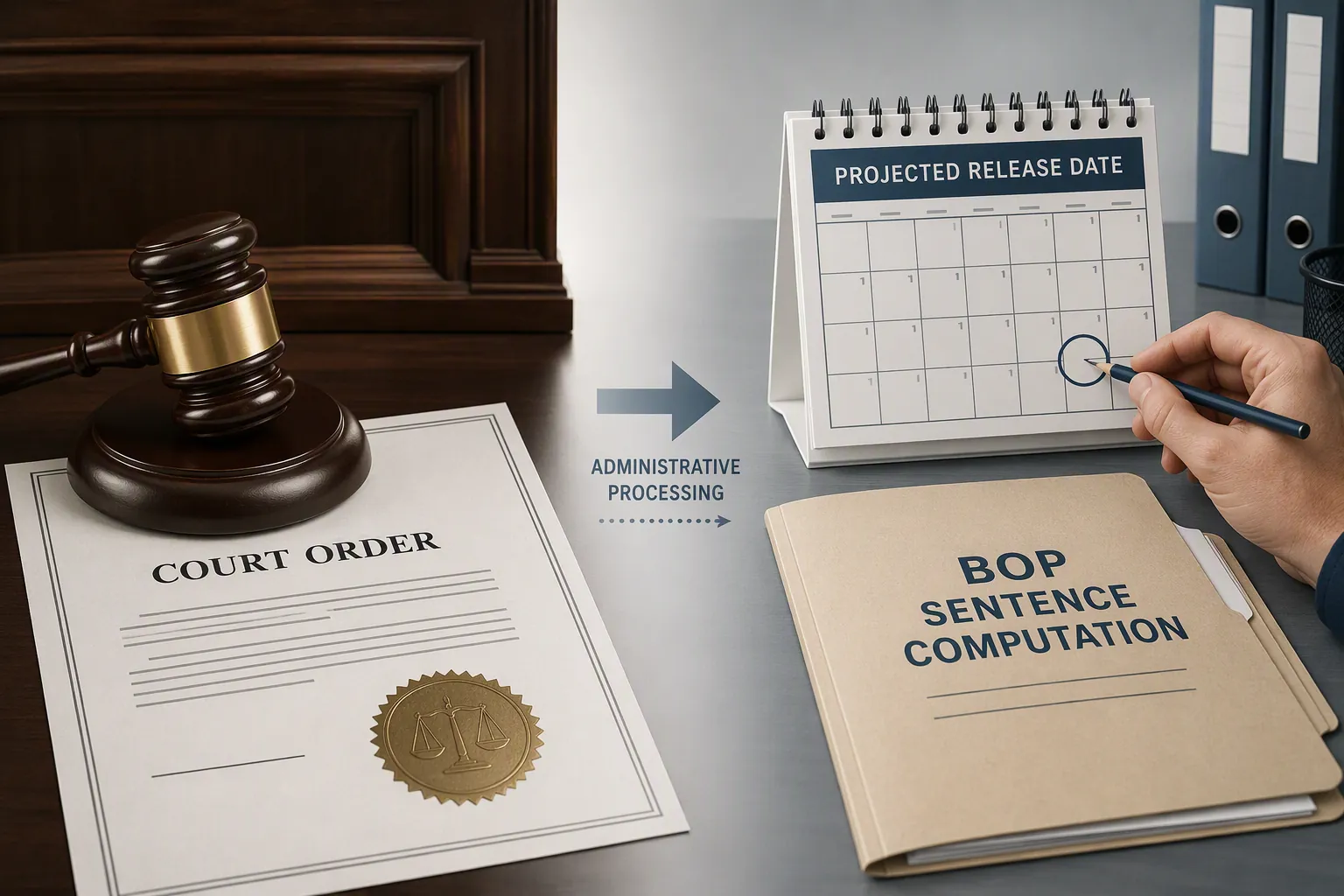
As of August 3, 2026, the clean answer is this: the 2028 date attached to Sean “Diddy” Combs is a Bureau of Prisons projected release-date computation, not a court-ordered early release. The most recent known projection reported in late July 2026 is January 24, 2028, after several earlier projected dates in 2028 moved forward; that kind of field can change because BOP calculates release projections administratively from the sentence, custody credit, good conduct time, and related records.[1][2]
The word that causes the damage is “ordered.” The Southern District of New York docket shows the criminal judgment and amended judgment; the Second Circuit docket shows an appeal still pending. Those records do not show a judge granting early release, reducing the sentence, reversing the conviction, or approving release pending appeal as of this verification date.[3][4]
Claim status as of August 3, 2026
| Claim | Status | What the record supports |
|---|---|---|
| Combs has a January 24, 2028 projected release date. | Reported current projection | Late-July coverage reported that BOP’s projected date moved to January 24, 2028. Treat it as a projection, not a guaranteed release date.[1][2] |
| A judge granted Diddy early release. | Contradicted by the court record reviewed here | The district and appellate dockets show the judgment and pending appeal, not a granted early-release order.[3][4] |
| The 2028 date comes from BOP sentence computation. | Confirmed as the legal mechanism | BOP’s public inmate-record materials describe the release-date field as a projected date; federal good-conduct-time rules explain why projected release dates can be earlier than the full term imposed.[2] |
| The conviction and sentence are already overturned. | Contradicted | The Second Circuit appeal remains pending as of this record; no appellate disposition is documented on the docket.[4] |
| The prison-fight and solitary-confinement claims explain the date movement. | Reported, not confirmed as a cause | Those claims rest on media reporting and unnamed-source accounts; BOP did not publicly provide that explanation for the release-date movement.[1] |
| The alcohol-in-prison rumor is established fact. | Contradicted or unsupported on this record | The rumor has been denied in public reporting attributed to Combs’s side and is not supported by the court dockets used for this legal-status check.[3][4] |
That status treatment is deliberately narrow. In a sentence-computation story, “reported” is not a synonym for “found by a court,” and “projected release date” is not a synonym for “legal entitlement to walk out on that date.”
The judgment BOP is computing from
The relevant judgment followed a mixed verdict. Combs was convicted on July 2, 2025, of two Mann Act transportation counts and acquitted of racketeering conspiracy and sex-trafficking charges, according to Reuters’ account of the appeal and trial result.[5]
On October 3, 2025, Judge Arun Subramanian sentenced Combs in the Southern District of New York to 50 months in prison, a $500,000 fine, and five years of supervised release, with public reporting describing credit for roughly 13 months already served.[6] The district docket identifies the case as United States v. Combs, No. 1:24-cr-00542, and shows judgment activity in mid-October 2025.[3]
That is the court side of the ledger. The judge imposed the sentence. BOP then administers the custody side: designation, sentence computation, projected release date, good conduct time, and other administrative records that appear in the inmate locator.
Why “early release” is a misleading shortcut
BOP’s inmate-record explanation is plain about the status of the release-date field: it is a projected release date. That word matters. A projection is the agency’s current computation from the records available to it; it is not the same thing as a judge signing an order that cuts the sentence short.[2]
Federal prisoners serving a term longer than one year, other than life, may earn good conduct time under federal rules. The current regulation states that an eligible prisoner may receive up to 54 days for each year of the sentence imposed, with proration for the last portion of the term.[7] BOP’s First Step Act materials and the 2022 final rule explain the agency’s implementation of those good-conduct-time calculations after Congress changed the statutory formula.[8][9]
That mechanism can make a public-facing release date look like “early release” to a search engine or headline writer. Legally, it is usually a different thing: the prisoner is still serving the judicially imposed sentence, but the agency’s calculation of the projected end date reflects credit rules that Congress, regulations, and BOP policy require BOP to apply.

There may be other custody-credit or administrative inputs in an individual computation, but the public record reviewed here does not support assigning a specific hidden reason to each date movement. The safer formulation is narrower: BOP’s projected date moved, and BOP’s own materials describe the release-date field as an administrative projection.
The moving 2028 timeline
The timeline is the part most likely to mislead a reader who sees only one headline. The projection did not simply become “2028” once and sit still. Public reporting has traced a sequence of earlier projected dates, with the latest known reported date moving to January 24, 2028.[1][10][11]

| Projected release date | How to read it | Legal significance |
|---|---|---|
| June 4, 2028 | Reported earlier BOP projection | A projected administrative date, not a release order.[1][11] |
| May 8, 2028 | Reported later projection | Movement in the BOP field; no matching court order identified in the dockets reviewed here.[1][3] |
| April 25, 2028 | Reported later projection | Still a projected release-date computation, not a judicial reduction.[1][2] |
| April 15, 2028 | Reported later projection | Another administrative projection in the public timeline.[1][10] |
| February 23, 2028 | Reported later projection | A prior projection that should not be treated as current if relying on late-July reporting.[1][10] |
| January 24, 2028 | Most recent known reported projection as of this record | Current reported BOP projection, subject to further administrative or legal change.[1][10] |
A date moving forward several times can look like a series of favors if the reader starts with the wrong source. The docket question is different: did a court reduce the sentence, grant release pending appeal, or otherwise order a new custodial endpoint? The district docket and the Second Circuit docket reviewed for this record do not show that.[3][4]
Nor should the January 2028 projection be treated as a promise. BOP projections can change again if the agency receives updated records, applies credits differently, changes prerelease-custody placement, records discipline, or implements a later court order. Some of those possibilities may never become visible in public-facing records, and none should be asserted as the reason for this movement unless a reliable source says so.
The appeal is pending, but pending is not relief
Combs’s appeal is pending in the Second Circuit as United States of America v. Combs, No. 25-2623. Reuters reported that his lawyers urged the appeals court on April 9, 2026, to overturn the conviction and sentence.[5] The appellate docket remains the controlling place to check whether that request has produced a disposition.[4]
A pending appeal can matter enormously in the future. It can also produce no immediate change in custody status. As of August 3, 2026, this record supports only the latter posture: the appeal exists, but no appellate ruling reversing the conviction, reducing the sentence, or ordering release is documented in the cited docket.[4]
That is why “he is being released early because of the appeal” is not a supported sentence. The appeal is a live legal route. The January 2028 date is an administrative projection. Those two facts can coexist without one causing the other.
The fight, solitary, and alcohol claims do not explain the release date
The prison-fight and solitary-confinement claims belong in a separate bucket. Coverage of the alleged fight has relied on media reports and unnamed sources, while BOP declined to comment on Combs’s conditions of confinement in at least one report about the release-date movement.[10]
That does not make every reported detail false. It does mean the details cannot be used as the legal reason for the January 2028 projection. If the point is disciplinary exposure, the proper question is whether BOP imposed a sanction affecting good conduct time or time credits, not whether a headline says a fight happened. For that narrower issue, see the site’s separate treatment of Sean Combs’ prison-fight sanction risk.
The same caution applies to solitary-confinement framing. A reported housing status is not the same thing as a sentencing event, and it is not a public explanation for a release-date computation unless BOP or a court record connects it to the calculation. The legal treatment of the solitary-confinement reports is discussed separately in What Federal Law Means for Sean Combs’ Solitary Confinement.
The alcohol-in-prison rumor is weaker still for release-date purposes. It has been denied in public reporting attributed to Combs’s side, and the court dockets cited here do not show a proceeding that turns that rumor into a legal finding or a release-date reason.[3][4]
What would actually change the legal answer
There are only a few records that should change the answer to the release-date question. A new BOP locator date would change the administrative projection. A Second Circuit ruling could change the conviction or sentence. A district-court order could grant a recognized form of post-judgment relief. A documented BOP disciplinary or credit decision could explain a computation change, if the agency or a reliable record actually disclosed it.
Until one of those things appears, the legally accurate phrasing is narrower than the headlines: Combs has a reported January 24, 2028 projected BOP release date; that date reflects administrative sentence computation from an existing 50-month judgment; and no court-ordered early-release route has been granted while the Second Circuit appeal remains undecided.[1][3][4]
References
- Diddy’s federal prison sentence has been reduced again, Los Angeles Times, 2026-07-30
- About Federal Inmate Records, Federal Bureau of Prisons
- United States v. Combs, CourtListener
- United States of America v. Combs, CourtListener
- Sean 'Diddy' Combs lawyers urge appeals court to overturn conviction, sentence, Reuters, 2026-04-09
- Sean 'Diddy' Combs sentenced to more than four years in prison, BBC
- 28 CFR § 523.20 - Good conduct time, Cornell Legal Information Institute
- First Step Act, Federal Bureau of Prisons
- Good Conduct Time Credit Under the First Step Act, Federal Register, 2022-02-11
- Diddy release date moved to January, NewsNation
- Sean 'Diddy' Combs' Release Date Changed From 2028 to 2027, Newsweek
Related records
Tool profile
How Meta's AI Spending Reshapes Law Firm ProfitabilityGoverning regulation
Browse the obligations tracker →Preventive workflow
Browse verification workflows →
Report a correction or tip
Spotted an outdated figure, a misstated fact, or a ruling this case record should reflect? Public comments are disabled for this content given the professional cost of a misreported case outcome, penalty amount, or rule text — use the structured correction channel instead.
Report a correction or tip for this record →