
Fauci Pleaded the Fifth. Now Comes the Contempt Vote.
As of Aug. 3, 2026, a verified status record of the Fauci Fifth Amendment matter: what the Aug. 5 HSGAC contempt vote can and cannot produce, which defenses survive the July D.C. Circuit rulings, and why DOJ's declination record still constrains enforcement.
- Jurisdiction
- U.S. federal
- Court
- U.S. Court of Appeals for the D.C. Circuit
- AI tool named
- No AI tool named
- Ruling date
- Jul 31, 2026
- Source document
- View primary court order ↗
- Last verified
- Aug 3, 2026
Lex Machina Review is an independent risk-tracking and reference resource. Nothing on this site is legal advice, and using it does not create an attorney-client relationship. Every record is reviewed against primary sources but may not reflect the most current status of a matter — always verify directly against the cited court order, rule text, or a licensed attorney before relying on it.
Companion explanation — secondary to the source document above
Verified status as of Aug. 3, 2026
For anyone tracking the Fauci Fifth Amendment congressional-hearing matter, the live legal fact is not a prosecution. It is a scheduled Senate committee business meeting. The Senate Homeland Security and Governmental Affairs Committee has noticed an Aug. 5, 2026 business meeting at 10:00 a.m. in Dirksen SD-342, with an agenda item described as an “original resolution regarding Contempt of Congress.”[1]
| Item | Verified status on Aug. 3, 2026 | Why it matters |
|---|---|---|
| HSGAC committee action | Scheduled for Aug. 5, 2026, 10:00 a.m., Dirksen SD-342. | This is the next formal step on the Senate-side calendar. |
| Resolution text | Not public in the materials reviewed for this record. | Without the text, no one can responsibly analyze the exact findings, referral language, or scope. |
| Full Senate vote | No full-Senate vote exists as of Aug. 3. | A committee vote alone does not create a criminal contempt prosecution. |
| DOJ referral | No DOJ referral exists as of Aug. 3. | The executive-branch enforcement question has not yet been formally presented. |
| Fauci court filing | No Fauci filing challenging the subpoena or contempt path exists in the materials reviewed. | There is no live Fauci-captioned federal docket posture to summarize. |
| Invocation count | Reported counts vary; no official transcript count is treated here as settled. | The number may matter rhetorically, but the procedural issue is the refusal posture and subpoena response record. |
| Update trigger | Aug. 5 committee action, publication of the resolution text, full-Senate action, DOJ referral, or a witness-side filing. | Any one of those would change the status record. |
That distinction is not a technicality. A committee contempt resolution can make findings, authorize a report, and put pressure on the chamber to act. It does not, by itself, indict anyone, compel DOJ to prosecute, or settle whether a witness had a valid basis to refuse particular answers.

What the Aug. 5 vote can do
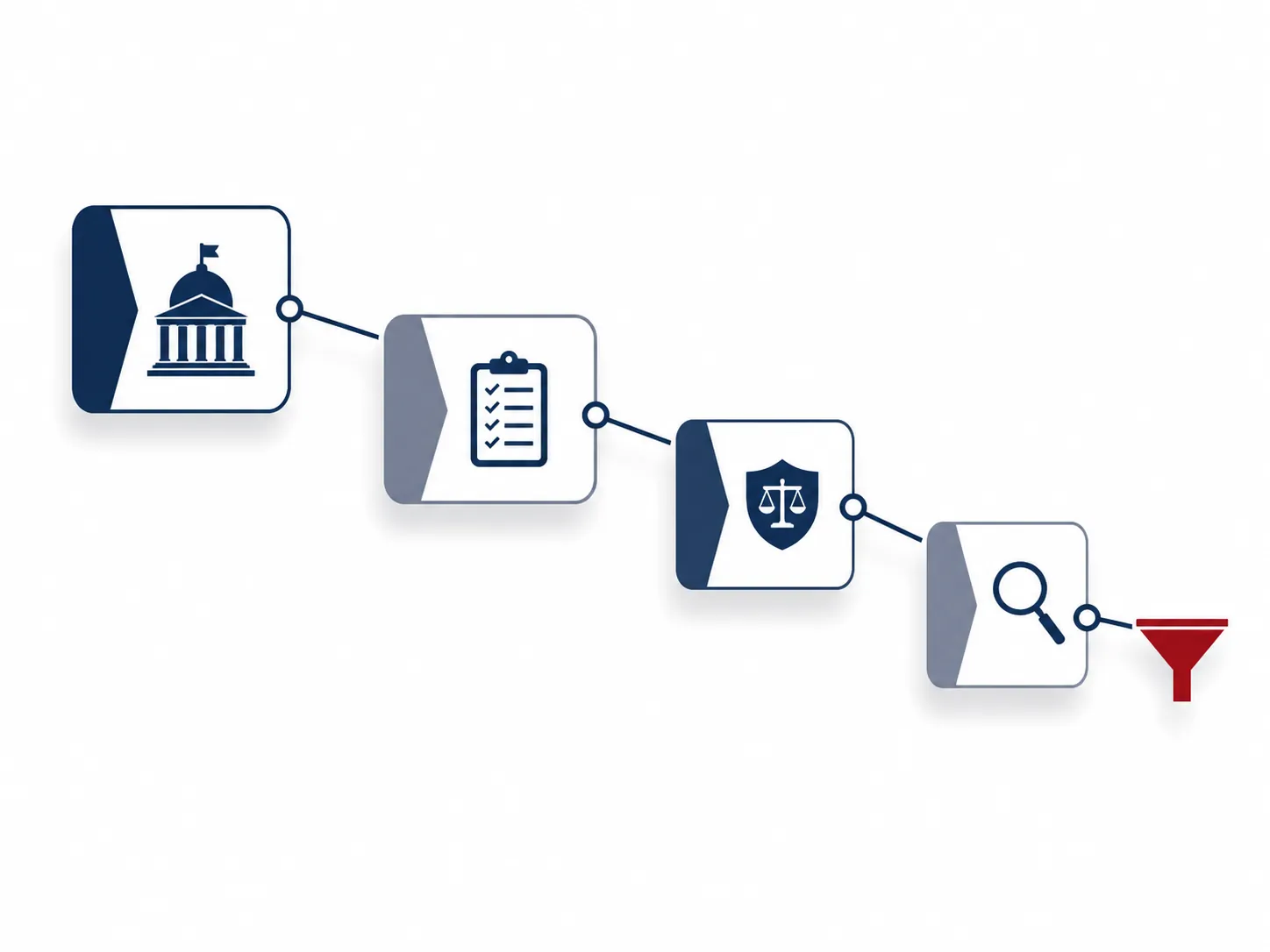
The Aug. 5 agenda item matters because it is the first visible institutional checkpoint after the hearing coverage. If HSGAC approves an original contempt resolution, the committee can move the matter toward the Senate rather than leaving it as a hearing-room dispute. Reporting has described Sen. Rand Paul’s plan as a dual track involving a contempt vote and referral efforts, but the official committee calendar currently confirms only the scheduled business-meeting item, not the final text or final committee action.[1][2]
The missing text is not incidental. The resolution could define the allegedly unanswered questions narrowly or broadly. It could attach findings about waiver, pardon exposure, executive-branch communications, or subpoena compliance. It could recommend referral language in a way that tracks 2 U.S.C. §§ 192 and 194, or it could preserve a more political committee record for a later Senate decision. Until the text is public, those details are unknown.
The full-Senate step should be described with care. Some current reporting frames a 60-vote Senate hurdle as the practical barrier to moving the contempt matter forward.[2][3] But 2 U.S.C. § 194 does not, on its face, say “60 votes.” The better description is narrower: press analysis and Senate practice point to a full-chamber step as necessary before a criminal contempt referral is transmitted, and the vote threshold is a procedural constraint, not clean statutory text.
That matters for briefing purposes. A client alert that says “Fauci has been referred to DOJ” would be wrong as of Aug. 3. So would a headline implying the Aug. 5 committee vote, if it occurs, is the same thing as a prosecution. The live question is whether the committee will approve a contempt resolution and, if so, what the Senate does with it.
Readers who need the baseline mechanics can compare this status record with the earlier enforcement-path explainer, Fauci contempt vote: legal path from citation to prosecution. This record is narrower and more current: it is keyed to the Aug. 5 calendar item and the two July D.C. Circuit decisions that now shape the witness-side risk analysis.
The hearing record is still thinner than the rhetoric around it
The broad outline is not in serious dispute: Fauci invoked the Fifth Amendment during Senate questioning, and that refusal posture is now tied to a contempt agenda item. The exact count is less settled. The Hill, citing Fox-derived reporting, reported 111 invocations; Reuters described the number as more than 100.[2][3] Until an official transcript is available and checked against the subpoenaed question set, the precise count should be attributed rather than stated as a record fact.
That does not make the count irrelevant. A high number of invocations can shape committee findings, public pressure, and any later Senate debate. But contempt analysis usually turns on the subpoena, the question, the witness’s response, any asserted privilege, and whether the committee preserved the procedural steps needed to support enforcement. A large invocation count is not a substitute for that record.
Nor is this record an attempt to relitigate the July hearing scene. The hearing itself is better treated as background for the subpoena-risk template already covered in Fauci Hearing as a Complete Congressional Subpoena Risk Template. The useful Aug. 3 question is what exists on paper now.
Navarro makes non-response harder to defend
The first July D.C. Circuit decision that matters is United States v. Navarro. On July 21, 2026, the D.C. Circuit upheld Peter Navarro’s contempt conviction in litigation arising from his refusal to comply with a congressional subpoena, and reporting on the decision emphasized two points relevant to later subpoena disputes: executive privilege had to be invoked in writing by the President, and a subpoena commanded a response.[4]
Navarro does not decide Fauci’s case. The asserted privilege theory, witness identity, committee record, and questions presented are not the same. But it does narrow a familiar maneuver: treating generalized privilege language, nonappearance, or non-response as if it were equivalent to a preserved, itemized, legally sufficient objection.
For a witness-side risk brief, the practical consequence is straightforward. If the committee record shows only refusal without a properly preserved privilege basis, Navarro makes that posture harder to defend. If the record instead shows question-by-question invocations, objections, or accommodations, the analysis becomes more granular. That is another reason the unpublished resolution text and any official transcript matter.
de la Torre limits the pre-enforcement Fifth Amendment route
The second decision is de la Torre v. Cassidy, issued July 31, 2026. Reuters reported that the former Steward Health Care CEO lost his appeal in a lawsuit against U.S. senators, and the D.C. Circuit case page identifies the July 31 decision in No. 25-5353.[5][6] The holding, as relevant here, is that the Speech or Debate Clause barred a pre-enforcement Fifth Amendment challenge to a Senate subpoena.
The point is not that the Fifth Amendment disappears in congressional investigations. It does not. The point is timing and forum. A witness who wants to sue senators in advance to block or reshape subpoena enforcement faces a Speech or Debate problem. Invocation may preserve a constitutional claim, but de la Torre cuts against the idea that invocation alone stops the Senate from continuing its own contempt process.
That is the narrower and more useful reading for the Fauci matter. The decision does not tell DOJ to prosecute. It does not decide whether particular Fauci answers would have been incriminating. It does not tell the Senate how to vote. It does, however, make one litigation path look less available: a pre-enforcement suit against senators framed around the Fifth Amendment before the chamber process runs its course.
The pardon and state-exposure issue should stay narrow
The public debate around the Fifth Amendment has leaned heavily on the effect of a presidential pardon and possible non-federal exposure. Reporting has described Paul’s theory that Fauci’s pardon does not eliminate all legal exposure and that a contempt referral remains possible.[2][3] That is a theory about why answers might still matter, not a judicial ruling on Fauci’s specific exposure.
A separate state development also exists. NBC4i reported that Florida’s attorney general was launching an investigation into Fauci after the Senate hearing.[7] That report may matter to how counsel evaluates Fifth Amendment risk, but it should not be folded into the Senate contempt track as if it were the same proceeding. State investigative interest is not a Senate vote, not a DOJ referral, and not a federal indictment.
The safe formulation is therefore limited: reported state-investigation activity may reinforce why a witness would be cautious about compelled testimony, but the existence, scope, and legal effect of any state exposure would need to be assessed separately from the HSGAC contempt calendar.
Even a referral would meet DOJ’s declination history
The enforcement constraint is not mainly doctrinal cleverness. It is institutional. Congressional contempt can move from committee findings to chamber action to a statutory referral, but criminal prosecution still depends on executive-branch action. The Congressional Research Service has summarized the modern House criminal-contempt record since 2008 as producing indictment efforts in 2 of 10 criminal-contempt citations.[8]
CRS has also noted DOJ’s recent declination in the 2024 contempt referral involving Attorney General Merrick Garland.[9] That declination does not control a hypothetical Fauci referral, and the Fauci matter would arise from a different factual setting. It does show the recurring problem with treating a contempt citation as if it were already a prosecutable case: the referral is a handoff, and the receiving institution may decline.
That is why the Aug. 5 vote can be politically significant without being legally dispositive. A committee vote may sharpen pressure on senators, force publication of findings, and create a record for later enforcement. It cannot erase the full-chamber question, the referral question, DOJ’s charging discretion, or the witness’s remaining constitutional arguments.
As of Aug. 3, 2026, the matter is a live procedural calendar converging on the Aug. 5 HSGAC business meeting. The July D.C. Circuit decisions have narrowed several defense and litigation routes, but no committee outcome, full-Senate vote, DOJ referral, indictment decision, or Fauci court filing exists yet.
References
- Business Meeting, U.S. Senate Committee on Homeland Security and Governmental Affairs.
- Anthony Fauci Fifth Amendment pardon contempt vote legal exposure, The Hill.
- Could Fauci face criminal charges for refusing Senate COVID questions?, Reuters, July 30, 2026.
- Navarro contempt conviction upheld, The Hill, July 22, 2026.
- Ex-Steward Health CEO loses appeal in lawsuit against US senators, Reuters, July 31, 2026.
- de la Torre v. Cassidy, Justia, July 31, 2026.
- Florida AG launching investigation into Fauci after Senate hearing, NBC4i.
- Congressional Subpoenas: Enforcing Executive Branch Compliance, Congressional Research Service.
- Congressional Contempt and the Enforcement of Congressional Subpoenas, Congressional Research Service.
Related records
Tool profile
How Meta's AI Spending Reshapes Law Firm ProfitabilityGoverning regulation
Browse the obligations tracker →Preventive workflow
Browse verification workflows →
Report a correction or tip
Spotted an outdated figure, a misstated fact, or a ruling this case record should reflect? Public comments are disabled for this content given the professional cost of a misreported case outcome, penalty amount, or rule text — use the structured correction channel instead.
Report a correction or tip for this record →