
Fauci Hearing as a Complete Congressional Subpoena Risk Template
This analysis maps the discrete risk events and unsettled legal questions exposed by the Fauci hearing, offering counsel a structured framework for preparing any client who receives a congressional subpoena—from pre-hearing pardon analysis to post-hearing contempt and prosecution risk.
- Jurisdiction
- United States - Federal
- Court
- U.S. Senate Committee on Homeland Security and Governmental Affairs
- AI tool named
- None
- Ruling date
- Jul 29, 2026
- Source document
- View primary court order ↗
- Last verified
- Jul 30, 2026
Lex Machina Review is an independent risk-tracking and reference resource. Nothing on this site is legal advice, and using it does not create an attorney-client relationship. Every record is reviewed against primary sources but may not reflect the most current status of a matter — always verify directly against the cited court order, rule text, or a licensed attorney before relying on it.
Companion explanation — secondary to the source document above
The most memorable frame from the July 29 Fauci hearing was built for television: Anthony Fauci at the witness table, Laura Ingraham visible behind him, Sen. Rand Paul pressing question after question, and Fauci answering with the same Fifth Amendment formula. For readers arriving through a Laura Ingraham Fauci Fifth Amendment hearing reaction legal analysis search, the caution is immediate: Ingraham’s presence explains part of the atmosphere, not the legal exposure. The legal event was the compression of a subpoena dispute into a single morning — pardon, compelled testimony, repeated refusals, counsel intervention, counsel removal, contempt threat, and a possible referral path that had not yet reached the Department of Justice as of July 30, 2026.
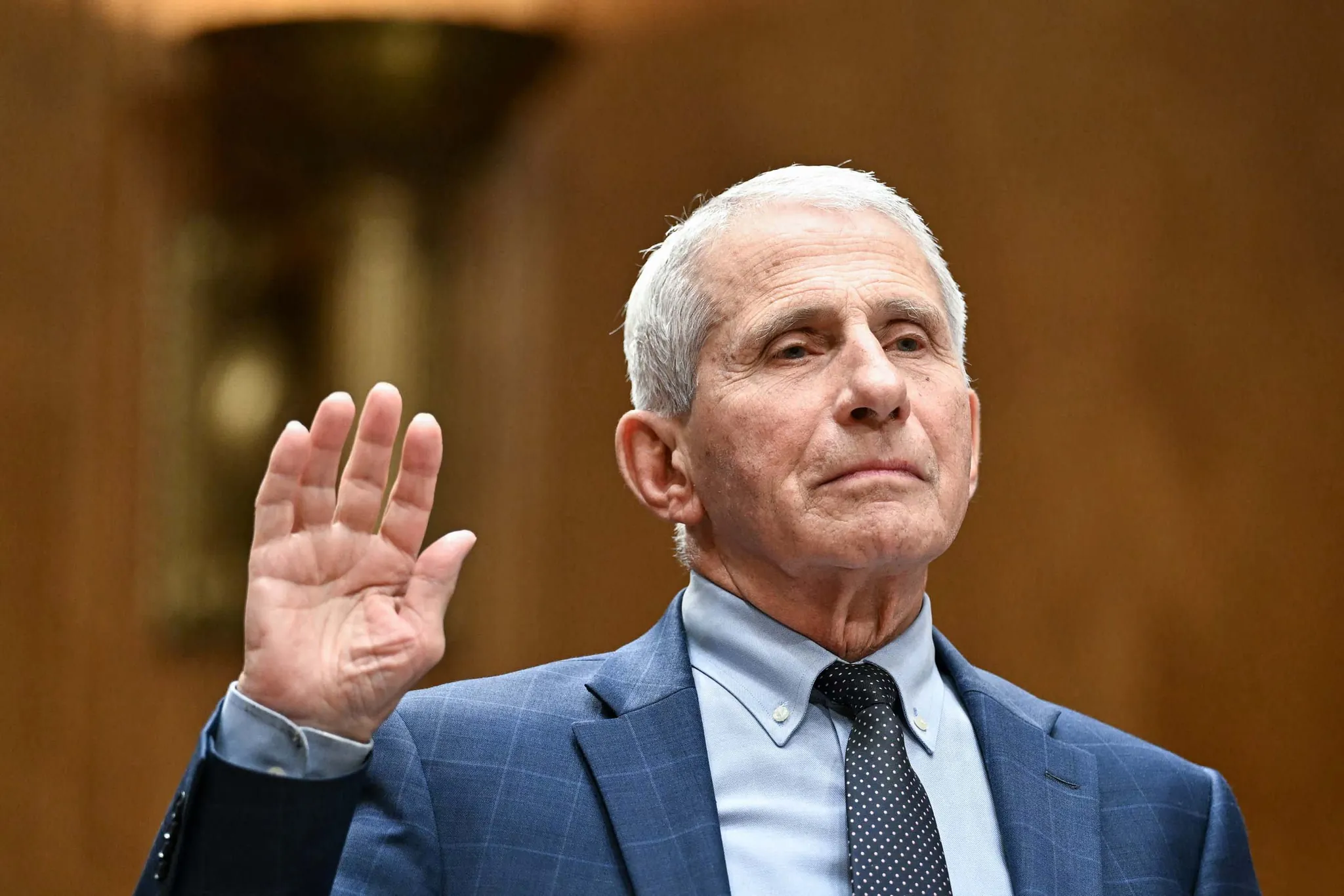
The visible exchange is easy to overread. Reuters reported that Fauci invoked the Fifth Amendment and declined to answer at Paul’s Senate hearing, while AP counted more than 100 refusals across the broader questioning by senators; Reuters separately described 15 Paul-specific refusals, which is a different count and should not be merged with AP’s broader number.[1][2] Yahoo News, republishing Mediaite, reported the Ingraham seating detail, Sen. Bernie Moreno’s callout, and the diary reference in which Fauci called Ingraham a “stooge.”[3] Those details matter because they show the media-oversight environment in which the witness and counsel were operating. They do not create a separate Ingraham-centered legal theory.
This is a risk-digest analysis, not legal advice. It treats the hearing as a subpoena-preparation template for counsel representing a witness, executive, former official, or company officer who may be compelled to appear before Congress. The useful question is not who looked stronger on camera. It is what a witness can safely say when a committee believes a presidential pardon has stripped away the Fifth Amendment and the witness’s lawyer believes a new offense can be created in real time.
The timeline matters before the legal argument starts
A subpoena recipient’s risk memo should begin with dates, not adjectives. Here the dates are unusually important because the pardon, the alleged past conduct, the hearing testimony, and any later contempt proceeding occupy different time periods.
| Date or window | Event | Why counsel should care |
|---|---|---|
| Jan. 1, 2014 through Jan. 19, 2025 | The period described in reporting on President Biden’s preemptive pardon for federal offenses involving Fauci. | A time-limited federal pardon may affect exposure for past federal conduct, but it does not automatically answer state-prosecution risk or later-testimony risk.[4] |
| Jan. 19, 2025 | Biden issued the preemptive pardon. | The pardon date becomes the dividing line between covered past federal exposure and conduct after the pardon, including hearing testimony.[4] |
| June 2026 | Paul subpoenaed Fauci after Fauci declined to testify voluntarily. | The matter moved from voluntary cooperation to compulsion, changing the witness-preparation posture.[1] |
| July 25, 2026 | Paul released Fauci’s diary, reported as 1,141 pages. | The release sharpened the hearing record and the public-pressure environment before testimony.[5] |
| July 29, 2026 | Fauci appeared, invoked the Fifth repeatedly, and counsel David Schertler was removed after attempting to intervene. | The witness’s answers, counsel’s attempted participation, and committee control of the room all became part of the risk record.[1][4] |
| Aug. 5, 2026 | Paul announced a committee vote on contempt for the next business meeting. | As of July 30, 2026, the vote had not occurred; any analysis predicting a contempt citation or DOJ prosecution is premature.[5] |
That sequence is why this hearing is more useful as a template than as a shouting-match recap. A witness who has a pardon may still have to decide whether a truthful answer creates state exposure, contradicts a prior statement, supplies an element for an unpardoned offense, or triggers a later false-statement or perjury allegation. A committee, for its part, may conclude the witness is hiding behind a privilege that no longer applies. Both positions can be stated too confidently.
The pardon–Fifth Amendment gap is the load-bearing issue
The central legal problem is not whether a pardon exists. It is what that pardon actually removes. NBC reported that Fauci’s written opening statement said he was invoking the Fifth on advice of counsel, accused Paul of an “unhinged obsession,” and pointed to Fauci’s more than 200 prior congressional appearances as evidence of good faith.[4] That is not just rhetoric. It is counsel trying to preserve a record that the refusal was based on a perceived prosecution risk, not a blanket refusal to cooperate.
The strongest argument against Fauci’s invocation starts with Brown v. Walker. The Constitution Center’s discussion of the pardon issue quotes the Brown-era proposition that, after a pardon, a witness “cannot longer set up his privilege” because he stands “as if [the offense] had never been committed.”[7] Sen. Josh Hawley reportedly invoked that line of authority in arguing that Fauci’s pardon defeated the Fifth Amendment claim.[4][7]
That argument has force, but it is not the whole memo. Brown supports a narrow proposition: when the legal risk of prosecution for the pardoned conduct is eliminated, the privilege may disappear as to that conduct. It does not, by itself, decide what happens when the pardon is federal rather than state, time-limited rather than universal, and followed by compelled live testimony that can generate its own exposure.
Burdick v. United States complicates the clean version of the Brown argument because it recognizes that a pardon can be refused, a point the Constitution Center discussion treats as part of the modern uncertainty around whether pardons automatically remove Fifth Amendment rights.[7] The Fauci hearing adds another layer: even if a pardon is accepted and effective for past federal offenses, that still leaves questions about state prosecution and post-pardon conduct.
The state-sovereign point is not decorative. The same Constitution Center discussion quotes Eugene Volokh’s formulation that the privilege disappears only when “there’s no realistic prospect of prosecution by any American government, federal or state.”[7] Counsel preparing a subpoena recipient cannot stop at, “Is there a federal pardon?” The next questions are whether any state theory remains plausible and whether the hearing questions seek admissions that could be repackaged outside the federal pardon’s reach.
The time gap is equally important. A pardon covering federal offenses through Jan. 19, 2025 cannot pardon testimony given on July 29, 2026. That does not mean every answer would create a realistic new charge. It means counsel must distinguish the subject matter of the question from the legal consequence of the answer. A question about 2020 conduct may invite an answer in 2026 that creates a new false-statement, perjury, obstruction, or inconsistency problem if the witness answers badly.
For deeper treatment of the constitutional pardon question, see the companion analysis on the pardon–Fifth Amendment risk. The practical point here is narrower: no lawyer should advise a witness that a presidential pardon either obviously destroys the Fifth in full or obviously leaves it untouched in full. The answer depends on sovereign, time, subject matter, and the specific phrasing of each question.
The perjury-trap concern is real, but it has to be kept narrow
A witness cannot usually invoke the Fifth merely because truthful testimony might later be judged harshly, politically weaponized, or contradicted in the press. Fear of prosecution for future perjury, standing alone, is a thin basis for silence; United States v. Whittington is the authority normally cited for the proposition that a witness cannot create a Fifth Amendment privilege simply by saying truthful testimony might expose him to perjury if he lies.
That is why Fauci’s team appears to have framed the risk more broadly than ordinary perjury anxiety. NBC reported that Fauci’s prepared statement accused Paul of an “unhinged obsession” and said Fauci was acting on advice of counsel.[4] STAT likewise reported the “unhinged obsession” language and the Fifth Amendment posture.[6] The phrase is inflammatory, but the legal work it tries to do is recognizable: it argues that the hearing was not a neutral request for historical facts, and that answers could be used to create a realistic prosecution risk outside the pardon’s safe zone.
That argument is not self-proving. A committee can ask hostile questions. A senator can have a long-running theory of wrongdoing. Neither fact automatically makes every answer incriminating. The witness still needs a reasonable apprehension of criminal prosecution tied to the question asked. The better defense memo would therefore annotate the transcript question by question: what conduct period was implicated, what sovereign could prosecute, what statute could plausibly be involved, and whether answering would merely be embarrassing or actually furnish evidence.
This is where the counting variance matters. Reuters’ 15 Paul-specific refusals and AP’s “more than 100” refusals across all senators are both newsworthy, but they measure different things.[1][2] For contempt defense, the number that matters is not the largest count that sounds dramatic. It is the set of specific questions on which the committee claims willful default, and whether a valid privilege attached to those questions.
Counsel’s removal belongs in the risk file, not in a victory lap
The lawyer-removal incident is the part of the hearing that should make defense counsel sit up straighter. NBC reported that Fauci’s attorney, David Schertler, was escorted out by committee security after Paul refused to recognize him as he tried to intervene.[4] STAT reported Schertler’s post-hearing statement that he was examining “all options to hold [Paul] accountable.”[6]
There is an obvious due-process concern when a compelled witness is left to answer, decline, or formulate privilege invocations without contemporaneous access to counsel. But there is also a discipline problem in overstating it. Available reporting and authorities do not identify a direct Supreme Court rule holding that removal of counsel from a congressional hearing automatically defeats contempt, immunizes the witness, or invalidates the proceeding. A defense lawyer would preserve the issue, not promise the client it wins the case.
The preparation lesson is practical. Before the witness enters the room, counsel should know the committee rules on attorney participation, whether objections can be made on the record, whether counsel may confer during questioning, who decides recognition disputes, and what the witness should say if counsel is cut off. The worst version is improvisation: counsel objects, the chair refuses recognition, security intervenes, and the witness has to decide alone whether a new phrasing is safe.
A clean instruction can be short. If counsel is excluded or prevented from advising during a legally sensitive question, the witness should be prepared to state that he or she cannot answer without consulting counsel and is preserving all constitutional and procedural objections. That does not guarantee the committee will accept the position. It prevents the witness from filling silence with a damaging answer.
Contempt is a process, not the senator’s announcement of it
Forbes reported that Paul said the committee would vote on holding Fauci in contempt at its next business meeting on Aug. 5, 2026.[5] That was a threat with a date, not a completed legal outcome. As of July 30, 2026, counsel should treat the contempt risk as live and unresolved.
The criminal contempt statute is blunt. Under 2 U.S.C. § 192, a summoned witness who “willfully makes default” or refuses to answer a question pertinent to the inquiry is guilty of a misdemeanor, with penalties that include a fine up to $100,000 and imprisonment up to 12 months.[8] That statutory language is why the transcript matters. A contempt theory has to be built from a summons, a pertinent question, a refusal, and willfulness.
| Enforcement path | What it means | Risk point for counsel |
|---|---|---|
| Inherent contempt | Congress uses its own coercive power, historically including detention by the sergeant-at-arms. | Cornell LII’s Wex overview describes inherent contempt as rarely used in modern practice; it remains part of the map but is not the ordinary path.[9] |
| Criminal contempt under 2 U.S.C. § 192 | Congress makes a contempt citation and the matter can be referred for prosecution. | The defense turns on validity of the privilege claim, pertinency, willfulness, and referral/prosecution decisions.[8][9] |
| Civil enforcement | Congress seeks a court order compelling compliance. | This path changes the forum and timing; it may reduce immediate theater but does not eliminate exposure.[9] |
Quinn v. United States matters here because the contempt question is not simply, “Did the witness refuse?” Cornell’s Wex discussion of contempt of Congress identifies a valid Fifth Amendment invocation as a defense to contempt.[9] The unresolved point in the Fauci setting is whether the pardon removed the factual predicate for a valid Fifth claim as to some or all questions. That is the hinge, and it should be briefed as a hinge rather than assumed away.
Even a committee vote would not be the same thing as a DOJ prosecution. The NY Post reported the Senate referral path in terms of a 60-vote cloture threshold, giving Democrats a potential filibuster route.[10] That political-procedural hurdle is not a merits defense under § 192. It is a separate gate between committee outrage and a prosecutable contempt referral.
The nearest modern cautionary comparison is not an identical Fauci fact pattern but the subpoena-contempt track that produced Peter Navarro’s conviction. For a side-by-side procedural reference, see the Navarro contempt conviction timeline and the analysis of how the willfulness standard under 2 U.S.C. § 192 can become the center of a criminal case. The Fauci hearing raises a different privilege problem, but the process risk is familiar: a congressional dispute can outlive the news cycle.
What the media details do and do not prove
The Ingraham detail matters because it was part of the room. Her seat behind Fauci, Moreno’s callout, and the diary insult helped turn a subpoena hearing into a media event.[3] They also give context to why a witness’s counsel might worry about phrasing, clip selection, and downstream uses of partial answers.
But none of that changes the legal tests. Ingraham’s presence does not decide whether Brown controls, whether Burdick leaves room for a continuing privilege, whether state prosecution risk is realistic, whether counsel’s removal violated due process, or whether a contempt citation would survive. Treating the media angle as the center of the legal analysis would make the same mistake a bad hearing prep memo makes: confusing pressure with exposure.
The credibility context also cuts differently from the legal context. Reuters and STAT reported that more than 150 infectious-disease experts signed a public letter defending Fauci.[1][6] That may matter in public debate, reputational assessment, and committee messaging. It does not itself answer whether a specific refusal to answer a specific question was privileged.
The prep memo this hearing writes for the next subpoena recipient
A lawyer preparing the next witness should not copy Fauci’s exact posture. The value is in the checklist the hearing exposes.
- Map immunity and pardon coverage by sovereign, date, subject matter, and offense. Do not describe a federal pardon as if it were global immunity.
- Separate past-conduct exposure from live-testimony exposure. A question about covered conduct can still produce an unprotected answer if the witness lies, speculates, or contradicts a prior statement.
- Prepare a question-by-question privilege protocol. A blanket Fifth Amendment posture may be necessary in some settings, but contempt defense will usually be litigated through discrete questions.
- Know the committee’s counsel rules before the witness sits down. If counsel may not object in the ordinary courtroom sense, the witness needs a rehearsed method for requesting consultation without volunteering substance.
- Create a record of good faith. Prior cooperation, document production, voluntary interviews, and narrowly stated objections may become important if the committee later argues willful default.
- Track the enforcement path separately from the hearing. A contempt threat, committee vote, floor action, referral, DOJ decision, indictment, and trial are different gates with different decision-makers.
The earlier Fauci risk-digest entry on disclosure conflict and the broader piece on records-destruction risk are useful background only to the extent they show how long-running oversight theories can reappear in new procedural forms. They do not replace the narrower hearing-specific analysis.
What remains unsettled as of July 30, 2026
Three questions remain open. First, does a time-limited federal pardon remove the Fifth Amendment privilege for every question about the covered period, or only for questions that cannot realistically expose the witness to state prosecution or post-pardon criminal liability? Brown gives the committee a serious argument; Burdick, state-sovereign exposure, and the later-testimony gap give counsel room to resist overstatement.[7]
Second, when does concern about a perjury trap become a reasonable apprehension of prosecution rather than ordinary witness anxiety? The answer cannot be supplied by the witness’s distrust of the questioner alone. It has to be tied to the question, the legal exposure, and the limits of any pardon or immunity.
Third, what consequence follows if a committee removes or silences a witness’s lawyer during compelled testimony? The incident is serious, and Schertler’s post-hearing statement indicates the issue may not end with the hearing.[6] But on the present record it is an unsettled due-process and right-to-counsel problem, not a guaranteed contempt defense.
That is the useful boundary. The hearing did not settle whether Fauci can be held in contempt, whether DOJ would prosecute, or whether a court would accept his Fifth Amendment theory. It did show, in unusually compressed form, what congressional subpoena preparation now has to cover: the pardon file, the privilege file, the transcript file, the counsel-access file, and the enforcement file — before the witness takes the first question.
References
- Fauci invokes Fifth Amendment, declines to answer at Rand Paul hearing — Reuters
- Fauci declines to testify in Republican-led COVID-19 hearing — AP News
- Fox News Star Gets Prime Seat at Fauci Grilling — Yahoo News/Mediaite
- Anthony Fauci invokes Fifth Amendment right not to answer questions at Covid hearing — NBC News
- Fauci Threatened With Contempt Of Congress After Invoking Fifth Amendment — Forbes
- Fauci, citing senator's "unhinged obsession," pleads the Fifth — STAT News
- Do presidential pardons remove the Fifth Amendment rights of recipients? — Constitution Center
- 2 U.S. Code § 192 — Cornell LII
- contempt of Congress — Cornell LII Wex
- Fauci's Biden autopen pardon won't spare him from prosecution — NY Post
Related records
Tool profile
Browse tool evaluations →Governing regulation
Browse the obligations tracker →Preventive workflow
Browse verification workflows →
Report a correction or tip
Spotted an outdated figure, a misstated fact, or a ruling this case record should reflect? Public comments are disabled for this content given the professional cost of a misreported case outcome, penalty amount, or rule text — use the structured correction channel instead.
Report a correction or tip for this record →