
What Fauci's Fifth Amendment testimony means legally
Maps the actual legal exposure from Fauci's Fifth Amendment testimony at the July 29, 2026 Senate hearing: the pardon narrows but does not extinguish the privilege, the 2 U.S.C. § 192 contempt path is long and discretionary, and the pre-hearing diary release makes post-pardon perjury the sharpest risk. Includes a primary-source verification checklist.
- Jurisdiction
- US Federal
- Court
- U.S. Senate (HSGAC)
- AI tool named
- No AI tool named
- Ruling date
- Jul 29, 2026
- Source document
- View primary court order ↗
- Last verified
- Aug 2, 2026
Lex Machina Review is an independent risk-tracking and reference resource. Nothing on this site is legal advice, and using it does not create an attorney-client relationship. Every record is reviewed against primary sources but may not reflect the most current status of a matter — always verify directly against the cited court order, rule text, or a licensed attorney before relying on it.
Companion explanation — secondary to the source document above
Risk Digest — congressional-investigation companion record. Legal information, not legal advice. Last verified: Aug. 2, 2026, UTC.
| Record point | Current status |
|---|---|
| Hearing | Senate Homeland Security and Governmental Affairs Committee hearing on July 29, 2026. [1] |
| Witness | Dr. Anthony S. Fauci, former director of the National Institute of Allergy and Infectious Diseases. [1] |
| Posture | Fauci appeared, was questioned, and invoked the Fifth Amendment repeatedly rather than refusing to appear. [1] |
| Contempt threat | Sen. Rand Paul said he would move toward a contempt vote after the invocations; PBS NewsHour posted video of Paul saying he would hold that vote. [2] |
| Invocation count | Treat the number as attributed until the official transcript is available: CNN and The Hill reported 111; BBC and BMJ described the count as more than 100. [3][4][5][6] |
| Pardon instrument | President Biden’s Jan. 19, 2025 pardon is reported as covering federal offenses from Jan. 1, 2014, through Jan. 19, 2025. [7] |
| Contempt status | A contemplated committee vote was not, by itself, a prosecution. The path would still require additional Senate and executive-branch steps. |
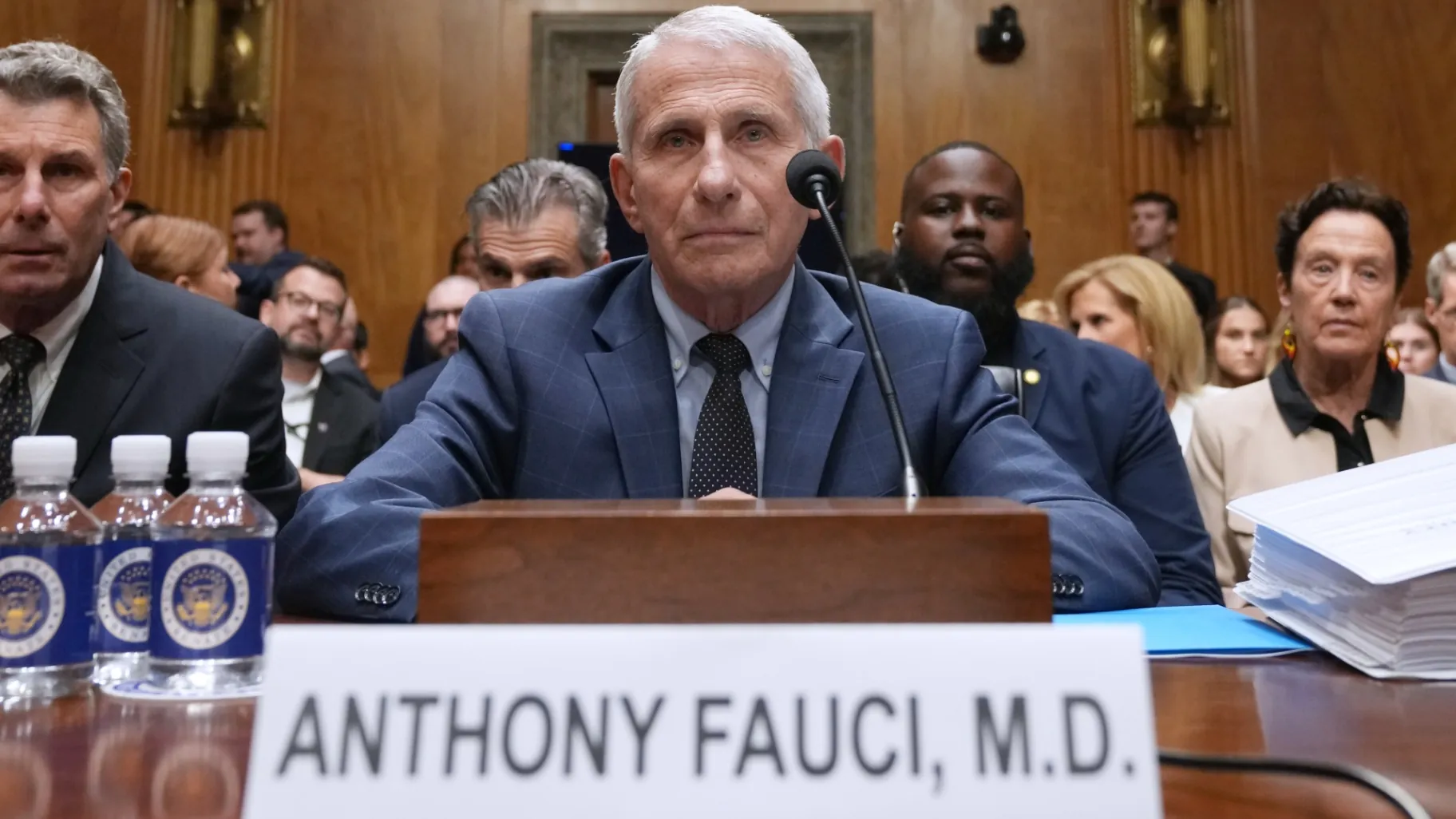
The legal implications of Fauci’s Fifth Amendment testimony are narrower, and sharper, than the televised contempt threat made them sound. The Biden pardon substantially reduces the ordinary risk of federal prosecution for covered pre-Jan. 19, 2025 conduct, but it does not automatically erase every possible basis for invoking the Fifth. The contempt route under 2 U.S.C. § 192 is real enough to track, but procedurally long and discretionary. The freshest legal exposure is different: if Fauci later gives testimony after the pardon period, and that testimony can be compared against documents released before questioning, the risk becomes testimony-related perjury or false-statement exposure rather than the underlying COVID-origin dispute.
That is the point that gets lost when the hearing is summarized as “Fauci took the Fifth despite a pardon.” A pardon changes the privilege analysis. It does not end the analysis.
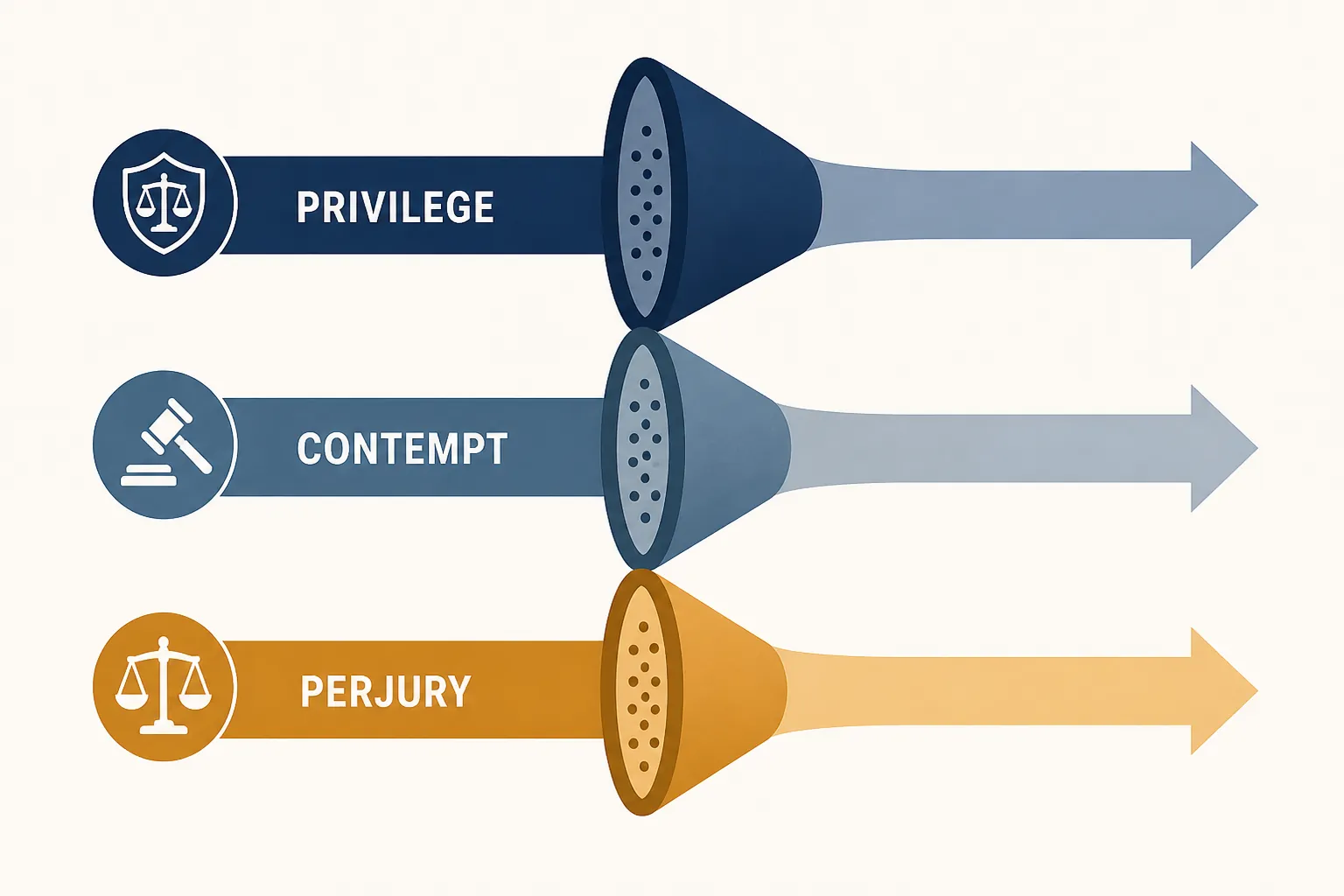
The three legal tracks are not the same risk
| Track | What has to be shown | Practical consequence |
|---|---|---|
| Fifth Amendment privilege after pardon | Whether the pardon removes any real risk of criminal exposure for the questions asked. | The pardon narrows the privilege for covered federal offenses, but state exposure, post-pardon conduct, and testimony-related crimes remain separate problems. |
| Contempt of Congress | Whether a witness summoned by Congress refused to answer a pertinent question without a valid legal basis, and whether Congress and prosecutors choose to press the matter. | A committee threat is only the first move. Referral and prosecutorial discretion matter. |
| Post-pardon perjury or false testimony | Whether testimony given after Jan. 19, 2025 is knowingly false or otherwise prosecutable as testimony-related misconduct. | This is the cleanest time-window problem for prosecutors because the alleged conduct would occur after the pardon’s endpoint. |
The earlier site records on the Fauci contempt-vote risk assessment, the contempt pathway, and the pardon-versus-privilege framework are useful if the question is only one lane. The harder advisory problem is that the lanes intersect but do not collapse into each other.
Why the pardon does not mechanically end the Fifth Amendment question

The Jan. 19, 2025 pardon is the hinge. Its reported coverage is broad within its lane: federal offenses arising during the period from Jan. 1, 2014, through Jan. 19, 2025. But the lane has edges. It is federal, not state. It is time-limited. It does not reach conduct after Jan. 19, 2025. Those boundaries matter more than the adjective “full” in any headline account of the hearing. [7]
The old Supreme Court authorities do not give either side a one-sentence answer. Brown v. Walker upheld compelled testimony where immunity displaced the danger of prosecution; Burdick v. United States treated a pardon differently and refused to turn an offered pardon into an automatic destruction of the privilege. The National Constitution Center’s discussion of those cases is useful because it separates immunity doctrine from pardon doctrine, a distinction that tends to vanish in hearing clips. [8]
Kastigar supplies the modern immunity baseline: the government may compel testimony over a Fifth Amendment objection when the immunity granted is coextensive with the privilege, including protection against use and derivative use of compelled testimony. That does not mean every pardon operates like a perfectly tailored immunity order for every question a committee asks. [9]
A lawyer advising the witness would ask a more granular question: for this question, could the answer furnish a link in a prosecutable chain that is not covered by the pardon? If the only plausible exposure is a covered federal offense within the Jan. 1, 2014-to-Jan. 19, 2025 window, the privilege claim is weaker. If the answer could implicate state-law exposure, post-Jan. 19, 2025 conduct, or the truthfulness of new testimony, the privilege analysis is not over.
That is why Paul’s own reported concession matters. PolitiFact quoted him as saying that “the courts may have to decide” the pardon question. It is an unusually important sentence because it concedes what the sound bite usually denies: the committee chair’s view is not self-executing law. [1]
The number of invocations is less important than the question-by-question basis
The reported invocation count is politically vivid but legally incomplete. CNN and The Hill reported 111 invocations; BBC and BMJ used the broader “more than 100” formulation. [3][4][5][6] Until the transcript is available, the safer treatment is to preserve the variation rather than harmonize it into a false precision.
Even after the transcript is available, the useful unit will not be the total number. It will be the sequence: the question asked, the objection made, any instruction from counsel, any ruling by the chair, and whether the question sought information inside or outside the pardon’s protected lane.
The perjury track is the cleaner post-pardon danger
The perjury issue is not that the diary proves any particular COVID-origin theory. Nothing in this record requires, or supports, that detour. The issue is mechanical: more than 1,100 pages of Fauci’s diary were released before the hearing, creating a fixed body of material against which later testimony could be compared. [5]
That changes the advisory posture. If documents exist before the questioning, a witness who elects to answer is not merely narrating from memory into an empty record. Counsel must assume that later reviewers can line up the answer, the document, the date, and any prior statement. The risk does not depend on whether the underlying pre-2025 conduct was pardoned. It depends on whether the new testimony is itself prosecutable conduct occurring after the pardon window.
This is why the pardon can make silence harder to defend on some underlying questions while making careful silence more rational on others. A covered federal offense from the pardon period may no longer be the sharp edge. A new false answer in 2026 would not be from the pardon period at all.
The distinction also explains why prior congressional appearances do not settle the point. Reports vary on whether Fauci had previously appeared before Congress more than 200 times or more than 250 times. [1][3] Either way, frequency of past testimony is not a waiver of a witness’s right to assess a new subpoena, a new document record, and a new pardon problem.
Contempt is possible, but not in the way the hearing threat suggested
The contempt statute is not imaginary. 2 U.S.C. § 192 covers a person summoned as a witness by Congress who refuses to answer a question pertinent to the inquiry, and it classifies the offense as a misdemeanor. [10] If a committee believes a witness’s Fifth Amendment invocation is invalid because a pardon removed the risk of self-incrimination, the committee can attempt to build a contempt record.
But the sequence is not “chair threatens contempt, witness is prosecuted.” The expected path would be: committee vote; possible full-Senate action; referral to the executive branch; then a charging decision by the U.S. Attorney for the District of Columbia. Reporting on the contemplated Fauci vote placed the committee step in the week after the hearing, not at the hearing itself. [2]
The penalty number should be verified from primary code text before publication in any later brief. The Cornell version of 2 U.S.C. § 192 states a fine range of $100 to $1,000 and imprisonment for one to twelve months; the materials cited here also include congressional-practice discussion describing a higher maximum fine. That conflict is a verification task, not a place for confident paraphrase. [10][11]
Bannon and Navarro are useful comparators only up to a point. They show that criminal contempt of Congress can become a real prosecution and sentence; Bannon received a four-month sentence, and Navarro was also convicted in the congressional-contempt context. But those matters involved refusal-to-appear or noncompliance postures. They are not successful precedents for punishing a witness who appeared at the table and invoked the Fifth question by question. [11]
On the present record, the best-supported formulation is expert-attributed, not absolute: PolitiFact and CNN reported analysis that there is no successful precedent for prosecuting this appeared-and-invoked posture. [1][3] That does not make contempt impossible. It makes the committee’s burden more complicated, and it makes prosecutorial discretion central.
What the next documents should show
The next legally useful document is not a fundraising email, a floor speech, or a cable-news chyron. It is the transcript. The transcript should show the actual questions, whether each question was arguably pertinent to the committee’s inquiry, whether counsel stated a basis for the Fifth Amendment assertion, and whether the chair directed an answer after the invocation.
The second document is any contempt resolution. It should identify the questions treated as refusals, the committee’s theory for why the pardon defeated the privilege, and the procedural authority for moving the matter forward. If the resolution simply counts invocations without pairing them to questions and rulings, it is a weaker legal instrument than the hearing rhetoric suggests.
The third event is any full-Senate referral. A committee vote would not itself put Fauci in criminal court. It would create a record for possible Senate action and, if referred, for executive-branch review. The D.C. U.S. Attorney’s office would still have discretion in deciding whether a prosecution is warranted.
Primary-source verification checklist
- Pardon instrument: confirm the date, the covered person, the federal-only scope, and the Jan. 1, 2014-to-Jan. 19, 2025 coverage window from the warrant itself.
- Hearing record: obtain the official July 29, 2026 Senate Homeland Security and Governmental Affairs Committee transcript when posted; do not rely on invocation-count summaries alone.
- Question list: identify each question for which the Fifth was invoked, the stated basis, and any chair ruling or instruction to answer.
- Contempt resolution: verify whether the committee actually voted, the date of the vote, the text of the resolution, and whether the resolution distinguishes appearing-and-invoking from refusing to appear.
- Statute text: check current 2 U.S.C. § 192 and related referral provisions before stating any penalty range or procedural obligation.
- Senate action: confirm whether any contempt report or resolution reached the full Senate and whether cloture or other voting thresholds affected referral.
- Executive-branch action: confirm whether any referral reached the U.S. Attorney for the District of Columbia and whether that office opened, declined, or took no public action.
- Diary materials: verify the released page count and release date before using the diary as a basis for any perjury-risk analysis; do not infer what the diary proves without document-level support.
Until those records exist, the clean legal read is limited: Fauci appeared and invoked; the pardon narrows but does not automatically extinguish the Fifth Amendment problem; contempt remains a procedurally extended and discretionary route; and post-pardon testimony-related exposure is the risk that deserves the closest drafting-room attention.
References
- Dr. Anthony Fauci has testified before Congress numerous times. Why take the Fifth now? — PolitiFact, July 29, 2026
- WATCH: Sen. Paul says he will hold a contempt vote after Fauci invokes 5th Amendment — PBS NewsHour
- Why Anthony Fauci might not be safe after pleading the Fifth — CNN, July 29, 2026
- Fauci on "solid legal ground" in face of prosecution threat, lawyer says — BBC
- Fauci invokes the fifth amendment in Senate hearing — BMJ
- 5 takeaways from Fauci’s COVID hearing — The Hill
- A full and unconditional pardon—Dr. Anthony S. Fauci—pardon warrant—19 Jan. 2025 — Wikimedia Commons, Jan. 19, 2025
- Do presidential pardons remove the Fifth Amendment rights of recipients? — National Constitution Center
- Kastigar v. United States, 406 U.S. 441 (1972) — Justia, 1972
- 2 U.S. Code § 192 - Refusal of witness to testify or produce papers — Cornell Legal Information Institute
- CRS Legal Sidebar LSB10974 — Congressional Research Service
Related records
Tool profile
How Meta's AI Spending Reshapes Law Firm ProfitabilityGoverning regulation
Browse the obligations tracker →Preventive workflow
Browse verification workflows →
Report a correction or tip
Spotted an outdated figure, a misstated fact, or a ruling this case record should reflect? Public comments are disabled for this content given the professional cost of a misreported case outcome, penalty amount, or rule text — use the structured correction channel instead.
Report a correction or tip for this record →