
What the FDA Compassionate Use Program Legally Requires
A citation-anchored, pathway-by-pathway register of FDA compassionate use requirements: the statute or regulation, form, criteria, and deadline behind each of the seven expanded access routes. Counsel and compliance officers can use it to pick the correct pathway before filing and to see where legal exposure really sits — pathway mis-selection and missed deadlines, not FDA denial.
- Jurisdiction
- US federal
- Court
- FDA
- AI tool named
- No AI tool
- Ruling date
- Aug 13, 2009
- Source document
- View primary court order ↗
- Last verified
- Aug 4, 2026
Lex Machina Review is an independent risk-tracking and reference resource. Nothing on this site is legal advice, and using it does not create an attorney-client relationship. Every record is reviewed against primary sources but may not reflect the most current status of a matter — always verify directly against the cited court order, rule text, or a licensed attorney before relying on it.
Companion explanation — secondary to the source document above
Scope note: this article uses “FDA compassionate use” in its federal expanded-access sense. It does not address state medical-cannabis “compassionate use” programs. It is a legal-information record, not legal advice. Legal-background review: Rowan Ellis, J.D., regulatory-law editor. Last verified: August 4, 2026; eCFR Title 21 materials checked against the version current to July 31, 2026.
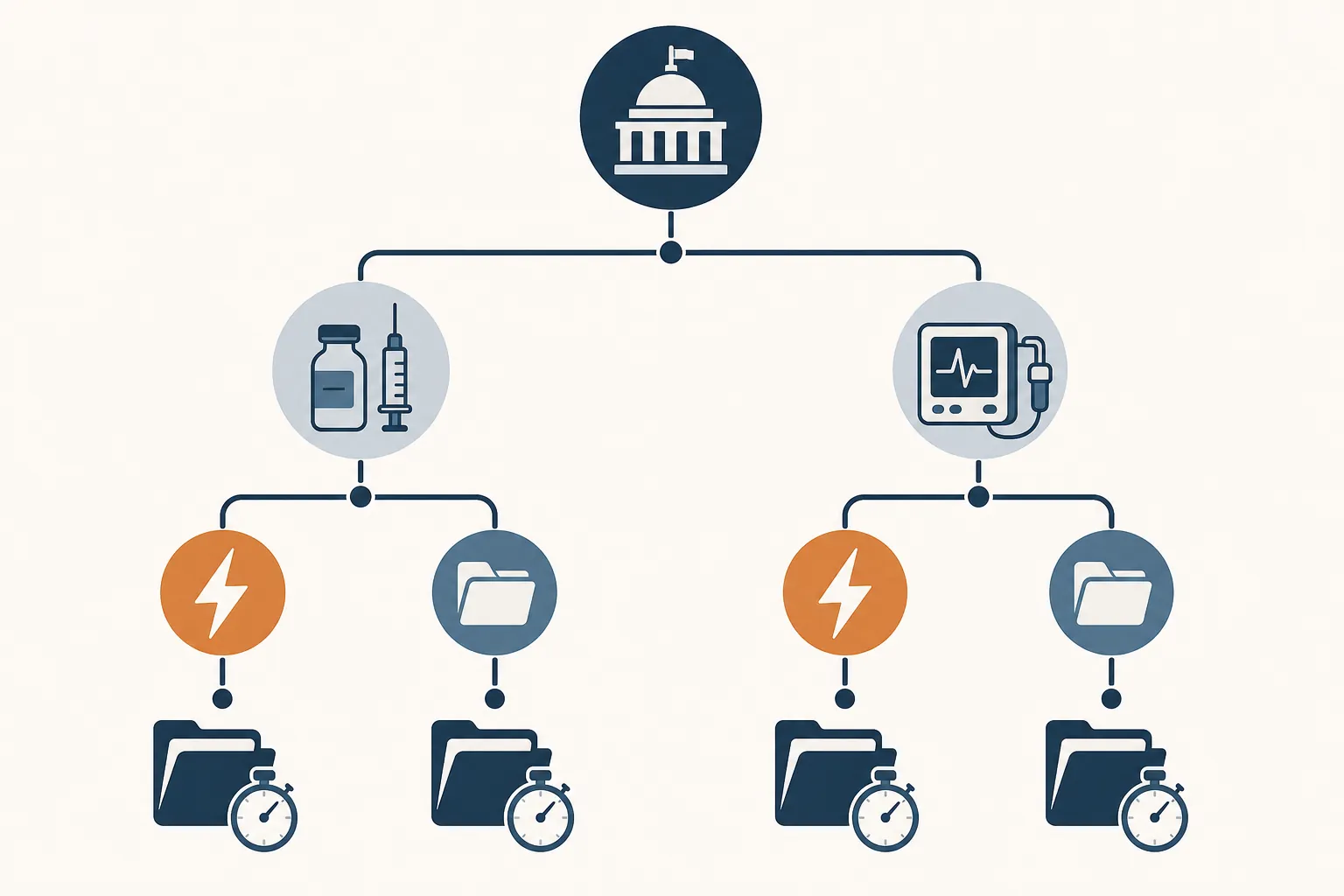
The practical answer to “what are the FDA compassionate use program legal requirements?” is that there is no single legal program to satisfy. FDA expanded access is a set of drug, biologic, and device routes that share a humanitarian access purpose but do not share the same form, trigger, or filing clock. FDA itself describes expanded access as a way for patients with serious diseases or conditions to obtain investigational medical products outside clinical trials when certain conditions are met.[1]

Pathway register: FDA expanded access routes and filing clocks
| Pathway | Primary authority | Filing or form | Core legal trigger | Deadline or follow-up clock |
|---|---|---|---|---|
| Drug/biologic: single-patient, non-emergency expanded access | 21 CFR 312 Subpart I; 21 CFR 312.305; single-patient criteria in 21 CFR 312.310[2][3] | Form FDA 3926 for a licensed physician request, or Forms FDA 1571/1572 where the sponsor-investigator IND route is used[4] | Individual patient has a serious or immediately life-threatening disease or condition; no comparable or satisfactory alternative therapy; potential benefit justifies potential risks; access will not interfere with development or marketing approval[2][3] | Treatment may generally begin 30 days after FDA receives the IND unless FDA notifies the sponsor earlier that treatment may proceed or imposes a clinical hold[4] |
| Drug/biologic: single-patient emergency expanded access | 21 CFR 312 Subpart I; 21 CFR 312.305; emergency single-patient process described by FDA[2][3][4] | Initial authorization may be requested by telephone or other rapid contact; written Form FDA 3926 or equivalent IND submission follows[4] | Same expanded-access criteria, with an emergency need that does not allow time for prior written submission and FDA review[3][4] | Written expanded-access submission must follow within 15 working days after FDA authorization; emergency IRB notice may be due within 5 working days when prior IRB review is not feasible[4][5] |
| Drug/biologic: intermediate-size patient population expanded access | 21 CFR 312.315 within 21 CFR 312 Subpart I[2] | Expanded-access IND or protocol, typically using the IND framework rather than the short physician-only Form FDA 3926 model[2][7] | More than one patient, but not the broad treatment-use population; FDA must be able to determine that the drug is sufficiently safe at the proposed dose and duration for the intended population[2] | IND/protocol timing follows the applicable IND expanded-access process; ongoing IND safety, annual reporting, and charging rules may apply[2][7] |
| Drug/biologic: treatment IND or treatment protocol | 21 CFR 312.320 within 21 CFR 312 Subpart I[2] | Treatment IND or treatment protocol under an existing IND[2][7] | For widespread treatment use in a serious or immediately life-threatening disease or condition, generally when the drug is being investigated in a controlled trial or all clinical trials have been completed and the sponsor is actively pursuing marketing approval[2] | IND/protocol effective-date, safety reporting, annual reporting, and cost-recovery rules apply; charging requires compliance with FDA charging regulations[2][7] |
| Device: emergency use | FDA device expanded-access policy under IDE framework; emergency-use route described by CDRH[6] | No prior FDA approval required where the emergency criteria are met; treating physician should obtain concurrence where possible and report afterward[6] | Life-threatening or serious disease or condition; no generally acceptable alternative; no time to obtain FDA approval; use of investigational device needed to save life or prevent serious harm[6] | Emergency use is followed by a report to FDA within 5 working days[6] |
| Device: compassionate use, also called single-patient or small-group access | FDA device expanded-access policy under IDE framework[6] | Prior FDA approval is required, usually through an IDE supplement from the sponsor, or physician submission if there is no IDE[6] | Serious disease or condition; no alternative device or therapy; patient does not meet clinical-trial criteria or no trial is available; treating physician believes the device may help[6] | FDA says CDRH review averages about 15 days; follow-up report is due within 45 days after use[6] |
| Device: treatment IDE | IDE treatment-use pathway described in FDA device expanded-access materials[6] | Treatment IDE or IDE supplement[6] | Device is intended to treat or diagnose a serious or immediately life-threatening disease or condition; no comparable or satisfactory alternative is available; device is under investigation or all clinical trials have been completed; sponsor is pursuing marketing approval[6] | Treatment-use IDE obligations continue under the IDE structure, including required reports and limits on promotion or commercialization[6][7] |
The drug and biologic framework starts with 21 CFR 312 Subpart I
For drugs and biologics, the load-bearing rule is 21 CFR 312 Subpart I. It defines expanded access as use of an investigational drug when the primary purpose is to diagnose, monitor, or treat a patient’s disease or condition rather than to obtain information about the drug.[2] That distinction matters because an access request is still built on the IND system, but it is not a clinical trial by another name.
Subpart I also supplies the vocabulary that tends to get flattened in casual use. A “serious disease or condition” is associated with morbidity that has substantial impact on day-to-day functioning, and short-lived or self-limiting morbidity may be serious if it is persistent or recurrent or if it adversely affects survival, day-to-day functioning, or the likelihood that the disease will progress if left untreated. An “immediately life-threatening disease or condition” means there is a reasonable likelihood that death will occur within a matter of months or that premature death is likely without early treatment.[2]
The universal drug-access criteria are in 21 CFR 312.305(a). FDA must determine that the patient or patients have a serious or immediately life-threatening disease or condition and no comparable or satisfactory alternative therapy; that the potential patient benefit justifies the potential risks and those risks are not unreasonable in the disease context; and that expanded access will not interfere with initiation, conduct, or completion of clinical investigations that could support marketing approval or otherwise compromise potential development of the product.[3]
The submission-content rule in 21 CFR 312.305(b) is the checklist behind the filing. An expanded-access submission must include enough information for FDA to assess the proposed use, including the rationale for use, criteria for patient selection, treatment plan, chemistry/manufacturing/control information adequate for the proposed use, pharmacology and toxicology information, previous human experience, and information adequate to satisfy the informed-consent and IRB requirements that apply.[3]
That is why a drug or biologic request cannot be classified from urgency alone. A single patient in an emergency, a single patient in a non-emergency setting, an intermediate-size population, and a treatment IND may all involve the same investigational product. They do not create the same record. For readers who track adjacent investigational-drug requirements, the same IND substrate appears in the FDA clinical-research pathway discussed in our psilocybin medical research compliance tracker.
Single-patient drug access: the form is easier than the classification
FDA created Form FDA 3926 to simplify physician requests for individual-patient expanded access to investigational drugs and biologics. FDA’s physician instructions distinguish the streamlined Form FDA 3926 route from the traditional IND forms, including Forms FDA 1571 and 1572, that may be used when the physician is acting as a sponsor-investigator.[4]
For a non-emergency single-patient request, the record should show the patient’s serious or immediately life-threatening condition, the lack of comparable or satisfactory alternatives, the treating physician’s risk-benefit judgment, the manufacturer’s authorization to reference product information where applicable, the treatment plan, informed-consent arrangements, and IRB review. The physician page and the Reagan-Udall checklist both treat these as practical filing components, not optional narrative background.[4]
The 30-day clock is the point many summaries understate. For non-emergency single-patient expanded access, treatment generally may not begin until 30 days after FDA receives the IND submission, unless FDA notifies the physician earlier that treatment may proceed. If FDA places the request on clinical hold, the treatment cannot proceed until the hold is resolved.[4]
Emergency single-patient access changes the sequence, not the underlying standard. FDA may authorize emergency use before a written submission when there is not time to prepare and submit the written IND request. The written submission must then follow within 15 working days of FDA’s authorization.[4]
IRB and consent are not a free-standing afterthought
The ordinary expanded-access record must account for informed consent and IRB review. In an emergency, FDA’s IRB materials point to the exception in 21 CFR 56.104(c), under which emergency use of a test article is exempt from prior IRB review when immediate use is required to preserve the life of the patient and there is not sufficient time to obtain IRB review. Even then, the emergency use must be reported to the IRB within 5 working days.[5]
That 5-working-day notice is a separate clock from the 15-working-day emergency written submission to FDA. Missing one is not cured by satisfying the other.
Intermediate-size and treatment IND routes are population pathways
Intermediate-size expanded access and treatment INDs are sometimes treated as scaled-up single-patient requests. The regulations do not read that way. Intermediate-size access under 21 CFR 312.315 is for more than one patient but less than the broad treatment-use setting. It requires FDA to be able to determine that the drug is sufficiently safe at the dose and duration proposed for the intended population.[2]
A treatment IND or treatment protocol under 21 CFR 312.320 is the broader drug-access route. It is used for treatment of serious or immediately life-threatening diseases or conditions when there is no comparable or satisfactory alternative therapy, and the drug is generally being investigated in a controlled clinical trial or all clinical trials have been completed while the sponsor is actively pursuing marketing approval.[2]
The compliance consequence is that counsel should not choose a population route merely because multiple patients are expected to request access. The question is whether the sponsor is prepared for an expanded-access IND or protocol with the accompanying safety reporting, annual reporting, cost-recovery, and development-interference analysis. FDA’s industry materials identify safety reporting under 21 CFR 312.32, annual reports under 21 CFR 312.33, charging under 21 CFR 312.8, and device commercialization restrictions under 21 CFR 812.7 as relevant obligations for expanded-access activity.[7]
Device expanded access should not be filed like a drug IND
The device routes are where terminology creates avoidable errors. FDA’s device expanded-access materials separate emergency use, compassionate use, and treatment IDE access. Those labels are not interchangeable with the drug single-patient IND categories.[6]
Device emergency use is the route for a life-threatening or serious disease or condition when no generally acceptable alternative exists and there is no time to obtain FDA approval. FDA says prior FDA approval is not required for emergency use of an investigational device when the emergency-use criteria are met. A report must be submitted to FDA within 5 working days after the use.[6]
Device compassionate use is different. It is for a single patient or small group of patients with a serious disease or condition when no alternative device or therapy is available and the patient does not qualify for, or cannot access, the clinical trial. Prior FDA approval is required before use. FDA says CDRH review of compassionate-use requests averages about 15 days, and a follow-up report is due within 45 days after the device is used.[6]
Treatment IDE access is broader still. It is available for treatment or diagnosis of serious or immediately life-threatening diseases or conditions where no comparable or satisfactory alternative is available and the device is under investigation or clinical trials have been completed while the sponsor pursues marketing approval.[6] The treatment IDE route carries IDE discipline; it is not simply compassionate use with more patients.
Why the statutory map looks uneven
The uneven map comes from layered authority. FD&C Act § 561, codified at 21 U.S.C. § 360bbb, authorizes expanded access to unapproved therapies and diagnostics for serious diseases or conditions when specified criteria are met.[8] FDA’s modern expanded-access regulations were issued in 2009, with the final rule published at 74 FR 40942 on August 13, 2009.[1]
Congress later added FD&C Act § 561A through the 21st Century Cures Act, requiring certain manufacturers or distributors of investigational drugs for serious diseases or conditions to make their expanded-access policies publicly available. FD&C Act § 561B, the federal Right to Try provision, was signed on May 30, 2018, and created a separate pathway for eligible investigational drugs outside FDA’s expanded-access authorization process.[9]
Right to Try is therefore a boundary, not an eighth FDA expanded-access route. FDA’s Right to Try annual-summary rule at 21 CFR 300.200 still requires a sponsor or manufacturer that provides an eligible investigational drug under Right to Try to submit an annual summary to FDA, including the number of doses supplied, the number of patients treated, the uses for which the drug was made available, and known serious adverse events.[10]
FDA denial is not the ordinary failure point
FDA’s own submission data cut against the common assumption that the main risk is agency refusal. In fiscal year 2023, CDER received 1,326 non-emergency single-patient expanded-access INDs and allowed 1,318 to proceed. CDER also received 634 emergency single-patient expanded-access INDs and allowed 634 to proceed.[11]
A 10-year CDER analysis by Jarow and coauthors reported 10,939 expanded-access INDs, with 99.7 percent allowed to proceed. The same study reported a 0.2 percent clinical-hold incidence for expanded-access INDs, compared with 7.9 percent for INDs generally.[12]
Those numbers are useful only if they are kept in their lane. They describe FDA allowance and clinical-hold patterns. They do not mean a manufacturer must provide the product, that an IRB obligation disappears, that charging is permitted without satisfying the charging rule, or that a sponsor may ignore annual reporting. They also do not protect a filing team that selected a device compassionate-use route when emergency use was the legally available path, or waited for the wrong effective date because it treated a drug request and a device request as the same thing.
The deadline exposure is pathway-specific
A defensible expanded-access file should show four decisions in sequence: product type, patient population, urgency, and post-authorization obligation. Product type separates drug/biologic IND access from device IDE access. Patient population separates single-patient, intermediate-size, and treatment-use routes. Urgency determines whether the emergency sequence is available. Post-authorization obligations decide what must be calendared after FDA or emergency authorization.
- Drug or biologic, non-emergency single-patient: calendar the 30-day IND effective period unless FDA affirmatively authorizes earlier treatment or places the request on hold.[4]
- Drug or biologic, emergency single-patient: document the emergency authorization and calendar the written FDA submission within 15 working days.[4]
- Emergency use without prior IRB review: calendar IRB notification within 5 working days under the emergency-use exemption.[5]
- Device emergency use: confirm no time existed to obtain FDA approval and calendar the 5-working-day FDA report.[6]
- Device compassionate use: obtain prior FDA approval and calendar the 45-day follow-up report after use.[6]
- Expanded-access INDs and protocols: calendar continuing safety reports, annual reports, and any charging-rule support that the route requires.[7]
- Right to Try supply: do not treat the pathway as FDA expanded access, but calendar the annual summary required by 21 CFR 300.200.[10]
Manufacturer participation remains its own control point. Expanded access generally requires a manufacturer willing to provide the investigational product or authorize reference to information needed for FDA review. Separately, § 561A policy disclosure means certain manufacturers must make public how they evaluate and respond to expanded-access requests, but disclosure of a policy is not a legal promise to provide the product in a given case.[9]
The clean legal conclusion is narrow. FDA compassionate use is not one door. It is a set of regulated routes, and the work is to document why the selected route fits the product, patient, urgency, and population; file on the correct form or IDE mechanism; preserve informed-consent and IRB support where required; and calendar the clock that belongs to that route.
References
- Expanded Access, FDA.
- 21 CFR Part 312 Subpart I—Expanded Access to Investigational Drugs for Treatment Use, eCFR.
- 21 CFR 312.305—Requirements for all expanded access uses, eCFR.
- For Physicians: How to Request Single Patient Expanded Access, FDA.
- Expanded Access: Information for Institutional Review Boards (IRBs), FDA.
- Expanded Access for Medical Devices, FDA.
- Expanded Access: Information for Industry, FDA.
- 21 U.S. Code § 360bbb—Expanded access to unapproved therapies and diagnostics, Cornell Legal Information Institute.
- Expanded Access Policy Disclosure, Goodwin, June 6, 2018.
- 21 CFR 300.200—Annual summary for investigational drugs supplied under Right to Try, eCFR.
- Expanded Access (Compassionate Use) Submission Data, FDA.
- Expanded Access of Investigational Drugs: The Experience of the Center of Drug Evaluation and Research Over a 10-Year Period, PMC.
Related records
Tool profile
How Meta's AI Spending Reshapes Law Firm ProfitabilityGoverning regulation
Browse the obligations tracker →Preventive workflow
Browse verification workflows →
Report a correction or tip
Spotted an outdated figure, a misstated fact, or a ruling this case record should reflect? Public comments are disabled for this content given the professional cost of a misreported case outcome, penalty amount, or rule text — use the structured correction channel instead.
Report a correction or tip for this record →