
The legal fallout of the GTA 6 leak site takedown
Verified record of the August 2026 GTA 6 leak-site shutdown: the DMCA §512(h) subpoenas behind it, the identifying data Take-Two demanded from Discord, Microsoft, X, and Google, and the legal consequences — identity disclosure, a John Doe suit, possible criminal referral — still open as of late August 2026.
- Jurisdiction
- US Federal (S.D.N.Y.)
- Court
- U.S. District Court for the Southern District of New York
- Judge
- Andrew L. Carter Jr.; Jennifer L. Rochon
- AI tool named
- No AI tool implicated
- Ruling date
- Aug 21, 2026
- Source document
- View primary court order ↗
- Last verified
- Aug 25, 2026
Lex Machina Review is an independent risk-tracking and reference resource. Nothing on this site is legal advice, and using it does not create an attorney-client relationship. Every record is reviewed against primary sources but may not reflect the most current status of a matter — always verify directly against the cited court order, rule text, or a licensed attorney before relying on it.
Companion explanation — secondary to the source document above
Last verified: August 25, 2026, UTC. This record is for legal-risk tracking and is not legal advice.
The visible event came first: on August 22, 2026, the Cyberleek website associated with recent GTA 6 leak material was offline, and the related Telegram channel displayed an “unavailable due to copyright infringement” banner. Reports also described additional clips — seventh through tenth in the sequence — continuing to appear through August 24, so the disappearance of the site did not end the leak stream. The cause of the shutdown remains unconfirmed: the record does not show whether Cyberleek’s operator took the site down, a platform acted, or some other enforcement step intervened.[1][2]
That distinction matters because the available documents do not show a court ordering Cyberleek closed after deciding infringement liability. They show Take-Two moving quickly through copyright notice and subpoena tools aimed at identifying people and accounts connected to the leak.
The documentary chain starts before the site disappeared
On August 19, 2026, Take-Two’s IP paralegal sent GitHub a DMCA takedown notice targeting the zyrexdz/cyberleek-leak-research repository and stating that the repository “must be completely disabled.” The next two days brought four subpoena petitions in the Southern District of New York: two filed through Kirkland & Ellis directed to Microsoft and Discord, and two filed through Ruttenberg IP Law directed to X Corp. and Google/YouTube.[3]
The petitions used 17 U.S.C. §512(h), the DMCA provision allowing a copyright owner or authorized representative to request a subpoena to identify an alleged infringer. That mechanism is narrower than many public accounts of a “takedown victory” suggest. Section 512(h) is a subpoena path; it does not itself decide whether infringement occurred, identify the operator, award damages, or order a website shut down.[4]
| Target | Filing window | Requesting counsel | Core records sought | Judge / status described in the available record | Production deadline |
|---|---|---|---|---|---|
| Discord | August 20–21, 2026 | Kirkland & Ellis | Identifying information and logs for accounts in three Discord servers since June 1, 2026 | Judge Andrew L. Carter Jr.; order to issue reported, with clerk issuance and production not yet shown in the cited report | September 4, 2026 |
| Microsoft | August 20–21, 2026 | Kirkland & Ellis | Account, investigation, device, telemetry, and OneDrive-related records | Judge Andrew L. Carter Jr.; order to issue reported, with clerk issuance and production not yet shown in the cited report | September 4, 2026 |
| X Corp. | August 20–21, 2026 | Ruttenberg IP Law | Identifying information for accounts linked to alleged leak activity | Judge Jennifer L. Rochon; order to issue reported, with clerk issuance and production not yet shown in the cited report | September 4, 2026 |
| Google / YouTube | August 20–21, 2026 | Ruttenberg IP Law | Identifying information for accounts linked to alleged leak activity | Judge Jennifer L. Rochon; order to issue reported, with clerk issuance and production not yet shown in the cited report | September 4, 2026 |
The orders to issue are important, but they are not the same thing as delivered data. As of the TorrentFreak report and the docket materials cited here, the reported posture was: petitions filed, judges’ orders authorizing issuance, a September 4 production deadline, and no confirmed production of identifying records.[3][5]
The Discord and Microsoft demands are the center of the risk record
The most legally consequential part of the campaign is not that a website vanished. It is the breadth of the account and device information Take-Two asked platforms to produce.
The Discord petition sought identifying information for every account in three Discord servers since June 1, 2026. The reported categories included account identifiers, IP logs, message logs, email addresses, phone numbers, connected accounts, and related user records. That sweeps well beyond a single named uploader if a server contained observers, reposting accounts, moderators, or people who joined without distributing unreleased material.[6][8]
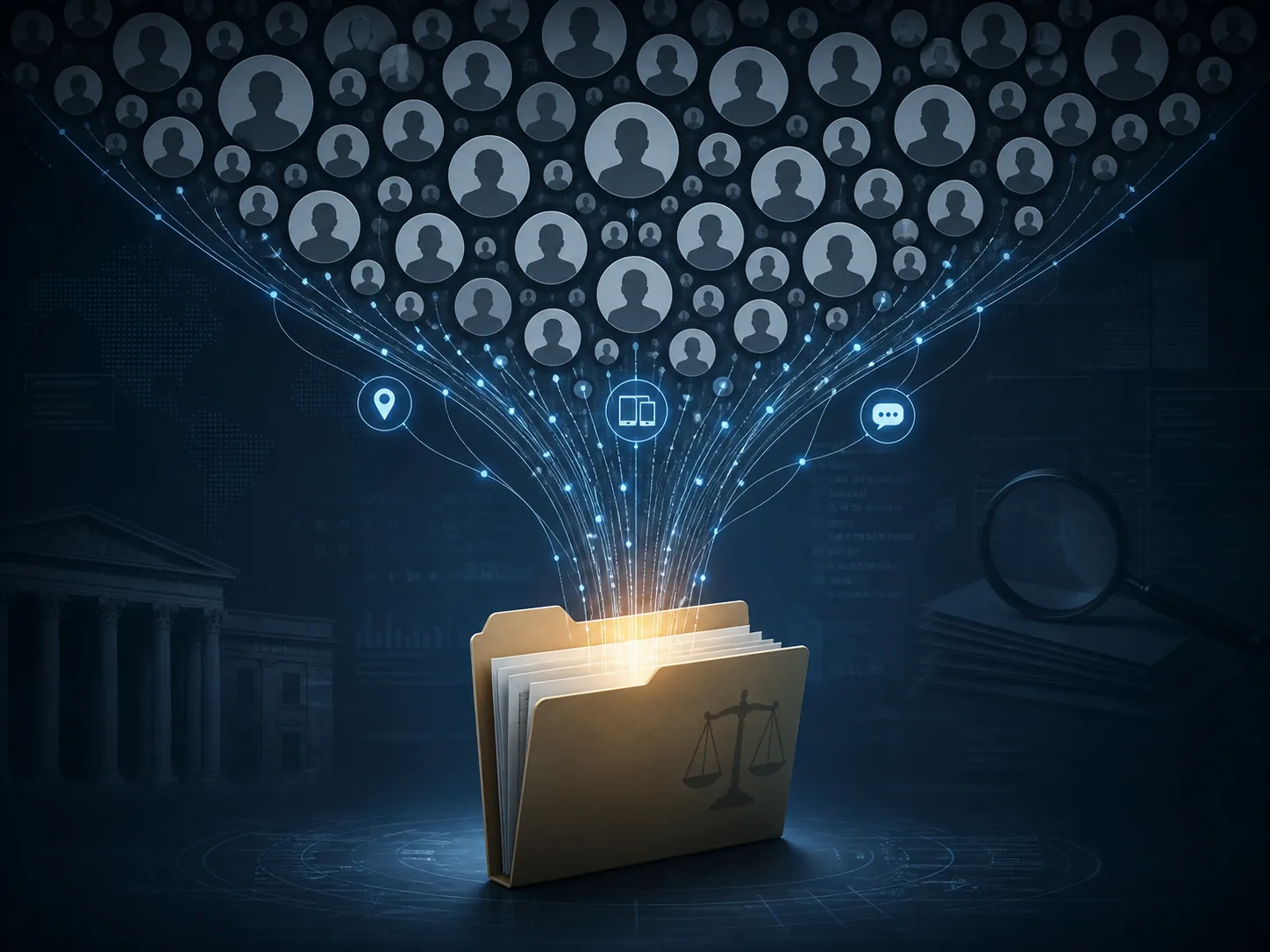
The Microsoft petition reached a different layer of attribution. The reported request covered Microsoft internal investigation records, device telemetry, MachineGuid and Microsoft account device IDs, and OneDrive content connected to the alleged leak activity. Those categories matter because they can connect online accounts to devices, storage locations, and platform-side investigative work rather than merely to public usernames.[7][8]
That scope also explains the bystander problem. A server-wide request can be useful to a rights owner trying to trace unreleased assets across reposting channels, but it can also pull in people whose legal exposure is not yet established by anything more than their presence in a place where the material circulated. The subpoena mechanism sorts information first; the merits fight, if one comes, happens later.
What §512(h) can produce, and what it cannot prove
Section 512(h) lets a qualifying requester ask the clerk to issue a subpoena to a service provider for information sufficient to identify an alleged infringer. The statute requires the request to include a proposed subpoena, a copy of the notification, and a sworn declaration that the subpoena is sought to obtain the identity of an alleged infringer and that the information will be used only for protecting rights under title 17.[4]
That last sworn-use statement is a predicate for the subpoena request, not proof that a civil complaint has already been filed against a known person. The available record supports a more limited sequence: Take-Two says it needs identifying information to protect its rights; the court orders authorize issuance of subpoenas; the platforms are given a production deadline. The record cited here does not show that Take-Two had received the records by August 25 or that a John Doe infringement action had been filed as a result.[3][5]
If platforms produce usable account information, the next civil step could be a John Doe suit or an amended complaint naming defendants. If records suggest unauthorized access, trafficking in stolen credentials, extortion, or other conduct outside ordinary copyright reposting, the facts could also be referred to law enforcement. Those are unresolved exposures, not outcomes shown by the current docket.
For readers tracking similar escalation paths, this is closer to a live consequences-escalation record than a completed enforcement story; the same distinction between status, allegation, and confirmed legal consequence is the reason to keep a separate verified-facts record and a separate consequences-escalation frame when public reporting is moving faster than the docket.
A named YouTuber is a useful caution, not a verdict
One YouTuber named in connection with a Take-Two subpoena publicly denied wrongdoing, saying he “did nothing wrong.” That denial is not proof of innocence, just as being named in a subpoena request is not proof of liability. It is useful because it shows the practical pressure created when rights enforcement begins with account-identification demands: a person can become part of the public story before a court has made any merits finding about that person’s conduct.[9]
That is the point at which platform counsel, creator counsel, and studio counsel are usually asking different questions. The platform asks what it must produce and whether notice or objection procedures apply. The named user asks whether the request reaches private messages, device identifiers, or unrelated accounts. The rights holder asks whether the data will connect leak distribution to a real defendant. None of those questions is answered by the Telegram copyright banner alone.
The leak continued after the hub went dark
The reports that additional clips appeared through August 24 are legally relevant in a narrow way. They do not prove who operated Cyberleek, why the site went offline, or whether any subpoena target controlled the original material. They do show that disabling or losing one hub did not stop distribution. For a rights holder, that can support continued urgency around account identification. For anyone swept into a server-wide request, it also means the investigation may expand as the material moves from one channel to another.[1][2]

The prison-term figures circulating in some gaming and social-media discussion are not part of the verified record used here. The cited materials do not establish an arrest, a criminal charge, a plea, a sentence, or a court finding about Cyberleek’s operator as of August 25.
Where the consequences stood on August 25
The strongest supported account is deliberately limited. Take-Two sent a GitHub DMCA demand on August 19. It filed four §512(h) subpoena petitions in SDNY on August 20–21. Judges signed orders authorizing issuance. The requests sought identifying, account, log, device, telemetry, investigation, and storage records from Discord, Microsoft, X, and Google/YouTube. The public Cyberleek website and Telegram channel became unavailable on August 22. Additional clips were still reported through August 24. The shared production deadline in the subpoena record was September 4, 2026.[1][2][3][5][6][7][8]
What the record did not show by August 25 is just as important: no confirmed arrest, no confirmed identity disclosure, no demonstrated platform production, no established operator-versus-platform explanation for the Cyberleek shutdown, and no merits ruling that ordered the website closed.
The next live date to monitor is September 4, 2026, the production deadline reflected across the subpoena campaign. Until production, objection, motion practice, or a follow-on complaint appears, the legal fallout remains potential rather than completed: identity disclosure may come next; a John Doe civil case may follow; a criminal referral remains possible on the right facts. The takedown was the visible effect of a fast-moving §512(h) campaign, not a court-ordered merits shutdown.
References
- GTA 6 leaks Cyberleek website down, Polygon
- GTA 6 Cyberleek website down, Eurogamer
- Take-Two Expands GTA 6 Leak Hunt With DMCA Subpoenas, TorrentFreak
- 17 U.S.C. § 512 - Limitations on liability relating to material online, Legal Information Institute
- Take-Two Interactive Software, Inc., CourtListener
- Discord petition PDF, CourtListener
- Microsoft petition PDF, CourtListener
- Take-Two subpoenas Microsoft for Windows device IDs of everyone in three Discord servers in GTA 6 leak hunt, Tom’s Hardware
- YouTuber Named in Take-Two GTA 6 Leaker Subpoena Insists He Did Nothing Wrong, IGN
Related records
Tool profile
How Meta's AI Spending Reshapes Law Firm ProfitabilityGoverning regulation
Browse the obligations tracker →Preventive workflow
Browse verification workflows →
Report a correction or tip
Spotted an outdated figure, a misstated fact, or a ruling this case record should reflect? Public comments are disabled for this content given the professional cost of a misreported case outcome, penalty amount, or rule text — use the structured correction channel instead.
Report a correction or tip for this record →