
Tracking the growing heatwave attribution litigation docket
A filterable, primary-sourced record of the heatwave-attribution docket — jurisdiction, claims, confirmed-vs-reported status, and rulings — for counsel checking whether this liability category has reached their forum or client. The docket is verifiable and growing, but no case has yet produced a final damages award; every entry tracks procedural posture, not a monetary outcome.
- Jurisdiction
- Washington, United States
- Court
- King County Superior Court
- AI tool named
- None
- Ruling date
- Jul 8, 2026
- Source document
- View primary court order ↗
- Last verified
- Aug 3, 2026
Lex Machina Review is an independent risk-tracking and reference resource. Nothing on this site is legal advice, and using it does not create an attorney-client relationship. Every record is reviewed against primary sources but may not reflect the most current status of a matter — always verify directly against the cited court order, rule text, or a licensed attorney before relying on it.
Companion explanation — secondary to the source document above
Risk Digest status note: this record is current as of August 3, 2026. It is a procedural tracker, not legal advice and not a damages ledger. Pleaded dollar amounts, remand orders, motion-to-dismiss rulings, standing decisions, and final judgments are kept separate because they answer different questions.
For counsel asking whether climate change heatwave attribution litigation has reached a client-facing docket, the answer is now yes. The narrower answer matters more: the tracked records show live pleadings, municipal cost-recovery claims, human-rights standing rulings, causation losses, and one important transnational dismissal. They do not show a final upheld damages award.
Docket record: heatwave attribution cases and related posture
| Record | Jurisdiction / court | Heatwave-attribution role | Claims or legal theory | Status flag | Key ruling or filing date | Last verified | Primary-source status |
|---|---|---|---|---|---|---|---|
| Leon v. Exxon Mobil Corp. | Washington; King County Superior Court, No. 25-2-15986-8 SEA | Pacific Northwest 2021 heat dome alleged as a climate-amplified fatal heat event | Wrongful-death / fossil-fuel liability damages claims | Confirmed; active after remand; motion to dismiss denied as to remaining defendants; ConocoPhillips and Olympic Pipeline dismissed on personal jurisdiction | Filed May 29, 2025; removed June 25, 2025; remanded October 28, 2025; MTD ruling July 8, 2026 [1][2] | August 3, 2026 | Climate Case Chart record and contemporaneous local reporting |
| Multnomah County v. Exxon Mobil | Oregon; state circuit court | 2021 heat dome used for event attribution and public-cost framing; source-attribution allegations directed at fossil-fuel defendants | Public nuisance / negligence-style municipal cost and abatement claims as reported in case materials | Confirmed filing; pleaded monetary figures only, not adjudicated recovery | Filed 2023 [3] | August 3, 2026 | CLX casebook record |
| KlimaSeniorinnen v. Switzerland | European Court of Human Rights, Grand Chamber | Heat vulnerability of older women central to association standing and climate-rights analysis | Human-rights challenge to state climate protection | Confirmed violation; not an individual damages precedent; individual applicants lacked victim status while association had standing | Grand Chamber judgment April 9, 2024 | August 3, 2026 | Primary HUDOC link not attached in this record set; attach before republication as a standalone docket entry |
| A.P. v. Austria | European Court of Human Rights, application no. 1718/21 | Death during a heat march; heat facts pleaded against state-protection obligations | Article 2 life-protection claim | Confirmed; no Article 2 violation; causation failed because the court treated lethal infection as breaking the causal chain; dissent noted | Judgment November 26, 2024 [4] | August 3, 2026 | Strasbourg Observers case analysis |
| Müllner v. Austria | European Court of Human Rights | Heat sensitivity and multiple sclerosis / Uhthoff’s phenomenon used to test individual vulnerability after KlimaSeniorinnen | Human-rights climate claim | Pending; status-sensitive; no outcome recorded here | Pending as of this survey | August 3, 2026 | Primary court link not attached in this record set; do not treat as decided |
| Lliuya v. RWE | Germany; Higher Regional Court of Hamm | Not a heatwave case, but important transnational attribution posture on private-defendant climate contribution, nuisance theory, imminence, and proportional responsibility | German Civil Code nuisance theory, including Section 1004 BGB | Confirmed final dismissal; liability-in-principle recognized under the theory, but imminence failed | Decision May 28, 2025 [5][6] | August 3, 2026 | Columbia Climate Law Blog and ELI analysis |
| City and County of Honolulu v. Sunoco LP | Hawaii state litigation; U.S. Supreme Court certiorari posture | Broader fossil-fuel climate-liability posture signal; not tracked here as a heatwave-specific damages ruling | State-law climate deception / nuisance-type claims | Confirmed; cert denied; summary judgment denied | Cert denied January 13, 2025; summary judgment denied January 2, 2026 [7] | August 3, 2026 | Climate Case Chart record |
| Boulder County / City of Boulder climate litigation against Exxon/Suncor | Colorado / U.S. Supreme Court posture reported for fall 2026 term | Broader fossil-fuel liability forum and preemption signal; heatwave-attribution-specific development not confirmed in this packet | State-law climate damages claims | Pending / docket-sensitive; Supreme Court posture should be checked against the live docket before publication | Fall 2026 term argument reported; pending posture reported January 2026 [8][9] | August 3, 2026 | Grist and E&E reporting; docket check still required |
| Reported second U.S. heat-death suit | United States; forum not verified in supplied materials | Reported as another heat-related wrongful-death claim | Unknown | Reported-but-unverified; excluded from confirmed count | No verified filing date in supplied materials | August 3, 2026 | Do not merge with Leon unless a primary docket record is obtained |
The closest structural cousin on this site is the status-flagged litigation format used in Tracking Transgender Athlete Lawsuits After the B.P.J. Ruling. The climate analogue is less mature: several entries are confirmed legal records, several are posture signals, and some reported matters remain outside the confirmed docket.

The U.S. heat-dome records are the practical center of the docket
Leon v. Exxon Mobil is the record to read first if the task is advising on whether heatwave attribution has crossed from policy argument into damages litigation. It is not merely a climate-liability complaint that mentions heat. The case is tied to a named death during the late-June 2021 Pacific Northwest heat dome, was filed in King County Superior Court on May 29, 2025, was removed on June 25, 2025, and was remanded on October 28, 2025. On July 8, 2026, the court denied a motion to dismiss as to remaining defendants while dismissing ConocoPhillips and Olympic Pipeline on personal-jurisdiction grounds [1].
Those dates should not be compressed into “the court accepted climate liability.” A remand order decides forum. A personal-jurisdiction dismissal decides whether those defendants can be kept in that court. A motion-to-dismiss denial means claims survived that stage against the remaining defendants; it is not a final finding that the defendants caused the death or owe damages.
The human facts are nevertheless unusually concrete for a climate-attribution pleading. KUOW reported that Juliana Leon, 65, died of hyperthermia on June 28, 2021, with a body temperature of 110°F while outdoor air temperature was 105°F [2]. That fact pattern gives the case a different advisory profile from a generalized climate-cost suit: a defendant is being asked to answer a heat-death damages claim tied to a specific extreme event.
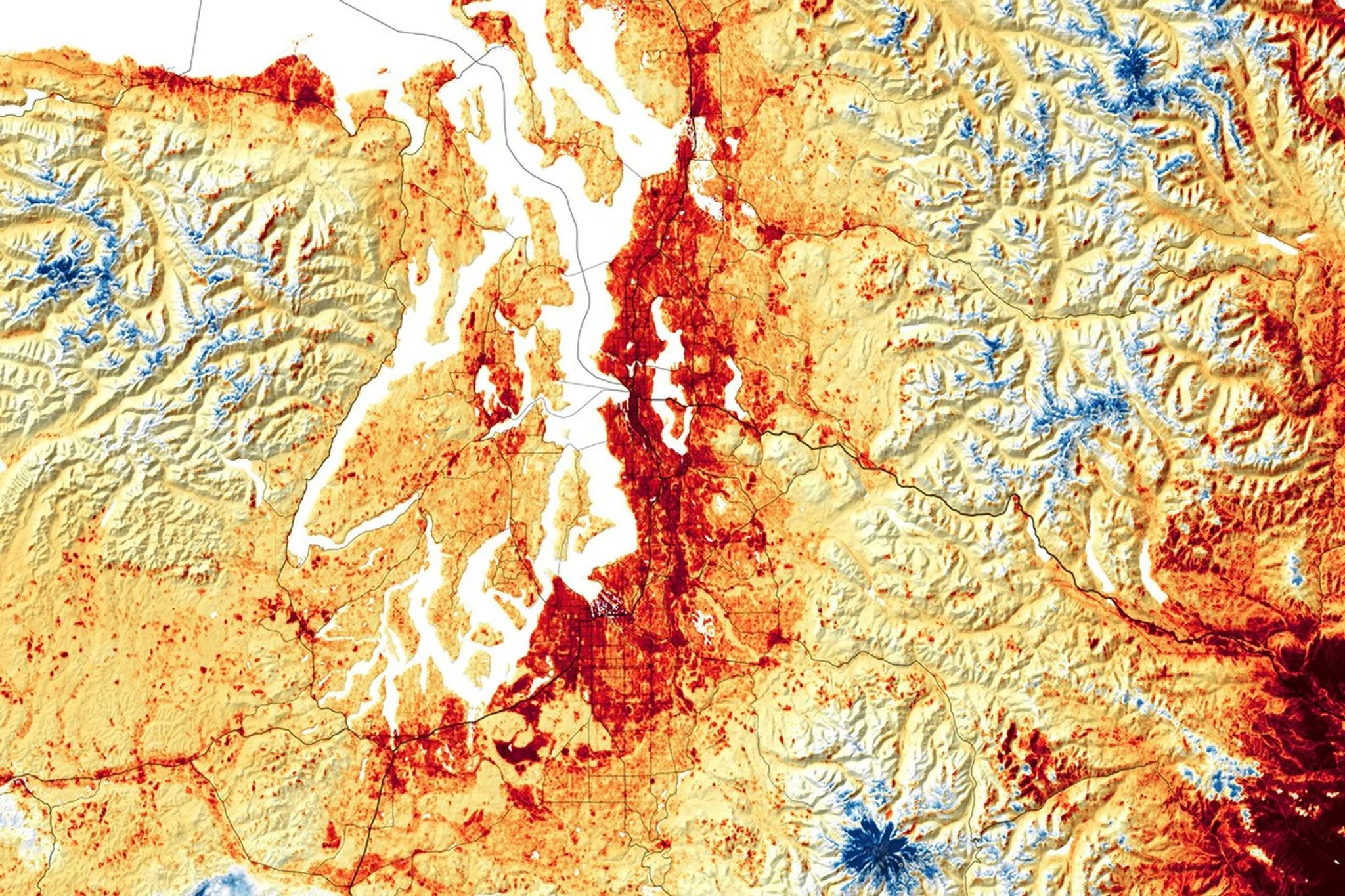
Multnomah County v. Exxon Mobil sits next to Leon but does different work. It is municipal, not a personal wrongful-death claim. The county’s case materials tie the 2021 heat dome to 69 heat-dome deaths in a county described as having a typical-year baseline of zero heat deaths, and they plead $50 million for past damages, $1.5 billion for future damages, and a $50 billion adaptation abatement fund [3]. Those figures are pleaded demands and remedial theories. They are not a verdict, settlement, or court-approved recovery.
The reason Multnomah County matters is not the size of the demand by itself. It combines event attribution, source-attribution allegations, and public-cost framing in a form that a municipal plaintiff can carry into state court. That makes it a useful risk marker for counties, cities, and infrastructure owners, even though it remains a live pleading posture rather than an adjudicated damages model.
Honolulu and Boulder are included here more cautiously. They help map the broader fossil-fuel-liability terrain — forum, preemption, state-law claims, and appellate timing — but the records reviewed here do not make them heatwave-attribution damages records in the same sense as Leon or Multnomah County. Honolulu’s certiorari denial and later summary-judgment denial are relevant posture signals [7]. Boulder’s reported Supreme Court posture is a docket-sensitive item that should be verified against the live docket before anyone treats it as a settled procedural fact [8][9].
Europe shows why attribution relevance is not the same as recovery
The European records are easy to overread because they are morally vivid and legally heterogeneous. KlimaSeniorinnen is the best-known climate-rights heat vulnerability judgment in the set: older women’s heat vulnerability mattered, and the association succeeded where the individual applicants did not. That makes it an important standing and state-obligation record, not an individual heatwave damages precedent.
A.P. v. Austria is the cautionary entry. The case involved a conscript who died after a heat march, with body temperature over 42°C during conditions described as above 30°C. The European Court of Human Rights found no Article 2 violation because, on its causation analysis, a lethal infection broke the causal chain; Judge Vehabović dissented [4]. For heat litigation, the point is procedural and evidentiary: a hot event and a death can be established, yet legal causation can still fail.
Müllner v. Austria belongs on a tracker but not in an outcomes chart. The records reviewed here describe a pending claim involving heat-sensitive multiple sclerosis and Uhthoff’s phenomenon, with the case expected to test individual standing after KlimaSeniorinnen. Until a primary court record and current status are attached, it should remain a pending, verification-sensitive item.
Lliuya v. RWE is not a heatwave case, but it is too important to omit from a causation-and-attribution register. On May 28, 2025, the Higher Regional Court of Hamm dismissed the claim as final because the alleged glacial-lake outburst flood risk was not sufficiently imminent; the reported probability was about 1% within 30 years. At the same time, the court rejected the “drop in the ocean” defense and recognized liability-in-principle under the German nuisance theory, including Section 1004 BGB, with knowledge findings traced to the mid-1960s [5][6].
That mixed result is the right template for reading the heatwave docket. Attribution evidence may be legally relevant. A private defendant’s fractional contribution may not be dismissed simply because it is small. But imminence, causation, forum, standing, and remedy still decide whether a plaintiff gets past the line that matters.
Why these claims are arriving now
The scientific backdrop has changed enough to affect pleadings. The World Weather Attribution analysis of the 2021 western North American heat wave concluded that the event would have been at least 150 times rarer without human-caused climate change and described it as roughly a 1-in-1,000-year event in the present climate [14]. A later source-attribution study described by Carbon Brief reported that 213 heatwaves from 2000 to 2023 were made more likely or more intense, and that about half of the additional 1.7°C warming in the study frame was traced to 180 carbon majors [12].
Those numbers should not be made interchangeable. The 2021 Pacific Northwest event has been described with different attribution multipliers depending on method; the reviewed sources flag WWA’s at-least-150-times framing and a model-based greater-than-10,000-times framing associated with Quilcaille-style analysis. A complaint can cite one method, an expert can defend another, and a court can still ask a separate legal question: whether that evidence proves the required element under the governing cause of action.
The 2026 European heatwave attribution reporting shows the same pressure from the science side. World Weather Attribution researchers described the June 2026 European heatwave as “virtually impossible” without climate change, the most severe June heatwave they had tracked, and about 3.5°C cooler in a 1976 climate [13]. That is relevant to why heat claims are becoming more legally imaginable. It does not, by itself, identify a defendant, prove duty, establish proximate cause, or select a forum.
Global counts are useful only if kept in their own boxes
The broader climate-litigation universe is large, but the case-count sources use different snapshots. The UNEP/Sabin 2025 global report, summarized by Columbia, counted 3,099 climate cases as of June 30, 2025, across 55 national jurisdictions and 24 international or regional courts and tribunals, including 1,986 U.S. cases [10]. The LSE Grantham 2026 snapshot, reported by IIGCC, described more than 3,600 cases across 62 countries and 249 new filings in 2025 [11].
Those counts confirm that climate litigation is no longer a fringe docket. They do not establish how many cases use heatwave attribution science in a legally material way. For that narrower category, confirmed records still have to be read one by one.
Verification exclusions
- “Marais v. France” is excluded. This survey could not verify it as a heatwave judgment through primary HUDOC confirmation.
- “Pescăruș and Butnaru v. Romania” is excluded for the same reason: no primary HUDOC confirmation was available in the reviewed sources.
- A reported second U.S. wrongful-death heat suit remains reported-but-unverified. It should not be counted with Leon unless a complaint, docket entry, or equivalent primary record is obtained.
- The 2021 Pacific Northwest death toll sometimes appears as an excess-death estimate. It should not be presented as an official death count unless the source being cited actually supports that characterization.
- ICJ advisory-opinion language should not be quoted here from secondary commentary. If used in a later update, the quotation should be checked against the opinion itself.
For adjacent climate-hazard tracking, see Judge Orders NPS to Restore Park Climate Exhibits and Who pays under French law when wildfires hit wine harvests? The common problem is not whether climate science is interesting. It is whether the record identifies a court, a claim, a status, and a consequence.
Where the docket stops
As of August 3, 2026, heatwave attribution is a verifiable and growing litigation category. Leon and Multnomah County put the 2021 heat dome into U.S. damages pleadings. KlimaSeniorinnen, A.P., and Müllner show how European courts and applicants are testing heat vulnerability, victim status, and causation. Lliuya shows that attribution can matter in private-defendant climate litigation even when imminence defeats the claim.
No tracked case in this survey has produced a final upheld damages award. The next legally decisive fights are causation, imminence, standing, and forum.
References
- Leon v. Exxon Mobil Corp. — Climate Case Chart
- Lawsuit blames oil companies for woman's Seattle heat dome death — KUOW
- Multnomah County v. Exxon Mobil — CLX Toolkit
- A.P. v Austria: Death of conscript during heat march — the question of causality — Strasbourg Observers, February 14, 2025
- What Lliuya v. RWE Means for Climate Change Loss and Damage Claims — Columbia Climate Law Blog, June 19, 2025
- No Liability Yet: What Lliuya v. RWE AG Means for Transnational Climate — Environmental Law Institute
- City & County of Honolulu v. Sunoco LP — Climate Case Chart
- Lawsuits, heatwave wrongful death, Supreme Court — Grist
- 5 climate court battles to watch in 2026 — E&E News
- Climate Change in the Courtroom: UNEP and Sabin Center’s Global Climate Litigation Report 2025 — Columbia Climate Law Blog, October 3, 2025
- Climate litigation in 2026 — IIGCC
- Study links world’s top oil and gas firms to 200 more intense heatwaves — Carbon Brief
- Climate change the culprit for Europe’s most severe heatwave: Report — Al Jazeera / AFP, June 26, 2026
- Western North American extreme heat virtually impossible without human-caused climate change — World Weather Attribution
Related records
Tool profile
Browse tool evaluations →Governing regulation
Browse the obligations tracker →Preventive workflow
Browse verification workflows →
Report a correction or tip
Spotted an outdated figure, a misstated fact, or a ruling this case record should reflect? Public comments are disabled for this content given the professional cost of a misreported case outcome, penalty amount, or rule text — use the structured correction channel instead.
Report a correction or tip for this record →