
What international law governs Iran's Hormuz tanker attacks?
Which legal regime governs Iran's 2026 Hormuz tanker attacks and the Strait's de facto closure? A source-linked briefing on UNCLOS passage, the law of naval warfare, UN Charter self-defense, and what UNSC Resolution 2817 determined.
- Jurisdiction
- International
- Court
- United Nations Security Council
- AI tool named
- No AI tool named
- Ruling date
- Mar 11, 2026
- Source document
- View primary court order ↗
- Last verified
- Aug 1, 2026
Lex Machina Review is an independent risk-tracking and reference resource. Nothing on this site is legal advice, and using it does not create an attorney-client relationship. Every record is reviewed against primary sources but may not reflect the most current status of a matter — always verify directly against the cited court order, rule text, or a licensed attorney before relying on it.
Companion explanation — secondary to the source document above
Last verified: 1 Aug 2026, UTC. This is a legal-risk briefing, not legal advice. It separates confirmed institutional findings from reported incidents and claimed responsibility. For the search question “iran tanker attack strait of hormuz international law,” the short answer is that no single regime does all the work: passage law frames the Strait, naval-warfare law frames attacks on merchant shipping and mining, and UN Charter self-defense frames any forcible response.
The most authoritative public determination in the record is Security Council Resolution 2817. It is strong enough to matter, but not tidy enough to end the analysis. It condemns attacks and obstruction; it does not sort every act into a settled hierarchy of UNCLOS transit passage, belligerent-strait rules, Hague mining rules, customary law, and Article 51 self-defense.
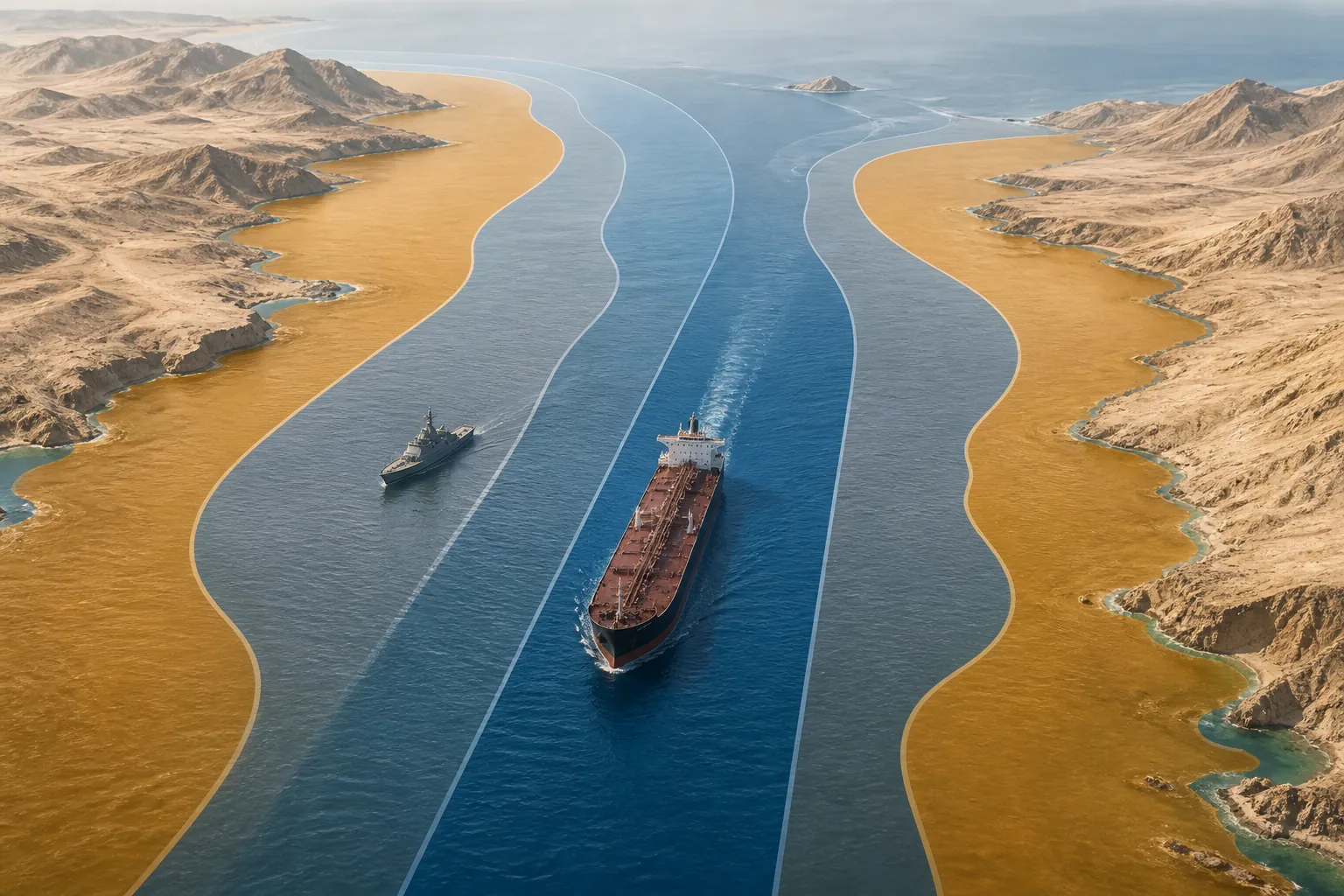
Resolution 2817 is the starting point, not the whole answer
On 11 March 2026, the Security Council adopted Resolution 2817 by a 13-0 vote, with Russia and China abstaining and 135 co-sponsors. The resolution condemned Iran’s attacks as “egregious,” determined that the attacks breached international law, and condemned any action or threat to close or obstruct the Strait of Hormuz.[1]
That is the load-bearing public text. It gives counsel a collective Security Council determination that attacks and obstruction were unlawful. It does not, however, say that every incident was attributable on the same evidentiary basis, that UNCLOS transit passage conclusively governs all traffic despite contested party status, or that any particular military response satisfies Article 51.
The distinction matters because the factual record is not a single event called “closing Hormuz.” It is a bundle: damaged vessels, killed and injured seafarers, claimed and unclaimed attacks, possible or threatened mining, passage restrictions, insurance and charter-party consequences, and responses by states and navies. A lawyer advising a shipowner or insurer cannot collapse those into one label without losing the legal question.
Separate the act before choosing the law
| Conduct being assessed | Status of the record | Most relevant legal frame |
|---|---|---|
| Attacks on tankers and other civilian merchant vessels | HRW reported IMO-confirmed figures of 17 damaged-vessel incidents from 16 attacks between 1 and 17 March 2026; responsibility was unconfirmed for 14 of the 16 attacks.[2] | Law of naval warfare for targeting; attribution rules before consequences; Article 51 only if assessing forcible response. |
| Action or threat to close or obstruct the Strait | Resolution 2817 condemned any action or threat to close or obstruct the Strait.[1] | Transit-passage law, customary-law dispute, and belligerent-strait rules. |
| Mines or mining risk affecting neutral shipping | Any actual placement, warning, or clearance record needs incident-level verification; the legal analysis changes if mines are established rather than merely feared. | Hague VIII, San Remo/Newport naval-warfare rules, and the absence of an alternative route for strait traffic.[3] |
| State response, escort, interception, or force against launch platforms | Depends on attribution, necessity, immediacy, proportionality, and whether the attack threshold is met. | UN Charter self-defense, with the Oil Platforms problem still unresolved in the single-vessel context. |
This is not a formatting preference. The legal consequences of an attributed missile attack on a merchant vessel are not the same as the consequences of a threatened toll regime, a discriminatory passage rule, a drifting mine, or a naval escort engagement. Resolution 2817 can condemn the overall obstruction and attacks while leaving counsel to identify the governing rule for each act.
Passage through Hormuz: UNCLOS, custom, and Iran’s objection
The Strait of Hormuz is a strait used for international navigation. In the usual UNCLOS vocabulary, that points toward transit passage rather than ordinary innocent passage. But the party-status problem is real: Iran, the United States, and Israel have not ratified UNCLOS. The United States treats transit passage through such straits as customary international law; Iran has disputed that position through its 1982 signature declaration and its 1993 domestic legislation.[3]
Iran’s legal position is not just a press slogan. It reads UNCLOS transit-passage entitlements more narrowly for non-parties and has argued for an innocent-passage framework in circumstances where other states would invoke customary transit passage.[4] That does not make Iran’s position prevailing law; it does mean that a clean “UNCLOS says X, therefore X” answer is incomplete when the affected states include non-parties and the dispute is deliberately framed in customary-law terms.
The narrower fee, corridor, and persistent-objector questions have already been treated separately in the persistent-objector analysis and the Hormuz corridor-rejection analysis. For the tanker-attack question, the key point is more limited: passage law helps identify what obstruction means, but it does not by itself answer whether a merchant ship was a lawful target, whether a minefield was lawful, or whether another state may use force in response.
The naval-warfare problem is harder than the passage label
Once the conduct is an attack on a vessel, the analysis moves away from the abstract status of the Strait and toward targeting law. Merchant vessels are not automatically military objectives because they carry oil, sail near a conflict zone, or affect a state’s economy. The relevant question is whether the vessel, by its nature, location, purpose, or use, made an effective contribution to military action and whether its destruction, capture, or neutralization offered a definite military advantage under the applicable naval-warfare framework.[7]
That test does not disappear in a chokepoint. A tanker can be commercially important and still civilian. It can also become targetable in particular circumstances if the facts show military use, incorporation into military logistics, or other conduct meeting the military-objective test. The difficult work is incident-specific: cargo, routing, ownership, chartering, military escort, communications, warnings, and the attacker’s information at the time.
The public humanitarian record is severe, but it must be kept within its evidentiary limits. HRW reported that, according to IMO-confirmed figures, 17 damaged-vessel incidents resulted from 16 attacks between 1 and 17 March 2026. It also reported seven seafarers and one shipyard worker killed, four people missing, and ten injured. HRW characterized deliberate attacks on civilian ships as apparent war crimes, while also noting that responsibility was unconfirmed for 14 of the 16 attacks.[2]
Those figures support two separate propositions, not one. They support the gravity of the harm to civilian maritime activity. They do not prove attribution for every incident. Treating the casualty count as if it solved responsibility would be a legal error, especially for sanctions, insurance, use-of-force, and claims purposes.
Belligerent straits and neutral traffic
A strait used for international navigation does not become legally irrelevant because an armed conflict touches it. San Remo Rule 27 is commonly invoked for the proposition that belligerent rights in straits used for international navigation are constrained by the continued rights of transit passage and archipelagic sea lanes passage. Commentary applying that rule to Hormuz emphasizes that belligerents cannot simply convert the Strait into a free-fire zone or deny neutral passage because the geography is inconvenient.[5]
The absence of an equivalent maritime route matters here. If a state closes or mines the only strait route between the Gulf and the Gulf of Oman, neutral shipping is not merely delayed around a cape; it is denied the maritime passage that makes the Gulf commercially usable. That is why the legal analysis of obstruction and mining cannot be reduced to a domestic-security claim at the coastal state’s shoreline.
Mines are not just another form of warning
Mining has its own legal history and its own evidentiary demands. Hague VIII rules on automatic contact mines and later naval-warfare manuals focus on notification, control, neutral shipping, and the prohibition on using mines in ways that effectively bar lawful neutral passage where no alternative route exists. Just Security’s March 2026 naval-warfare analysis treated mining in Hormuz as a central problem precisely because mines can obstruct without a continuous visible blockade line.[6]
That does not mean every insurance withdrawal or rerouting decision proves unlawful mining. Commercial actors react to risk, and they often react before attribution or weapon type is confirmed. A legal brief should distinguish a confirmed mine strike, a reported mine-like explosion, a state warning, naval clearance activity, and market behavior driven by fear of mines.
Attribution is the constraint that should slow every sentence down
Resolution 2817 condemns Iran’s attacks and obstruction at the level of Security Council determination.[1] HRW’s incident record, however, reports that responsibility was unconfirmed for 14 of 16 attacks in the 1-17 March window.[2] Both statements can be true. One operates at the level of collective political-legal determination; the other limits what can responsibly be said about each incident.
For counsel, that distinction affects more than word choice. Attribution drives whether a charterer invokes a war-risk clause against a particular state-linked peril, whether an insurer reserves rights, whether a sanctions team treats a counterparty as exposed to Iranian-origin conduct, and whether a state frames a response as self-defense rather than maritime law enforcement.
The same discipline applies to targeting. A legal conclusion that a civilian merchant ship was unlawfully attacked requires at least three steps: the vessel was civilian or otherwise protected; the attacker or responsible party can be identified to the necessary legal standard; and no facts converted the vessel into a military objective at the time. HRW’s “apparent war crimes” characterization is an important human-rights assessment, not a substitute for incident-level proof in every forum.[2]
Self-defense matters, but it is not a shortcut
If another state uses force in response to tanker attacks or Strait obstruction, the question shifts to Article 51 self-defense: armed attack, attribution, necessity, proportionality, and reporting. That inquiry is related to the legality of the original attack, but it is not identical to it.
The unresolved checkpoint is the single-vessel problem. The ICJ’s Oil Platforms judgment is still treated as leaving open how easily attacks on individual commercial vessels cross the armed-attack threshold for self-defense. March 2026 commentary on the conflict with Iran treated that threshold issue as unsettled rather than mechanically answered by the fact of a tanker attack.[7]
A pattern of attacks, the scale of casualties, the role of state forces, and an attempted closure of the Strait may all affect the analysis. But none of those factors removes the need to prove attribution and to assess the proposed response on its own facts. The Security Council’s condemnation is powerful evidence of unlawfulness; it is not a blank check for any operational response.
Practical consequences: contracts, insurance, sanctions, and verification
The doctrinal split is not academic for operators. A vessel owner may need to decide overnight whether to transit, wait, accept naval escort, declare a war-risk deviation, or reject a voyage order. An insurer may need to decide whether the relevant peril is war, terrorism, mines, seizure, sanctions exposure, or ordinary marine casualty. Those decisions depend on facts that may lag behind the market by days.
Force majeure and frustration analysis should therefore avoid generic references to “the closure of Hormuz” unless the contract itself uses that language. The better first pass is to identify the triggering fact: government prohibition, physical impossibility, unsafe-port order, unavailable insurance, naval warning, sanctions designation, or owner’s risk judgment. For a comparative chokepoint discussion, see the Bab al-Mandab disruption and legal-AI risk analysis.
Sanctions and enforcement updates need a separate verification track. OFAC actions, license changes, flag-state notices, port-state controls, and insurer circulars can alter the commercial answer without resolving the public-international-law question. Maritime-law framing under UNCLOS and the SUA Convention is also discussed in the Asana chemical tanker hijacking analysis, but Hormuz adds the strait-transit and belligerent-obstruction layer.
Where the record lands as of 1 Aug 2026
Resolution 2817 supplies the strongest public determination that Iran-linked attacks and obstruction in the Strait of Hormuz breached international law. It should be the first citation in a serious brief, not an afterthought.
It should also not be asked to do work it did not do. Passage rights, targeting rules, mining rules, attribution, and self-defense remain separate questions. The cleanest legal answer is therefore a disciplined one: use Resolution 2817 for the collective condemnation and breach determination; use UNCLOS/customary-law analysis for passage and obstruction; use naval-warfare law for attacks on merchant vessels and mines; and use Article 51 only when assessing a forcible response.
References
- Resolution 2817 (2026) — United Nations Security Council, 11 Mar 2026.
- Iran: Deliberate Attacks on Civilian Ships Apparent War Crimes — Human Rights Watch, 24 Mar 2026.
- The Strait of Hormuz, shipping, and law — Chatham House, 13 Apr 2026.
- Iran's Legal Strategy in Hormuz — Völkerrechtsblog, 16 Apr 2026.
- The Closure of the Strait of Hormuz by Iran — Opinio Juris, 6 May 2026.
- Legal and Operational Issues in the Strait of Hormuz: Transit Passage Under Fire — Just Security, 15 Mar 2026.
- Expert Q&A on Key Law of Naval Warfare Issues in the Conflict with Iran — Just Security, 15 Mar 2026.
Related records
Tool profile
How Meta's AI Spending Reshapes Law Firm ProfitabilityGoverning regulation
Browse the obligations tracker →Preventive workflow
Browse verification workflows →
Report a correction or tip
Spotted an outdated figure, a misstated fact, or a ruling this case record should reflect? Public comments are disabled for this content given the professional cost of a misreported case outcome, penalty amount, or rule text — use the structured correction channel instead.
Report a correction or tip for this record →