
Judge voids Trump-IRS settlement for lack of adverseness
Judge Williams' July 13 order in Trump v. IRS strips the 'settlement' of operative legal effect after finding the parties were never adverse, and bars them from relying on it in any future proceeding. This non-AI court-obligations record distills the ruling's findings and the adverseness checks counsel should run before signing, with the Eleventh Circuit appeal tracked in a separate Risk Digest record.
- Jurisdiction
- U.S. Federal
- Court
- U.S. District Court for the Southern District of Florida
- Judge
- Kathleen M. Williams
- AI tool named
- No AI tool implicated
- Ruling date
- Jul 13, 2026
- Source document
- View primary court order ↗
- Last verified
- Aug 2, 2026
Lex Machina Review is an independent risk-tracking and reference resource. Nothing on this site is legal advice, and using it does not create an attorney-client relationship. Every record is reviewed against primary sources but may not reflect the most current status of a matter — always verify directly against the cited court order, rule text, or a licensed attorney before relying on it.
Companion explanation — secondary to the source document above
Last verified: Aug. 2, 2026. Primary record: Judge Kathleen M. Williams’ July 13, 2026 order in Trump v. Internal Revenue Service, No. 1:26-cv-20609, S.D. Fla. This is not an AI case; it is carried as a sanctions and court-obligations record. Legal-background reviewer: not identified in the supplied source packet. This article is for legal-information and risk-review purposes only, not legal advice.

The narrow answer for readers tracking the Trump-IRS settlement appeal is procedural, not theatrical: the July 13 order did more than criticize a deal. It stripped the settlement papers of operative legal usefulness in court, barred the parties from relying on them in any future proceeding, and imposed sanctions consequences after finding there had been “never adverseness between the Parties,” “never a case or controversy,” and “never a question as to who would prevail.”[1]
That is also why the common shorthand “voided” needs care. The order removed legal effect and future reliance in the litigation record, but later reporting correctly noted the order did not explicitly decide the private enforceability of any agreement; the court said that issue was not before it.[3] For counsel, that distinction is not cosmetic. A document may still exist as paper while losing the court-backed status that made it useful.
What The July 13 Order Actually Did
Judge Williams’ order began from a jurisdictional defect, not from ordinary buyer’s remorse over settlement terms. The court found that the parties were never genuinely adverse, that there was no Article III case or controversy, and that no real litigation question existed about who would prevail.[1] Once the court reached that finding, the signed papers could not be treated as an ordinary compromise of disputed claims.
The order then identified an improper purpose: the parties used the action “to gain the imprimatur of judicial legitimacy for a ‘settlement’ that had no viable basis in law or fact.”[1] That phrase is the useful center of the ruling. The defect was not merely that the settlement was large, controversial, or politically charged. The defect was that the court was asked to lend legal dignity to a resolution of a dispute the court found had not been real.
The remedy followed that premise. The court barred Donald Trump, his sons, the Trump Organization, and the government from citing, invoking, or otherwise using the settlement in any future proceeding.[1] That future-use bar is the part later readers will need most. It tells another court, agency, auditor, journalist, or lawyer that the agreement cannot be treated as a judicially blessed endpoint.
The sanctions consequences were separate but connected. The order referred Alejandro Brito to the Florida Bar, barred Daniel Epstein from S.D. Fla. admissions for one year, permitted fee awards to amici including 35 former federal judges, and sent copies to the New York and D.C. bars.[1] Those measures belong with the court-obligation record, not as decoration around the settlement story.
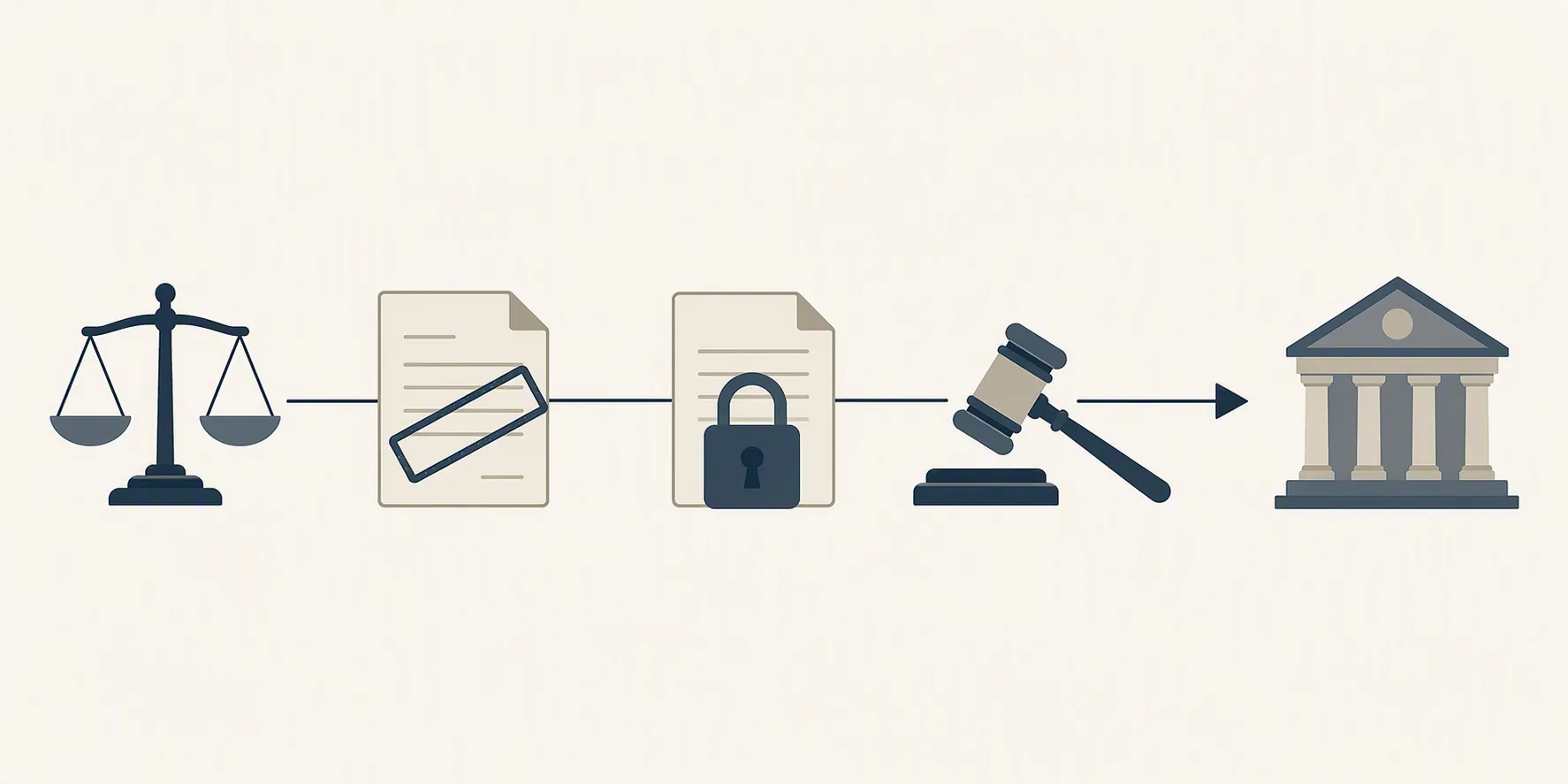
| Order finding or remedy | Practical effect |
|---|---|
| No adverseness; no case or controversy | The settlement could not function as a court-backed resolution of real litigation. |
| Improper purpose | The court treated the filing posture as an effort to obtain judicial legitimacy for a non-adverse arrangement. |
| Loss of operative legal effect | The papers were stripped of usefulness as a judicially effective settlement record. |
| Future-use bar | The parties were barred from citing or relying on the settlement in later proceedings. |
| Inherent-authority sanctions and referrals | The court imposed professional-conduct consequences beyond ordinary dismissal mechanics. |
The Reopening Was Narrow
The procedural spine matters because it limits what the ruling stands for. The inquiry was reopened on May 29, 2026 after former federal judges moved on a fraud-on-the-court theory, but the dismissed case itself was not reopened.[1][2] That is the posture in which the court assessed whether its own process had been misused.
The appeal belongs in the Eleventh Circuit, not the D.C. Circuit. For docket posture, the companion appeal record is the better place to track updates: Trump IRS self-dealing appeal case. This record stays with the settlement-practice consequence: a dismissal paper does not insulate lawyers from later scrutiny when the court is asked to clean up an asserted fraud on the court.
Why Reliance Mattered
The settlement context explains why future reliance was the live danger. The underlying Littlejohn-related suit had been dismissed in connection with a $1.776 billion “Anti-Weaponization Fund,” which was later abandoned after a June 12, 2026 preliminary injunction in the Eastern District of Virginia.[1] A May 19, 2026 addendum attributed to Todd Blanche barred IRS audits, and public reporting described the eliminated tax dispute as involving a claimed $72.9 million refund and potential exposure exceeding $100 million.[4][5]
Those figures should not swallow the ruling. They matter because they show why a court-stamped agreement would have been useful elsewhere. A settlement that purports to affect audit exposure, agency action, or later tax positions is not just a file-closing event. It becomes a tool someone may try to hand to another decision-maker.
That is the point at which sloppy settlement administration becomes a court-obligation problem. If the parties were never adverse, the judge is not merely checking whether the draft was artful. The judge is deciding whether the court’s authority was used to manufacture reliance.
The Government Disputes the Finding
DOJ publicly rejected the court’s conclusion. CNBC quoted the department as saying: “There was no collusion in this case, and the partisan judge who speculated otherwise has disregarded decades of precedent.”[3] That denial belongs in the record, especially because the ruling is now on appeal.
It does not replace the order’s findings. The operative record remains that Judge Williams found non-adverseness, improper purpose, and misuse of judicial legitimacy, then imposed remedies that cut off future reliance.[1] Counsel evaluating risk should brief both things at once: the order is contested, and it is currently the written basis for the sanctions and settlement-effect consequences.
The Adverseness Check Before Signing
The practical lesson is not that controversial settlements are unsafe. Real settlements end real disputes every day, and courts have reason to welcome them. The problem begins when the signature pages hide the absence of an actual fight.
Before execution, counsel should be able to answer these questions without leaning on captions, formal party labels, or the fact that everyone has signed:
- Who is genuinely adverse to whom, and what claim would each side actually litigate if the settlement failed?
- Does one side control, direct, fund, appoint, supervise, or materially benefit from both sides’ litigation posture?
- Is the court being asked to resolve a dispute, or to confer legitimacy on an arrangement already agreed for external use?
- Will the settlement be cited later before another court, agency, auditor, regulator, bar authority, or congressional body?
- Does the dismissal paper assume the court has power to bless terms that no live case or controversy supports?
- If a nonparty later alleges fraud on the court, what record shows independent litigation judgment on each side?
A useful file note is not a memo saying “settlement is favored.” It is a record showing the live dispute, the independent interests, the court’s authority, and the expected future uses of the agreement. If those points cannot be written plainly before filing, the weakness should be treated as substantive, not clerical.

Where One Party Controls Both Sides
The hardest settlements to review are not always the longest. They are the ones where one side’s practical control makes the caption misleading: a government entity resolving a dispute involving its own principal, a corporate affiliate structure where nominal opponents answer to the same decision-maker, or a fiduciary arrangement where the person approving the settlement benefits from both sides’ posture. Those are examples of risk patterns, not findings from the Trump record.
In that setting, counsel should separate three questions that often get blurred: whether a document is enforceable as a private agreement, whether a federal court had power to give it judicial effect, and whether the parties may later rely on it as a litigation-resolution record. The July 13 order is addressed to the second and third questions. For the private-enforceability boundary, see the separate record on the written-modification issue: Cornyn blocks Blanche Trump settlement.
Post-Dismissal Exposure Is Real
The order is also a reminder that voluntary dismissal is not always the final page for lawyer conduct. Rule 60(b), fraud-on-the-court doctrine, and a federal court’s inherent authority can give a court room to examine whether its process was abused, even when the underlying action itself is not being reopened in the ordinary merits sense.[1]
The companion sanctions record tracks the fee and discipline details more closely: Trump lawyers sanctioned in IRS lawsuit. The point here is narrower. If the settlement’s value depends on the court’s seal, the lawyers should assume someone may later ask whether the court had any lawful reason to provide it.
Before settlement execution, verify genuine adverseness, court power, party control, independent litigation interest, future-reliance assumptions, and post-dismissal reopening exposure. A settlement resolves litigation only when there was real litigation to resolve.
References
- Order on Sanctions, Trump v. Internal Revenue Service, No. 1:26-cv-20609, ECF 106, U.S. District Court for the Southern District of Florida, July 13, 2026, link
- Trump v. Internal Revenue Service docket, CourtListener, link
- Trump appeals order slamming IRS lawsuit, referring lawyer to bar, CNBC, July 31, 2026, link
- Trump Settlement With I.R.S. Could Benefit Him by More Than $100 Million, The New York Times, May 19, 2026, link
- DOJ Settlement Forever Bars IRS Trump Audits, Sparks Backlash, Thomson Reuters Tax, link
Related records
Tool profile
How Meta's AI Spending Reshapes Law Firm ProfitabilityGoverning regulation
Browse the obligations tracker →Preventive workflow
Browse verification workflows →
Report a correction or tip
Spotted an outdated figure, a misstated fact, or a ruling this case record should reflect? Public comments are disabled for this content given the professional cost of a misreported case outcome, penalty amount, or rule text — use the structured correction channel instead.
Report a correction or tip for this record →