
What Laura Owens Actually Alleged Against Clayton Echard
The popular 'coercive abortion' framing of Laura Owens' case against Clayton Echard conflicts with the sourced record, which documents fabricated-pregnancy and paternity fraud. This record separates what the Aug 28, 2026 guilty plea adjudicated from what remains reported or unverified, including the pending Oct 23, 2026 sentencing.
- Jurisdiction
- Arizona, United States
- Court
- Maricopa County Superior Court
- Judge
- Julie Mata
- AI tool named
- No AI tool named
- Ruling date
- Aug 28, 2026
- Source document
- View primary court order ↗
- Last verified
- Aug 31, 2026
Lex Machina Review is an independent risk-tracking and reference resource. Nothing on this site is legal advice, and using it does not create an attorney-client relationship. Every record is reviewed against primary sources but may not reflect the most current status of a matter — always verify directly against the cited court order, rule text, or a licensed attorney before relying on it.
Companion explanation — secondary to the source document above
Laura Owens alleged that Clayton Echard fathered twins she was carrying. The supplied record does not support the separate claim that Echard coerced her to terminate a pregnancy. Instead, Mercury News reported that Owens pleaded guilty on August 28, 2026, to two fraud counts arising from the false pregnancy and paternity claim; the report says 10 of 14 felony counts were dismissed.[1] People separately reported the guilty plea.[2]
Status as of August 31, 2026: the plea is a reported adjudicated disposition, but it has not been independently checked against a primary Maricopa County docket or plea document because neither is included in the source packet. Sentencing is reported as scheduled for October 23, 2026, so there is no sentencing outcome to report.[1]
Last verified: August 31, 2026. This article distinguishes adjudicated matters, secondary reporting, allegations in an investigation report, and unsupported claims. It is an informational record review, not legal advice.
Sources
- Ronn Owens’ daughter pleads guilty in ‘Bachelor’ pregnancy fraud case, The Mercury News, August 28, 2026
- Clayton Echard’s Accuser Laura Owens Pleads Guilty in Pregnancy Fraud Case, People
- Clayton Echard, Laura Owens & Love Trapped | Capsule NZ, Capsule NZ, July 2, 2026; page carries a post-plea update
- Former ‘Bachelor’ Clayton Echard speaks after winning paternity suit in Maricopa County, 12News
- Victims of Laura Owens - Documents, Victims of Laura Owens

| Proposition | Current status | Important boundary |
|---|---|---|
| Owens claimed Echard fathered twins | Core allegation in the dispute | The later guilty plea supports treating that paternity representation as fraudulent |
| Owens pleaded guilty to two fraud counts | Reported adjudicated disposition | Corroborated by news reports, but not independently checked against the primary plea record |
| Echard coerced Owens to terminate a pregnancy | Not supported by the supplied packet | A deposition statement about consent and a Plan B message do not establish a judicial finding of coercion |
| Sentencing | Reportedly scheduled for October 23, 2026 | Pending as of August 31, 2026 |
What the guilty plea resolves
The plea is the decisive development because it changes the central paternity representation from a disputed allegation into the subject of a reported criminal disposition. Mercury News, citing a report from the Maricopa County Attorney’s Office, said Owens pleaded guilty to two fraud counts and that 10 of 14 felony counts were dismissed.[1] The available reporting therefore supports the conclusion that her claim of being pregnant with Echard’s twins was fraudulent.
That conclusion should remain no broader than the plea permits. A guilty plea to fraud does not automatically admit every factual accusation made in commentary, every detail attributed to investigators, or every characterization of the parties’ private interactions. Nor does dismissal of 10 counts establish that all underlying conduct associated with those counts was disproved. Dismissal identifies the disposition of those charges; without the plea agreement and docket, the reason for each dismissal should not be inferred.
The same restraint applies to sentencing. Mercury News reported an October 23, 2026 sentencing date.[1] As of the last verification date, that is a scheduled event, not an outcome. Any claim about incarceration, probation, restitution, or another penalty would be premature.
The missing primary record matters here. A credible report of a guilty plea is strong evidence that the plea occurred, especially when another publication reports the same disposition.[1][2] It is still secondary reporting. The count language, case number, accepted factual basis, dismissal terms, and sentencing calendar should ultimately be checked against the court’s own docket and filed documents.
How the allegation moved through court
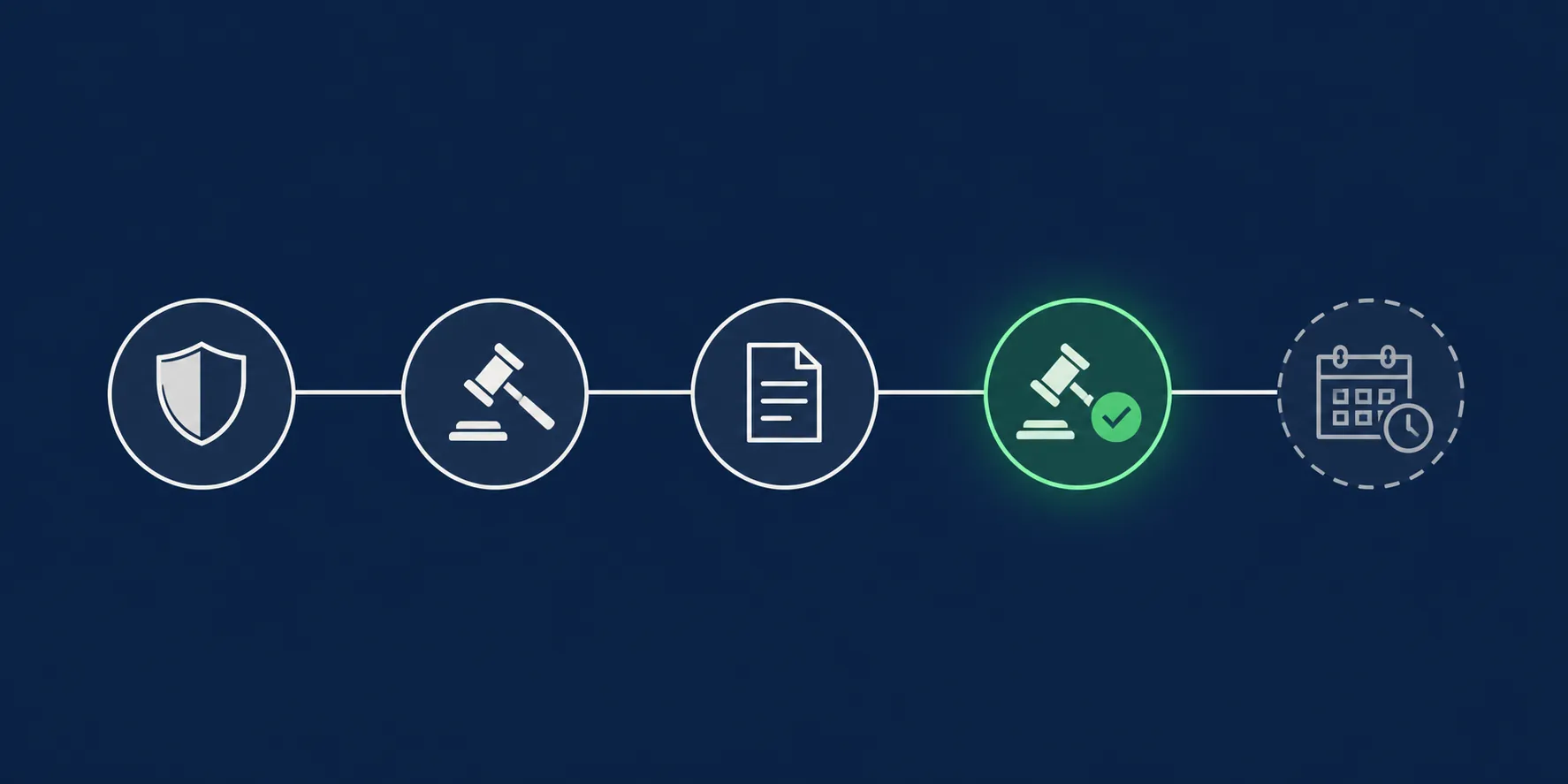
The supplied procedural account begins with competing protective-order proceedings in 2023. Capsule NZ reports that Echard sought an injunction against harassment, citing approximately 500 messages over five months, while Owens obtained an order of protection. It also reports that Echard appeared without counsel at a continued hearing on October 24, 2023.[3] These details establish the procedural setting, but they do not independently prove the truth of every allegation presented during those proceedings.
The more consequential family-court development came on June 10, 2024. Capsule NZ’s account says Judge Julie Mata found that Owens had engaged in “a pattern of similar, if not identical behavior” and referred the matter to the Maricopa County Attorney’s Office.[3] The quotation and referral are consequential, but the packet does not include the court order itself. They should therefore be identified as the contents of Capsule NZ’s account of the order, not as language independently transcribed from a primary filing.
A 12News headline likewise describes Echard as having won the paternity suit.[4] That supports the broad disposition at headline level, but it cannot supply the order’s reasoning, evidentiary findings, or precise relief. For those details, the underlying family-court record remains the appropriate checkpoint.
The investigation report explains the alleged mechanism—but introduces a record problem
Capsule NZ reports that a 118-page investigation report was released in January 2026 and bears the date April 29, 2025. According to its account, investigators alleged that Owens passed off her sister’s sonogram or sonogram video as her own and purchased injectable human chorionic gonadotropin, commonly abbreviated HcG.[3] Those allegations offer a proposed mechanism for the fabricated-pregnancy claim, but they are not made findings by the guilty plea merely because they concern the same dispute.
The hosting and indexing of that report create an additional verification problem. The Victims of Laura Owens documents page displays the case label “CR 2025-007905-001,” while its hyperlink points to a docket URL containing “CR2025-006831.”[5] The packet does not resolve which identifier is correct, whether the link was entered incorrectly, or whether the numbers refer to different matters.
That mismatch is a stop sign. It should not be repaired by guessing from names, dates, or neighboring files. Until the court portal or a filed document connects the correct case number to Owens and the reported plea, the criminal case number should be treated as unverified.
Why the “coercive abortion” description does not fit this record
Nothing in the supplied packet supports the proposition that Echard coerced Owens to have an abortion. The documented core of the matter is her assertion that she was pregnant with his twins, followed by family-court proceedings, an investigation, a prosecutorial referral, and the reported fraud plea.
There is one narrower conflict concerning consent. Capsule NZ reports that Owens said during a deposition that the sexual encounter was non-consensual, while a contemporaneous message from her discussed taking Plan B and characterized the encounter in terms inconsistent with that later account.[3] The message is relevant because it is contemporaneous and contradicts the reported deposition statement. It is not, however, a judicial determination about consent, and it does not turn the case into an adjudication of sexual assault or termination coercion.
The distinction is necessary because several different propositions can otherwise collapse into one viral label. A statement about whether an encounter was consensual, a message about emergency contraception, a disputed claim of pregnancy, and an allegation that someone forced a pregnancy termination are not interchangeable. The available sources address the first three to varying degrees. They do not substantiate the fourth.
Claims the packet cannot verify
The available materials do not establish that this dispute included a defamation counterclaim, a temporary restraining order separate from the reported protective-order proceedings, or a gag order. Those propositions should not be repeated as facts.
That is an absence-of-evidence conclusion, not proof that no such filing ever existed. The packet lacks a complete civil docket, so it cannot conclusively exclude an overlooked, sealed, later-filed, or differently captioned proceeding. Anyone checking those claims should search the primary civil record rather than infer nonexistence from the documents currently assembled.
The same verification discipline applies to the criminal case. The practical checkpoints are outlined in the site’s plea-stage verification guide: confirm the case identifier, inspect the minute entry or plea agreement, verify which counts were accepted or dismissed, and check the sentencing calendar against a filed order.
On the record available August 31, 2026, the defensible account is a fabricated-pregnancy and paternity-fraud case, culminating in a reported guilty plea to two fraud counts. It is not a substantiated coercive-abortion case. The investigation details remain attributed allegations, the primary plea record remains unchecked, and sentencing remains pending. The Maricopa County docket should be checked again immediately before publication and again after October 23, 2026.
Related records
Tool profile
How Meta's AI Spending Reshapes Law Firm ProfitabilityGoverning regulation
Browse the obligations tracker →Preventive workflow
Browse verification workflows →
Report a correction or tip
Spotted an outdated figure, a misstated fact, or a ruling this case record should reflect? Public comments are disabled for this content given the professional cost of a misreported case outcome, penalty amount, or rule text — use the structured correction channel instead.
Report a correction or tip for this record →