
What's Verified in Lindsay Clancy's 911 Call Transcript?
No official public transcript of Lindsay Clancy's 911 call exists: Plymouth Superior Court admitted the recording, subject to a limiting instruction, and kept it from public release. This case record separates what the jury heard on July 29, 2026 from the reporter-transcribed lines circulating as the 'transcript,' giving every quoted detail a confirmed-versus-reported status.
- Jurisdiction
- Massachusetts, U.S.
- Court
- Plymouth Superior Court
- Judge
- William F. Sullivan
- AI tool named
- No AI tool named
- Ruling date
- Jun 29, 2026
- Source document
- View primary court order ↗
- Last verified
- Aug 3, 2026
Lex Machina Review is an independent risk-tracking and reference resource. Nothing on this site is legal advice, and using it does not create an attorney-client relationship. Every record is reviewed against primary sources but may not reflect the most current status of a matter — always verify directly against the cited court order, rule text, or a licensed attorney before relying on it.
Companion explanation — secondary to the source document above
As of Aug. 3, 2026, there is no official public transcript of Lindsay Clancy’s 911 call. What exists in the public domain is a narrower record: Plymouth Superior Court admitted the recording, Judge William F. Sullivan imposed a limiting instruction and declined to release the audio to the media, and reporters in the courtroom described or transcribed portions after the recording was played for the jury on July 29, 2026.[1][2]
That distinction is not clerical. It is the difference between a court record and a hurried public substitute for one. The “lindsay clancy case 911 call transcript details” circulating online should be read as a mix of confirmed procedural facts and reporter-transcribed lines, not as a certified transcript.
| Record item | Status as of Aug. 3, 2026 |
|---|---|
| Court | Plymouth Superior Court |
| Judge | Judge William F. Sullivan |
| What was admitted | The 911 call recording, not a public transcript[1] |
| When the jury heard it | July 29, 2026, during trial coverage described as the second day of testimony[2] |
| Public release | The recording was not released outside the courtroom; Parade also described the call as blocked from public access[1][3] |
| Transcript status | No official public transcript identified or released as of this article’s last verification date |
| How quoted lines below are treated | Either court-confirmed procedural facts or reporter-transcribed/reporter-reported accounts, never an official transcript |
What the judge admitted
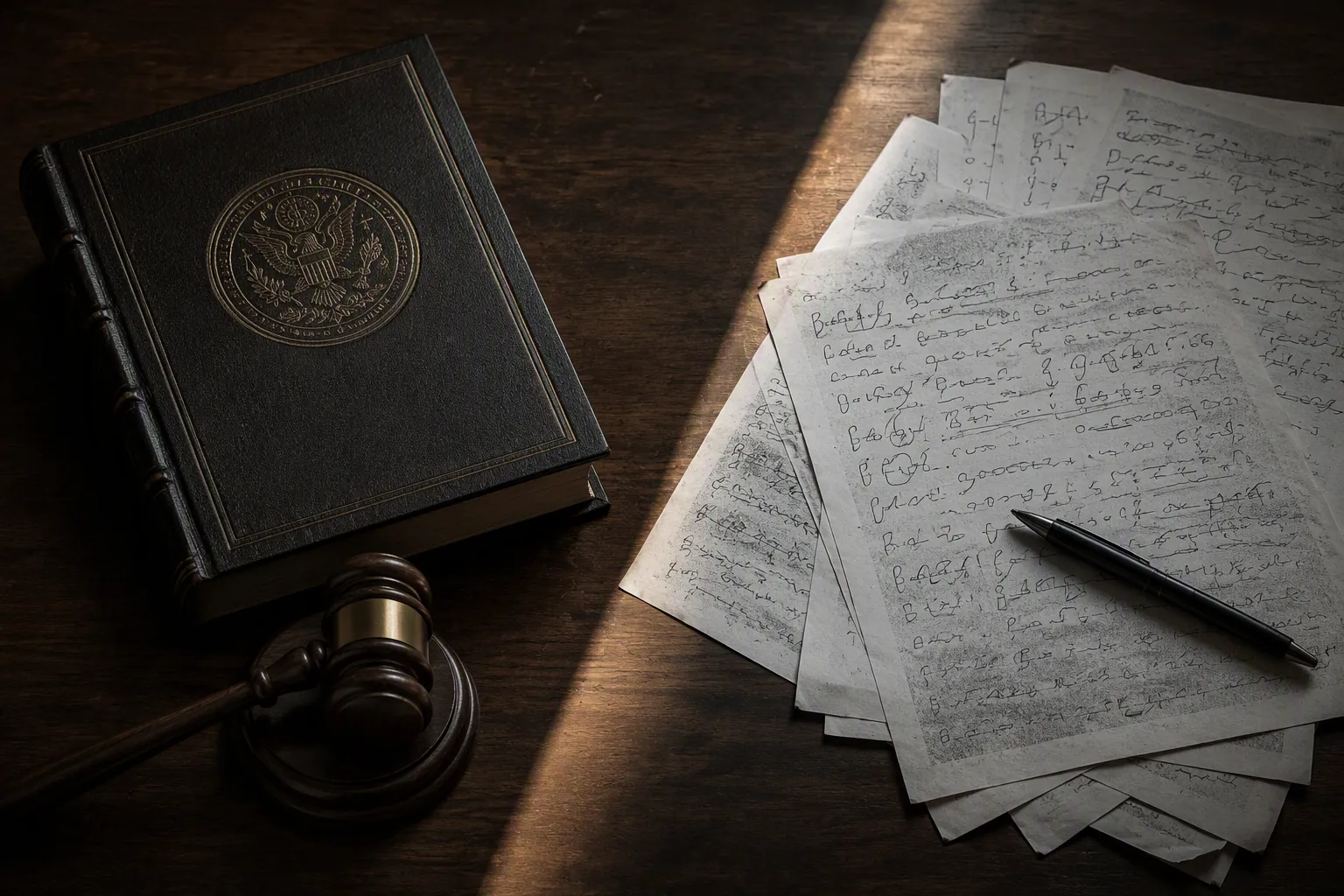
The most secure fact about the call is procedural: the recording came in. WCVB reported on June 29, 2026, that Judge Sullivan ruled the 911 call admissible over litigation about its use at trial. The prosecution argued the call had “significant probative evidentiary value in terms of proving deliberate premeditation, extreme atrocity or cruelty, and the state of mind of the defendant.” The judge allowed the recording subject to a limiting instruction and ruled that it would not be released to the media outside the courtroom.[1]
That ruling does not mean every emotional moment in the audio became available for any purpose. A limiting instruction matters because it tells jurors the legally permitted use of evidence. It also matters for anyone summarizing the trial: the admitted exhibit was the recording heard by jurors, not a free-floating transcript that the public can inspect, quote, and compare against the audio.
For legal-risk and newsroom purposes, this is why the call belongs in the same record discipline as a confirmed-versus-reported case file rather than in a quote-driven recap. The question is not only what words were heard. It is who heard them, under what ruling, with what restriction, and from what source later readers are taking the wording.
The call details: confirmed record versus reporter wording
The public accounts from July 29 are valuable, but they do different jobs. East Idaho News published the rough in-court transcript most often treated online as the “911 call transcript.” Parade amplified the account and noted the call was blocked from public access. The Boston Herald described Patrick Clancy’s call in narrative form. WCVB’s Day 2 account tied the call to witness testimony and described what Patrick found while he remained on the line.[2][3][4][5]
| Detail in public circulation | Best current status | Why it is labeled that way |
|---|---|---|
| The 911 recording was admitted and played for the jury. | Confirmed procedural fact | The admissibility ruling and July 29 courtroom reports establish that the recording was allowed and played.[1][2] |
| The recording was withheld from public release. | Confirmed public-access fact | WCVB reported the judge would not release it to the media; Parade described the call as blocked from the public.[1][3] |
| A publicly available official transcript exists. | Not verified; should be treated as false unless a court release later appears | The available public materials describe the audio being played and reporter accounts being circulated, not a certified public transcript. |
| Patrick Clancy reported a fall of about 20 feet. | Reporter-transcribed account | East Idaho News included this in its rough courtroom transcription of the call, not as an official transcript.[2] |
| The exchange “Where are the kids?” / “In the basement.” | Reporter-transcribed account | This wording appears in the East Idaho News rough in-court transcript and should not be converted into certified dispatcher wording.[2] |
| The cry “She killed the kids!” | Reporter-transcribed or reporter-reported account | East Idaho News used the line prominently in its July 29 courtroom account; it remains a reporter account of what was heard in court.[2] |
| Patrick said he needed to check on his children and screamed their names. | Reporter-reported narrative of the call | The Boston Herald reported this as part of its narrative account of Patrick Clancy’s 911 call being played in court.[4] |
| Patrick stayed on the line while running to the basement and found Cora and Callan with exercise bands around their necks. | Reporter-reported courtroom testimony/call account | WCVB’s Day 2 coverage reported those details from the testimony and call presentation.[5] |
| The statement “I knew that he was gone.” | Reporter-reported account | WCVB attributed this wording in its July 29 Day 2 trial coverage, not in a released official transcript.[5] |
The unsettling part is that the reporter-transcribed lines are also the lines readers most want to repeat. They sound complete because quotation marks make them look finished. But a courtroom reporter’s account of audio played in open court is still a secondary account unless the court releases the exhibit, a certified transcript, or another primary record that fixes the words.
That is especially important with dispatcher wording. A caller’s panic, overlapping speech, courtroom acoustics, and the pace of live reporting all work against transcript certainty. The fact that reporters heard and wrote down a line does not make their version useless; it makes the status label mandatory.
Why the limiting instruction is the center of the record
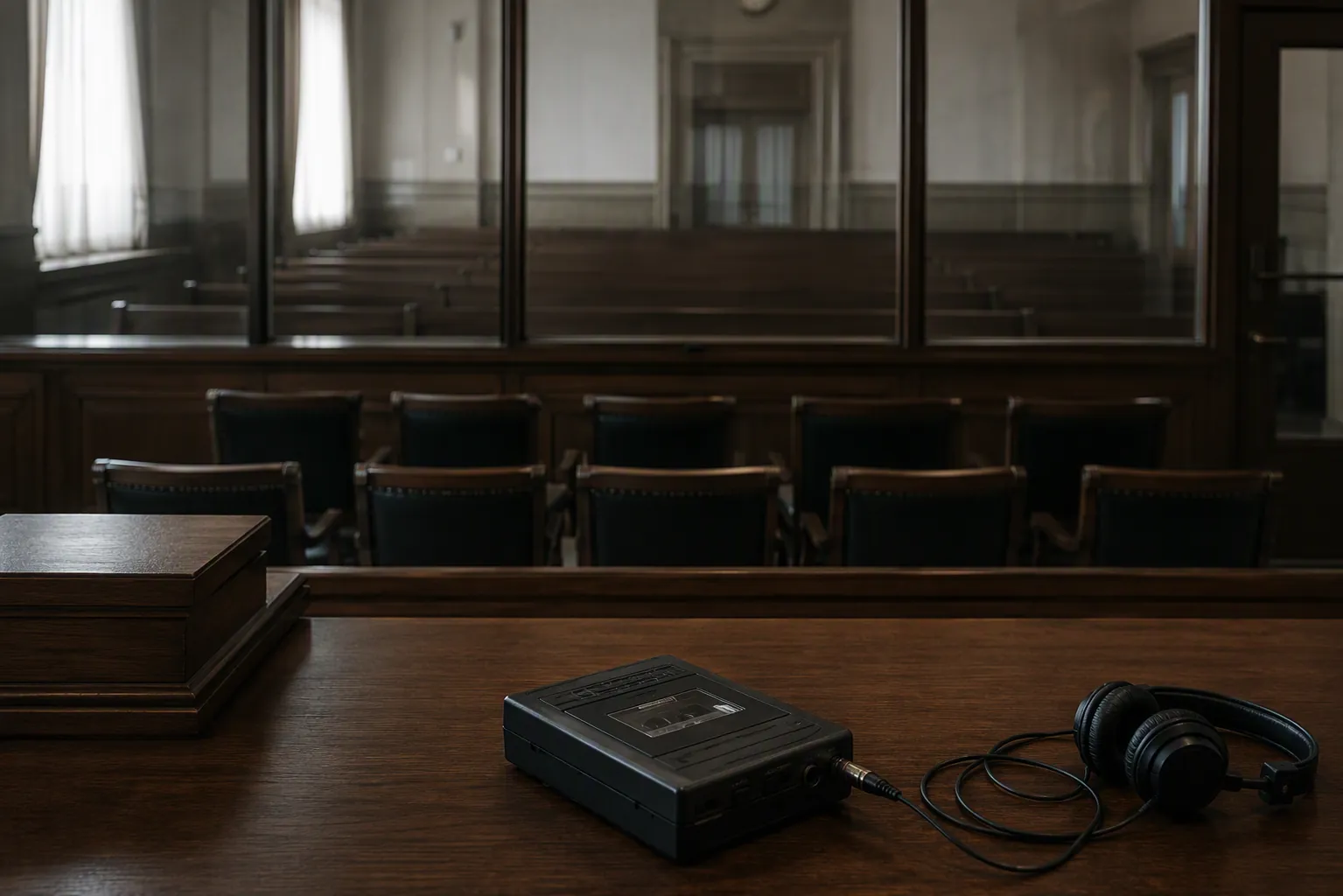
A 911 call can feel like the most direct evidence in a case because it captures discovery as it happens. That is also why courts fight over it. The prosecution’s stated theory, as reported by WCVB, tied the call to deliberate premeditation, extreme atrocity or cruelty, and state of mind.[1] Those are evidentiary uses, not permission for the public to treat the recording as a grief document to be mined line by line.
The judge’s ruling also separated courtroom access from media release. Jurors could hear the recording under the court’s supervision. The public could read reports from people who heard it. Those are not equivalent positions. One is trial evidence; the other is coverage of trial evidence.
For lawyers and legal journalists, that means the safest formulation is plain: “The jury heard the 911 recording on July 29; no official public transcript has been released; the following wording comes from courtroom reporting.” Anything stronger should wait for a docketed transcript, a released exhibit, or an on-record court filing that quotes the call.
The broader case context, kept in its lane
The call sits inside a Massachusetts murder trial arising from the deaths of Clancy’s three children. CNN’s pretrial explainer summarized the charges and the prosecution’s theory before trial began.[6] That context explains why the commonwealth wanted jurors to hear the call, but it does not supply a transcript of the call.
The defense posture also makes careful labeling necessary. Massachusetts Model Jury Instruction 9200 addresses lack of criminal responsibility, and Massachusetts General Laws c. 123, § 16 concerns mental-health-related hospitalization and examination procedures for people in criminal proceedings.[7][8] Those sources are legal context for issues that may arise in the case; they are not sources for the 911 call’s wording.
Some published coverage also contains small record-cleanup discrepancies around ages and projected trial length. Those should be resolved against filings, transcripts, and court minutes where available. They should not be treated as separate proof about what the 911 call said.
This article is a risk-digest evidentiary record, not an AI-risk incident record and not legal advice. Its closest site relatives are records about evidence rulings shaping a pending criminal case and reported-not-primary-verified posture. The method is the point: keep admissibility, public access, and quotation status in separate boxes.
Last verified status
Last verified Aug. 3, 2026: the trial remained ongoing, and no verdict had been reached. The public can verify the procedure around the 911 call more securely than the exact wording of the call. The recording was admitted. Jurors heard it. The court restricted public release. The “transcript” circulating online is reporter transcription, not an official public transcript.
References
- Lindsay Clancy 911 call allowed evidence, WCVB, June 29, 2026.
- ‘She killed the kids’: Extremely emotional 911 call played during second day of Lindsay Clancy trial, East Idaho News, July 29, 2026.
- Lindsay Clancy 911 Call, Parade.
- Lindsay Clancy trial: Patrick Clancy’s 911 call played in court, Boston Herald, July 29, 2026.
- Lindsay Clancy trial July 29, 2026, WCVB, July 29, 2026.
- Lindsay Clancy murder trial Massachusetts, CNN, July 20, 2026.
- 9200 Lack of Criminal Responsibility, Mass.gov.
- General Law - Part I, Title XVII, Chapter 123, Section 16, Massachusetts Legislature.
Related records
Tool profile
How Meta's AI Spending Reshapes Law Firm ProfitabilityGoverning regulation
Browse the obligations tracker →Preventive workflow
Browse verification workflows →
Report a correction or tip
Spotted an outdated figure, a misstated fact, or a ruling this case record should reflect? Public comments are disabled for this content given the professional cost of a misreported case outcome, penalty amount, or rule text — use the structured correction channel instead.
Report a correction or tip for this record →