
Tony Romo OWI Arrest Is Real. The Viral AI Content Isn't.
Tony Romo's OWI arrest is real and sheriff-documented, but the viral 'dashcam' is a recycled sketch, the TikTok clips are AI deepfakes, and 'criminal defense lawyer' mislabels a Wisconsin civil violation. This confirmed-vs-reported record provides the verified baseline for the pending case.
- Jurisdiction
- Wisconsin, US
- Court
- Milwaukee County Circuit Court
- AI tool named
- TikTok (AI deepfake)
- Ruling date
- Sep 21, 2026
- Source document
- View primary court order ↗
- Last verified
- Aug 2, 2026
Lex Machina Review is an independent risk-tracking and reference resource. Nothing on this site is legal advice, and using it does not create an attorney-client relationship. Every record is reviewed against primary sources but may not reflect the most current status of a matter — always verify directly against the cited court order, rule text, or a licensed attorney before relying on it.
Companion explanation — secondary to the source document above
Last verified: Aug. 2, 2026. Tony Romo’s Milwaukee County OWI arrest is a real, sheriff-documented event, and the case is still pending with a Sept. 21, 2026 court date reported by local and Dallas-area outlets using Milwaukee County Sheriff’s Office materials.[1][2][3] The legal label attached to much of the search traffic around “tony romo owi arrest criminal defense lawyer” is where the record starts to bend: a DA spokesperson described the matter as “a traffic violation and not a criminal charge,” and Wisconsin sources classify first-offense OWI as a civil traffic violation rather than a crime under the state’s OWI framework.[4][5][6][7]
The arrest is not the fake part. The fake part is the evidentiary theater that formed around it within days: a viral “dashcam” clip identified by Meaww as recycled Comedy Central sketch footage, and TikTok arrest clips circulating as AI/deepfake material rather than evidence from the stop.[8][9] No documented AI chatbot output mischaracterizing this specific case was found in the materials reviewed for this record. The AI issue here is narrower and more useful: public-facing content is already treating a live civil-traffic OWI matter as if it were a criminal-defense spectacle.
| Circulating claim | Current status | Verification posture |
|---|---|---|
| Romo was arrested in Milwaukee County on suspicion of OWI | Confirmed | Use the sheriff-documented arrest record as reported by established outlets, not viral clips. |
| The case is a criminal charge requiring the usual “criminal defense lawyer” framing | False as a legal-status shorthand for first-offense Wisconsin OWI | The DA spokesperson and Wisconsin OWI sources classify the first offense as civil/traffic, not criminal. |
| Police released dashcam footage of the arrest | False on the materials reviewed | The viral dashcam claim traces to recycled sketch footage; established reports describe bodycam and sheriff materials, not released dashcam footage. |
| TikTok arrest videos show the real stop | AI/deepfake circulation, not evidence | Treat social clips only as proof that fabricated arrest media circulated. |
| CBS pay, leave, or employment consequences are settled | Not established in this verification record | Keep employment commentary separate from the arrest baseline unless tied to verified reporting. |
| Blood-warrant results or final case outcome are known | Pending / not yet known | Do not fill the gap before the Sept. 21 court date or reported blood-result disclosure. |
The verified arrest record is narrower than the viral story
The dependable baseline is not complicated, which is part of the problem. A stop, an OWI arrest, a booking, a release, and a future court date do not provide enough drama for the internet’s evidence machine, so other material gets recruited to do the work.
Fox6 reported that the Milwaukee County Sheriff’s Office stop occurred on southbound I-43 after unsafe passing on the right, that Romo “performed poorly” on standardized field sobriety tests, that he was booked at about 9:45 p.m. and released around 11 p.m., and that the arresting demeanor was listed as cooperative.[1] WISN also reported the arrest on suspicion of operating under the influence and identified the same future court date.[2] NBC 5 Dallas-Fort Worth reported on the bodycam video and the Milwaukee arrest record from the Dallas market, where the story naturally had a second audience because of Romo’s Cowboys history.[3]
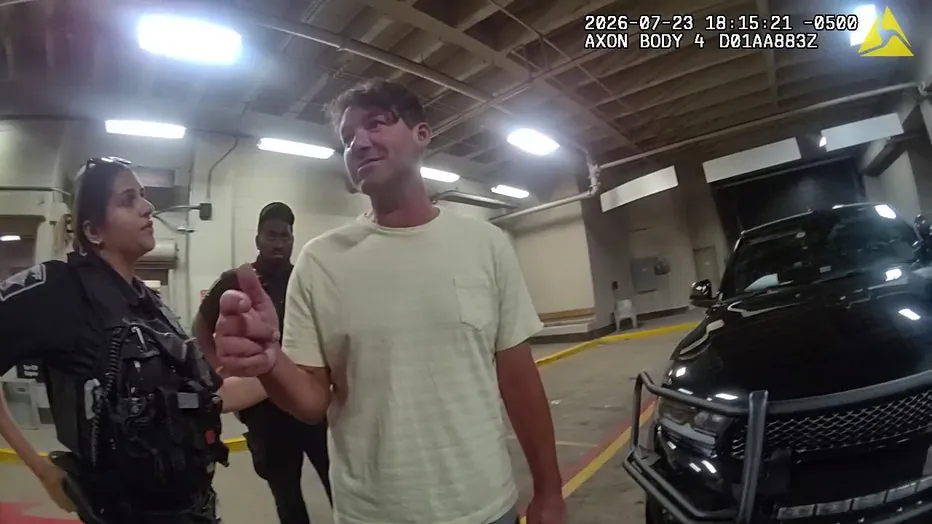
There is one timing conflict that should be preserved rather than smoothed over. WISN reported the stop at about 5:30 p.m.; Fox6 reported about 6:15 p.m.; the New York Post described it as just after 6 p.m.[1][2][4] That discrepancy does not undo the arrest record, but it does matter for anyone building a chronology. When a case is pending, guessing a reconciled time is a small way to make the record worse.
The same restraint applies to the open procedural pieces. This site has separate records for the refusal citation track, the blood-draw warrant procedure, and the open-container citation. Those threads are related, but they do not license a conclusion about final outcome, blood results, or penalties before the case moves.
The “criminal defense lawyer” framing gets the Wisconsin status wrong
Search language has a way of hardening into legal language. A page written to capture “criminal defense lawyer” traffic may look ordinary in a marketing dashboard, but in this case the phrase carries a status error if it implies that Romo’s first-offense Wisconsin OWI is a criminal charge.
The New York Post quoted a DA spokesperson saying the matter was “a traffic violation and not a criminal charge.”[4] Wisconsin Watch’s Gigafact brief states that first-offense drunken driving in Wisconsin is generally a civil offense rather than a crime.[5] WisDOT’s first-offense OWI page and the Wisconsin Legislative Reference Bureau’s overview of Wisconsin OWI law place first-offense OWI within the state’s operating-while-intoxicated statutory structure, including Wis. Stat. §§346.63 and 346.65.[6][7]
That does not mean the matter is trivial. It means the label has to match the jurisdiction. Wisconsin’s first-offense classification is the reason the safer baseline is the one used in this site’s civil-not-criminal Romo OWI record: describe the arrest, describe the citation posture, and do not import criminal-charge language from Texas DWI assumptions, celebrity-crime templates, or lawyer-intake keywords.
This is also where the AI point should stay disciplined. The available materials do not show a named chatbot inventing the arrest or hallucinating a court record. The error pattern is more ordinary and therefore more likely to spread: a real event is fed into a familiar legal-content format, and the format supplies the wrong label.
The fake dashcam clip should not be treated as a close call
The viral “dashcam” layer is useful evidence of misinformation, not evidence of the arrest. Meaww’s fact check reported on July 25, 2026 that the supposed police dashcam footage was not released dashcam video from the Romo stop but recycled footage from an old Comedy Central sketch.[8] Meaww is not the source to use for the arrest baseline, but it is enough to document the false claim’s existence and identify the clip’s non-evidentiary origin.
The corroborating point is negative but important: the established reports used for the arrest baseline describe sheriff materials and bodycam video, not released dashcam footage.[1][2][3] If a legal article treats the sketch clip as police evidence, it is not adding color. It is contaminating the record.
This is the stage at which a newsroom researcher, KM lawyer, or marketing director usually has to do the unglamorous cleanup: remove the clip, correct the label, update the chronology, and decide whether a page that looked like a fast response has become a liability. The cost is not only reputational. Once a false “released video” premise appears in a legal explainer, downstream summaries can quote the explainer instead of the record.
TikTok deepfakes prove circulation, not facts
The TikTok material belongs in a lower evidentiary tier. A post from the nflmemes_tiktok account circulated AI/deepfake-style arrest content tied to the Romo story.[9] That is enough to say fabricated or AI-generated clips entered the public stream. It is not enough to infer anything about what happened during the stop.
For legal-risk purposes, that distinction matters more than whether the clip fooled every viewer. A social clip can be relevant because it shows the path of a false claim, while still being useless as evidence about the event. The same item can be probative of circulation and worthless on the merits.
The practical rule is simple enough to apply inside an AI-assisted publishing workflow: never let a social-video object answer a court-record question. If the question is what charge or citation exists, go to the arrest record, the DA classification, and the Wisconsin sources. If the question is whether fake media circulated, then the TikTok post can be logged as an artifact with a low-authority warning attached.
Lawyer content raced the case status
Law-firm commentary appearing quickly after a celebrity OWI arrest is not suspicious by itself. Lawyers explain public cases all the time, and some do it carefully. One example in the materials reviewed is My Dallas Criminal Lawyer’s “Tony Romo OWI Arrest: A Dallas DWI Lawyer’s Bodycam Analysis,” which shows how quickly the arrest became a legal-content topic for a DWI audience outside Wisconsin.[10]
The risk is not that every lawyer page is fake. The risk is that the intake economy rewards the first page that sounds authoritative, and the phrase “criminal defense lawyer” can drag the article toward the wrong jurisdictional frame. A Dallas DWI lens may be useful for explaining field sobriety testing or police interaction. It cannot supply Wisconsin’s first-offense OWI classification.
The same separation is necessary for employment claims. Fake or thin sports-news pages claiming CBS pay or leave consequences should not be allowed to sit next to verified arrest facts as if they carry the same weight. This site’s CBS OWI legal analysis treats that topic as a separate verification problem for a reason: employment consequences are not proven by the existence of an arrest, and they are certainly not proven by a page that cannot anchor its claim.
What remains pending should stay pending
As of Aug. 2, 2026, the court date remains in the future, the case posture is pending, and the materials reviewed do not establish a final outcome or blood-warrant result.[1][2][3] That leaves several tempting blanks: what the blood evidence may show, how the refusal citation may proceed, whether additional consequences may follow, and how Romo or counsel may respond.
Those blanks are not invitations. They are the edge of the record. The more famous the person and the more familiar the legal template, the easier it is to write past that edge without noticing. A pending OWI citation is not a verdict. A warrant procedure is not a public blood result. A bodycam clip is not a dashcam release. A Wisconsin civil-traffic classification is not a criminal charge because the keyword says “criminal defense lawyer.”
The verification burden falls on the publisher, not the tool
The National Center for State Courts’ legal practitioner guide to AI and hallucinations uses the phrase “never trust, always verify” and describes risks including fabricated citations, distorted holdings, and false procedural information.[11] That guidance is usually discussed in the context of court filings. The Romo misinformation layer shows why the same habit belongs in marketing, legal commentary, and newsroom workflows.
The minimum verification sequence for a live legal incident is not exotic: confirm the event against the arrest or court record; confirm the legal classification against the jurisdiction’s governing sources; separate official video from social video; mark AI-generated or fabricated media as circulation evidence only; and leave unresolved procedural issues unresolved until a reliable source moves them.
That sequence would have caught the central errors here. It would have kept the arrest real, the Wisconsin first-offense status civil/traffic, the Comedy Central sketch out of the evidence file, the TikTok deepfakes out of the factual chronology, and the Sept. 21 hearing in the future where it belongs.
References
- Tony Romo OWI arrest in Milwaukee, court date scheduled — Fox6 Milwaukee
- Tony Romo arrested in Milwaukee on suspicion of operating under the influence — WISN 12
- Tony Romo OWI arrest shown on bodycam video — NBC 5 Dallas-Fort Worth
- Exclusive | Tony Romo's argument with cop during OWI arrest captured on bodycam — New York Post
- Is first-offense drunken driving a crime in Wisconsin? — Wisconsin Watch / Gigafact Fact Brief
- First OWI offense — WisDOT
- An Overview of Wisconsin OWI Law — Wisconsin Legislative Reference Bureau, LRB Report 2-8
- Fact Check: Did police release dashcam footage of Tony Romo's arrest? — Meaww, July 25, 2026
- TikTok deepfake post — TikTok
- Tony Romo OWI Arrest: A Dallas DWI Lawyer's Bodycam Analysis — My Dallas Criminal Lawyer
- A legal practitioner's guide to AI & hallucinations — National Center for State Courts
Related records
Tool profile
How Meta's AI Spending Reshapes Law Firm ProfitabilityGoverning regulation
Browse the obligations tracker →Preventive workflow
Browse verification workflows →
Report a correction or tip
Spotted an outdated figure, a misstated fact, or a ruling this case record should reflect? Public comments are disabled for this content given the professional cost of a misreported case outcome, penalty amount, or rule text — use the structured correction channel instead.
Report a correction or tip for this record →